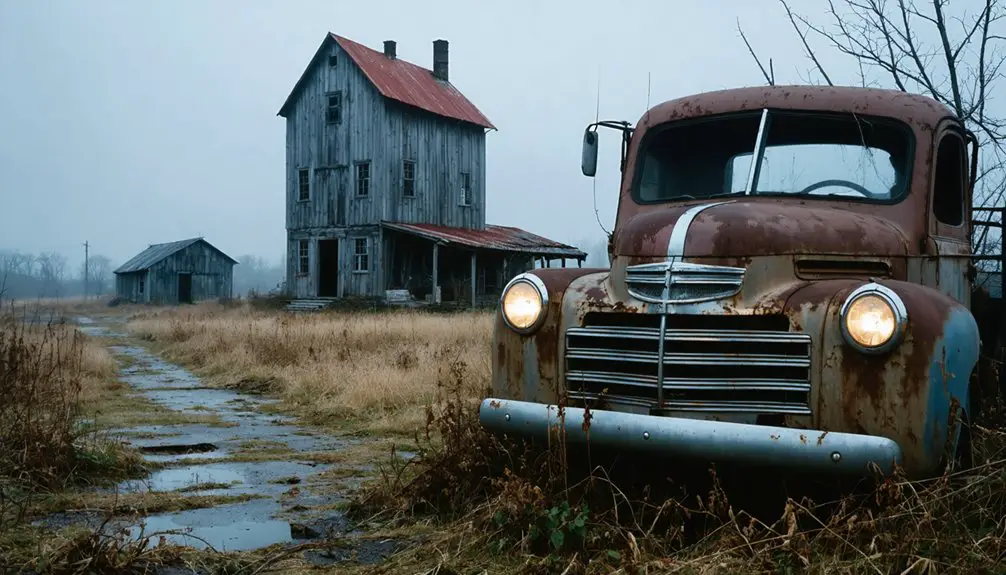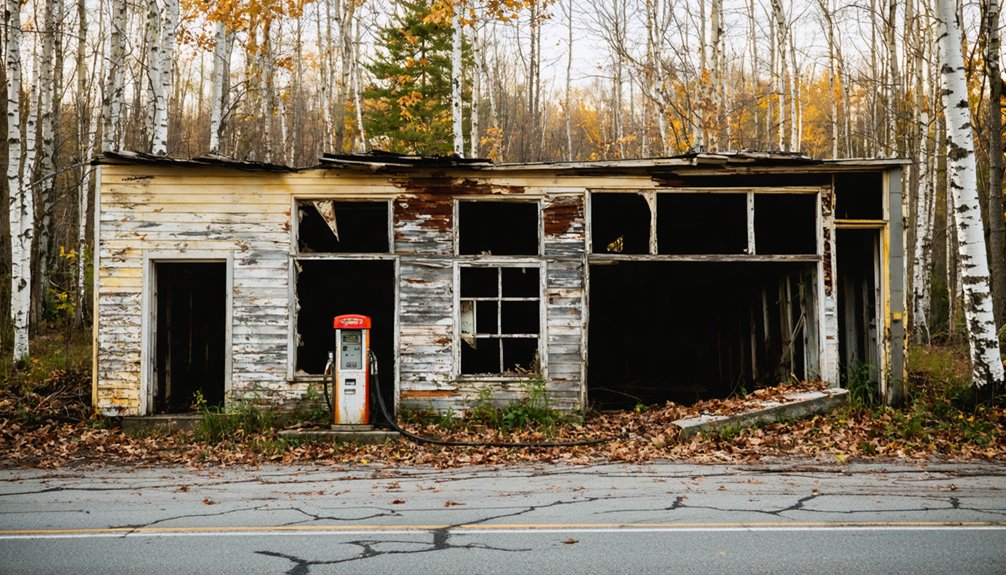
Wekwagamaw is a forgotten copper-rush ghost town buried deep in Michigan’s Porcupine Mountains, roughly 35 miles from Houghton. You’ll need a high-clearance vehicle, offline maps, and a full tank before hitting unpaved back roads. Once there, crumbling mineshaft structures and old apple trees tell the story of families who once called this wilderness home. It’s genuinely remote, quietly haunting, and far more complex than it first appears — everything you need to know is just ahead.
Key Takeaways
- Wekwagamaw is a ghost town in Michigan’s Upper Peninsula, about 35 miles from Houghton, established during the 1860s copper rush.
- Access requires a high-clearance vehicle, a full gas tank, food, water, and offline GPS due to poor cell service.
- The site features deteriorated buildings, rusted equipment, and mineshaft remnants reflecting the harsh realities of 1860s copper mining.
- Hidden mineshafts dropping 25 feet or more are serious hazards; never explore alone and stay on marked paths.
- Do not enter deteriorated buildings, remove artifacts, or approach mineshafts — respect preservation laws and leave the site untouched.
What Is Wekwagamaw and Why Does This Ghost Town Matter?
Wekwagamaw is a ghost town swallowed by Michigan’s Upper Peninsula, tucked into the rugged Porcupine Mountains just miles from the Wisconsin border — and it’s one of those places that makes you feel the weight of lives lived and lost.
Wekwagamaw sits where Michigan’s wilderness swallowed an entire world — and somehow, you can still feel it breathing.
Born during the 1860s copper rush, this remote settlement thrived briefly before exhausted deposits forced everyone out within a decade. That ghost town history is written into every crumbling structure and overgrown shaft you’ll encounter here.
What makes Wekwagamaw matter isn’t spectacle — it’s authenticity. You’re walking through genuine mining heritage, where ambitious people carved a community from wilderness, then quietly disappeared.
Old apple trees still stand where families once gathered. The forest has reclaimed nearly everything else, leaving you to piece together a story the land refuses to fully surrender.
Where Exactly Is Wekwagamaw Located in Michigan?
Tucked into Michigan’s northern Great Lakes region near the Wisconsin border, Wekwagamaw sits within the Porcupine Mountains at elevations pushing between 1,200 and 1,500 feet — terrain that feels deliberately designed to keep the outside world away.
Houghton serves as your closest anchor point, roughly 35 miles out and about 45 minutes of driving through Houghton County’s unpaved back roads. This wilderness exploration demands a high-clearance vehicle — no shortcuts exist here.
Picture what you’re moving through:
- Dense copper-mining hills swallowed by old-growth forest
- Rugged ridgelines carrying the historical significance of 1860s ambition
- A landscape that’s actively resisted modern intrusion for over a century
You’re not just traversing geography — you’re tracing the ghosted edges of forgotten American freedom.
How To Get to Wekwagamaw From Houghton
Starting your journey in Houghton, you’ll head northwest through Houghton County on roads that gradually shed their pavement and demand a high-clearance vehicle.
The unpaved stretch tests your patience but rewards it, winding through dense forest that feels untouched by the decades that have passed since miners last traveled this route.
After roughly 45 to 50 minutes, you’ll reach a small parking area marking the entrance to Wekwagamaw, where the trees open just enough to hint at the abandoned world waiting beyond.
Starting Point In Houghton
If you’re making the trek out to Wekwagamaw, Houghton serves as your natural jumping-off point, sitting roughly 35 miles from the ghost town. This lakeside college town carries its own historical significance, rooted deep in copper country heritage and local legends of boom-and-bust fortunes.
Stock up here before venturing into the remote wilderness — there’s nothing waiting for you out there but silence and shadows.
Before you leave Houghton, make sure you’ve got:
- A full tank of gas — no stations exist along the route
- Enough food and water — the road demands self-sufficiency
- A detailed map or downloaded offline GPS — cell service disappears fast
The 45-to-50-minute drive north is your passage from civilization into something beautifully untamed.
Navigating Unpaved Roads
Once you leave Houghton’s paved streets behind, the road north quietly transforms beneath your tires — smooth asphalt giving way to gravel, then packed dirt, then something that barely qualifies as a road at all.
These unpaved challenges demand respect. You’ll need a high-clearance vehicle to navigate the rutted terrain through Houghton County without bottoming out or losing traction on loose surface material.
Road safety here means slowing down before you think you need to. Branches scrape. Potholes hide under standing water. The forest closes in tight on both sides, swallowing daylight.
Budget 45 to 50 minutes from Houghton, though the final stretch will feel longer. When you reach the small parking area near the site’s entrance, you’ll understand why most people never make it this far.
Arriving At Wekwagamaw
The 35-mile drive from Houghton to Wekwagamaw begins simply enough — head northwest out of town, following the county roads that thread through Houghton County’s thinning settlements before the pavement surrenders entirely.
Budget 45 to 50 minutes, and don’t underestimate the final stretch.
As you near the site, the ghost town allure becomes undeniable:
- Copper-scarred hills emerge through the tree line, hinting at Wekwagamaw’s historical significance
- Old apple trees — planted by miners’ families — appear unexpectedly among the overgrowth
- A deteriorating parking area marks your arrival at the edge of a forgotten world
You’ll need a high-clearance vehicle to reach that parking area.
From there, you continue on foot, stepping into silence that’s belonged to the forest for over 150 years.
The 1860s Mining Ruins and Structures Still Standing at the Townsite
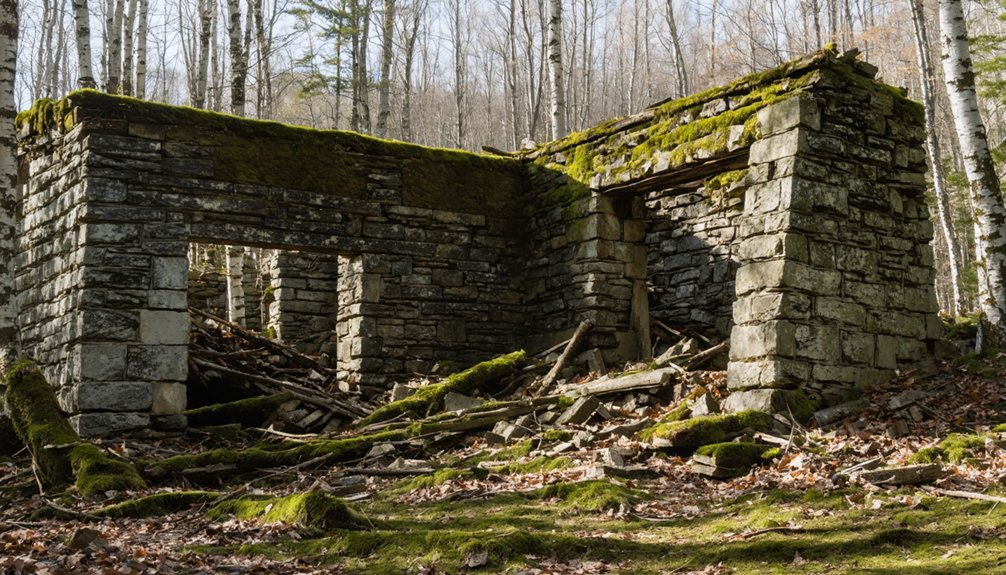
Once you set foot at the Wekwagamaw townsite, you’ll find yourself surrounded by the skeletal remnants of a copper mining era that vanished over 150 years ago.
The surviving mineshaft structures still pierce through the overgrowth, quietly echoing the labor and ambition of 1860s miners who once worked them relentlessly.
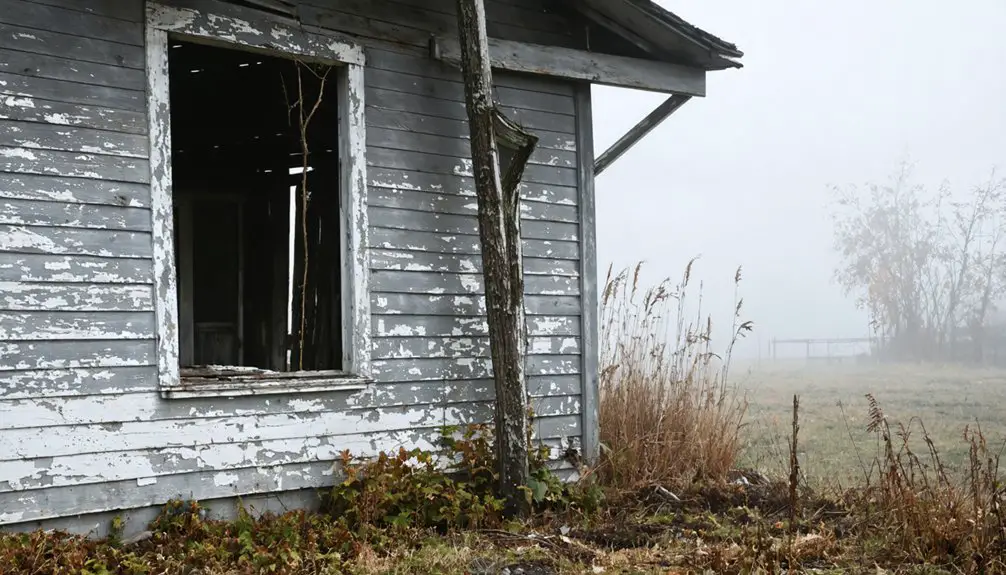
You’ll also encounter the deteriorated frames of townsite buildings, their weathered timber and crumbling foundations serving as haunting reminders of a community that simply ceased to exist.
Surviving Mining Shaft Remnants
Scattered across Wekwagamaw’s forest floor, the surviving remnants of 1860s mining infrastructure tell a story of ambition cut brutally short.
You’ll find yourself walking through living Mining Heritage, where Ghost Towns whisper their forgotten chapters beneath your boots.
Watch for these haunting features as you explore:
- Collapsed shaft openings barely visible beneath decades of tangled vegetation, dropping dangerously 25 feet or more into darkness
- Rusted iron hardware from original hoisting equipment, slowly surrendering to Michigan’s relentless freeze-thaw cycles
- Rock waste piles marking where miners once extracted copper with relentless determination before economic reality ended everything
Tread carefully here.
These shafts aren’t fenced or marked, and the overgrowth conceals genuine danger.
Bring your flashlight, respect the silence, and let this raw, untamed landscape speak freely.
Deteriorated Townsite Building Structures
Beyond the mineshafts, Wekwagamaw’s crumbling townsite structures rise from the undergrowth like weathered bones of a community that barely had time to breathe.
These remnants carry enormous historical significance — they’re physical proof of a copper rush that burned bright and collapsed within a single decade during the 1860s.
As you move through the site, you’ll notice deterioration effects everywhere: buckled timber frames, collapsed rooflines swallowed by moss, and foundation stones slowly surrendering to frost heave.
Each structure whispers stories of miners who built homes expecting permanence, only to abandon everything when the copper ran dry.
Approach carefully — walls shift unexpectedly, and floors hide dangerous voids beneath rotted wood.
Respect what’s left standing. These ruins belong to history, not your backpack.
The Hidden Mine Shafts That Make Wekwagamaw Genuinely Dangerous
What makes Wekwagamaw genuinely unsettling isn’t the silence or the decay — it’s what you can’t see. These hidden hazards define ghost town adventures here more than anything else. Beneath the overgrowth, mineshafts drop 25 feet or more, offering no escape once you’ve fallen.
Watch for these warning signs as you explore:
- Subtle depressions in the earth where vegetation grows unusually dense, masking open shafts below
- Irregular ground that shifts or crumbles underfoot without warning near old infrastructure remnants
- Dark circular openings half-swallowed by brush, easily mistaken for shallow hollows
You’re free to roam here, but that freedom demands respect. Step deliberately, stay alert, and never explore alone.
Freedom here is earned, not given — move with intention, stay sharp, and always bring someone who has your back.
Wekwagamaw rewards the cautious adventurer — it doesn’t forgive carelessness.
What To Pack Before You Drive Out to Wekwagamaw

Before you point your truck toward Houghton and those unpaved roads beyond, pack like the wilderness doesn’t care about your plans — because it doesn’t.
Ghost town exploration demands respect, and your packing essentials reflect that respect.
Bring water, snacks, and sun protection — the forest won’t offer shade on demand.
Wear sturdy shoes because overgrowth and rugged copper mining terrain will punish anything less.
Carry a flashlight for dark mine entrances that haven’t seen light since the 1860s.
A first aid kit isn’t optional out here; it’s your lifeline when the nearest town sits 35 miles away.
Leave artifacts, bottles, and debris exactly where you find them.
You’re walking through someone’s abandoned life — honor it, photograph it, and drive home with only memories.
What You Are Not Allowed To Do When Visiting Wekwagamaw
Wekwagamaw isn’t yours to take home. The ghost town’s weathered remnants — rusted tools, antique bottles, crumbling timber — belong to history itself.
Artifact preservation laws strictly prohibit removing anything from the site, and violating them carries serious legal consequences.
Beyond respecting the past, safety regulations exist to protect you from very real dangers:
- Don’t enter deteriorated buildings — floors and walls can collapse without warning
- Don’t approach or lean over mineshafts — hidden drops exceed 25 feet with no escape routes
- Don’t wander off marked paths — dense overgrowth conceals hazards that swallow careless steps
True freedom means leaving Wekwagamaw exactly as you found it — silent, untouched, and waiting for the next traveler who needs to feel something ancient and real.
Why Wekwagamaw Remains One of Michigan’s Most Remote Ghost Towns
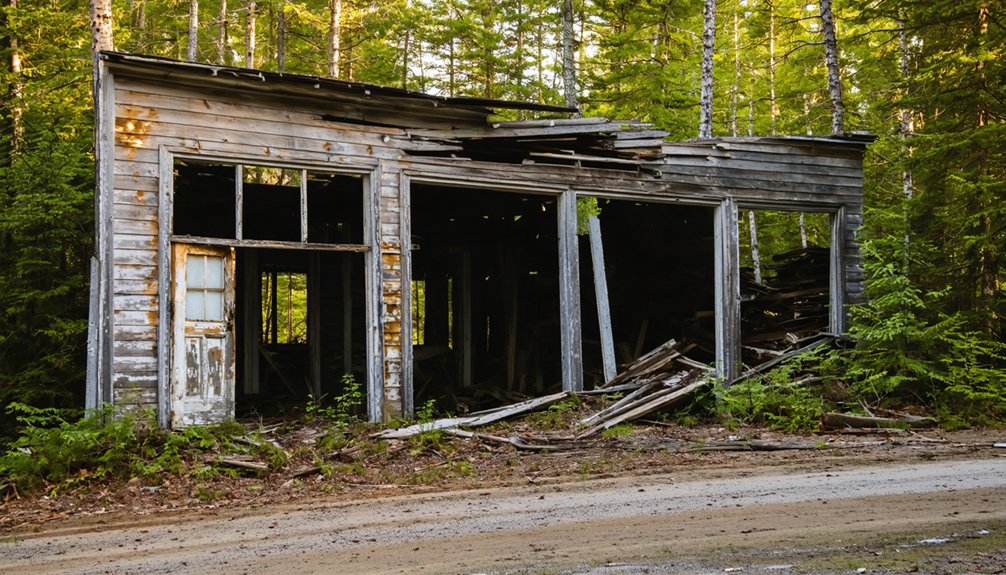
Few ghost towns in Michigan test your resolve quite like this one. Wekwagamaw sits deep within the Porcupine Mountains, nearly 35 miles from Houghton, reachable only by unpaved roads demanding a high-clearance vehicle.
Its mining history stretches back to the 1860s copper boom, yet the town collapsed within a decade, swallowed by economic failure and dense forest. No public transportation reaches it. No permanent residents remain.
Ghost town legends thrive here precisely because isolation preserves them — old apple trees still bear fruit, mineshafts still breathe cold air, and deteriorated buildings still hold their silence.
You won’t stumble upon Wekwagamaw accidentally. You’ll have to want it, plan for it, and earn every mile of rugged terrain between you and its forgotten edges.
Frequently Asked Questions
Are There Guided Tours Available at Wekwagamaw for First-Time Visitors?
No guided tours exist at Wekwagamaw, so you’ll embrace true guided exploration independently. Wander freely through remnants of local history, discovering forgotten copper-mining echoes yourself. Pack essentials, trust your instincts, and let Wekwagamaw’s haunting, nostalgic wilderness reveal its secrets on your own terms.
What Is the Best Season to Visit Wekwagamaw Ghost Town?
Despite winter’s rugged appeal, you’ll find late summer your best season—dense trails clear, best photography spots glow golden, and seasonal wildlife observations thrive. You’re free to roam Wekwagamaw’s forgotten echoes without nature’s harshest barriers slowing you down.
Is Camping Overnight Permitted Anywhere Near the Wekwagamaw Townsite?
The knowledge doesn’t specify camping regulations for Wekwagamaw, but nearby campgrounds within Porcupine Mountains Wilderness State Park let you bed down under ancient stars, breathing freedom’s air before you explore those haunting, copper-scarred hills at dawn.
Are Children and Pets Allowed to Visit the Wekwagamaw Site?
Hidden mineshafts lurk beneath your every step—you’ll want to reconsider family friendly activities here. No official pet policies exist, but dangerous drops make Wekwagamaw unsuitable for children and pets seeking freedom’s wild adventure.
Has Anyone Ever Discovered Significant Artifacts While Exploring Wekwagamaw?
You’ll find whispers of artifact significance tucked beneath Wekwagamaw’s overgrowth, but remember — removal’s illegal. Sharpen your exploration techniques to *discover* history’s echoes without disturbing them. The past belongs to everyone’s freedom, not anyone’s pocket.
References
- https://en.wikipedia.org/wiki/List_of_ghost_towns_in_Michigan
- https://wgrd.com/michigan-ghost-town-map/
- https://www.ghosttowns.com/states/mi/mi.html
- https://www.mlive.com/travel/2016/10/michigan_ghost_towns.html
- https://www.youtube.com/watch?v=sSSRkoV7mh8
- https://ghost-towns.close-to-me.com/states/michigan/
- https://www.facebook.com/groups/157059191540681/posts/1689185181661400/
- https://en.wikipedia.org/wiki/Category:Ghost_towns_in_Michigan
- https://www.youtube.com/watch?v=DdiQnC9Dwxs
- https://www.youtube.com/watch?v=zFa8wx2yUpk