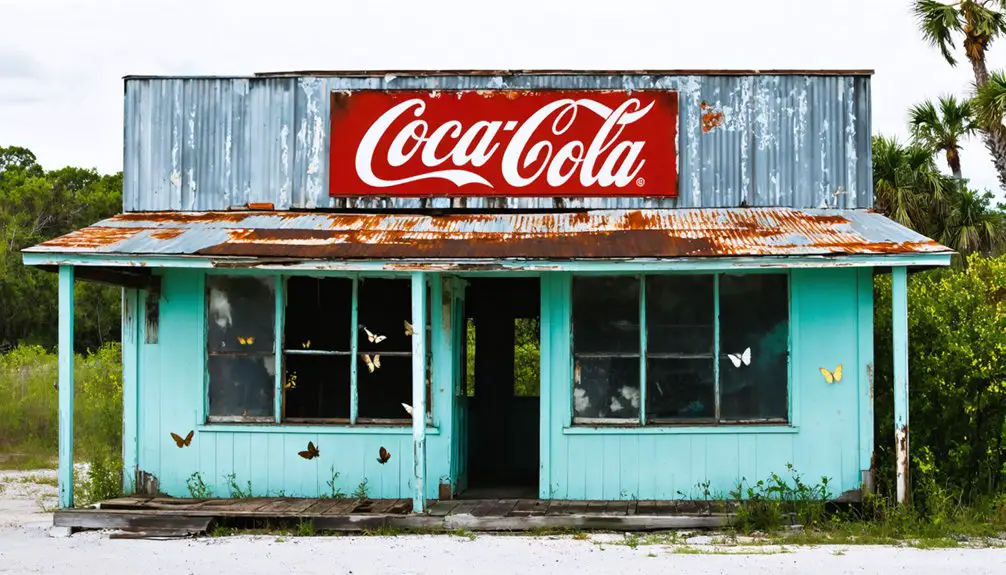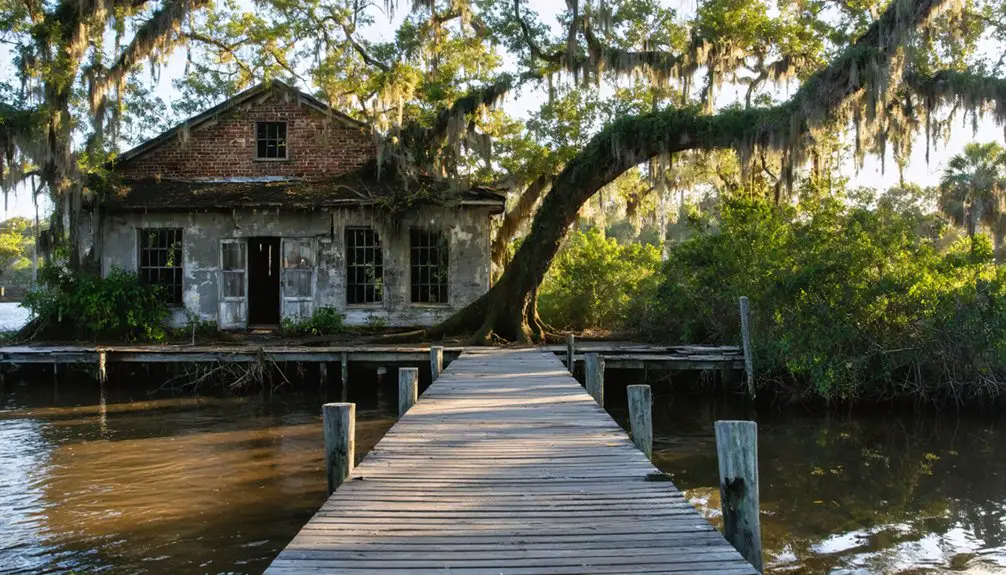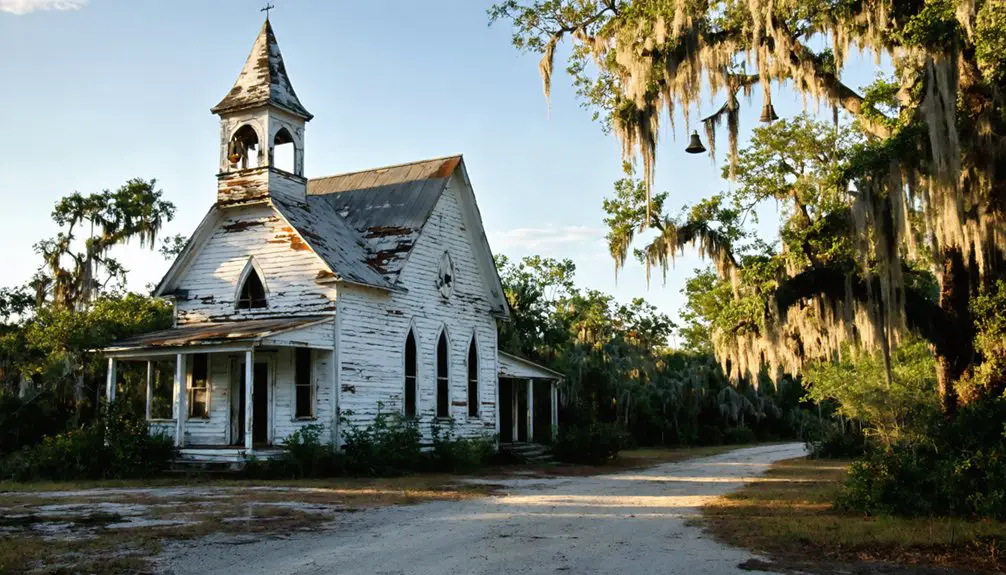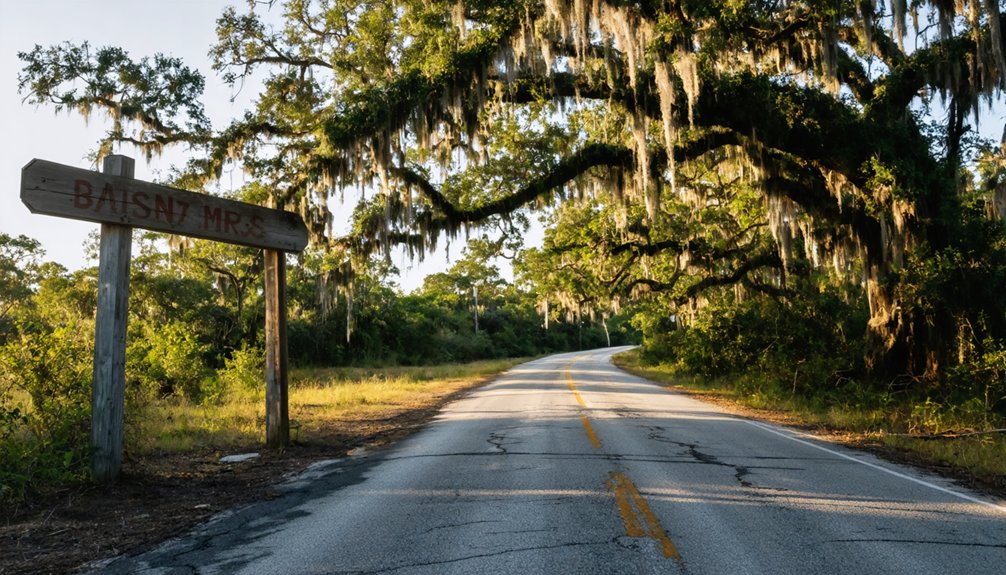
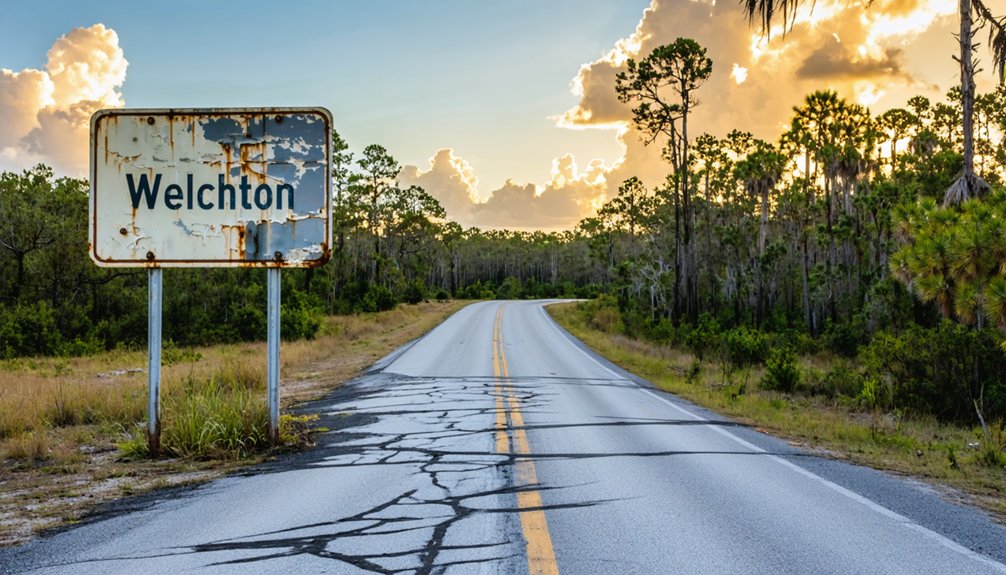
You’ll find Welchton’s scattered remnants northwest of Lake Weir along Highway 464 at coordinates 29°5.0’N 81°59.5’W, where Captain Welch’s 1885 Italian grape colony collapsed into Florida’s unforgiving scrubland. Plan your visit between November and April when temperatures hover around 60-75°F and the dry season keeps the ground firm and mosquitoes manageable. The maintained roads guarantee year-round access without permits, though summer’s 95°F heat demands dawn or dusk exploration. There’s considerably more to discover about this forgotten settlement’s brief, ambitious existence.
Key Takeaways
- Welchton lies northwest of Lake Weir along Highway 464 at coordinates 29°5.0’N 81°59.5’W with year-round accessible roads.
- Visit November through April for ideal 60-75°F temperatures, minimal rain, reduced mosquitoes, and manageable terrain conditions.
- No permits or restrictions required to explore abandoned structures and construction sites scattered across the former Italian grape colony.
- Avoid summer’s 95°F+ heat by scheduling visits before 10 AM or after 5 PM for cooler conditions.
- Expect windstorms creating sandstorms, empty buildings, and remnants of failed redevelopment projects throughout the ghost town site.
The Rise and Fall of Captain Welch’s Italian Grape Colony
When two hundred Italian immigrants stepped off their ship at Green Cove Springs in December 1885, they carried more than their belongings—they brought dreams of cultivating grapes in Florida‘s unfamiliar soil. They’d crossed the Alps and sailed from England to Philadelphia before reaching their destination: Welchton, Captain Welch’s ambitious grape colony venture.
The settlers handed over their savings for promised farmland, while the priest’s role in colony life began immediately—Father Dominique Andre Gaetan served their spiritual needs from a small wooden chapel built specifically for Italian-speaking parishioners. Like the Turnbull colonists who arrived in Florida in 1768, these Italian immigrants sought new opportunities in unfamiliar territory.
But farming challenges faced these pioneers proved insurmountable. Florida’s climate couldn’t support European grape varieties. Like Charles Kline Landis’s requirement that houses be erected within one year of land purchase in his successful Vineland colony, Captain Welch had imposed building deadlines on his settlers—but unlike Vineland’s thriving farms, Welchton’s grape cultivation failed. Within years, families like the Ghiottos and Toffalettis abandoned the failing venture, scattering to Ocala, Palatka, and beyond, leaving Welchton to fade into memory.
What Remains of Welchton Today
Unlike the Welchton of Captain Welch’s era—where Italian voices once filled chapel pews and hopeful hands worked stubborn soil—today’s site bears little trace of its 1880s origins. You’ll discover abandoned community structures scattered across barren wastelands, their empty shells standing as monuments to more recent failures.
Construction sites sit paralyzed mid-build, victims of developers who exploited loopholes and vanished when buyers disappeared.
Navigate these roads at your own risk—they end abruptly in overgrown territories that’ll have you swinging detours through Ellenton. The redevelopment challenges stretch endlessly: forced payments, acquisition processes, demolition delays.
Drive the outskirts accessible from Bradenton and you’ll witness something unsettling—not romantic Wild West ruins, but fresh ghost towns where failure’s still raw. Windy days transform these developments into giant sandstorms, coating everything in sight with the dust of apocalyptic construction sites. The Gainesville-Hawthorne State Trail now runs on former railroad right of way that once connected these remote Florida communities. It’s a landscape that demands adventurous souls willing to explore Florida’s unfinished dreams.
Getting There: Directions and Road Conditions
Though Welchton’s historical heart lies northwest of Lake Weir, you’ll find its scattered remnants along Highway 464—Maricamp Road—in Marion County, where Silver Springs Shores now sprawls across what Italian farmers once tilled. Your standard two-wheel-drive vehicle handles these paved roads year-round, no special equipment needed.
Navigation essentials:
- From Lake Weir: Head 6 miles northwest on Highway 464, positioning yourself between Ocala and Candler—coordinates 29°5.0’N 81°59.5’W mark your destination
- Trail markers: Modern street signs have replaced the Atlantic Coast Line Railroad stops where trains once paused for hotel meals
- Seasonal accessibility: Florida’s hot summers make spring and fall ideal, though maintained infrastructure guarantees passage any time
The ghost town’s middle section now hides beneath suburban development, but you’re free to explore without permits or restrictions. Captain Welch’s original vision included a three story hotel that served as a centerpiece for the community’s ambitious grape cultivation enterprise. Welchton is noted as an inhabited ghost town, meaning you may encounter residents among the historical remnants.
Best Times to Explore the Ghost Town Site
You’ll want to schedule your Welchton expedition between November and April, when Central Florida’s dry season delivers mild 60-75°F temperatures and minimal rainfall—ideal conditions for exploring overgrown foundations and faint homestead traces.
Summer’s oppressive heat and afternoon thunderstorms would leave you drenched and exhausted before you’ve located the old general store site, while the bone-dry winter months keep the underbrush manageable and the ground firm beneath your boots. Those cooler months also spare you the swarms of mosquitoes and biting flies that plague Marion County’s scrublands from May through October, making your hunt for Welchton’s remnants far more bearable. Like many vanished settlements, Welchton’s most significant remains are likely concentrated near reliable water sources such as springs or streams where the original inhabitants established their community. Throughout the 19th and early 20th centuries, countless small communities were established throughout Florida, with many eventually declining or disappearing entirely like Welchton itself.
Seasonal Weather Considerations
Marion County’s temperate climate grants you the rare advantage of exploring Welchton’s remnants throughout the year, though strategic timing transforms a standard visit into a choice experience. Understanding weather pattern impacts helps you maximize your exploration while avoiding Florida’s infamous summer heat.
Ideal touring times breakdown:
- Winter months (December-February) deliver comfortable 72°F highs and crisp 38°F mornings—perfect for wandering overgrown foundations without crowds or oppressive humidity.
- Spring and fall shoulder seasons offer balanced temperatures around 72-82°F, though you’ll face 27% shower chances and occasional afternoon thunderstorms that roll through quickly.
- Summer visits demand early morning departures before heat peaks, as temperatures climb relentlessly and afternoon storms become ritual.
Cold snaps remain rare but possible—Marion County witnessed freezes in 1895 that altered agricultural patterns permanently. The extended forecast shows precipitation probability fluctuating throughout the week, so check conditions before your ghost town expedition. When planning your visit, be prepared for winds SSW at 10 to 20 mph that can kick up dust around the abandoned structures and foundation remnants.
Avoiding Summer Heat Peaks
Central Florida’s summer sun transforms Welchton’s abandoned clearings into a punishing gauntlet that’ll test even seasoned explorers—those July afternoons when the mercury climbs past 95°F and humidity wraps around you like a wet wool blanket. You’ll want to schedule your expedition before 10 AM or after 5 PM when temperatures dip below 85°F.
Those dawn patrols offer the sweetest conditions: cooler air, softer light, and freedom to roam without wilting. Pack water resistant gear for afternoon thunderstorms that roll through after 2 PM, bringing temporary relief but intensifying muggy conditions. Hydrating while exploring becomes critical as heat index values top 105°F midday.
Better yet, consider visiting October through May when highs hover around 70-80°F—perfect weather for documenting crumbling foundations without fighting heat exhaustion.
Silver Springs Shores: Modern Development on Historic Grounds
Where ancient Timucua settlements once thrived along crystalline waters, Silver Springs Shores now spreads across Marion County’s horse country as an embodiment, a reflection, a symbol of Florida’s perpetual transformation. You’ll find pre existing Native American sites layered beneath modern subdivisions carved from Circle Square Ranch’s 13,000 acres, where State Road 200’s six-lane corridor now pulses with commerce.
Florida’s horse country transforms endlessly—ancient Timucua grounds now pulse beneath subdivisions where modern commerce replaces crystalline springs and ranch land.
Today’s challenges demand your attention:
- Nitrate pollution from fertilizer runoff chokes springs with brown algae
- Groundwater depletion threatens the 242-acre springs complex
- Commercial sprawl replaces citrus groves and timber stands
Yet sustainable development practices emerge through Florida Park Service restoration of 4,000 acres. You’ll discover this tension everywhere—glass-bottom boats still gliding over springs explored since 1852, while Walmart parking lots replace yesterday’s plantations.
The Three-Story Hotel That Fed Railroad Passengers
You’ll find the heart of Welchton’s story in Captain John M. Welch’s 1884 three-story hotel—a forty-room architectural marvel built right on the Atlantic Coast Line tracks. Every day at noon, the train would stop and passengers would pour into the dining room for a proper meal before continuing their journey between Ocala and Candler.
The hotel thrived alongside the town’s grape orchards until failed harvests and the devastating 1895 freeze shuttered both the dining rooms and the dreams that built them.
Daily Noonday Meal Service
Rising three stories above the sandy soil of McIntosh, this 19-room railroad hotel became the heartbeat of Marion County’s citrus boom when construction wrapped in 1894. You’d have found Florida Southern Line passengers gathering for daily dining hours at precisely noon, when the establishment transformed into a bustling hub of agricultural conversation and railroad schedules.
The hotel’s meal service routine centered on:
- Noonday gatherings timed to train arrivals along the tracks
- Citrus growers exchanging market intelligence over shared tables
- Transient travelers fueling up before continuing southward journeys
When consecutive freezes in 1894 and 1895 decimated local groves, meal service declines mirrored the town’s fading prosperity. The last guest checked out in 1964, twelve years before the final train rolled through McIntosh’s abandoned corridor.
Forty-Room Architectural Marvel
Captain John M. Welch’s architectural splendor rose three stories above the pine-cleared landscape in 1884, commanding attention from every Atlantic Coast Line train that rolled past. You’ll find it hard to imagine today, but forty rooms once filled this marvel between Ocala and Candler, serving passengers who stepped off at Welchton’s platform seeking nourishment and rest.
The local craftsmanship extended beyond the hotel itself. Welch guaranteed Italian immigrant workers received houses built with overlapping sides—far superior to the standard vertical board construction you’d find in typical pioneer settlements. His general store stocked everything from hardware to dress material, while the post office kept connections flowing until 1898. This wasn’t just a hotel; it was complete self-sufficiency on 7,000 acres.
Closure After Grape Failure
When mid-1894’s brutal freeze struck Marion County, the nineteen-room hotel rising near the Florida Southern Line tracks in McIntosh seemed destined for failure before it even opened its doors. The 1895 freeze delivered the final blow, proving North Florida too temperamental for citrus. You’ll find this three-story structure stood witness to complete economic devastation as farmers abandoned their groves for Orlando’s milder climate.
The crop shift southward hollowed out McIntosh’s prosperity:
- 1894-1895: Back-to-back freezes destroyed orange and lime crops
- 1964: Hotel closed after serving railroad passengers through decades of decline
- 1976: Final train departed, twelve years after the hotel’s last guest
The building operated seventy years despite losing its agricultural foundation—a marker of stubborn Florida determination against inevitable abandonment.
Why the Grapes Failed and the Town Disappeared
Though Captain John M. Welch envisioned Welchton as Florida’s grape paradise in 1884, his dream withered on unprepared ground. Early agricultural experiments with non-native grape varieties proved disastrous—nobody understood how to amend the local soil composition of pine-heavy land between Ocala and Candler. The 7,000 acres needed specific treatments that remained unknown to the 200 Italian immigrants who’d arrived expecting fertile orchards.
Pierce’s disease and Florida’s unforgiving climate finished what ignorance started. When the grape enterprise collapsed, Welchton’s infrastructure crumbled fast. The general store shuttered, the magnificent 40-room hotel went dark, and Atlantic Coast Line trains ceased their daily meal stops.
Desperate residents switched to citrus, but the 1895 freeze destroyed that fallback. By 1898, even the Post Office relocated to Candler, leaving freedom-seeking settlers scattered.
Nearby Attractions in Marion County
Welchton’s vanished streets hold little besides memories and scrubland now, but Marion County surrounds its ghost with attractions worth your detour.
- Silver Springs State Park delivers wildlife encounters through glass-bottom boat tours where alligators glide beneath cypress reflections. Scenic hiking trails wind between crystal springs you’ll paddle by kayak, while the Silver River Museum preserves Florida’s pioneer past in authentic one-room schoolhouses.
- The Canyons Zip Line & Canopy Tours launches you over rare limestone cliffs on Florida’s longest zip lines. Between aerial thrills, you’ll pet horses in the World’s Horse Capital stables.
- Fort King National Historic Landmark reconstructs the 1827 frontier post where Seminole resistance ignited. Walk interpretive trails past freshwater springs to Marion County’s original courthouse, surrounded by grounds that witnessed America’s costliest Indian war.
Tips for Your Welchton Ghost Town Adventure
Little survives at Welchton’s coordinates along Highway 464—no weathered foundations, no commemorative markers, just Silver Springs Shores subdivisions where Italian orchardists once coaxed doomed grapes from sandy soil. You’ll need imagination more than camera gear here, though photography opportunities exist in documenting how completely modern development erases frontier ambition.
Stop at nearby Ocala’s historical societies for local folklore about Captain Welch’s three-story hotel where Atlantic Coast Line passengers once ate noonday meals. Bring topographic maps showing 1884 boundaries against today’s street grids. The 2WD roads prove easy, but summer heat mirrors what drove those Italian families northward after the 1895 freeze.
Visit anytime—Welchton’s lesson about agricultural hubris transcends seasons, visible only in what’s conspicuously absent.
Frequently Asked Questions
Are There Any Descendants of the Original Italian Immigrants Still Living Nearby?
Like scattered seeds from a failed vineyard, descendants remain elusive—historical records reveal no traceable lineages in nearby areas. You’ll find the current local economy transformed entirely, with descendant occupations lost to time’s relentless migration.
What Specific Grape Varieties Did Captain Welch Attempt to Grow in Welchton?
I cannot provide specific grape varieties Captain Welch attempted in Welchton, as historical records don’t document this venture. You’d find Native grape varietals and experimental viticultural methods were common in Florida’s early wine attempts, but Welch’s connection remains unverified.
Can Visitors Access Any Original Property Boundaries or Land Markers From 1884?
No, you won’t find boundary markers—modern suburbia devoured them completely. Your treasure hunt requires original land surveys and historical deed records at Marion County’s courthouse, where Welchton’s 7,000-acre dream exists only in fading ink and forgotten plat maps.
Did Captain Welch’s Ocala Restaurant Serve Food From His Failed Grape Harvests?
No evidence exists that Captain Welch’s restaurant provided food from his unsuccessful grape crops. Historical records don’t confirm any grape cultivation techniques or equipment were utilized in the restaurant, as these claims remain unsubstantiated by available documentation.
Were Any Photographs or Artifacts From the Hotel Preserved in Local Museums?
Time’s erased the trail—no photographs or artifacts from Welchton’s hotel survived in local museums. Despite the historical significance of hotel artifacts elsewhere, local preservation efforts of hotel relics here simply didn’t materialize, leaving you with empty archives.
References
- https://www.ghosttowns.com/states/fl/welchton.html
- https://www.emeraldcoastmagazine.com/ghost-towns-of-west-florida/
- https://www.visitsouthwalton.com/history/
- https://en.wikipedia.org/wiki/List_of_ghost_towns_in_Florida
- https://ghosttownadventures.wordpress.com/2018/03/
- http://www.shrimpnfishflorida.com/forums/threads/lake-county-fl-ghost-towns.5641/
- https://www.youtube.com/shorts/ojlxBi_pojc
- http://westjersey.org/vland.htm
- https://digitalcommons.usf.edu/cgi/viewcontent.cgi?article=1140&context=sunlandtribune
- https://www.fgga.org/wp-content/uploads/2023/01/Florida_grape_history.pdf