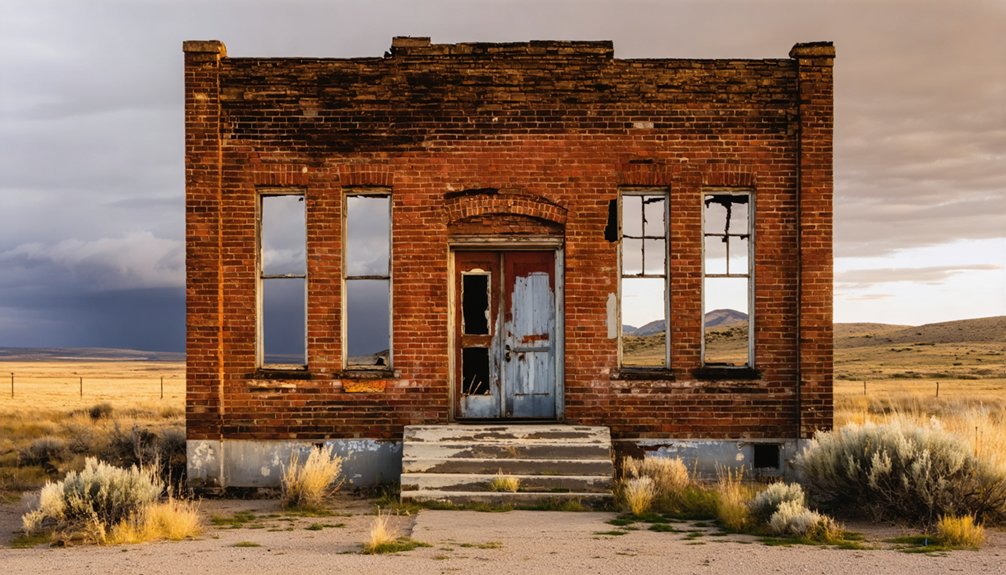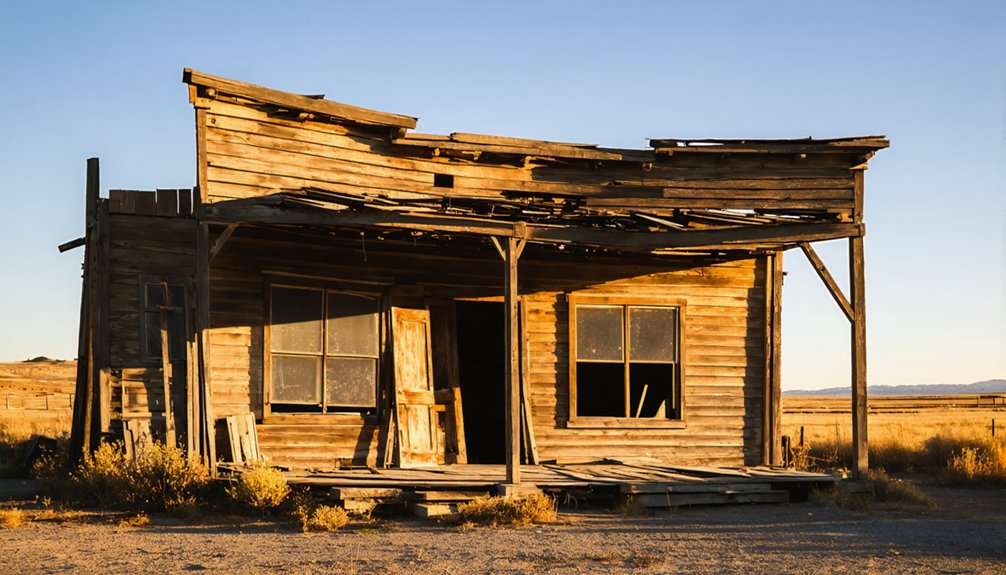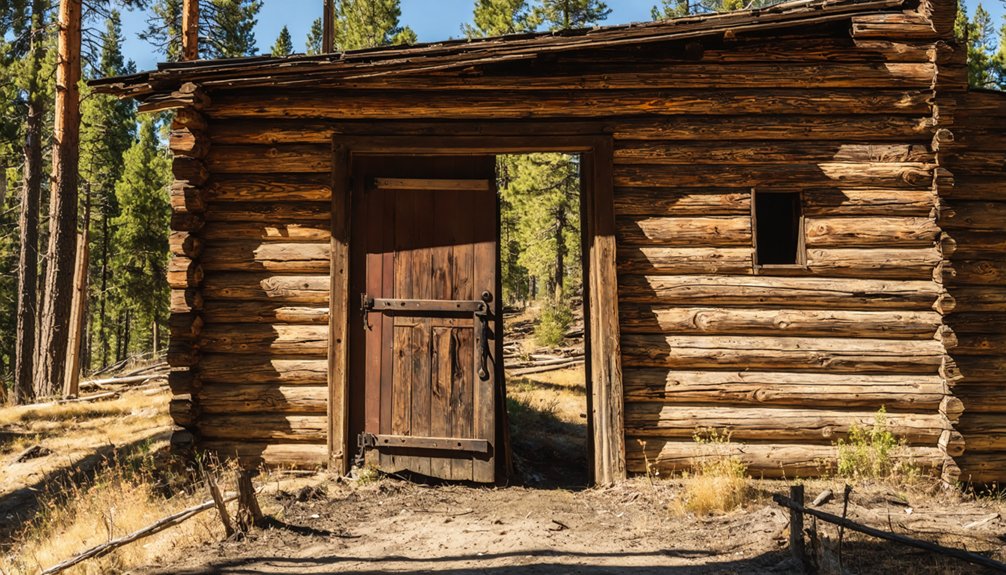
You’ll find White Knob Ghost Town 20 miles north of Mackay off Highway 93, where a steep climb delivers you to weathered cabins and abandoned ore carts at 7,300 feet. Bring a high-clearance vehicle for the washboard road, and visit September through October when fall’s golden light makes the crumbled schoolhouse and boarding house ruins most photogenic. The 1918 aerial tramway towers still trace their 3-mile route up the mountainside, and there’s much more to discover about this zinc-rich settlement’s fascinating boom-and-bust story.
Key Takeaways
- White Knob is located off Highway 93, approximately 20 miles north of Mackay, requiring a high-clearance vehicle for access.
- Visit between September and October for ideal weather and photography conditions, avoiding winter months when snow restricts road access.
- Explore weathered cabin foundations, collapsed structures, rusted mining equipment, and the 1918 aerial tramway system spanning 3 miles.
- The route climbs steeply to 7,300 feet elevation through rugged terrain, with washboard surfaces and loose rocks challenging standard vehicles.
- Underground mine workings have been sealed since 1957, but surface ruins and the tramway museum provide extensive historical exploration opportunities.
The Rich Mining Heritage of White Knob Ghost Town
The story of White Knob begins in 1879, when prospectors first spotted copper glinting in the rugged mountains of central Idaho. You’ll find this remote site at 7,999 feet in the White Knob Mountains, where Wayne Darlington’s 1901 discovery sparked a mining boom that drew 100-400 workers.
The mine’s underground workings yielded high grade ore deposits—primarily zinc, silver, and lead, with traces of gold and copper. By 1899, miners had sunk a 700-foot shaft with extensive drifts, extracting ore through overhand stoping methods.
While metallurgical processes at Mackay’s smelters initially struggled with insufficient sulfur content, the 1906 shift to a leasing system transformed operations. By 1942, ore still graded an impressive 17% zinc, proving this wasn’t just another played-out prospect.
Getting to White Knob in the Custer County Mountains
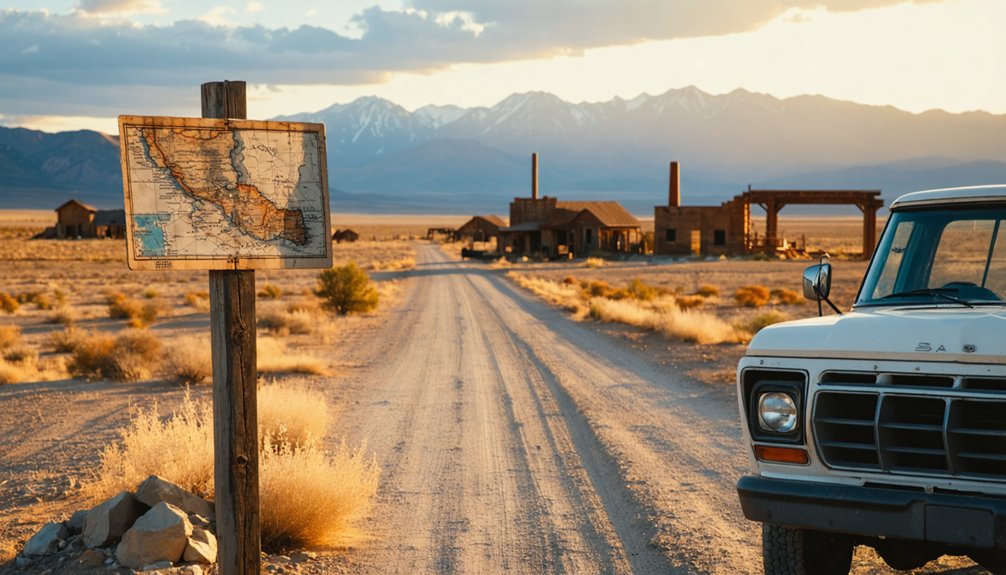
You’ll find the turnoff to White Knob along Highway 93, about 20 miles north of Mackay, where a weathered sign marks the beginning of a rough mountain road.
The route climbs steeply through sagebrush flats before entering the rugged terrain of the White Knob Mountains at 11,253 feet, and I learned the hard way that a high-clearance vehicle isn’t optional—it’s mandatory.
Expect washboard surfaces, loose rocks, and seasonal closures during spring snowmelt, so check conditions at the Custer County office before heading out.
Directions From Highway 93
From Mackay’s junction where US-93 meets Main Street, your adventure into the Custer County Mountains begins with a turn onto FSR-207, locally known as Mine Tour Road. You’ll drive 3.8 miles through rugged terrain until reaching the critical FSR-207/FSR-207A junction.
Pull off just 0.1 mile onto FSR-207A, where you’ll find parking at 7,300 feet elevation.
This isn’t some manicured park experience—road maintenance updates are sparse out here, so check conditions before heading in. The trailhead amenities amount to whatever space you can find to park your rig.
From this junction, FSR-207A winds toward the National Historic Register-listed White Knob ghost town, accessible by truck or ATV. The route passes through active mining history, climbing toward the 10,835-foot White Knob Mountain summit.
Mountain Road Conditions
Knowing where to turn is one thing—surviving the drive is another. White Knob sits at 11,253 feet, where winter road conditions can shift from passable to treacherous within hours. You’re tackling high-elevation terrain with steep ascents that don’t forgive casual planning.
Before you roll out:
- Check Idaho 511 for real-time updates on snow and ice hazards
- Download printable topo maps from USGS to identify alternate routes
- Monitor the 511 app’s cameras along your approach from Highway 93
Mountain passes in Custer County demand respect. Weather information systems track conditions, but you’ll need self-reliance when cell service drops. Winter driving resources at itd.idaho.gov/travel provide essential intel. This isn’t a paved highway cruise—it’s remote Idaho backcountry where preparation separates adventure from disaster.
What Remains of the Original Mining Settlement
After decades of abandonment, White Knob‘s physical remnants tell a fragmented story of its copper and silver mining past. You’ll find architectural ruins scattered across the hillside at 7,999 feet—weathered cabin foundations, collapsed boarding houses, and remnants of the mercantile that once supplied 400 miners.
The schoolhouse where 30 pupils studied has crumbled into the landscape. Abandoned mining equipment dots the terrain: rusted ore carts, cable systems, and machinery that echoed through these narrow valleys until the 1970s. The underground workings remain inaccessible since 1957, sealed against time and curiosity.
What survives isn’t much—a few skeletal structures, scattered metal, stone foundations reclaimed by sagebrush—but it’s enough to spark your imagination about the boom-and-bust cycles that defined this remote mountain settlement.
Exploring the Historic Tram System and Equipment
You’ll spot the 1918 aerial tramway towers climbing up Mackay Mine Hill, their skeletal frames still tracing the 3-mile route that once carried ore from White Knob’s mines down to the smelter. The tram head-house at the base now serves as a museum centerpiece, where weathered cables, ore buckets, and vintage photographs tell the story of how this $125,000 system slashed transportation costs by 80% and saved the struggling operation.
I’ve stood beside these towering remnants on the self-guided tour, imagining the miners who’d risk riding the ore buckets down the mountain on Friday afternoons, enthusiastic to reach town after a hard week’s work.
Tram Connection to Mackay
When you stand at the weathered tramway headhouse today, it’s hard to imagine the engineering marvel that once stretched 6+ miles down the mountain to Mackay’s smelter. This gravity-powered tramway cable system conquered a 2,100-foot elevation drop, delivering ore continuously through circulating buckets suspended from pine towers.
The mining transportation engineering revolutionized operations in 1918:
- Slashed costs by 80% compared to the previous 7.5-mile Shay railroad
- Moved 80 tons per train without fuel or complex machinery
- Required zero external power—gravity alone pulled loaded buckets downward while returning empties upward
Thirty-six wooden towers once guided the continuous cable loop across ridges and valleys. Though nearly all have fallen, the tramway headhouse remains accessible on the Mackay Mine Hill Tour—your gateway to understanding how remote mining conquered impossible terrain.
Mining Artifacts Museum Display
The White Knob story comes alive through carefully preserved artifacts that reveal how miners conquered this unforgiving terrain. You’ll find authentic historic mining equipment at the Idaho Museum of Mining & Geology, housed in Boise’s Old Penitentiary.
The mining museum exhibits showcase a massive steam crank drill that once thundered through solid rock, alongside an industrial-sized wall ventilation fan that pumped breathable air into cramped tunnels. Detailed maps trace the White Knob’s 700-foot shaft and 1,100-foot access tunnel, while period photographs capture leather-faced miners who extracted $15 million in lead, zinc, and silver.
A mining camp replica lets you step into their world—no velvet ropes keeping you from the raw, unvarnished truth of frontier mining life.
Best Times to Visit and Weather Considerations
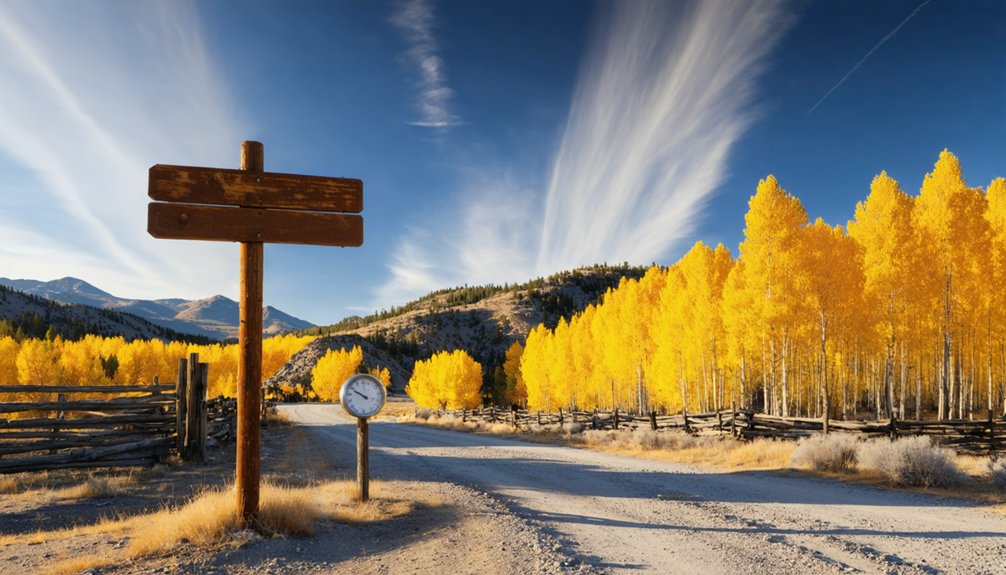
Planning your ghost town adventure means timing it right, and White Knob reveals its best character during fall’s golden weeks. September through October delivers comfortable temperatures between 47–74°F, perfect for exploring abandoned structures without summer’s heat or winter’s snow barriers.
As you delve into exploring bodie ghost town history, you’ll uncover fascinating tales of mining prosperity and the challenges faced by its former residents. The remnants of buildings and artifacts scattered throughout the area tell stories of a bustling community that once thrived in this remote location. Make sure to bring your camera, as the haunting beauty of bodie’s landscape provides a stunning backdrop for capturing memories.
Fall’s crisp air and golden light make White Knob’s abandoned buildings most photogenic from September through October.
You’ll find seasonal variations transform the landscape dramatically—spring brings rushing waterways from snowmelt (March-May, 30–67°F), while summer offers extended daylight for photography (June-August, 52–84°F).
Optimal visiting windows:
- Fall: Late September peaks with foliage and minimal crowds
- Summer: July’s 57–84°F range provides ideal hiking conditions
- Spring: April-May opens trails as snow recedes
Avoid December through February when weather changes blanket mountain roads in snow, restricting access. Winter temperatures dropping to the 20s make exploration treacherous rather than liberating.
Guided Tours Through the Mackay Mayor’s Office
You’ll discover White Knob’s hidden stories through intimate guided tours led by Mackay’s mayor himself—a rare chance to explore this ghost town with someone who breathes its history. Mayor Olsen shares firsthand accounts of miners riding tram buckets down the mountain each Friday, their week’s work complete. You’ll sign up through Idaho’s State Historic Preservation Office, then meet at city hall before caravaning toward White Knob’s scattered remains.
The mayor’s insights bring crumbling structures to life—pointing out Basque boardinghouses, explaining the 1906 leasing system that kept the school running for thirty pupils, and describing the town’s wild population swings between 100 and 400 souls. You’ll stop at the tramway tension tower, explore cave-like dwellings, and stand where copper dreams once flourished before nature reclaimed them.
Mining Artifacts and Museum Displays
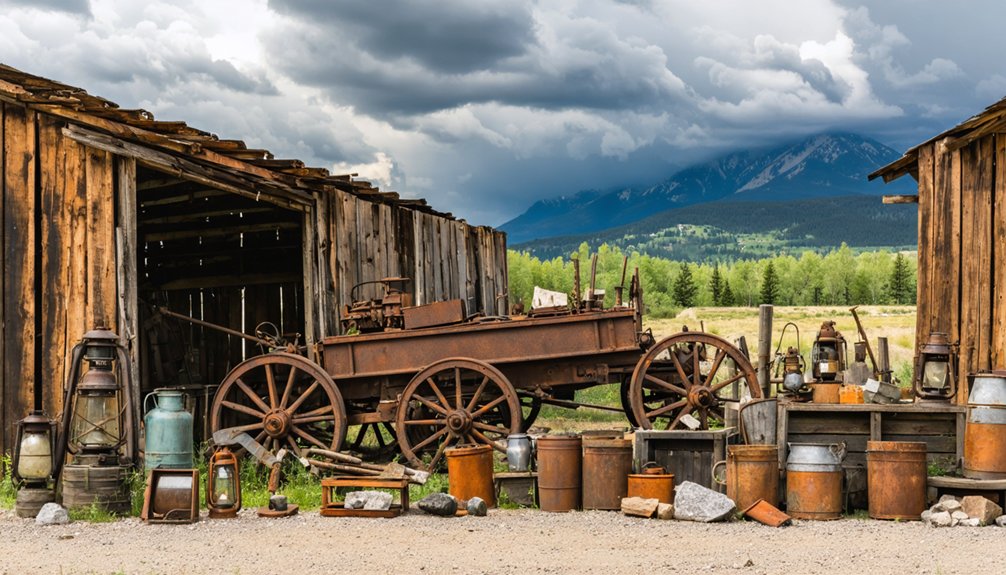
Scattered across White Knob’s windswept slopes, rusted tram buckets and crumbling foundry walls tell stories that museum placards can’t quite capture. You’ll find preserved mining equipment throughout the site, from massive smelter foundations dating to 1901 to ore buckets miners once rode down the mountain on paydays—imagine clutching cold steel as you descended into town with your earnings.
The displays reveal White Knob’s gritty reality:
- Historic buildings at the tram base house exhibits on daily mining operations, from drilling techniques to milling processes
- Workshop foundations mark where blacksmiths once hammered out repairs between shifts
- Signage identifies tunnel entrances and advertising remnants, placing you in the miners’ dusty boots
Stand where two 125-ton blast furnaces once roared, and you’ll understand why freedom-seekers built empires in these unforgiving mountains.
Photography Opportunities and Scenic Overlooks
When golden hour light hits White Knob’s crumbling tramway headhouse, you’re staring at one of Idaho’s most photogenic ghost towns—where rusted cables slice across mountain silhouettes and every angle frames snow-capped peaks stretching toward seven different ranges. Climb the tension towers for aerial viewpoints spanning Boulder, Pioneer, and White Cloud ranges—I’ve watched sunrise from Redbird Mountain’s 11,263-foot summit, stitching panoramas that rival Swiss Alps scenery.
The Mackay Mine Hill Tour delivers nineteen interpretive stops with unobstructed 360-degree vistas, while mining infrastructure like the gravity tramway loop adds textured foregrounds to valley compositions. Hike ridgelines from Sawmill Canyon for solitary shoots, or capture macro details of rust-streaked buildings. Self-guided trails let you chase perfect light without schedules constraining your exploration.
Nearby Attractions in Historic Mackay
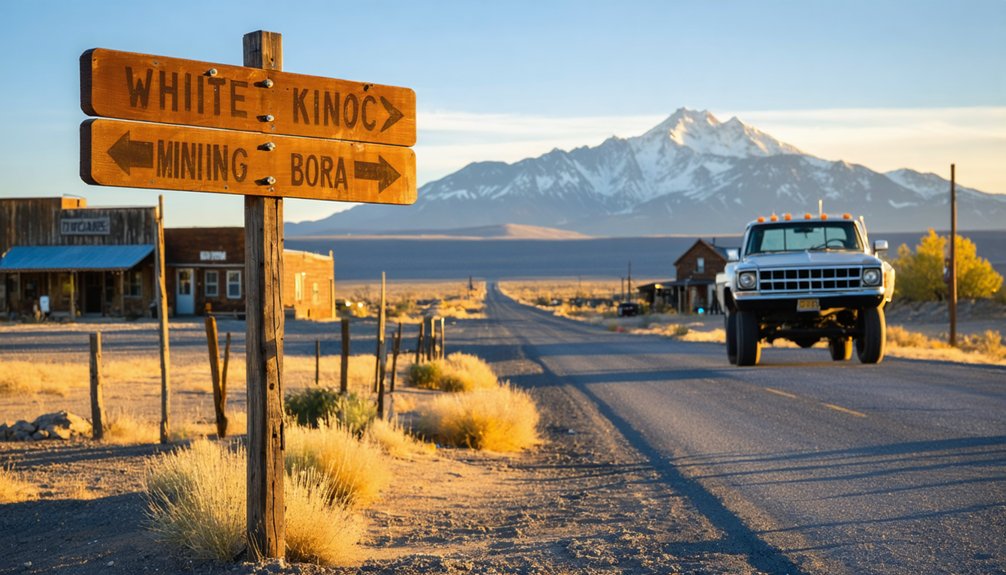
After capturing White Knob’s weathered structures, head three miles downhill to Mackay—a town that’s transformed its mining legacy into twenty-first-century heritage tourism without losing its cowboy authenticity.
Where Old West grit meets modern preservation—Mackay keeps its ranching roots while welcoming curious travelers.
Start at the Lost River Museum on Main Street, where curator led tours reveal moonshine operations and settler stories through restored wagons and mining tools. The volunteer guides share insider knowledge you won’t find in guidebooks.
Essential Mackay experiences:
- Mine Hill Tour: This self-guided 20-mile loop showcases 19 interpretive sites, including early miners’ camps, the 1918 aerial tramway towers, and Cliff City Smelter ruins
- Main Theater: Catch weekend movies in this restored venue, especially during August’s car show
- Borah Peak views: Idaho’s highest summit dominates the skyline from Double Springs Road
The town’s annual free barbecue and Heritage Fest celebrate genuine ranching culture.
Frequently Asked Questions
Are There Any Safety Concerns When Exploring the Abandoned Mine Sites?
Yes, you’ll face serious risks exploring abandoned mines. Dangerous structures can collapse without warning, while toxic materials like lead and arsenic contaminate everything you touch. Hidden shafts, unstable explosives, and deadly gases make these sites potentially fatal for unprepared adventurers.
Is Camping Allowed Near the White Knob Ghost Town Area?
Yes, you’ll find dispersed camping on BLM lands near White Knob. No camping permits required, but you’ll want wildlife precautions recommended—bears frequent the area. Stay 200 feet from water sources and practice Leave No Trace principles.
What Amenities Are Available in Nearby Mackay for Visitors?
You’ll find Mackay perfectly positioned as your basecamp, offering nearby accommodations from cozy motels to RV parks, plus local dining options like The Bear Bottom Inn. There’s also a museum, theater, and Idaho’s highest peak for exploration.
Are There Entrance Fees to Access the Ghost Town Site?
There aren’t entrance fees, but you’ll face private property concerns limiting access to many buildings. Unlike nearby ghost towns offering guided tours availability, White Knob requires landowner permission for exploration, respecting ownership boundaries throughout your visit.
Can You Drive All the Way to the Ghost Town Site?
You’ll drive directly to White Knob’s doorstep! Vehicle accessibility welcomes 2WD cars, trucks, and ATVs right to the ghost town. Trail conditions remain remarkably navigable during warmer months, granting you complete freedom to explore this abandoned mountain treasure independently.