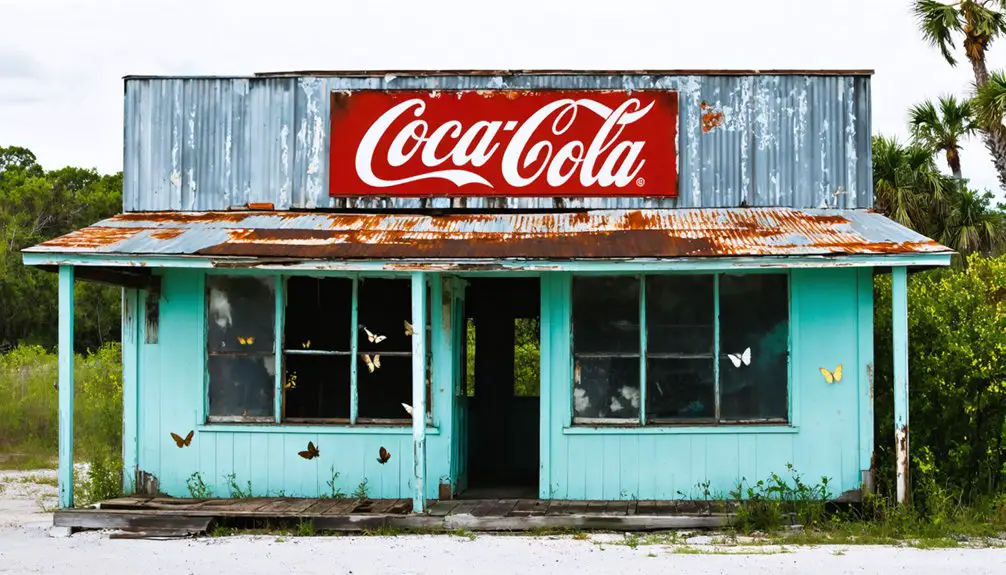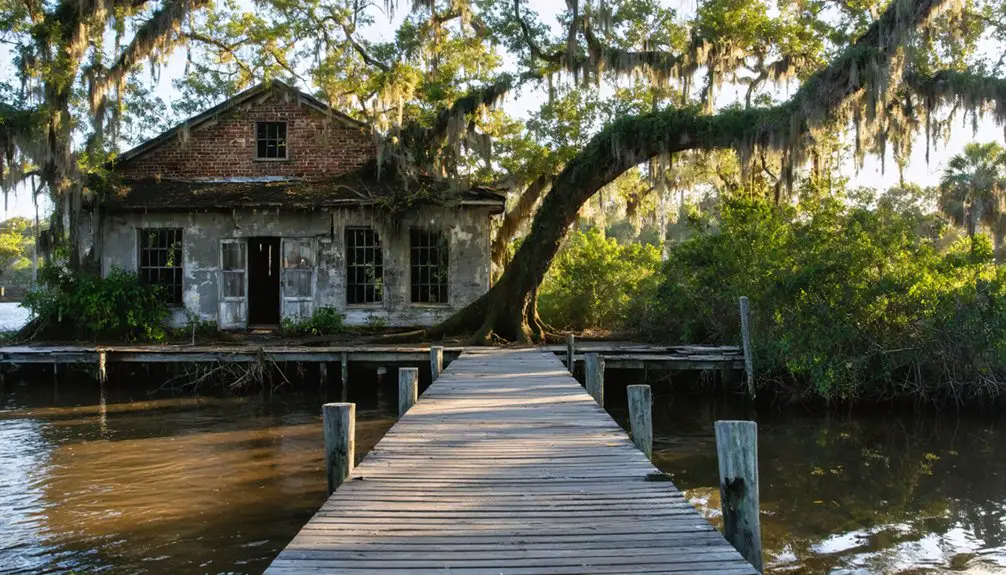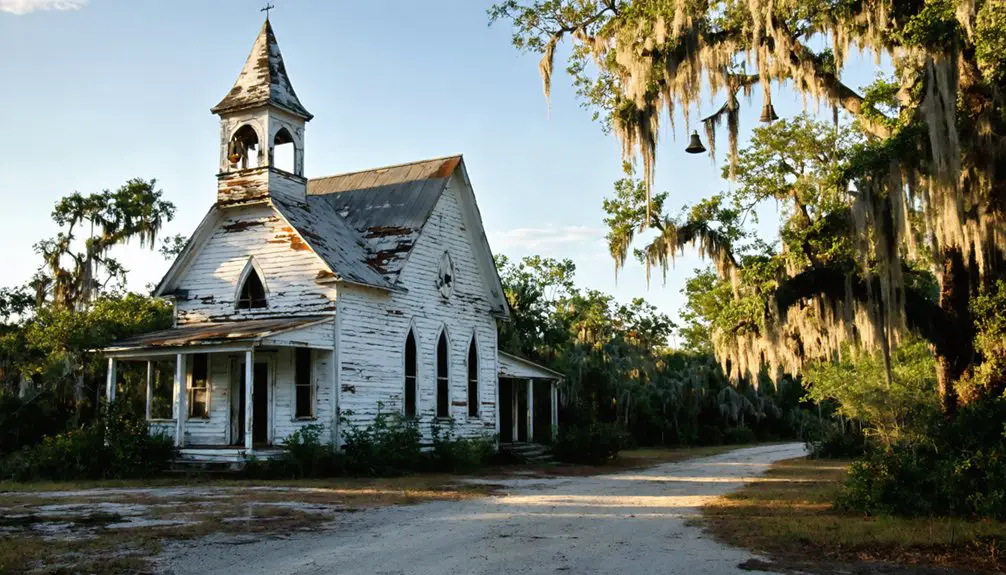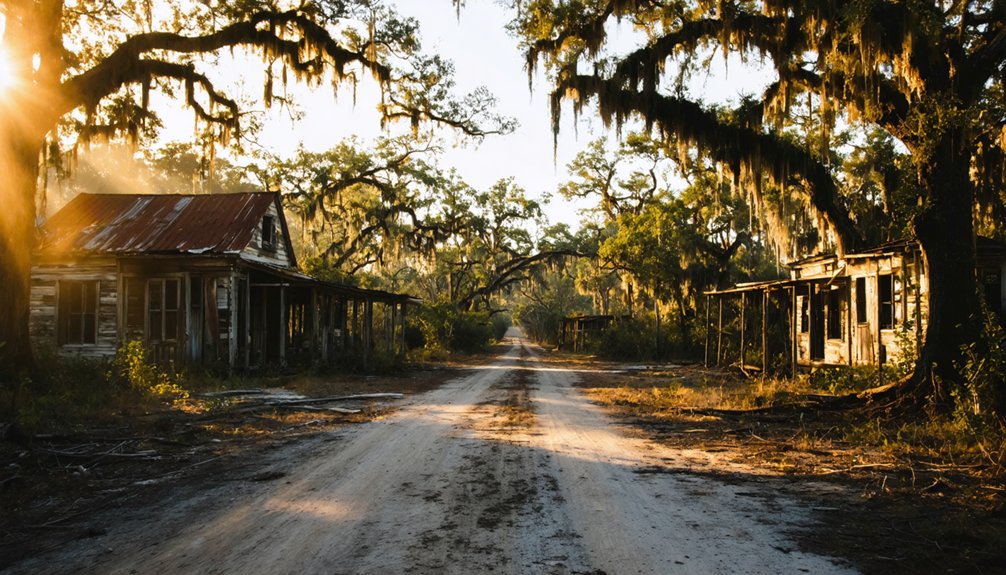
Planning a ghost town road trip to Wilson, Florida, means heading to Merritt Island, where a once-thriving lumber community vanished in 1962 when the federal government claimed the land for Kennedy Space Center. You’ll find the site near the intersection of CR 402 and Kennedy Parkway, deep inside Merritt Island National Wildlife Refuge. Nature has swallowed nearly everything, but concrete foundations and wild citrus trees still whisper the town’s story—and there’s much more to uncover ahead.
Key Takeaways
- Wilson, Florida, a former lumber town on Merritt Island, was demolished in 1962 to make way for Kennedy Space Center.
- The site sits at the intersection of CR 402 and Kennedy Parkway, requiring passage through NASA and U.S. Fish and Wildlife checkpoints.
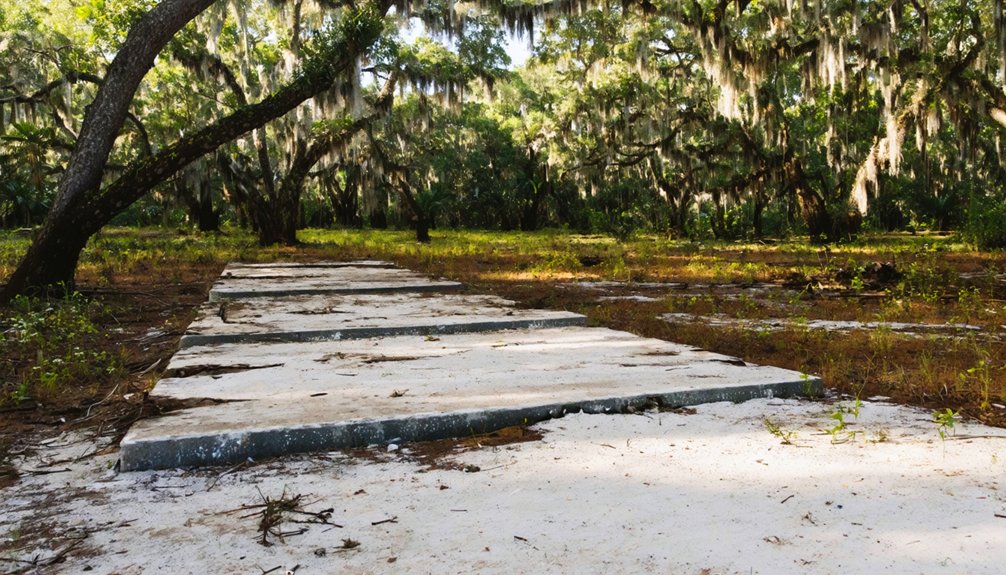
- Visible remnants include concrete foundations, old road grades, scattered debris, and wild citrus trees from original homesteader orchards.
- Visit between fall and early spring to avoid extreme summer heat, high humidity, and frequent afternoon thunderstorms.
- Pack sunscreen, insect repellent, water, and sturdy shoes; nearby Kennedy Space Center and Merritt Island Wildlife Refuge are worth combining into your trip.
What Was Wilson, Florida, and Why Did It Disappear?
Few ghost towns vanish as completely as Wilson, Florida — a once-thriving lumber community on Merritt Island that the federal government basically erased from the map in 1962.
Its historical significance lies in what it represented: a self-sufficient settlement where working families built real lives around the timber industry. The community lifestyle revolved around honest labor, tight-knit neighbors, and the natural rhythms of Florida’s coastal landscape.
Then NASA arrived.
When Kennedy Space Center needed the land, Wilson didn’t survive negotiations. The government razed homes, cleared roads, and fundamentally rewrote the geography of Merritt Island overnight.
Today, you’ll find almost no physical trace remaining. Standing near CR 402 and Kennedy Parkway, you’re walking ground where an entire community once breathed — now swallowed by space-age ambition and federal authority.
Where Exactly Did Wilson Stand Near Kennedy Space Center?
Merritt Island holds the ghost of Wilson at a specific and visitable crossroads — CR 402 and Kennedy Parkway — where the old lumber community once spread across the landscape before federal bulldozers arrived.
You can stand at that intersection today and feel Wilson’s historical significance pressing through the silence. The coordinates place you on the eastern edge of Merritt Island National Wildlife Refuge, where scrubland has reclaimed everything the government erased in 1962.
Ghost town exploration here demands sharp eyes — no standing structures mark the spot, but the land itself carries memory. Study the treeline, the road’s curve, the flatness where buildings once stood.
You’re reading a landscape that federal authority tried to make unreadable. Wilson doesn’t announce itself. You have to find it.
What’s Left on the Wilson Ghost Town Site Today?
Standing at Wilson’s crossroads tells you where the town was — but walking the site tells you what survived federal erasure. Ghost town remnants here are subtle — concrete foundations swallowed by palmetto scrub, old road grades barely visible beneath decades of overgrowth, and scattered debris the government never bothered reclaiming.
The historical significance hits differently when you realize nature reclaimed what bureaucracy demolished. You’ll spot citrus trees gone wild, descendants of homesteaders’ orchards still producing fruit nobody harvests.
Merritt Island National Wildlife Refuge now blankets Wilson’s former footprint, making the land federally protected twice over — first destroyed by one agency, then preserved by another.
Bring boots, bug spray, and sharp eyes. The site rewards patient explorers who understand that absence itself becomes evidence of everything Wilson once was.
How Do You Reach CR 402 and the Kennedy Parkway Site?
Getting to Wilson’s ghost town site requires traversing Florida’s Space Coast with purpose — you’re heading to the intersection of County Road 402 and Kennedy Parkway on Merritt Island, a crossroads that exists today largely because it once marked the heart of a demolished community.
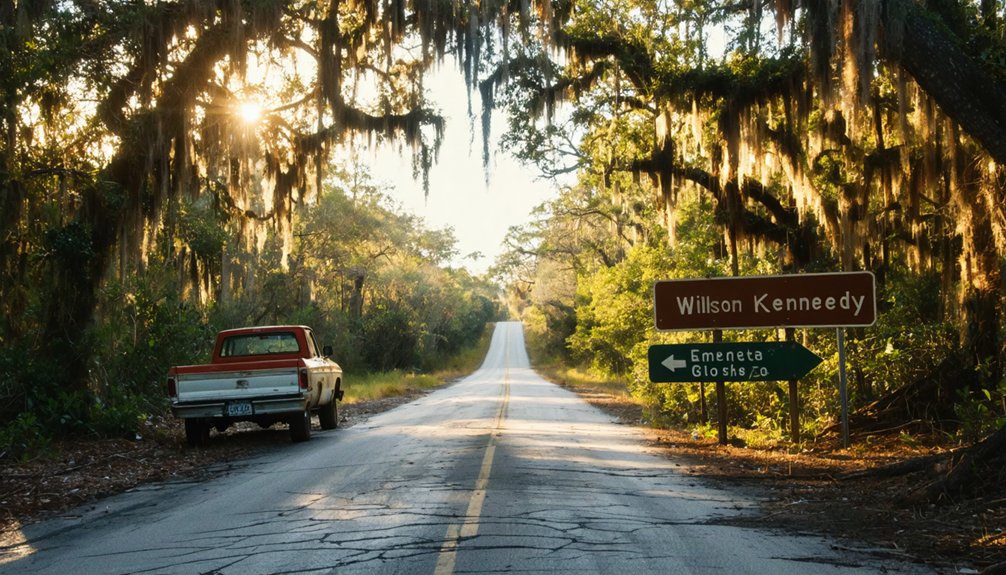
Take SR-528 east across the causeway, then steer north toward Merritt Island National Wildlife Refuge. CR 402 cuts directly through protected federal land, so you’ll pass security checkpoints managed by NASA and the U.S. Fish and Wildlife Service. Bring valid identification.
The surrounding wilderness conceals hidden history beneath its palmetto scrub and wetlands, where local legends whisper about families who once built lives here before government bulldozers arrived.
No GPS marker flags Wilson specifically — you’re guiding by knowledge, not convenience.
When Is the Best Time to Visit the Wilson Ghost Town?
Timing shapes everything when you’re chasing ghost towns, and Wilson’s former site on Merritt Island rewards visitors who plan around Florida’s unforgiving seasonal rhythms.
Among the best seasons, fall through early spring delivers the most freedom—cooler temperatures, lower humidity, and manageable mosquito populations make outdoor exploration genuinely enjoyable.
Weather considerations matter most during summer, when heat indices regularly exceed 100°F and afternoon thunderstorms roll in fast, cutting your visit short. Hurricane season runs June through November, occasionally making coastal routes along CR 402 hazardous.
Winter months offer crisp mornings ideal for photography and unhurried wandering. Avoid holiday weekends near Kennedy Space Center, when traffic congests the parkway considerably.
Early weekday mornings give you the stillness that ghost town exploration deserves.
What Should You Pack for This Merritt Island Trip?
Packing smart separates a frustrating outing from a genuinely rewarding one, especially when you’re heading to a remote, sun-hammered stretch of Merritt Island with limited services nearby. Your packing essentials should include sunscreen, insect repellent, plenty of water, and sturdy closed-toe shoes for traversing overgrown terrain.
Bring a charged phone loaded with offline maps, since cell coverage can be spotty along CR 402 near Kennedy Parkway. A camera captures the haunting beauty that words can’t fully express. Pack snacks, a first-aid kit, and a portable charger so you stay self-sufficient throughout the day.
Since local attractions like the Merritt Island National Wildlife Refuge sit close by, consider binoculars for wildlife spotting. Freedom tastes better when you’re genuinely prepared rather than scrambling for forgotten necessities.
Which Nearby Stops Are Worth Adding to Your Route?
Once your bag is zipped and you’re heading out the door, it’s worth knowing that the area surrounding Wilson’s old site rewards explorers who linger a little longer.
Merritt Island National Wildlife Refuge sits right next door, offering trails where wildlife roams freely across marshland and coastal scrub.
Kennedy Space Center is minutes away, delivering one of Florida’s most compelling historical sites packed with launch pads, rockets, and authentic mission archives.
Canaveral National Seashore stretches northward with undeveloped beaches that feel genuinely remote.
For nearby attractions with a cultural edge, Titusville’s downtown holds small museums and riverfront parks worth an afternoon stop.
These additions transform a single ghost town visit into a full-day route that satisfies curiosity, rewards movement, and keeps your sense of adventure completely intact.
Frequently Asked Questions
Did Any Wilson Residents Resist Relocation When Kennedy Space Center Acquired Land?
Yes, you’ll find that relocation resistance was real — some Wilson residents fiercely clung to their community memories, refusing to leave homes their families had built for generations before federal acquisition ultimately forced them out.
Are There Any Surviving Photographs or Maps Documenting Wilson Before Demolition?
“A picture’s worth a thousand words.” You’ll find scarce ghost town photography and historical maps of Wilson pre-demolition, but digging through Florida State Archives and Kennedy Space Center’s records might uncover rare surviving visual documentation of this lost community.
Was Wilson, Florida Ever Officially Incorporated as a Municipality?
You won’t find any evidence that Wilson, Florida ever achieved official Municipal Status in recorded Wilson History—it existed as an unincorporated lumber community, meaning residents lived freely outside formal governmental boundaries before demolition claimed it entirely.
Do Any Descendants of Wilson Residents Hold Reunions Near the Site?
Yes, you’ll find descendants keeping Wilson’s spirit alive through family gatherings near the historic site, honoring their historical connections to this lost community—so explore these reunions and let their stories fuel your own sense of freedom and discovery.
Could Wilson Ever Be Archaeologically Excavated or Historically Landmarked?
Like Pompeii’s buried secrets, Wilson could absolutely see archaeological significance revealed beneath its soil. You’d champion historical preservation efforts by petitioning NASA or Florida’s historic trust to landmark and potentially excavate this forgotten community’s hidden remnants.
References
- http://www.gribblenation.org/2018/02/ghost-town-tuesday-ghost-towns-of.html
- https://afamwilsonnc.com/2019/10/22/south-carolina-roots-the-wilsons/
- https://www.youtube.com/watch?v=NLgu1h4loCo