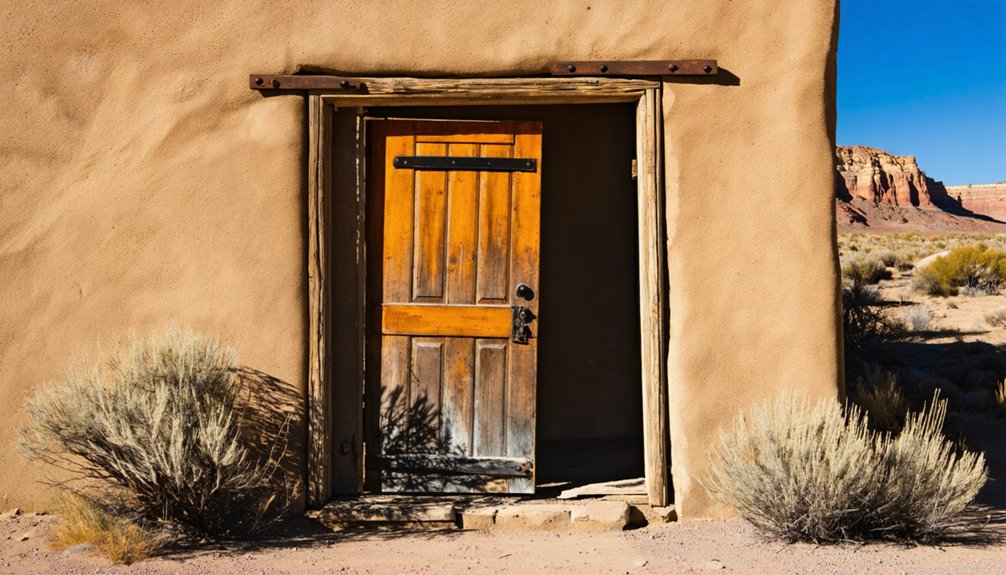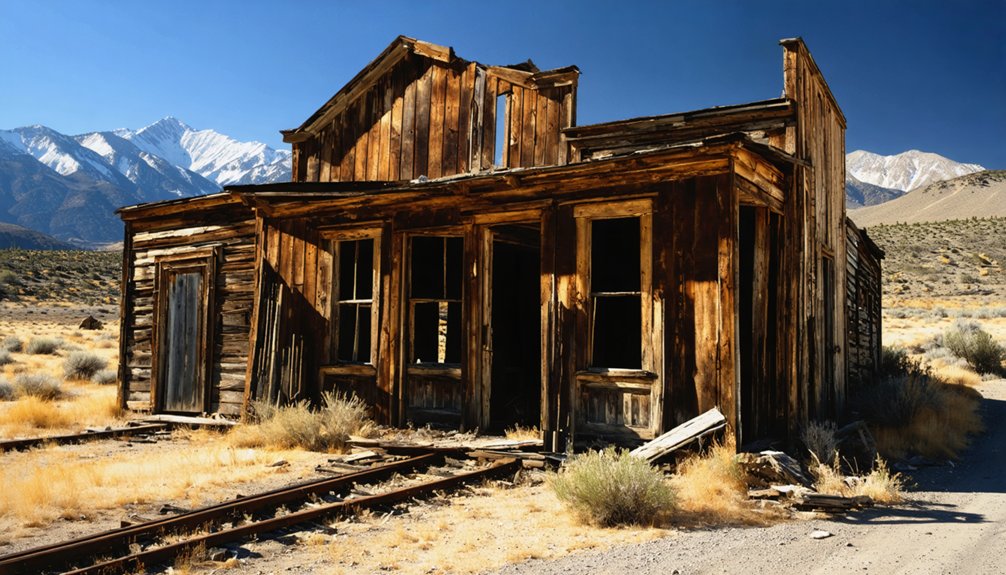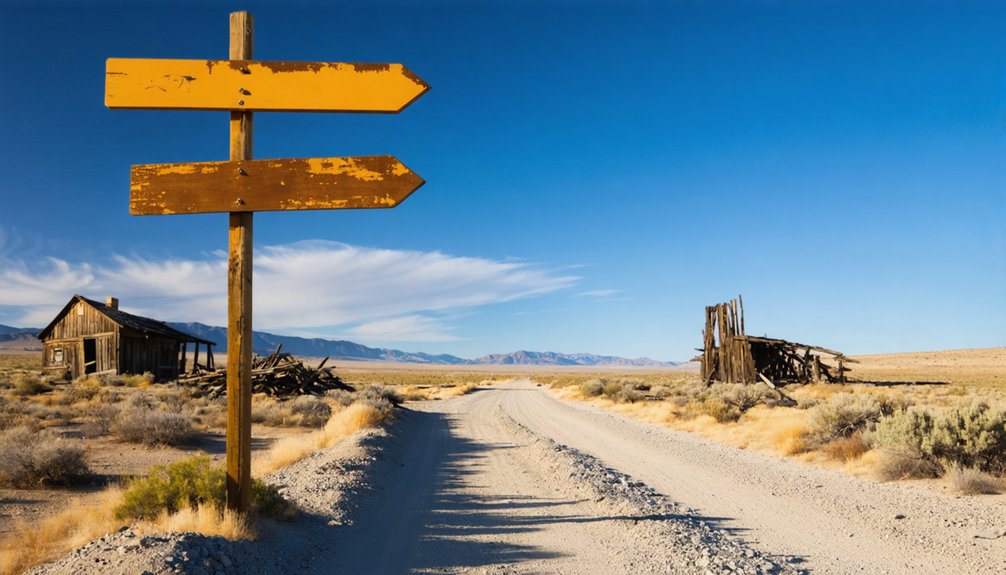
Start your Woodrow ghost town adventure in Eureka, then take the Dividend road loop off US 6 to reach this windswept site where crumbling foundations and weathered artifacts blend into sagebrush-covered slopes. You’ll need a high-clearance 4×4, topographic maps, plenty of water, and emergency supplies to navigate the rough terrain safely. Watch for open mine shafts and respect no-trespassing signs on active mining property. Plan a strategic three-day loop to explore Mammoth’s mountain ruins and other scattered Tintic District settlements for an extensive mining heritage experience.
Key Takeaways
- Start in Eureka, the gateway town, and take the Dividend road loop off US 6 for panoramic views and mining artifacts.
- Bring topographic maps, water, emergency supplies, camera, and high-clearance 4×4 for rough terrain and desert conditions.
- Check land access regulations beforehand, as some areas require permits or are on private mining company property.
- Exercise extreme caution around abandoned quarry sites and open mine shafts throughout the reclaimed area.
- Plan a strategic three-day loop to explore Eureka’s museum, Mammoth’s ruins, and settlements between Dividend and Woodrow.
Discovering the Remote Mining Heritage of Woodrow
When tectonic plates collided millions of years ago, they forged a mineral-rich suture zone that stretches from the Oquirrh Mountains to the Deep Creek Range—a geological gift that would eventually draw fortune seekers to Utah’s most isolated corners.
You’ll find Woodrow nestled within this legacy, where mineral rich deposits dictated everything from street layouts to building placements. The Tintic District’s gold, silver, and lead veins twisted through mountainsides, creating geography driven settlement patterns that followed ore bodies rather than surveyor’s grids.
What began as surface pickings by solitary prospectors transformed into industrial operations reaching thousands of feet underground. Today’s abandoned camps preserve this progression—from canvas tents to steam-powered hoisting works—offering you an authentic glimpse into the rugged independence that built the American West.
The Rise and Fall of a Tintic District Mining Camp
George Rust’s 1869 silver discovery in the East Tintic Mountains ignited a prospecting frenzy that would transform barren slopes into one of the American West’s most productive mining districts. Early mineral prospecting yielded modest returns until 1916, when the Tintic Standard mine became the world’s richest silver producer. You’ll find Woodrow emerged during this era of speculative mining ventures, as prospectors staked claims across every promising ridge.
From barren wasteland to legendary silver district: George Rust’s 1869 discovery sparked the transformation that created mining empires and ghost towns alike.
The district’s dramatic trajectory included:
- Production valued at $568 million between 1869-1976, with East Tintic alone contributing $231 million
- Peak output reaching 227,848 tonnes in 1976 from the Burgin mine
- Complete exhaustion of major deposits by 1946, leaving camps like Woodrow abandoned
Railroad access and technological advances fueled the boom, but inevitable ore depletion sealed these settlements’ fate.
What Remains at the Woodrow Ghost Town Site
Little evidence of Woodrow’s brief existence survives on the windswept slopes where miners once staked their fortunes. You’ll find the landscape reclaimed by sagebrush and silence, with only fragmentary traces marking where a community once thrived. Crumbling structures—if any foundation stones remain—blend into the rocky terrain, demanding a keen eye to distinguish human handiwork from natural formations.
Weathered artifacts occasionally surface among the scrub: rusted cans, purple-tinted glass shards, square nails scattered like forgotten memories. The site’s remoteness has preserved what little exists while simultaneously accelerating nature’s erasure. You’re exploring a place where absence speaks louder than presence, where imagination must reconstruct what time has dismantled. This ephemeral quality defines Woodrow’s appeal—freedom to interpret ruins without tourist crowds or interpretive signs dictating your experience.
Your journey to Woodrow begins in Eureka, gateway to the Tintic Mining District, where roughly 800 residents now occupy a town that once bustled with mining wealth. From here, you’ll navigate rugged backroads that once connected these mountain communities when only trails existed in the early 1900s.
Where 800 souls now dwell, a mining empire once thrived—Eureka stands as gateway to Tintic’s forgotten wealth.
Essential Navigation Points:
- Travel the Dividend road loop off US 6 for panoramic views before rejoining the highway
- Watch for mining artifacts scattered along roadways visible only in aerial photos but undetectable at ground level
- Exercise extreme caution around the abandoned quarry site and open mine shafts throughout the reclaim area
The route demands respectful exploration—no trespassing signs mark active mining company property, and memorials stand where tragedy struck. Hawks circle overhead as you venture deeper into this landscape of forgotten prosperity.
Building Your Multi-Stop Tintic Mining District Adventure
Your Tintic District adventure deserves careful planning to capture Eureka’s mining museum, Mammoth’s mountain ruins, and the scattered settlements between Dividend and Woodrow. Pack topographic maps showing the historic sites across both Utah and Juab Counties, along with water, emergency supplies, and a camera to document Porter Rockwell’s restored cabin and remnants of old smelting operations.
Check current land access regulations before venturing to remote locations like Silver City or the former Burgin Mine site, as some areas require permits while others remain on private property.
Mapping Your Multi-Day Route
A strategic three-day loop through the Tintic Mining District transforms scattered ghost towns into a cohesive adventure spanning 60-80 miles of Utah’s mining heritage. You’ll base yourself in Eureka, where recommended accommodation options range from historic inns to nearby campgrounds.
As you explore the area, you can also visit various historic sites in Grafton, Utah, which showcase the remnants of pioneering spirit and architectural charm. These sites provide a glimpse into the region’s rich history and offer stunning backdrops for photography enthusiasts. Don’t forget to take some time to enjoy the stunning landscapes that surround these historical landmarks.
Day one tackles Mammoth’s underground tours and Tintic’s mine structures. Day two ventures to Silver City and Dragon’s weathered remnants via gravel backroads. Day three extends west to Woodrow through SR-36, completing your circuit.
Essential Route Considerations:
- Regional road conditions vary seasonally—winter closures affect backcountry access, requiring high-clearance vehicles year-round
- Primary access flows from I-15 via UT-64, with Google Maps integration simplifying navigation
- Each day allows 4-6 hours exploration time before returning to your base
Pack flexibility into your timeline for spontaneous detours.
Essential Supplies and Permits
Desert winds whip through abandoned mine shafts with surprising force, making proper preparation the difference between discovery and disaster in the Tintic Mining District. You’ll need sturdy water shoes for creek crossings and a reliable headlamp when exploring dim structures. Pack your daypack with sunscreen, a first aid kit, and bug spray—these ghost towns offer zero amenities.
Your high-clearance 4×4 requires specialized vehicle maintenance before tackling unpaved access roads. Stock a multi-tool, portable charger, and park maps for navigation. While day pass requirements don’t apply to Woodrow’s ruins, you’ll appreciate concrete transport strategies for protecting gear on rough terrain. Bring plastic bags for organizing supplies and an outdoor blanket for desert breaks between your mining district discoveries.
Exploring Nearby Ghost Towns and Historic Mining Sites
Beyond Woodrow’s weathered foundations, Utah’s landscape harbors dozens of abandoned settlements where prospectors and pioneers once chased fortune through unforgiving terrain.
Prime Ghost Town Destinations:
- Grafton – Mormon settlement near Zion where floods and conflict drove families away, leaving sun-bleached structures against red canyon walls
- Silver Reef – Rare silver-in-sandstone district with intact Wells Fargo vault, crumbling wooden sidewalks, and sage-choked streets that once bustled with miners
- Sego – Coal town beneath the Book Cliffs where underground fires still smolder, sending smoke through abandoned shafts and collapsed boarding houses
These abandoned mining camps dot unforgiving desert terrain throughout Washington and Grand Counties. You’ll discover authentic relics—rusting equipment, forgotten graveyards, and foundations marking dreams that couldn’t withstand Utah’s harsh realities. Each site offers unrestricted exploration through America’s boom-and-bust frontier legacy.
Essential Gear and Safety Considerations for Desert Exploration
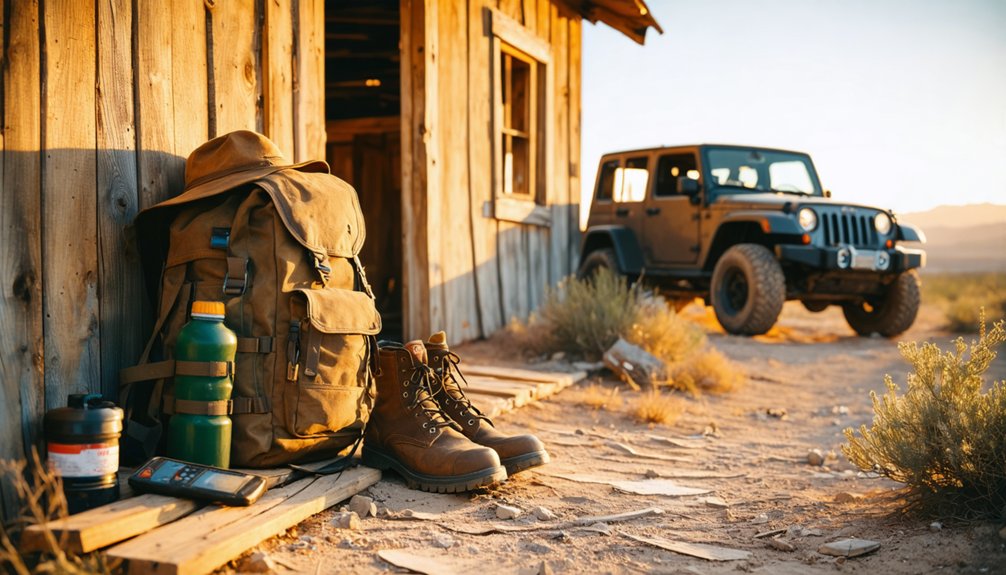
When venturing into Utah’s abandoned settlements, your survival depends on preparation that matches the desert’s unforgiving temperament. Pack moisture-wicking long sleeves, lightweight pants, and a wide-brimmed hat for sun exposure prevention against relentless UV rays. Your eyes need polarized sunglasses to combat the blinding glare off sand and rock faces.
Carry three liters of water per person, plus electrolyte tablets and high-calorie snacks. Navigation tools—GPS, compass, and map—keep you oriented in featureless terrain, while a personal locator beacon summons help when you’re miles from civilization.
Your first-aid kit needs blister treatment, antiseptic wipes, and bandages that withstand dust. Include a multi-tool for equipment maintenance and emergency repairs. Cold nights demand insulating layers, and your headlamp with spare batteries illuminates crumbling structures after sunset.
Best Seasons and Conditions for Visiting Abandoned Mining Camps
Spring’s arrival between mid-April and early June transforms Utah’s high desert into the ideal window for ghost town exploration, when daytime temperatures hover between 65-75°F and wildflowers punctuate the sagebrush landscape. You’ll find abandoned structures most accessible during these months, with minimal snow blocking primitive roads and lightning risks still weeks away.
Optimal visiting conditions include:
- Early morning light casting dramatic shadows across weathered timber frames
- Dry ground allowing confident footing through unstable structures
- Cool temperatures preventing dehydration during extended explorations
Fall’s September-October window offers comparable ideal weather conditions, though you’ll sacrifice spring’s vibrant blooms. Summer’s scorching heat threatens both your safety and ghost town preservation efforts—intense UV accelerates wood deterioration. Winter access remains unpredictable, with sudden storms transforming dirt roads into impassable quagmires within hours.
Frequently Asked Questions
Are There Any Guided Tours Available for Woodrow Ghost Town?
You won’t find guided tours available specifically for Woodrow Ghost Town—it’s a self-exploration adventure. However, nearby Provo and St. George offer excellent local history tours featuring paranormal tales, giving you freedom to experience Utah’s haunted heritage independently.
Can I Camp Overnight Near the Woodrow Mining Site?
You can camp on public land access near Woodrow’s abandoned mining structures, but exercise caution around contaminated areas. Stay 100 feet from water sources and follow Utah’s 15-day limit while exploring this historic site responsibly.
Is Metal Detecting Allowed at Woodrow and Surrounding Ghost Towns?
Tread carefully—metal detecting at Woodrow’s tricky since interesting artifacts over 100 years old fall under ARPA protection. You’ll need permits for BLM lands, and the site’s historical significance means pre-1926 items must stay untouched.
What Cell Phone Coverage Exists in the East Tintic District?
Cell phone signal strength weakens dramatically across East Tintic District’s remote terrain. AT&T offers the strongest network provider coverage, though it’s still spotty. You’ll find Verizon and T-Mobile even more unreliable in these untamed backcountry ghost towns.
Are There Restroom Facilities or Services Near Woodrow?
Like a mirage shimmering on desert highways, restroom options near Woodrow are scarce. You’ll find seasonal porta potties through Royal Restrooms and Morning Loo serving the area, but nearest convenience stores require driving to neighboring towns for facilities.