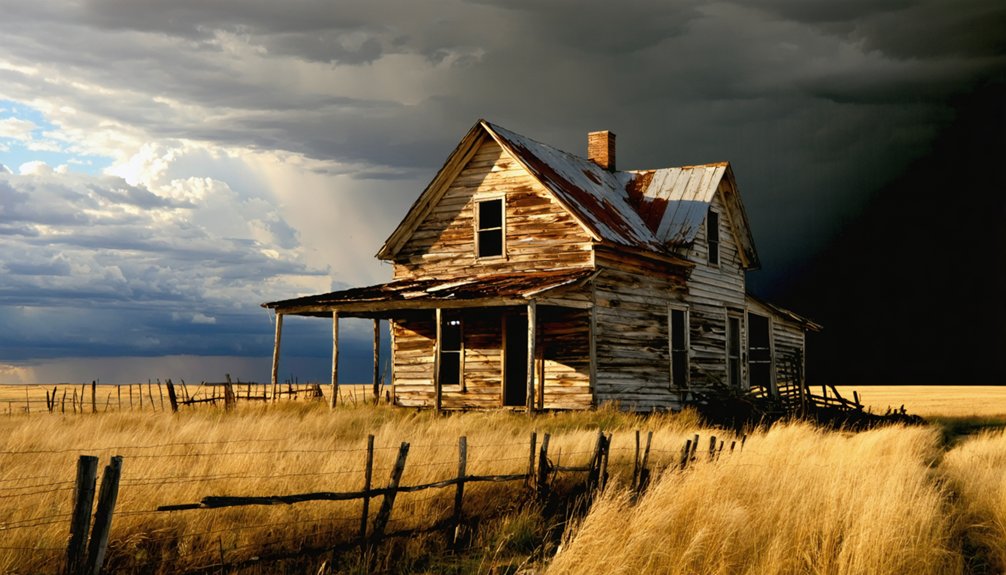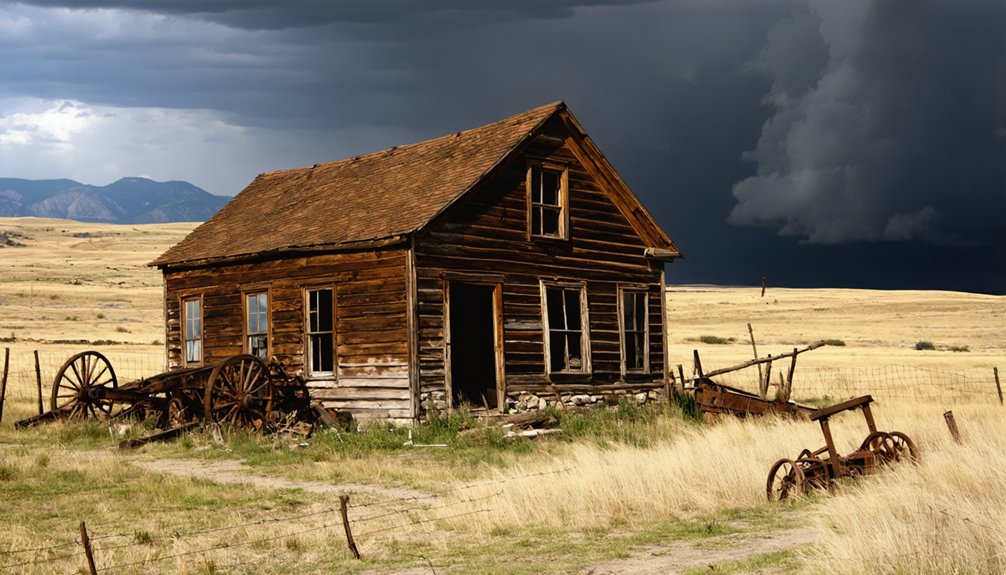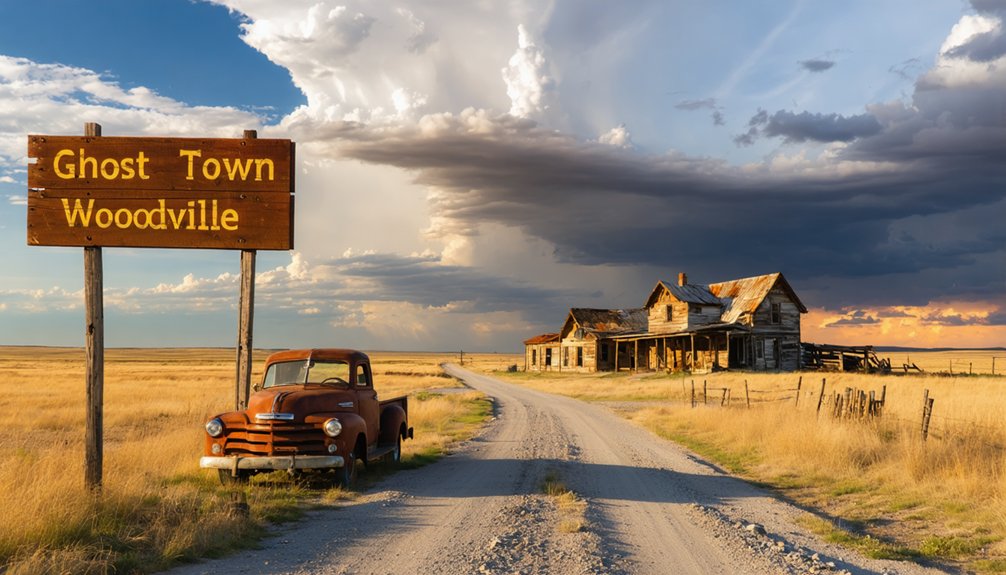
You’ll reach Woodville via Highway 385 through Lawrence County, where narrow gauge rails once hauled miners’ gold from the 1881 Black Hills Railroad terminus. The ghost town offers skeletal depot remains, rusted ore carts, and twisted rails accessible by unmarked dirt roads—best explored May through October with three companions minimum. Combine your visit with nearby Galena through Vanocker Canyon, submerged Pactola beneath the lake, and the 109-mile Mickelson Trail connecting historic mining camps where forgotten stories still echo through pine-covered ridges.
Key Takeaways
- Woodville served as a Black Hills Railroad terminus in 1881, supporting Homestake mining operations with narrow gauge rails for transporting gold.
- Access Woodville via unmarked dirt roads near Highway 385, which connects multiple abandoned 1876 gold rush mining camps throughout Lawrence County.
- Visit May through October for optimal conditions; expect skeletal depot walls, rusted ore carts, twisted rails, and tailings piles at the site.
- Bring minimum 3 companions, flashlights, respirators, first-aid supplies, and inform others of your location and expected return time before exploring.
- Combine your Woodville visit with nearby ghost towns like Galena, Rochford, and active heritage sites including Homestake Gold Mine and Mickelson Trail.
Discovering Woodville’s Railroad and Outlaw Legacy
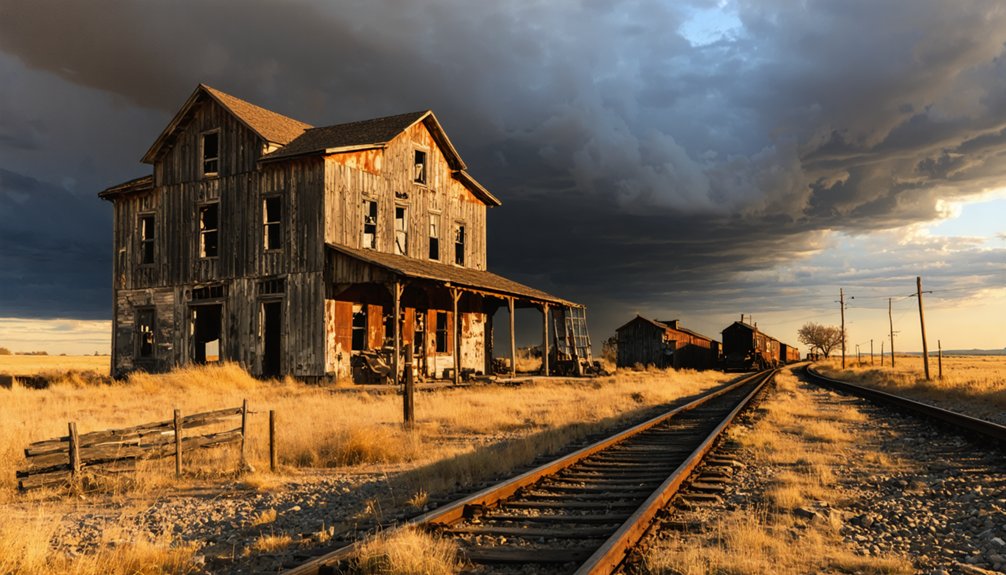
The screech of iron wheels on narrow gauge rails once echoed through Woodville’s valley, announcing the arrival of civilization in South Dakota’s rugged Black Hills.
In 1881, the Black Hills Railroad Company laid its first tracks here, making Woodville the terminus for miners hauling gold from Homestake operations. You’ll find remnants of this frontier enterprise scattered throughout the valley—weathered rail beds where narrow gauge locomotives once defied fifteen burning bridges during the catastrophic 1886 wildfire rescue.
Though railroad museum reconstruction efforts haven’t reached Woodville yet, historic locomotive preservation enthusiasts recognize this ghost town’s significance. The line operated until 1930, serving an untamed region where fortune-seekers rode iron horses toward their dreams of independence and prosperity.
Mapping Your Route Through Lawrence County’s Ghost Town Network
When you’re ready to explore Lawrence County’s ghostly remnants, Highway 385 serves as your spine road through the Black Hills’ most concentrated collection of abandoned settlements. This reimagined Old West route connects Rochford, Spokane, and the broader mining network, each site bearing distinct historical significance from the 1876 gold rush era.
Highway 385 cuts through Lawrence County’s abandoned mining camps, linking ghostly settlements from the 1876 Black Hills gold rush era.
Your expedition requires understanding remote accessibility challenges:
- Galena: Exit I-90 West at 32, navigate Vanocker Canyon to Galena Road—couple miles from Deadwood’s tourist crowds
- Rochford: Highway 44 West from Rapid City to Highway 385 north, then Rochford Road into genuine isolation
- Submerged Pactola: Lake Pactola now covers this 1870s boomtown, originally Camp Crook
These 143 mapped trails lead you through barren townsite remnants like Greenwood, Gregory, and Whitewood City—freedom measured in dusty miles.
Essential Stops Along the Black Hills Mining Trail
Beyond Woodville’s weathered foundations, Lawrence County’s mining heritage crystallizes into five essential destinations that transform abstract gold rush history into tangible experience. You’ll descend 8,000 feet into Homestake Gold Mine’s historic tunnels near Lead, where mining equipment restoration preserves century-old machinery.
Big Thunder Gold Mine in Keystone lets you pocket actual gold specs from authentic 1892 sluices—no corporate restrictions on your findings.
Gold Mountain Mine showcases the Black Hills’ only standing mill frame, its gold processing facilities dating to the 1920s. For perspective between sites, pedal the 109-mile Mickelson Trail through four rock tunnels and over 100 bridges.
Cap your expedition at Rushmore Tramway Adventures, where chairlift views contextualize the landscape these prospectors conquered, beer in hand, no schedules dictating your descent.
What Remains at the Lake Station Site Today
Hidden beneath a canopy of encroaching ponderosa pine, Lake Station’s skeletal remains mark where the Black Hills mining economy once pulsed through Fall River County’s southern reaches. You’ll discover historic structural features rising from native grasses—partial depot walls standing defiantly at 5-7 feet, twisted iron rails evidence of weathering’s relentless work, and collapsed platform remnants from early 1900s construction.
The weathered mining artifacts tell richer stories:
- Rusted ore carts abandoned along tracks where fortune-seekers once hauled their dreams
- Scattered assay equipment fragments—scales and crucibles—documenting forgotten hopes
- Tailings piles and quartz fragments marking extraction sites
Navigate the unmarked dirt access road yourself, preferably May through October. No facilities exist here—just raw history, wildlife tracks, and summit views stretching across territory where independence wasn’t ideology but necessity.
Practical Tips for Exploring Remote Abandoned Settlements
Remote settlement exploration demands preparation that transforms curiosity into survivable adventure. You’ll need three companions minimum—one stays with injuries while another fetches help. Pack multiple flashlights, respirators for asbestos-laden preserved structures, and first-aid essentials. Inform someone trustworthy of your location and return timeline.
Test floors before committing weight; stay near walls where supports hold firm. Avoid elevator shafts and staircase centers that collapse without warning. Walk the exterior first, mapping exits through windows before entering questionable spaces.
Seek locals’ perspectives beforehand—they’ll reveal hidden hazards like chemical contamination or structural failures. Carry offline maps, marking chalk, and recovery gear for vehicle extraction. Your thick-soled boots, gloves, and respirator aren’t paranoia—they’re freedom’s insurance policy against turning exploration into evacuation.
Frequently Asked Questions
Are There Guided Tours Available for Woodville and Nearby Ghost Towns?
You’ll find guided walking tours exploring Deadwood’s haunted history and self-guided driving tours through Black Hills ghost towns. GeoFunTrek offers customizable adventures to abandoned sites like Spokane and Rochford, while Woodville remains accessible for independent exploration.
What Wildlife Species Should Visitors Watch for in the Area?
You’ll spot pronghorn antelope racing across prairies and bison herds roaming freely. Watch for rare bird sightings including endangered whooping cranes and bald eagles. Prairie dogs, coyotes, and mule deer thrive here, embodying the wild spirit of endangered species conservation.
Can Visitors Camp Overnight Near Woodville or Other Ghost Town Sites?
You’ll find no designated campsites at Woodville itself, but nearby Steel Wheel Campground offers full hookups and facilities for overnight stays. Mad Peak Rentals provides lodging adjacent to trail access, perfectly positioning you for ghost town exploration adventures.
Are Metal Detectors Allowed at Abandoned Mining Sites in Lawrence County?
Metal detectors aren’t freely allowed at Lawrence County’s abandoned mining sites without authorization. You’ll need written permits from Game, Fish and Parks if they manage the land, balancing your exploration dreams with metal detector regulations and environmental impact of exploration.
Which Museums Display Artifacts From Woodville’s Railroad and Robbery History?
You’ll find historic train memorabilia at South Dakota State Railroad Museum in Hill City, featuring artifacts from 1872 onwards. While bank robbery reenactments aren’t displayed there, the museum showcases authentic railroad history through 600 square feet of interactive exhibits.