To plan your ghost town road trip to Wrights, California, start at Wrights Station Road in the Santa Cruz Mountains, where the old South Pacific Coast Railroad corridor winds through redwood country. Explore the north portal of Wrights Tunnel, scan overgrown foundations, and pair your visit with nearby vanished railroad towns like Laurel and Glenwood. Come prepared with sturdy shoes and a curious mind—this site rewards imagination over signage. There’s far more history buried in these hills than you’d expect.
Key Takeaways
- Wrights, a former railroad town in the Santa Cruz Mountains, was established in 1877 and abandoned after rail operations ceased in 1940.
- Key remnants include the north portal of Wrights Tunnel, overgrown foundations, a historic bridge, and Wrights Station Road tracing the old rail corridor.
- Visit in spring or early fall, wear sturdy shoes, and stay on public routes due to surrounding private land ownership.
- Extend your trip by exploring nearby ghost towns Laurel, Glenwood, Clems, and Patchen along Summit Road and Highway 17.
- No interpretive signs or guided tours exist, so researching the area’s railroad history beforehand is essential for a rewarding visit.
What Was Wrights, California: and Why Does It Matter?
Deep in the Santa Cruz Mountains, tucked along the north bank of Los Gatos Creek, Wrights, California once hummed with the kind of industrial purpose that tends to vanish quietly from history.
You’re looking at a place that earned its identity through railroad ambition — specifically, the South Pacific Coast Railroad‘s grueling push to connect Los Gatos with Santa Cruz.
Wrights earned its identity through railroad ambition — the South Pacific Coast Railroad’s grueling push through the Santa Cruz Mountains.
Wrights history begins around 1877, when workers arrived to bore the 1.2-mile Summit Tunnel through unforgiving mountain rock.
The town that grew around that effort supported orchards, vineyards, freight operations, and everyday frontier commerce.
Ghost town significance here isn’t about dramatic collapse — it’s about understanding how completely a working community can disappear once the railroad stops running.
How Wrights Became a Railroad Boomtown in the Santa Cruz Mountains
When you trace Wrights’ origins, you find a town that railroad construction fundamentally conjured into existence.
In 1877, workers began boring through the Santa Cruz Mountains to create the Summit Tunnel, and the settlement that grew around that brutal effort became Wrights.
Railroad Construction Sparks Growth
Before the orchards and freight wagons arrived, it was the railroad that carved Wrights into existence. Railroad Innovation and Economic Expansion collided here when the South Pacific Coast Railroad pushed through the Santa Cruz Mountains starting in 1877.
Here’s what fueled Wrights’ rapid rise:
- Workers flooded the area during construction of the 1.2-mile Summit Tunnel.
- The tunnel project created immediate demand for housing, supplies, and services.
- Wrights earned its post office by 1879, formalizing the settlement.
- Tunnel completion in 1880 initiated freight movement between Los Gatos and Santa Cruz.
- Surrounding farmland exploded into thousands of acres of orchards and vineyards.
You’re standing where ambition met granite. The railroad didn’t just pass through Wrights — it built it from nothing.
Tunnel Completion Transforms Wrights
The moment workers broke through the final feet of the Summit Tunnel in 1880, Wrights stopped being a construction camp and became something far more consequential.
That 1.2-mile feat of tunnel engineering opened a reliable mountain corridor connecting Los Gatos to Santa Cruz, and Wrights sat squarely at its north portal.
Freight moved. Orchards shipped. A depot, hotel, store, and blacksmith shop followed, transforming rough terrain into a functioning railroad town.
You can still feel that railroad legacy when you stand near the old portal today — the ambition it took to punch through solid mountain rock remains palpable.
Wrights didn’t just survive tunnel completion; it thrived because of it.
The mountain stopped being a barrier and became a highway, and Wrights controlled the gate.
The Rise and Fall of Wrights Station Over Six Decades
When you trace Wrights Station‘s arc from 1879 to 1940, you’re following a tight, turbulent sixty-year story built entirely on steel rails and mountain terrain.
The town climbed fast, surviving an 1885 hotel fire and rebuilding stronger by 1887 with a depot, hotel, store, and blacksmith shop anchoring daily life around the tunnel corridor.
Then the railroad quit in March 1940, Highway 17 carved a new path that bypassed the community, and Wrights slipped almost overnight from a working freight stop into silence.
Railroad Roots and Growth
Few places in the Santa Cruz Mountains carry as compressed a history as Wrights Station, where a single railroad tunnel project sparked a town’s entire existence.
Railroad expansion brought workers, freight, and ambition to this isolated corridor starting in 1877. What grew from that momentum became a self-sustaining community before eventually becoming a ghost town.
Here’s what drove Wrights’ early growth:
- Workers arrived to build the 1.2-mile Summit Tunnel
- A post office opened in 1879 at the station house
- The tunnel completed in 1880 connected Los Gatos to Santa Cruz
- Surrounding land supported thousands of acres of orchards and vineyards
- Wrights became an essential freight stop for regional farms
You’re tracing a place that built itself entirely around iron rails and mountain ambition.
Decline and Abandonment
Wrights Station didn’t collapse overnight—it unraveled across six decades, pulled apart by forces larger than any single disaster.
Once the Los Gatos-Santa Cruz railroad ceased operations in March 1940, the town lost its reason for existing. That same year, Highway 17‘s construction bypassed the area entirely, cutting off communities that had depended on through-traffic and connectivity.
The San Jose Water Company quietly absorbed much of the remaining land, and demolition crews removed what time hadn’t already claimed.
What you’re visiting today carries real historical significance—a place that once fed freight, sheltered workers, and moved produce across the mountains.
Now it stands as a genuine ghost town, stripped to foundations and forest silence. That erasure is exactly what makes the journey worth taking.
What You Can Still See at the Wrights Ghost Town Site Today
Ghosts don’t always announce themselves, and Wrights is no exception. You won’t find interpretive signs or guided tours here. What you’ll find instead is silence, forest, and fragments of a railroad world that once moved freight across these mountains.
Explore carefully and you’ll spot:
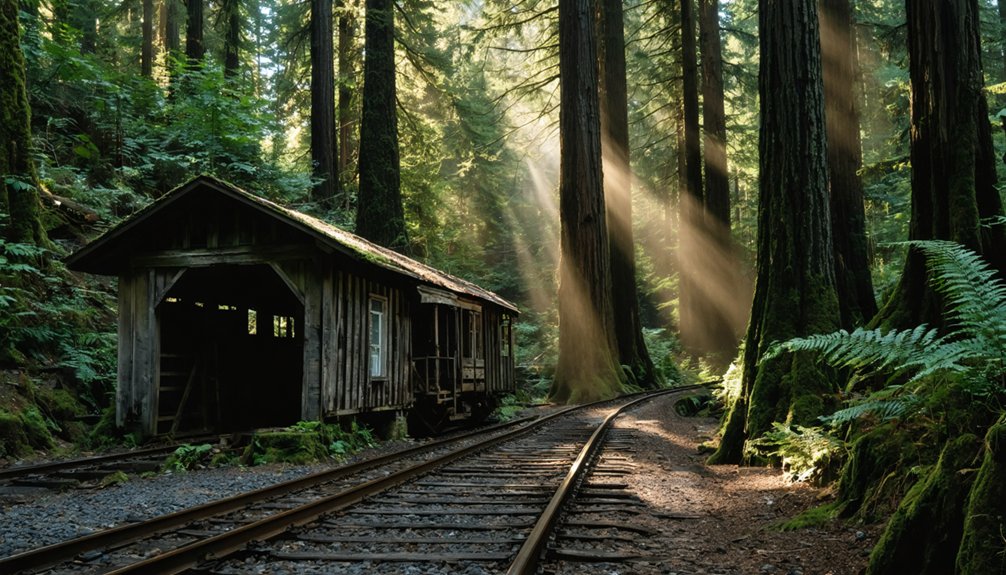
- The north portal of Wrights Tunnel, a striking remnant of tunnel history
- Wrights Station Road, tracing the old rail corridor
- A historic bridge marking the former town center
- Stone foundations half-swallowed by dense woods
- The Wrights Station Vineyard & Winery, sitting above this ghost town’s bones
This isn’t a polished heritage site. It’s raw, quiet, and yours to read on your own terms.
Bring curiosity, wear good shoes, and let the landscape do the talking.
How to Get to Wrights From Los Gatos and Highway 17
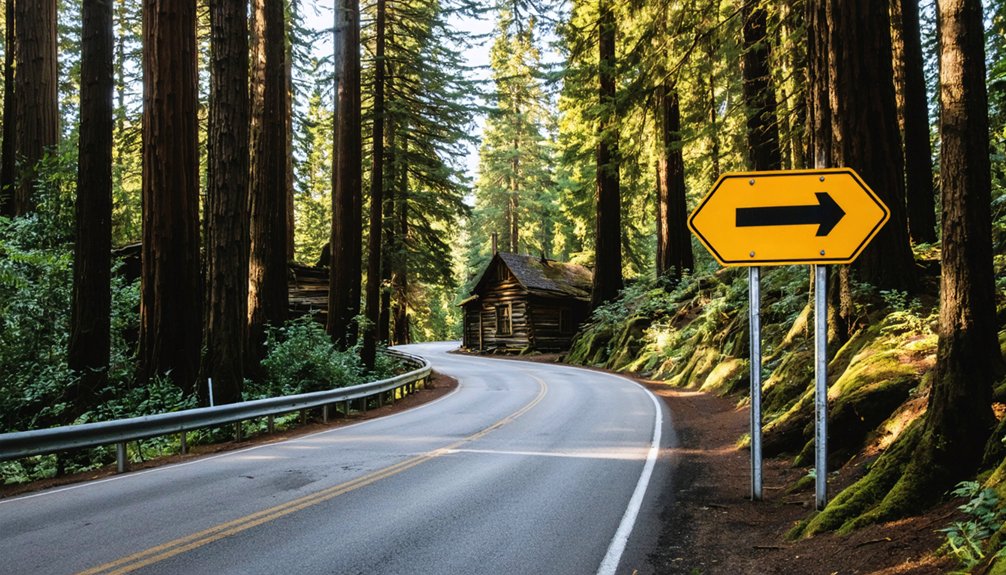
Getting to Wrights takes only a few turns, but each one pulls you deeper into the ghost town’s context. From Los Gatos, head south on Highway 17 toward Santa Cruz. Take the Summit Road exit and follow it west through the mountain corridor.
Watch for Wrights Station Road, a narrow turnoff that drops toward Los Gatos Creek.
That descent marks your entry into Wrights history. The road follows the same creek drainage that once carried freight trains between the bay and the coast. You’re retracing a working railroad route now swallowed by forest and time.
The ghost town sits quietly at the end of that drop, near the tunnel portal. No signs announce it. You’ll recognize it by what’s missing more than what remains.
The Best Time to Visit Wrights Station
Once you’ve found your way down Wrights Station Road, timing shapes everything about what you’ll actually see and feel there. The best season for visiting is spring or early fall, when weather considerations work in your favor.
- Spring clears winter mud while keeping trails accessible.
- Early fall offers dry paths and softer light filtering through dense woods.
- Summer brings heat and heavy brush that can obscure foundations.
- Winter creates atmospheric fog but makes unpaved access genuinely treacherous.
- Weekdays give you solitude that weekends simply won’t.
You’re exploring a vanished railroad world, not a maintained park. The tunnel portal, bridge remnants, and road traces reveal themselves differently depending on conditions.
Choose your window deliberately, and the site rewards serious curiosity over casual drive-bys.
Other Ghost Towns Near Wrights Worth Adding to Your Route

Wrights doesn’t stand alone in this corridor — the Santa Cruz Mountains once threaded together a string of railroad communities that vanished almost as quietly as they appeared, and the best road trips through this region string several of them together.
Laurel, Glenwood, Clems, and Patchen each carry their own ghost town history, and each one deepens your understanding of the railroad legacy that briefly animated this mountain landscape.
You’ll find overgrown foundations, disappeared depots, and roads that once hummed with freight wagons.
Moving between these sites along Summit Road and the Highway 17 corridor transforms a single stop into a full historical arc.
You’re not just visiting ruins — you’re tracing the outline of a world the railroad built and then quietly abandoned.
A Full-Day Route Combining Wrights, Summit Road, and the Santa Cruz Mountains
A full day in the Santa Cruz Mountains gives you enough room to move slowly through a landscape that rewards patience.
Combine Wrights history with broader ghost town exploration by building your route around these stops:
- Begin at Wrights Station Road, walking the north portal of Wrights Tunnel.
- Follow Summit Road west through dense redwood corridors.
- Stop at Laurel and Glenwood, two vanished railroad communities worth stepping out for.
- Drive the Highway 17 corridor and notice how it severed the old rail path.
- End near the Wrights Station Vineyard, sitting above the former town site.
You’re not chasing museums here.
You’re reading a landscape that still holds its railroad bones if you know where to look.
What to Know Before Visiting Wrights Station and the Tunnel Portal Area
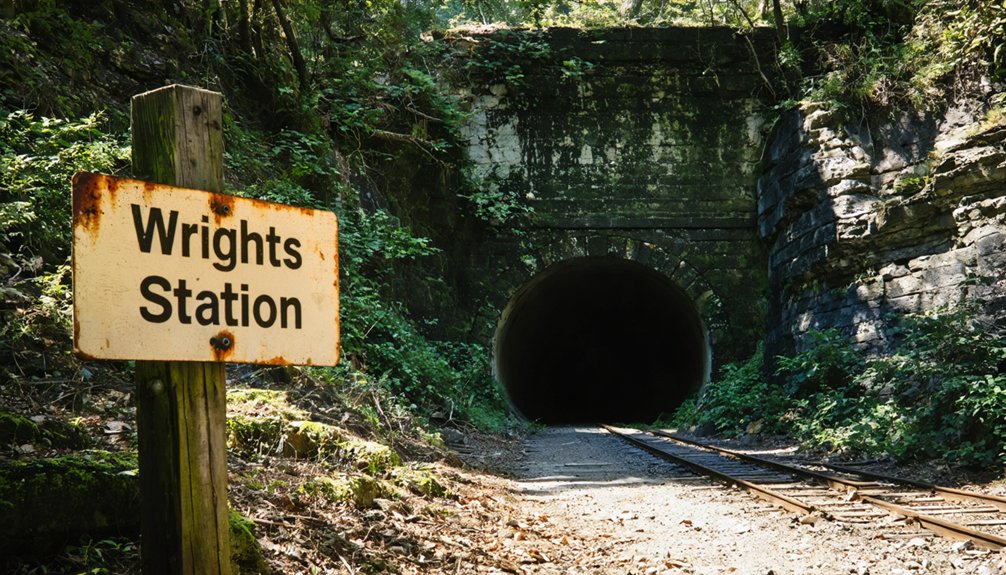
Before you turn off Highway 17 and follow Wrights Station Road into the canyon, know that this isn’t a maintained historical site—it’s a remnant.
Wrights history lives in tunnel stone, overgrown foundations, and a road that once connected a working railroad town to the wider world. The railroad significance here was real—this corridor moved freight, fruit, and passengers between Los Gatos and Santa Cruz for decades.
What’s left demands imagination more than signage. Bring sturdy shoes, since the terrain is rough and access is limited. The San Jose Water Company owns surrounding land, so stay on public routes.
The tunnel portal area rewards the historically curious, not the casual tourist. Come prepared, come respectful, and come ready to piece together a vanished place from what little remains.
Frequently Asked Questions
Is Wrights Station Vineyard Open to Visitors for Wine Tasting?
Ironically, the knowledge doesn’t confirm if you can sip wine there! Before planning vineyard tours or wine pairing adventures, you’d better check Wrights Station Vineyard’s current website directly—ghost towns don’t exactly broadcast their tasting hours.
Who Owns the Land Where Wrights Ghost Town Once Stood?
The San Jose Water Company now owns the land with deep historical significance. You’ll find they’ve absorbed what was once a thriving railroad town, leaving you to explore land ownership tied to Wrights’ fading, evocative legacy.
Are There Any Guided Tours Specifically Focused on Wrights Station History?
Like a forgotten map with no guide, Wrights Station offers no dedicated tours of its historical significance. You’ll forge your own path, exploring tunnel portals, road traces, and foundations independently through this evocative, freedom-filled mountain corridor.
Can You Enter Wrights Tunnel, or Is Access Restricted?
You can’t freely enter Wrights Tunnel — access regulations keep explorers out. But you’ll still feel its tunnel history standing at the atmospheric north portal, where mountain silence and railroad legacy invite your imagination to wander inside.
Is Wrights Station Road Suitable for Standard Passenger Vehicles?
You can navigate Wrights Station Road in a standard passenger vehicle, though it’s narrow and rugged. As you trace Wrights Station history through these shadowed hills, ghost town legends seem to whisper from every weathered bend.
References
- https://en.wikipedia.org/wiki/Wrights
- https://kids.kiddle.co/Wrights
- https://hilltromper.com/article/horrors-summit-tunnel
- https://www.facebook.com/groups/1411879629035576/posts/2291429107747286/
- https://myfamilytravels.com/this-haunted-california-walking-trail-is-hiding-ghosts-from-a-19th-century-railroad-disaster/
- https://www.youtube.com/watch?v=_0i0x-Hro7g
- https://www.wrightsstation.com/history-of-wrights-station/
- https://usdandelion.com/archives/6494
- https://www.exploratography.com/blog-abandoned/wrights-service-station-stopping-now-would-be-wrong-california
- https://ohp.parks.ca.gov/?page_id=21421