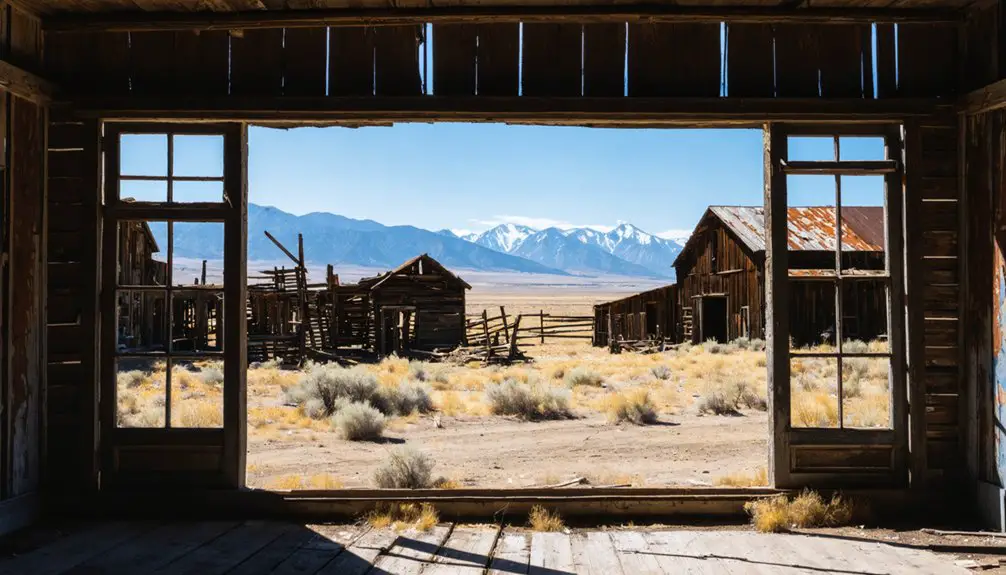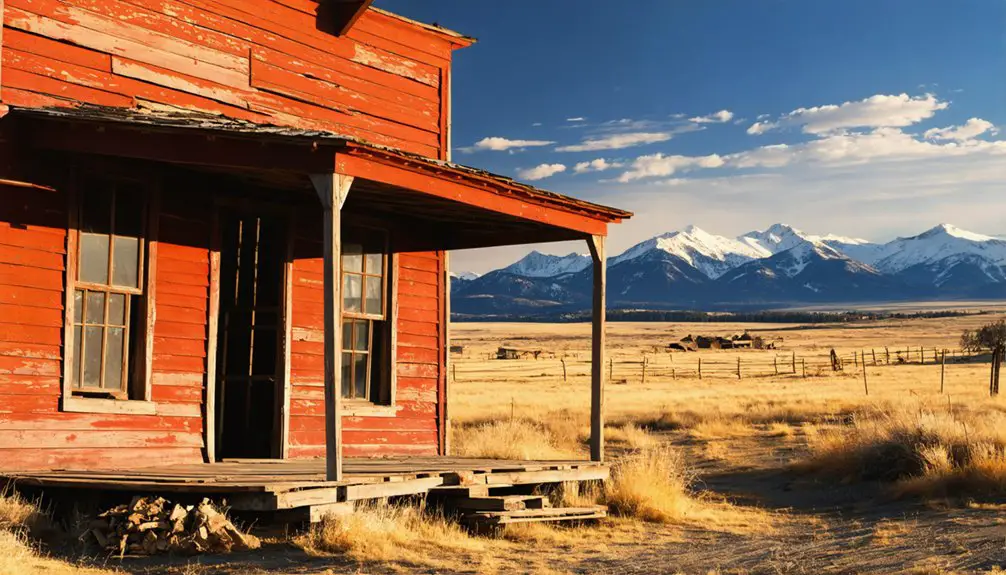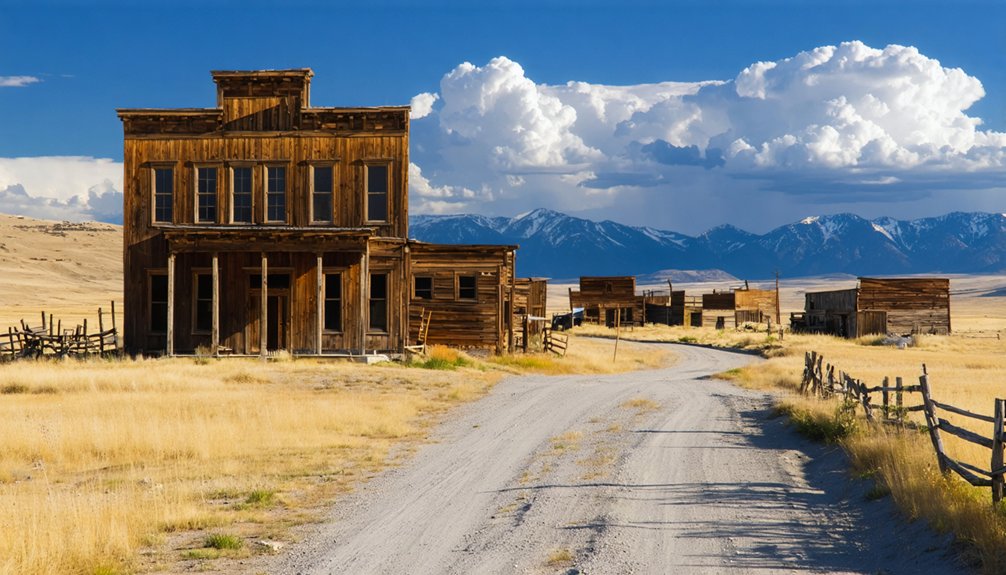
You’ll discover Montana’s richest gold rush history within two hours of Yellowstone’s north entrance, where Virginia City’s 200 Victorian buildings and Bannack’s 50 weathered structures transport you to the 1860s. Visit between May and September for living history demonstrations, or explore snow-covered Garnet by snowmobile in winter. The region’s hidden ruins—Red Bluff, Sterling, and Rochester—offer unfiltered access to frontier architecture beyond the main attractions. Understanding seasonal logistics, driving routes, and which ghost towns deliver authentic experiences will transform your expedition into an unforgettable journey through vigilante territory.
Key Takeaways
- Visit Virginia City and Nevada City for 200+ preserved Victorian buildings, living history demonstrations, and a vintage steam train connection between towns.
- Plan summer trips (May-September) for full visitor center operations or shoulder season (August-October) for autumn photography and fewer crowds.
- Explore remote Madison Valley ruins like Red Bluff, Sterling, and Rochester for unfiltered access to authentic mining camp structures.
- Check road conditions and vehicle clearance requirements before visiting, as Montana mountain weather changes rapidly and affects accessibility.
- Consider guided tours from West Yellowstone or Bozeman for enhanced historical context about mining camps, vigilante justice, and frontier life.
Virginia City: Montana’s Best-Preserved Victorian Mining Town
When Bill Fairweather and Henry Edgar struck gold in Alder Gulch on May 26, 1863, they sparked what would become the richest placer gold discovery in the Rocky Mountains.
The May 1863 gold strike at Alder Gulch triggered the Rocky Mountains’ most lucrative placer discovery in frontier history.
You’ll find yourself walking streets where 10,000 fortune-seekers once lived, where vigilantes dispensed frontier justice, and where $30 million in gold was extracted within three years.
Today’s Virginia City stands as Montana’s best-preserved Victorian mining town, thanks to cultural preservation efforts that began when Charlie and Sue Bovey stabilized crumbling structures in the 1940s. Over 200 authentic buildings remain—false-fronted saloons, log cabins, Victorian residences frozen in time. The town briefly served as Montana’s territorial capital in 1865, cementing its importance in the region’s early history.
This National Historic Landmark now supports a thriving tourist economy while maintaining its authentic Old West character, letting you experience genuine frontier independence. Perched at an elevation of 5,822 feet, Virginia City offers crisp mountain air and sweeping views of the surrounding gulch where fortunes were made and lost.
Nevada City Open-Air Museum: Step Into the 1800s
Just 1.5 miles west of Virginia City, you’ll discover Nevada City’s sprawling outdoor museum where over 100 authentic frontier buildings transport you straight into Montana’s gold rush era.
Walk through original 1800s log cabins filled with period furnishings, explore the Music Hall’s remarkable collection of automated instruments, and browse 1.2 million artifacts that tell the story of western frontier life. Charles Bovey moved historic structures from across Montana to preserve them, including a saddle shop from Fort Benton and a barber shop from Elkhorn.
On summer weekends, you can ride the vintage steam train that connects both ghost towns while costumed interpreters demonstrate blacksmithing, saloon games, and other frontier trades using original equipment. The town is owned by the State of Montana and operated by the Montana Heritage Commission, ensuring its preservation for future generations.
Historic Buildings and Exhibits
More than 100 weathered buildings line the dusty streets of Nevada City, their false-fronted facades and hand-hewn timber frames frozen in the amber of Montana’s frontier past. You’ll wander through original structures like the jail that held outlaw George Ives and Dr. Byam’s home, alongside relocated treasures—a saddle shop from Fort Benton, a barber shop from Elkhorn. Each building showcases period specific furnishings that transport you to the 1860s Gold Rush era.
The Nevada City Music Hall houses North America’s most extensive collection of rare music artifacts: player pianos, violanos, and calliopes that once filled saloons with melody. On summer weekends, interpreters in authentic dress demonstrate blacksmithing and deal faro at the saloon, bringing this preserved frontier settlement alive through sound, sight, and story. Beyond gaming demonstrations, visitors can watch cobbler demonstrations and witness artisans practicing traditional leather work and quilting techniques that were essential frontier crafts. The museum welcomes visitors between Memorial Day weekend and Labor Day weekend, with living history demonstrations featured every Saturday and Sunday during this period.
Steam Train Connection Experience
The whistle of a vintage steam locomotive pierces the mountain air as you board for the 1.5-mile journey between Virginia City and Nevada City—a ride that Charles Bovey envisioned in 1964 when he constructed this narrow-gauge line to link his twin preservation projects. This immersive transportation experience delivers authentic frontier ambiance as iron wheels clatter along rails that mirror 1800s mining camp connections.
Your journey encompasses:
- Living access to history – The train deposits you directly at Nevada City’s open-air museum, home to the nation’s second-largest Old West artifact collection from the 1863 gold rush era.
- Summer operations – Ride from Memorial Day through Labor Day, with weekend departures coordinating with living history demonstrations.
- Sensory time travel – Steam, coal smoke, and rhythmic chugging recreate how fortune-seekers moved through vigilante territory during Alder Gulch’s explosive growth. The narrow-gauge railroad experience echoes Nevada City, California’s own Victorian Italianate architecture, which emerged during the similar Gold Rush era of 1849.
Bannack State Park: Montana’s First Territorial Capital
On July 28, 1862, when John White’s crew struck gold along Grasshopper Creek, they ignited Montana’s first major gold rush and planted the seeds of what would become the territory’s original capital.
You’ll walk Main Street where the first territorial legislature convened in 1864 under Governor Sidney Edgerton, surrounded by over 50 weathered log buildings that stand exactly as prospectors left them. These structures whisper tales of gold prospectors’ challenges—brutal winters, Henry Plummer’s outlaw gang, and the Vigilance Committee’s swift justice that ended with 22 hangings. By 1863, the population surged past 3,000 as fortune seekers flooded into the remote mining camp.
Unlike sanitized tourist towns, Bannack remains frozen in authentic decay, inviting you to explore empty saloons and abandoned shops without barriers or reconstructions. The state of Montana acquired the site in 1954 and transformed it into a state park dedicated to preserving these historic structures. You’re free to wander this National Historic Landmark at your own pace, discovering Montana’s raw frontier origins.
Distance and Driving Routes From Yellowstone National Park
After exploring Montana’s ghostly territorial capital, your journey continues northward through equally dramatic landscapes. You’ll find freedom on open highways connecting these historic destinations, with the Yellowstone River guiding your route through Paradise Valley.
Montana’s territorial past meets untamed wilderness as the Yellowstone River charts your course through Paradise Valley’s sweeping corridors.
Primary Routes to Contemplate:
- Interstate 90 to US Highway 89 – Your main corridor runs through Livingston, where these major arteries intersect for seamless navigation
- Paradise Valley Scenic Route – Following US 89 south delivers you to Gardiner and Yellowstone’s northern entrance in under an hour
- Park County Back Roads – Communities like Emigrant and Pray offer authentic Western stops along your path
Approximate travel times remain favorable year-round, though seasonal road conditions demand attention during winter months. Livingston serves as the seat of Park County, providing essential services and historical context for travelers exploring this region. This gateway territory rewards adventurous spirits seeking both ghostly history and natural grandeur.
Best Times to Visit Montana’s Historic Ghost Towns
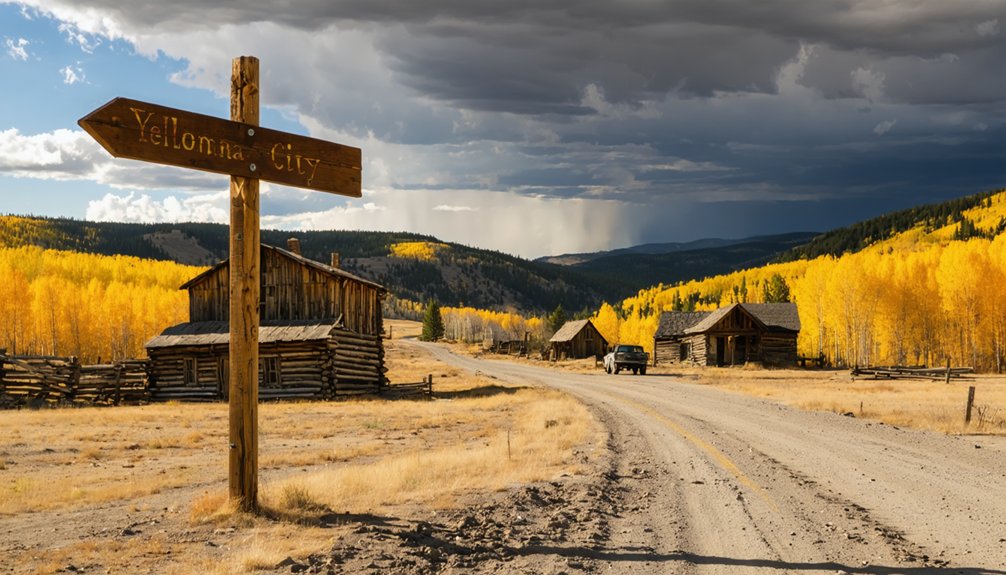
You’ll find Montana’s ghost towns transform dramatically with each season, dictating which weathered structures you can access and how comfortably you’ll explore them.
Late spring through early fall offers your widest window—when snow-clogged mountain roads finally open and temperatures climb into the pleasant 40-70°F range for hiking through abandoned mining camps.
Winter blankets remote sites like Garnet under feet of snow, while summer’s peak season floods Virginia City with crowds but rewards you with extended daylight to photograph every crumbling facade at Bannack’s 60+ structures.
Optimal Seasonal Visiting Windows
Montana’s ghost towns reveal dramatically different personalities across the calendar, transforming from bustling summer attractions into snowbound time capsules as seasons shift. You’ll discover three distinct windows for exploration:
- Peak Summer Access (May-September): Visitor centers, living history programs, and Virginia City’s steam train operate fully. Expect crowds but maximum amenities.
- Shoulder Season Impact (May 3-17, August 2-October 17): You’ll find smaller visitor populations, operational facilities, and stunning autumn photography conditions. Sites remain accessible while offering genuine solitude.
- Winter Excursion Logistics (October 18-April 15): Garnet Ghost Town beckons snowmobilers and cross-country skiers. Bannack maintains limited hours, rewarding hardy explorers with stargazing opportunities and silent, snow-draped streets devoid of tourist chatter.
Choose your season based on desired adventure intensity.
Weather and Accessibility Considerations
Winter accessibility challenges intensify at higher elevations. Snow seals Garnet entirely, demanding snowmobiles or skis to reach primitive rental cabins.
Bannack stays open year-round but operates reduced hours (8 a.m.–5 p.m.) when cold dominates. Weather pivots fast in Montana’s mountains and plains—that morning sunshine can become afternoon whiteout.
Check your vehicle’s clearance, contact the BLM Missoula office for current conditions, and never attempt narrow mountain routes during storms. Freedom requires preparation.
Guided Tours and Living History Experiences
While the ghost towns themselves whisper their stories through weathered buildings and abandoned streets, guided tours throughout Yellowstone Country bring these narratives to vivid life through the voices of passionate historians and Indigenous storytellers.
Three unmissable museum visitor experiences:
- West Yellowstone’s Railroad District – Historic trail maps guide you through 20+ sites within a 4-block radius, from the 1908 Depot to forest service cabins, all marked by the Painted Bear Paw Trail.
- Bozeman’s Dark Side – Seasonal tours explore “Madams and Mediums” and the historic red-light district, revealing stories conventional history books won’t tell you.
- Indigenous Cultural Tours – Tribal members Jesse DesRosier, Chris LaTray, and Lailani Upham share traditional stewardship knowledge during intimate 12-person expeditions through Yellowstone’s sacred landscapes ($99, equipment included).
Riding the Historic Steam Locomotive Between Towns
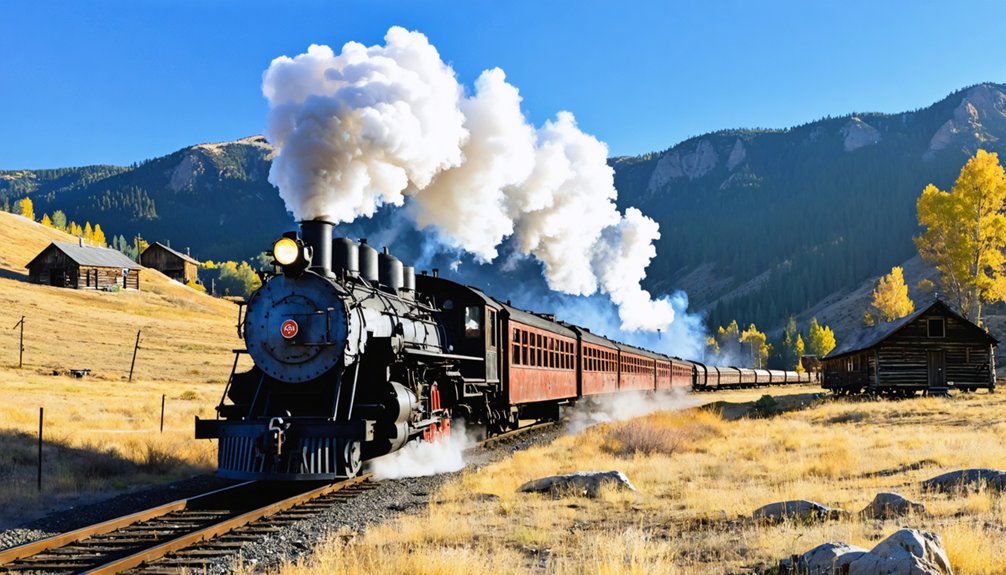
You’ll step aboard a meticulously restored 1910 steam locomotive that huffs and clinks to life, its brass fittings gleaming against black iron as coal smoke curls into the mountain air. The two-mile journey between ghost towns rumbles you through sagebrush valleys where miners once walked, the whistle echoing off distant peaks just as it did over a century ago.
Check the seasonal schedule before your visit—tickets for this authentic narrow-gauge experience sell out quickly during summer months when the engine runs most frequently.
1910 Locomotive Restoration Details
Though steam locomotives haven’t regularly operated in Montana since the 1950s, you can still glimpse their thunderous legacy at the Yellowstone County Museum, where Old 1031 stands as a 63-ton monument to the Northern Pacific Railway’s golden age.
This Class 1-7 American Locomotive Company masterpiece tells its story through impressive locomotive specifications and a remarkable locomotive relocation history:
- Service Record: Logged 700,000 miles switching freight across Lake Superior and Yellowstone Division routes before retirement
- Epic Journey: Required a Low-Boy truck and two separate movements spanning 6 hours 45 minutes to travel just 5 miles on November 16, 1956
- Living Monument: Dedicated May 25, 1957, by Northern Pacific Vice-President W.W. Judson as a permanent tribute to Eastern Montana’s railroad pioneers
You’ll stand before authentic railroad heritage that powered westward expansion.
Two-Mile Route Experience
If you’re chasing authentic steam locomotive action in Montana, you’ll need to catch rare filming events rather than regular passenger service. The 2024 steam locomotive operations in Butte marked Montana’s first standard gauge steam action since 2009, confined mainly to BNSF’s yard over three November days. You won’t find scheduled rides here—just occasional Hollywood productions transforming historic depots into fictional stations.
Montana’s railway heritage tells stories of short lived rail connections like the White Sulphur Springs and Yellowstone Park Railway, which ran just 22.8 miles from 1910 to 1980. Today, Montana Rail Link maintains over 900 miles of track across Missoula, Livingston, Bozeman, and Helena, but steam engines only emerge when cameras roll and production budgets allow authentic railroad moments.
Seasonal Schedule and Tickets
Montana’s ghost town railroad dreams clash with a harsh reality: no regularly scheduled steam locomotive passenger service connects these historic mining settlements. You’ll need to pivot your plans if you’re chasing authentic steam experiences near Yellowstone City.
Your closest alternative rolls through northern Montana:
- Amtrak Empire Builder provides year-round daily service through West Glacier and Whitefish, though diesel-powered rather than steam
- Multi day packages combining rail travel with ghost town exploration require independent driving between destinations
- Ticket discounts aren’t available for nonexistent steam services; budget instead for car rentals and lodging
The iron horse never conquered Park County’s mining camps with tourist trains. You’ll explore Yellowstone City’s weathered buildings on foot, experiencing the authentic isolation that defined frontier life—no whistles, no scheduled departures, just wind through abandoned structures.
Vigilante Justice and Wild West Legends
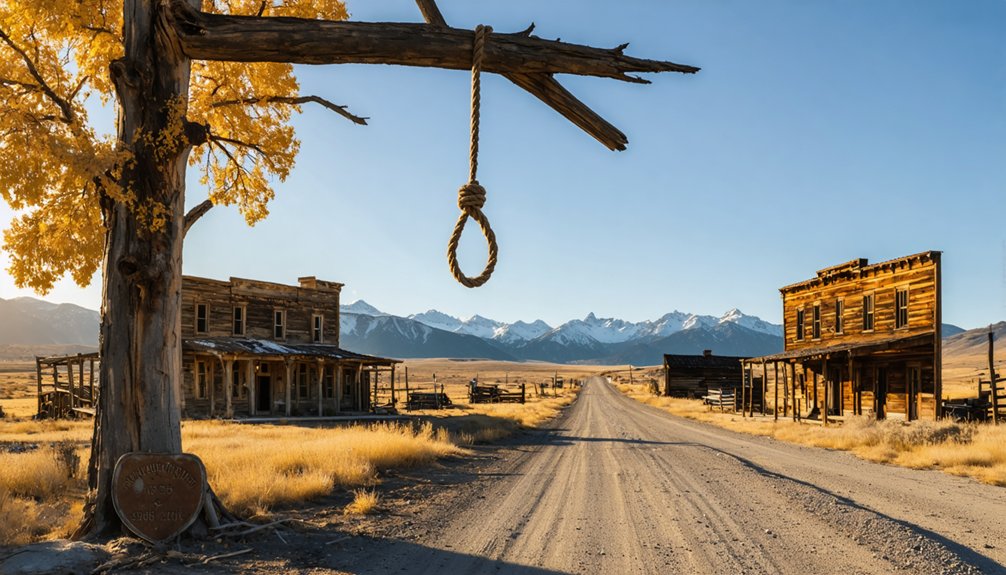
When you stand in the quiet streets of Yellowstone City today, it’s hard to imagine the swift and brutal justice that once ruled Montana’s mining camps. Between 1863 and 1865, vigilante committees hanged at least 20 suspected criminals in nearby Alder Gulch alone, including Sheriff Henry Plummer himself.
Mining camp dynamics bred lawlessness in these remote territories—no courts, no official law enforcement, just desperate men making desperate rules. The infamous 3-7-77 code still appears on Montana Highway Patrol vehicles, a controversial remnant of warnings vigilantes painted on fences.
You’ll find these vigilante rationalizations debated even now: were they heroic citizens protecting their communities, or power-hungry men eliminating rivals? The ghosts of both victims and executioners haunt these weathered buildings.
Hidden Ghost Town Ruins in Madison Valley
Beyond the well-trodden paths of Virginia City and Nevada City, Madison Valley conceals a scattered collection of ghost town ruins that most travelers never find. You’ll discover remnants of Red Bluff, Sterling, and Rochester—settlements where Montana’s mining boom left its mark before fading into sagebrush obscurity.
These sites reward your adventurous spirit with unfiltered access to architectural heritage:
- Red Bluff’s isolated structures offer solitude among crumbling stone foundations
- Rochester’s mining camp buildings showcase 1800s construction techniques against mountain backdrops
- Laurin’s preserved settlement bridges past and present with minimal commercialization
The scenic drive through the Tobacco Root Mountains delivers outstanding outdoor photography opportunities. You won’t battle crowds here—just navigate rough roads and embrace the valley’s hidden history on your own terms, approximately 90 miles from West Yellowstone’s tourist sprawl.
Planning Your Multi-Day Ghost Town Adventure
A well-crafted ghost town circuit through Park and Yellowstone counties transforms casual sightseeing into genuine exploration, threading together abandoned mining camps where weathered timber frames still stand against mountain silhouettes. You’ll want to base yourself in Livingston for three nights, tackling Yellowstone City and Independence on day one, then pushing toward Jardine’s rugged terrain on day two.
Exploring the ghost towns of Montana history reveals a rich tapestry of stories and forgotten lives, each site echoing with the whispers of the past. As you wander their skeletal remains, you can’t help but imagine the bustling communities that once thrived in these remote landscapes. This adventure offers not just a glimpse into the state’s mining heritage, but also a chance to connect with the rugged beauty of Montana itself.
Remote site access demands a high-clearance vehicle—Jardine Road’s gravel surface gets punishing after spring snowmelt. Extend south to Virginia City on day three, where preserved boardwalks offer contrast to Park County’s rawer remnants. Budget 300-400 miles total, checking seasonal road closures before departure.
Summer grants full access; winter transforms these routes into snowmobile-only corridors, restricting your freedom to roam these forgotten landscapes.
Frequently Asked Questions
Are Pets Allowed at Virginia City, Nevada City, and Bannack State Park?
Yes, you’ll find welcoming pet policies at all three locations. Your leashed dog can explore these historic ghost towns alongside you, with excellent visitor accessibility throughout. Just remember waste cleanup and keep leashes under eight feet for everyone’s freedom.
What Dining and Lodging Options Exist in or Near These Ghost Towns?
You’ll find limited dining in these ghost towns themselves, but nearby communities offer local restaurant recommendations and unique lodging experiences. Garnet provides primitive winter cabins, while Virginia City and Bannack focus on day exploration with modern amenities in surrounding areas.
Do These Historic Sites Have Accessible Facilities for Wheelchair Users?
Most ghost towns lack modern amenities, but nearby Yellowstone offers wheelchair-friendly pathways at Old Faithful and accessible restrooms throughout. You’ll find freedom exploring boardwalks, though historic mining sites themselves remain rugged and unmodified from their original conditions.
Are Photography and Drone Usage Permitted at the Ghost Town Locations?
Photography’s welcomed at ghost towns, though you’ll need permits for groups of nine or more. Drone safety regulations restrict unmanned aircraft in most heritage sites. Photo permit requirements vary by location, so always check specific property rules before your adventure begins.
What Admission Fees Apply to Virginia City, Nevada City, and Bannack?
You’ll find varying admission fees at each location, with Virginia City and Nevada City offering passes from $10-$185. Historic preservation efforts shine through interpretive signage quality at Bannack State Park, where your day-use fee supports maintaining authentic Western freedom.
References
- https://backroadplanet.com/montana-ghost-towns/
- https://www.mountain-home.com/blog/vacation-planning/guide-montana’s-ghost-towns
- https://grizzlyrv.com/are-there-any-ghost-towns-near-west-yellowstone/
- https://virginiacitymt.com/Experience-The-Old-West/index
- https://montanahistoriclandscape.com/2014/12/27/miles-city-the-yellowstones-forgotten-jewel/
- https://www.westyellowstonenet.com/history_museums/virginia_city.php
- https://destinationyellowstone.com/ghost-towns-and-hidden-history-near-yellowstone/
- https://destinationyellowstone.com/the-first-gateway-to-yellowstone/
- https://www.truewestmagazine.com/article/between-yellowstone-and-glacier-3-must-see-mining-ghost-towns/
- https://westernmininghistory.com/towns/montana/virginia-city/