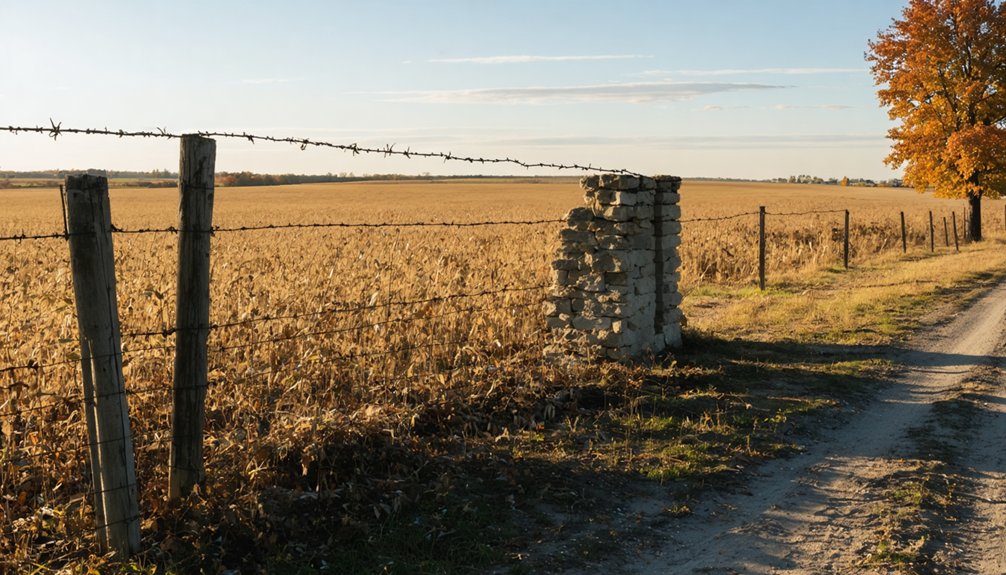
To visit Totten Prairie, head to Cass Township in Fulton County, Illinois, and locate the southwest quarter of section 27, southeast of Smithfield. You won’t find historic markers, so bring detailed maps or GPS. The prairie has reclaimed most of the land, but that raw openness is exactly what drew William Totten here in 1823. There’s a remarkable story of frontier grit, blockhouses, and an unlikely peace with Black Hawk waiting to unfold.
Key Takeaways
- Totten Prairie, founded in 1823 by William Totten, is located in Cass Township, Fulton County, Illinois, southeast of Smithfield.
- No historic markers exist, so bring detailed maps or GPS to find the original settlement in section 27’s southwest quarter.
- The rural area retains little physical evidence of the settlement, but visitors can experience the vast, open prairie landscape.
- Historical highlights include a fortified blockhouse built in 1827 and Black Hawk’s peaceful visit during the 1832 Black Hawk War.
- Local historical societies and archives preserve primary sources, including land surveys, constable records, and military documents related to the settlement.
The Founding Story Behind This Forgotten Illinois Prairie
When you trace the origins of Totten Prairie, you’ll find yourself drawn back to 1823, when a determined Ohio native named William Totten carved out a settlement in Cass Township, Fulton County, Illinois — staking his claim on the southwest quarter of section 27, just southeast of what’s now Smithfield.
Totten didn’t arrive easily. He migrated through Kentucky and Indiana before planting roots on the open Illinois prairie.
That same year, Illinois legislators formally organized Fulton County, and Totten stepped up immediately — earning an appointment as constable and later serving on the first grand jury in 1824.
Prairie life here meant forging your own path, and the Totten Legacy reflects exactly that spirit: independent, resourceful, and deeply connected to a raw, untamed landscape that rewarded those bold enough to claim it.
Black Hawk, Blockhouses, and Conflict at Totten Prairie
When you explore Totten Prairie’s history, you can’t ignore the turbulent conflicts that once threatened this quiet settlement.
During the 1827 Winnebago troubles, settlers constructed a fortified blockhouse on the prairie to protect against potential attacks.
Yet just five years later, during the Black Hawk War of 1832, the legendary Sauk warrior Black Hawk himself visited the Tottens peacefully, even engaging in friendly target shooting with the family.
Winnebago Troubles Blockhouse
During the uneasy Winnebago troubles of 1827, settlers on Totten Prairie erected a fortified blockhouse, bracing for conflict that seemed inevitable on the Illinois frontier. This blockhouse history reflects the raw determination of free people refusing to surrender their hard-won land.
You’re standing where pioneers stacked thick timber walls, transforming an open prairie into a defensive stronghold almost overnight.
The Winnebago conflicts pushed settlers toward collective action, building structures that represented both fear and fierce independence. William Totten and his neighbors understood that survival demanded preparation, not passivity.
That blockhouse wasn’t just wood and nails — it was a declaration that they’d defend their families and freedoms without hesitation.
Walk this ground today and you’ll feel that same uncompromising spirit embedded in Totten Prairie’s soil.
Black Hawk’s Friendly Visits
Just years after settlers nailed together that blockhouse in fear of Winnebago raiders, a very different kind of visitor arrived at Totten Prairie — Black Hawk himself.
During the 1832 Black Hawk War, while frontier families across Illinois trembled behind barricades, William Totten’s family stood outside, trading stories and shooting targets alongside the famous Sauk warrior.
Black Hawk’s influence across the region brought devastation to many settlements, yet Totten Prairie remained completely undisturbed.
You can credit William Totten’s remarkable ability to cultivate peaceful relations with local tribes, built through years of fair trading and mutual respect.
Black Hawk personally visited the Tottens, engaging in friendly target shooting — a stunning contrast to the chaos erupting elsewhere.
Standing on this ground today, that story feels almost impossible to believe.
What Made William Totten’s Peace With Local Indians Remarkable
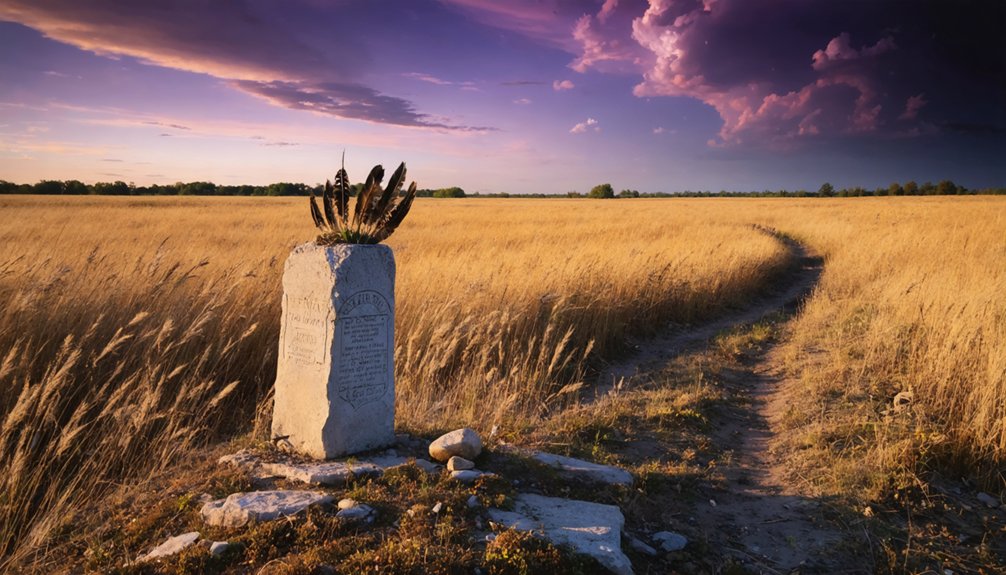
Perhaps the most striking aspect of William Totten’s story is how he turned potential conflict into genuine camaraderie.
On a frontier where violence frequently defined indigenous relations, Totten chose cultural diplomacy instead. He traded with local tribes, joined their sporting activities, and welcomed their visits rather than fearing them. That approach paid off remarkably well — even during the fierce 1832 Black Hawk War, his settlement remained completely undisturbed.
Black Hawk himself visited the Tottens and participated in target shooting alongside them. When you stand near Section 27 today, consider what that kind of trust actually required.
Totten didn’t just survive the frontier; he built real human connections across cultural lines that most settlers never attempted. That legacy makes Totten Prairie worth finding.
How to Find the Totten Prairie Settlement Site in Cass Township
Now that you understand what made Totten Prairie worth finding, let’s talk about how you actually get there. Head to Cass Township in Fulton County, Illinois, and orient yourself around Smithfield. The original settlement sits southeast of present-day Smithfield, on the southwest quarter of section 27.
No historic markers guarantee your arrival, so bring a detailed county map or reliable GPS coordinates. The area remains rural, and the landscape has reclaimed much of its settlement history.
You’re fundamentally standing where William Totten built his life from scratch in 1823.
Treat Smithfield as your base camp. From there, explore the surrounding prairie roads heading southeast. You won’t find buildings, but you’ll feel the openness that drew settlers to Totten Prairie in the first place. That freedom speaks for itself.
What Survives at the Totten Prairie Site Today?
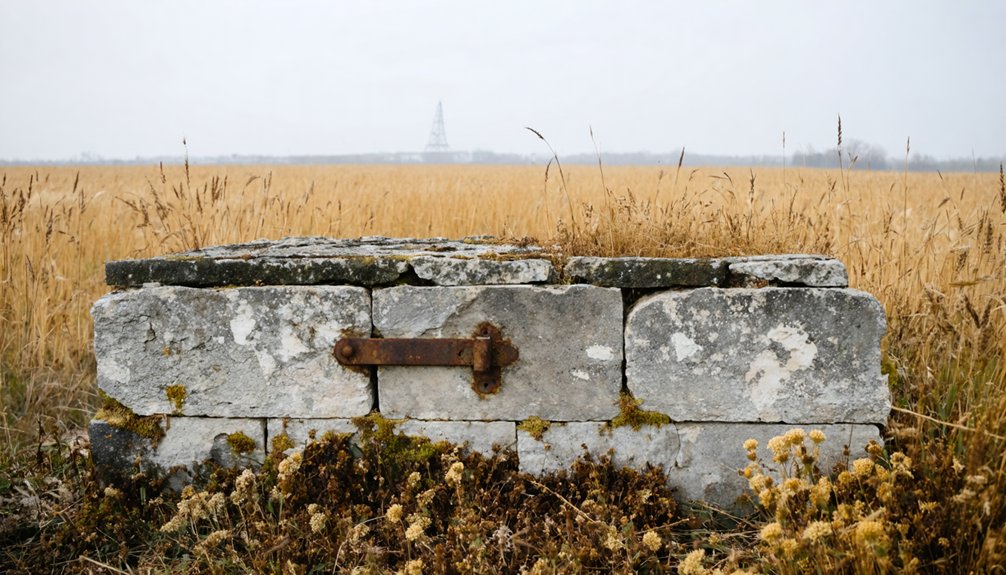
When you arrive at Totten Prairie today, honesty hits fast: almost nothing physical remains of William Totten’s 1823 settlement. The prairie has reclaimed its land, leaving no standing structures, no marked graves, and no preserved blockhouse from the 1827 Winnebago troubles.
You’re standing on rural Illinois farmland, fundamentally unchanged in appearance from surrounding countryside.
What keeps Totten Prairie alive isn’t historical remnants you can touch — it’s the documented record. Historical societies and Illinois lost town archives preserve the settlement’s story. You’ll want to bring those records with you, because the land won’t tell you much on its own.
Consider this your challenge: explore section 27’s southwest quarter, breathe the open air, and let your imagination reconstruct what determined frontier people built here against remarkable odds.
Other Fulton County Ghost Towns From the Same Settlement Era
Totten Prairie wasn’t the only early settlement in Fulton County to fade quietly into the prairie grass. Fulton Towns from this era shared remarkably similar Settlement Patterns — ambitious founders, remote locations, and futures that time simply swallowed whole.
Tuscumbia, once a thriving 1830s stagecoach stop along the Illinois River, bustled with commerce until railroads rerouted everything that mattered. When transportation shifted, communities collapsed.
You’ll find these forgotten places scattered across Fulton County’s rural backroads, each one a snapshot of pioneer determination meeting hard reality. Exploring them alongside Totten Prairie transforms your road trip into something deeper — a genuine reckoning with how settlements rise, struggle, and disappear.
Pack your maps, follow the gravel roads, and let Illinois’s forgotten history unfold around every bend.
Primary Sources and Archives for Researching Totten Prairie History

If you’re ready to dig deeper into Totten Prairie’s past, the Illinois State Historical Archives holds early settlement documents that’ll bring William Totten’s world to life.
You can also track down Fulton County Court Records, where you’ll find entries naming Totten as constable in 1823 and his appearance on the first grand jury in 1824.
These primary sources give you direct, firsthand evidence of how this vanished prairie settlement shaped early Fulton County history.
Illinois State Historical Archives
Researchers chasing the faded footprints of Totten Prairie will find the Illinois State Historical Archives in Springfield an indispensable starting point, housing primary documents that breathe life into this long-vanished Fulton County settlement.
These Illinois Archives preserve the 1823 legislative act organizing Fulton County, William Totten’s constable appointment records, and early grand jury documentation from 1824.
You’ll uncover Historical Documents detailing the first circuit court proceedings, land surveys identifying section 27’s southwest quarter, and commission records placing the original county seat.
Dig into township plat maps, settler correspondence, and territorial papers that collectively reconstruct Totten Prairie’s founding years.
Request finding aids specific to Fulton County collections before visiting, saving yourself valuable research time and ensuring you target the most revealing primary sources available.
Fulton County Court Records
Dig into these court documents and you’ll uncover Totten’s 1823 constable appointment and his 1824 grand jury service — tangible proof of a man shaping raw frontier justice.
The historical significance of these records runs deep, revealing how Fulton County organized itself after the Illinois legislature’s January 28, 1823 act.
You’ll also find references to the delayed first circuit court, pushed from October 1823 into spring 1824.
These aren’t dusty formalities — they’re your direct line into a vanished world worth chasing down backroads to discover.
Early Settlement Primary Documents
Beyond the courthouse walls, a broader network of primary sources keeps Totten Prairie’s story alive in archives worth tracking down.
Immerse yourself in archival research at the Illinois State Archives in Springfield, where territorial records document William Totten‘s 1823 constable appointment and grand jury service.
The Fulton County Historical Society holds primary documents connecting the Totten family’s migration route from Ohio through Kentucky and Indiana.
Land survey records pinpoint the southwest quarter of section 27, Cass Township — your exact target on the map.
Military records tied to the 1827 Winnebago troubles and 1832 Black Hawk War reference fortified settlements like Totten Prairie.
Cross-referencing these scattered sources builds a vivid picture of frontier life before this remarkable settlement quietly faded from the living landscape.
Frequently Asked Questions
What Is the Best Time of Year to Visit Totten Prairie?
Over 200 years old, Totten Prairie’s best weather arrives in spring or fall! You’ll enjoy comfortable temperatures for seasonal activities like exploring the historic section 27 settlement site and uncovering William Totten’s fascinating frontier legacy.
Are There Guided Ghost Town Tours Available Near Smithfield, Illinois?
Formal guided tours aren’t widely documented near Smithfield, but you’ll discover adventurous self-guided explorations of Totten Prairie’s rich local legends and ghost stories. Check with Fulton County historical societies—they’re your best resource for uncovering hidden trails!
Can Visitors Legally Access the Original Section 27 Settlement Land?
You can’t freely roam the original Section 27 settlement history site without verifying land ownership first. Private property may restrict access, yet you’re free to research boundaries and seek permission before adventuring onto this historic ground.
Are There Any Commemorative Markers or Signs at Totten Prairie?
You won’t find official commemorative markers at Totten Prairie, but don’t let that stop you! Explore the area’s historical significance yourself, uncover local legends about William Totten’s peaceful Indian relations, and forge your own adventurous connection to this forgotten Illinois ghost town.
What Other Ghost Towns Can Be Visited on the Same Road Trip?
Like stepping through a time portal, you can explore Tuscumbia’s abandoned buildings and local legends nearby. It’s a stagecoach stop frozen in Illinois history, making it a thrilling companion destination on your Fulton County ghost town adventure!
References
- https://drloihjournal.blogspot.com/2022/09/lost-towns-of-illinois-totten-illinois.html
- https://www.youtube.com/watch?v=93k0qtvzkn4
- https://drloihjournal.blogspot.com/search/label/Lost Towns of Illinois
- https://everafterinthewoods.com/8-forgotten-ghost-towns-in-illinois-that-are-quietly-fascinating/
- https://www.youtube.com/watch?v=X-k9IxjPWqc
- http://genealogytrails.com/ill/jefferson/ghostowns.html
- https://storymaps.arcgis.com/stories/6ea7c4b9b0594c039c2792d5be7456c9