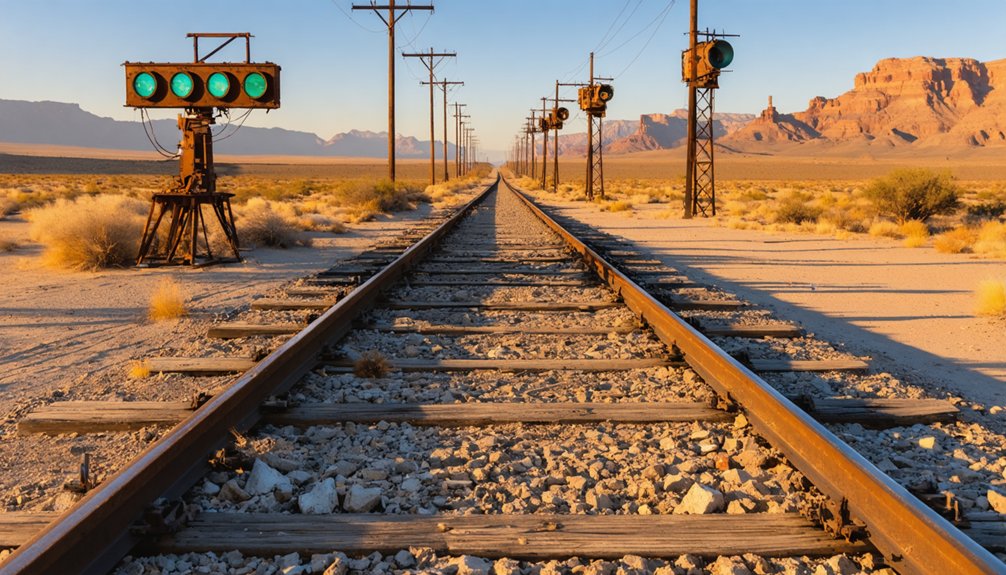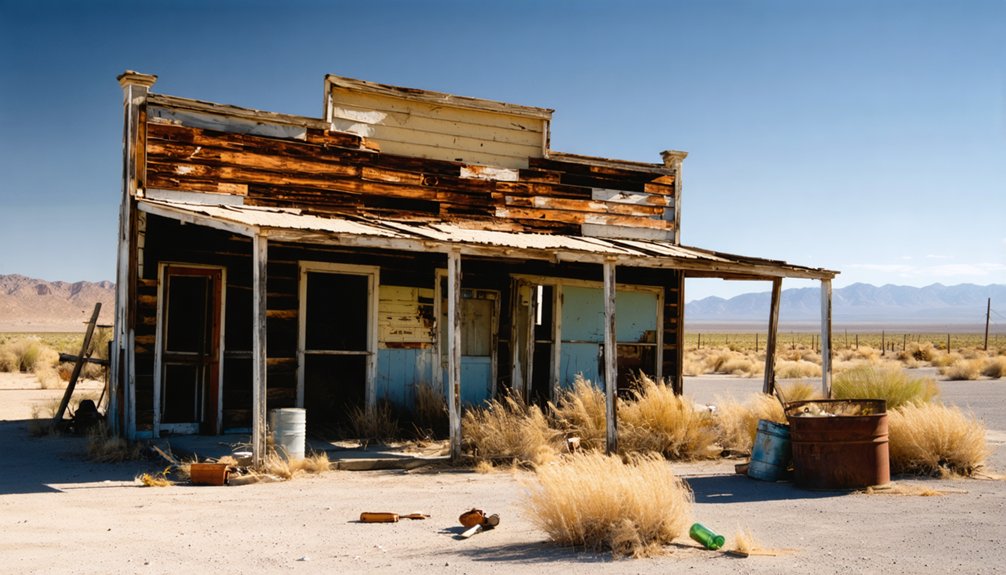
Planning a road trip to Tres Alamos, Arizona means heading north on Pomerene Road about 12 miles from Benson to the east bank of the San Pedro River. You don’t need a 4WD vehicle, but you’ll want sturdy boots, plenty of water, and a good map since cell service is unreliable. This 1874 ghost town has nearly vanished, swallowed by erosion and time — and understanding why makes the journey far more fascinating.
Key Takeaways
- Tres Alamos sits on the east bank of the San Pedro River, roughly 12 miles north of Benson, Arizona, via Pomerene Road.
- The site is 2WD accessible, requiring no rugged vehicle, making it an easy road trip destination for most travelers.
- Visit during fall, spring, or winter for comfortable temperatures; avoid monsoon season when Pomerene Road may become impassable.
- Pack sturdy boots, plenty of water, sunscreen, detailed maps, and a first-aid kit, as cell service is unreliable.
- Once a frontier outpost settled in 1874, Tres Alamos features rich history, though erosion has largely erased its physical remains.
Tres Alamos, Arizona: A Ghost Town With Almost Nothing Left to Show
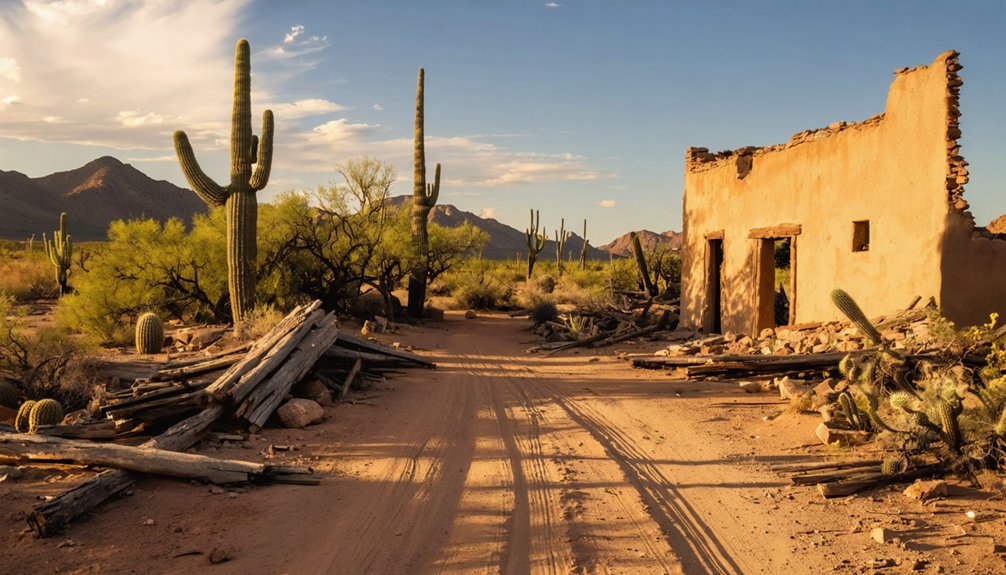
Perched on the east bank of the San Pedro River, about 12 miles north of Benson, Arizona, Tres Alamos is a ghost town that offers almost nothing in the way of visible remains — and yet, it’s a place where history runs surprisingly deep.
You won’t find abandoned structures standing here; erosion has swallowed nearly every trace of what once existed. What remains sits on a terrace 100 to 150 feet above the river, where ruins and prehistoric evidence quietly endure.
Local legends of unexplained violence, cattle ranching families, and stagecoach travelers paint a vivid picture of frontier life. For those who crave open roads and forgotten history, Tres Alamos rewards curiosity more than it rewards the camera.
The Rise and Fall of Tres Alamos Along the San Pedro River
What you see at Tres Alamos today — or rather, what you don’t see — is the end result of a story that began with genuine promise. Settled in 1874, this Arizona Territory outpost reflected classic frontier settlement patterns — ranchers, a post office, an adobe chapel, and a stage station supplying travelers moving between Tucson and Mesilla, New Mexico.
Its historical significance runs deeper than its short lifespan suggests. The Soza family ranched here as early as 1860, and Billy Ohnesorgen’s stage crossing made it a genuine lifeline along the San Pedro River.
But the Southern Pacific Railroad shifted power to Benson in the 1880s, the post office closed in 1886, and unexplained violence accelerated the town’s unraveling. What thrived as a river community simply couldn’t survive progress pushing past it.
How to Get to Tres Alamos on Pomerene Road
Reaching Tres Alamos takes just one road — Pomerene Road, heading north out of Benson.
You’ll drive roughly 12 miles before reaching the east bank of the San Pedro River, where the ghost town once stood. The route is 2WD accessible, so you don’t need a rugged vehicle to make the trip.
Along the way, scenic views of the San Pedro Valley unfold around you, offering glimpses of the same landscape that ranchers and stagecoach travelers crossed over a century ago.
You’re heading to the confluence of Tres Alamos Wash and the San Pedro River, so watch your coordinates — 32°03′42″N, 110°20′40″W.
While no structures remain, the erosion terraces above the river still hint at the lives once rooted here.
When to Visit Tres Alamos in Cochise County
Cochise County’s climate makes Tres Alamos a surprisingly flexible destination — warm winters keep the trails comfortable while summer heat can climb well past 100°F. Understanding the best seasons and weather considerations helps you plan a rewarding visit.
- Fall and spring offer ideal mild temperatures for exploring the San Pedro River area.
- Winter visits remain comfortable, making this a rare year-round desert destination.
- Summer months demand early morning starts and plenty of water.
- Monsoon season (July–September) can make Pomerene Road temporarily impassable after heavy rains.
You’ve got genuine freedom here — there’s no entrance fee, no crowds, and no rigid schedule.
Just pack smart, respect the desert, and you’ll find Tres Alamos accessible whenever the road calls you.
Why Almost Nothing Remains at the Tres Alamos Site Today
Once you’ve sorted out the best time to make the drive up Pomerene Road, you’ll quickly discover that arriving at Tres Alamos raises an unexpected question: where did everything go?
The answer lies in site erosion. The San Pedro Valley‘s severe erosion has steadily devoured the landscape, erasing structures, artifacts, and prehistoric features that once defined this community.
Severe erosion has swallowed the San Pedro Valley whole, erasing structures, artifacts, and every trace of the community that once thrived here.
You’ll find ruins only on an erosion terrace sitting 100 to 150 feet above the river, where remnants cling to higher ground.
Despite its historical significance — a functioning post office, stage station, and adobe chapel once thrived here — nature reclaimed the rest.
The same valley that sustained ranchers, travelers, and the Soza family ultimately swallowed their physical legacy, leaving little for your eyes to find.
Contention City and Fairbank: Best Paired With a Tres Alamos Visit
While Tres Alamos leaves you with more questions than physical evidence, the nearby ghost towns of Contention City and Fairbank reward the same drive with far more to see.
Both contemporary ghost towns sit close enough to combine into one powerful day trip through the San Pedro Valley.
Here’s why you should pair them:
- Fairbank offers standing structures and historical preservation efforts managed by the BLM.
- Contention City served as a major transportation hub during the silver boom era.
- Both sites share the same Pomerene Road corridor as Tres Alamos.
- Together, they create a complete picture of how this valley rose and collapsed.
You’ll leave understanding the full arc of this region’s restless, violent, and fascinating history.
What to Bring and Watch for Before You Go
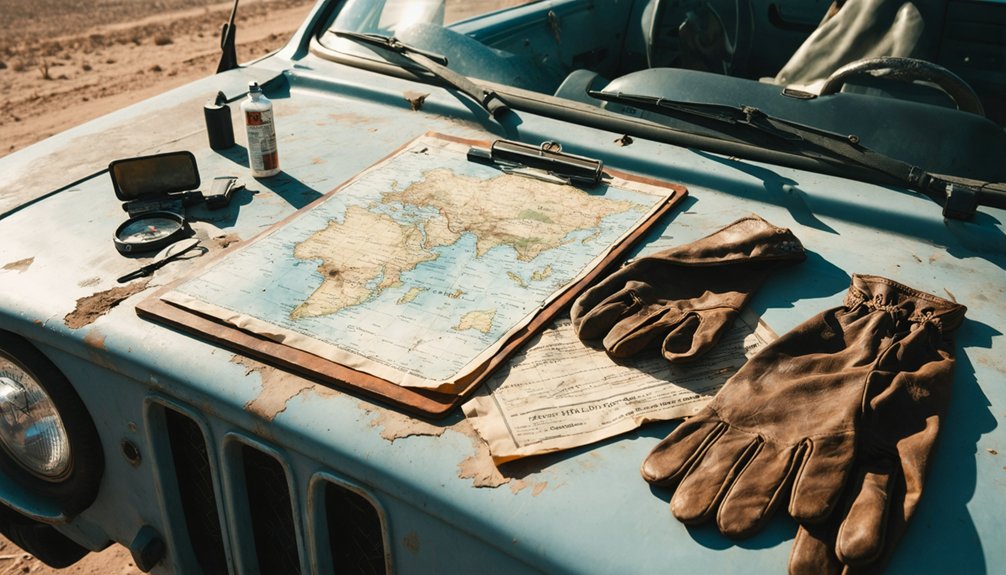
Before heading out to Tres Alamos, pack smart—the site demands more preparation than a typical historic landmark visit. Essential gear includes sturdy hiking boots, plenty of water, sunscreen, and a detailed map, since cell service along Pomerene Road runs unreliable.
The San Pedro River valley gets brutally hot in summer, so an early morning start keeps you comfortable and energized.
Wildlife awareness is non-negotiable here. Rattlesnakes, javelinas, and coyotes roam this corridor freely—watch your step on the erosion terraces and stay alert near brush.
Rattlesnakes, javelinas, and coyotes own this land—respect their territory or face real consequences.
Bring binoculars; the riparian habitat attracts impressive bird species worth spotting.
Wear layered clothing for unpredictable temperature swings, and carry a first-aid kit.
You’re exploring remote Arizona on your own terms—prepare accordingly and the experience rewards you completely.
Frequently Asked Questions
Who Was the Soza Family and Why Did They Settle Tres Alamos?
The Soza family’s legacy began when they settled Tres Alamos in 1860, establishing a cattle ranch along the San Pedro River. You’ll find their family history woven into this rugged land’s pioneering spirit.
What Was La Capilla De San Antonio De Padua De Lisboa?
Like a frontier parish bringing settlers together, La Capilla de San Antonio de Padua de Lisboa was an adobe chapel you’d find at Tres Alamos, carrying deep religious significance through its Spanish architecture while uniting the growing community.
What Unexplained Violence Contributed to Tres Alamos’s Decline?
You’ll find that Tres Alamos’s history remains shrouded in mystery, as unresolved conflicts and tragic incidents plagued the community, yet specific details of the unexplained violence that contributed to its decline aren’t fully documented or preserved today.
Did Billy Ohnesorgen’s Stage Station Serve Any Notable Historical Travelers?
You’d find that Billy Ohnesorgen’s stage station welcomed notable visitors and historical figures traveling between Tucson and Mesilla, New Mexico, including travelers actively dodging Indian threats along the dangerous San Pedro River crossing route.
Was the Late 1800S Canal at Tres Alamos Built Over a Prehistoric One?
Researchers discovered the late 1800s canal possibly followed a prehistoric one, doubling its historical significance! You’re standing where ancient builders may have engineered prehistoric canals centuries earlier — a breathtaking reminder that human ingenuity here spans thousands of years.
References
- https://en.wikipedia.org/wiki/Tres_Alamos
- https://www.ghosttowns.com/states/az/tresalamos.html
- https://www.wyattearpexplorers.com/billy-ohnesorgen–tres-alamos.html
- https://core.tdar.org/document/448860/the-tres-alamos-site-on-the-san-pedro-river-southeastern-arizona
- https://www.blm.gov/visit/tres-alamos-wilderness
- https://www.youtube.com/watch?v=uJvtntuFH_k
- https://en.wikipedia.org/wiki/Alamo_Crossing