Planning a road trip to Tybo, Nevada means heading deep into Nye County’s Hot Creek Range, where a forgotten silver boomtown waits at the end of rugged backcountry roads off Route 6. You’ll need an off-road-capable vehicle, paper maps, and a sense of adventure. Once home to nearly 1,000 residents in the 1870s, Tybo’s charcoal kilns, stone ruins, and storied past make every dusty mile worth it — and there’s far more to this canyon than meets the eye.
Key Takeaways
- Tybo is located in Nye County, Nevada, deep in Tybo Canyon off Route 6 on the eastern slope of the Hot Creek Range.
- Reaching Tybo requires an off-road-capable vehicle, paper maps or offline navigation, as backcountry roads have limited cell service.
- Historic remnants include intact charcoal kilns, the Trowbridge Store, mill foundations, and crumbling walls offering an open-air museum experience.
- Tybo boomed in the 1870s as a silver and lead mining hub, with nearly 1,000 residents at its peak in 1876.
- The scenic drive rewards visitors with dramatic canyon views, making the journey itself a worthwhile part of the road trip.
Where Exactly Is Tybo, Nevada?
Tucked away on the eastern slope of the Hot Creek Range in Nye County, Nevada, Tybo sits hidden within a dramatic canyon that rewards only those willing to venture off the beaten path.
You’ll find it off Route 6, deep in Tybo Canyon, where rugged backcountry roads demand off-grid navigation and an adventurous spirit.
The name itself carries historical significance — derived from the Shoshone word “tai-vu,” meaning “white man.”
That Tybo geography places it near the infamous Project Faultless site, adding another layer of intrigue to your journey.
Once a thriving silver and lead mining hub in the 1870s, this remote location kept the town both productive and isolated.
Today, that same remoteness preserves its eerie, authentic atmosphere, making it an unforgettable destination for freedom-seeking explorers.
How to Get to Tybo Ghost Town
Now that you know where Tybo sits on the map, getting there’s half the adventure. Head east on Route 6 through central Nevada’s wide-open desert until you spot the turnoff toward the Hot Creek Range.
From there, you’ll navigate rugged backcountry roads that demand an off-road-capable vehicle and solid navigation skills — cell service is scarce, so bring a paper map or downloaded offline route.
The drive rewards you with dramatic canyon scenery before Tybo’s ghost town ruins come into view. You’re also close to the Project Faultless nuclear test site, adding another layer of intrigue to your journey.
Embracing the remoteness is part of experiencing this place’s raw mining history firsthand. Pack extra fuel, water, and supplies — self-reliance isn’t optional out here.
Tybo’s Boom-and-Bust Silver Mining Past
When Shoshone Indians tipped off white settlers to silver veins in 1866, they unknowingly set Tybo on a collision course with boom-and-bust destiny. Silver mining exploded through the 1870s, making Tybo’s lead-silver district second only to Eureka by 1877, shipping over 250 tons of bullion monthly.
You’d have witnessed nearly 1,000 residents flooding the canyon by 1876, chasing fortunes beneath the Hot Creek Range.
But prosperity proved fragile. Ore reduction problems hit the Tybo Consolidated Mining Co. hard in 1879, triggering rapid population decline that gutted the town within a year — fewer than 100 souls remained by 1880.
Revivals in 1901, 1905, 1917, and 1925 sparked brief hope, but Tybo never recaptured its roaring prime.
What Really Happened During Tybo’s 1876 Racial Conflicts?
As you explore Tybo’s ruins, you’ll find the town’s 1876 racial conflicts reveal a community fractured along sharp ethnic lines, with Irish, Cornish, and Central European miners occupying separate sections of camp.
When Chinese woodcutters arrived to fill a labor shortage, the Workingmen’s Union responded with brutal midnight raids on the Chinese camp, wielding whips and pistols to drive them out.
This violent episode, known as the “Chinese War,” reflects the ugly undercurrent of racial hostility that ran through many of the American West’s boomtowns during this era.
Ethnic Tensions Divided Community
Beneath Tybo’s silver-rush prosperity, deep ethnic fault lines fractured the community into three distinct camps: Irish, Cornish, and Central European miners who’d carved out separate social territories within the canyon settlement.
This ethnic diversity, rather than fostering cooperation, accelerated community fragmentation as each group fiercely protected its cultural identity and economic interests.
Swiss-Italian workers added another volatile layer to these already strained divisions.
When Chinese woodcutters arrived in 1876 to address labor shortages, they became the common target that temporarily united these otherwise competing factions.
The Workingmen’s Union launched a midnight raid on the Chinese camp, wielding whips and pistols to drive them out permanently.
You’re witnessing what happens when economic anxiety collides with unchecked prejudice inside an isolated, pressure-cooker mining settlement.
Workingmen’s Union Attacks Chinese
Midnight brought no warning to Tybo’s Chinese woodcutters in 1876—just the sudden thunder of boots, the crack of whips, and the cold glint of pistols. The Workingmen’s Union stormed the Chinese camp, driving every worker out of town through coordinated violence and intimidation.
You’d be wrong to dismiss this as random lawlessness. The attack reflected deeper racial dynamics and labor conflicts festering beneath Tybo’s surface. Mine operators had hired Chinese woodcutters specifically because white workers demanded higher wages, instantly weaponizing racial resentment among struggling laborers.
The union’s midnight raid wasn’t spontaneous—it was calculated.
When you walk Tybo’s abandoned streets today, remember that beneath the picturesque ruins lies a brutal episode where economic fear transformed working men into a violent, organized mob.
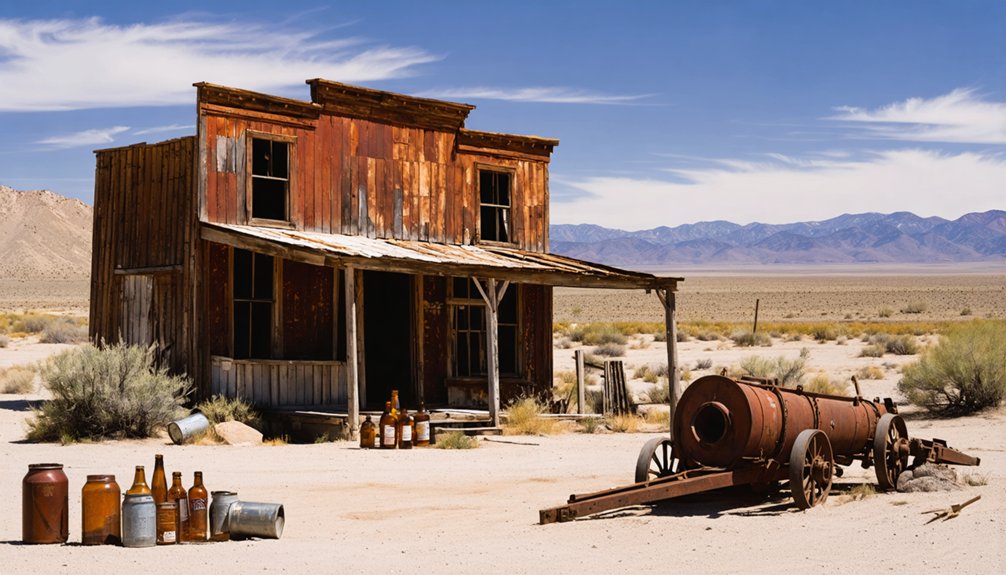
What’s Left to See at Tybo Today
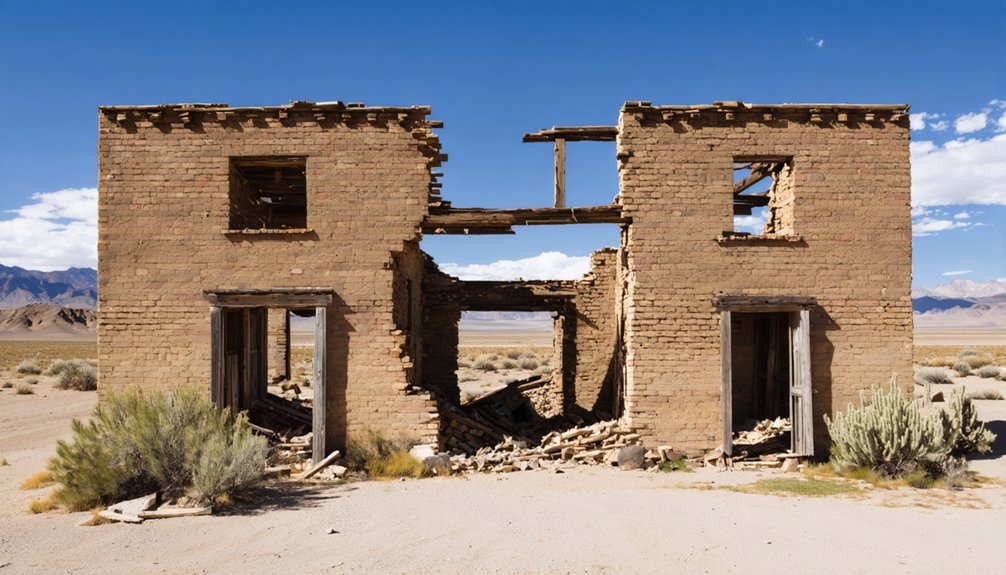
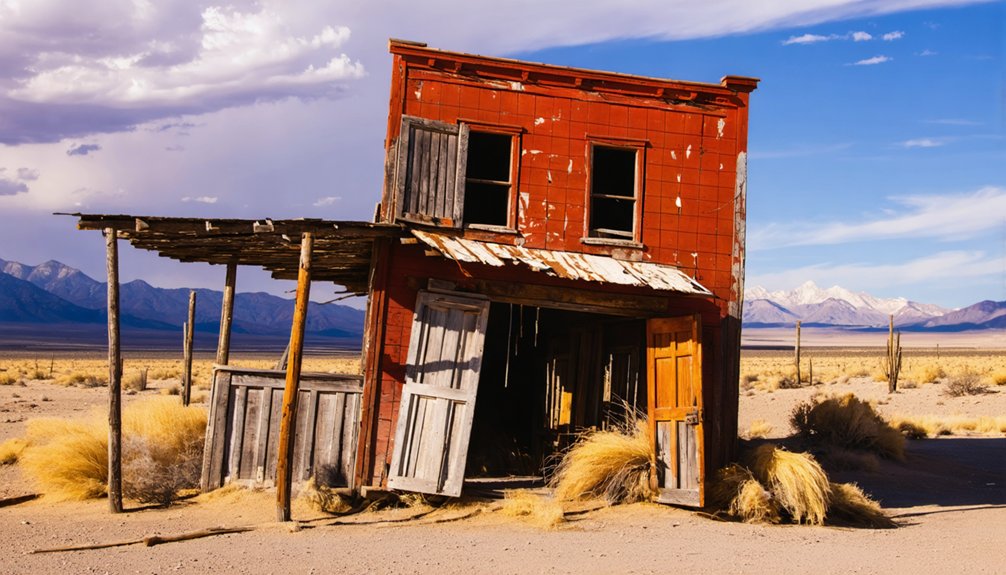
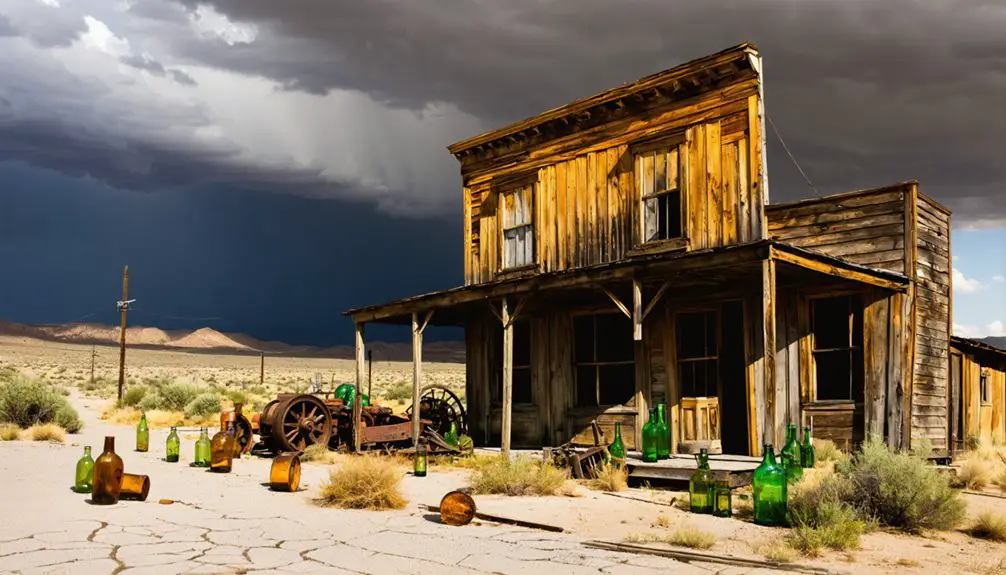
Though much of Tybo has crumbled into the desert floor, you’ll still find a surprising number of historic structures standing defiantly in the canyon.
These ghostly remnants carry real historical significance, rewarding curious explorers who make the journey.
Here’s what you can expect to discover:
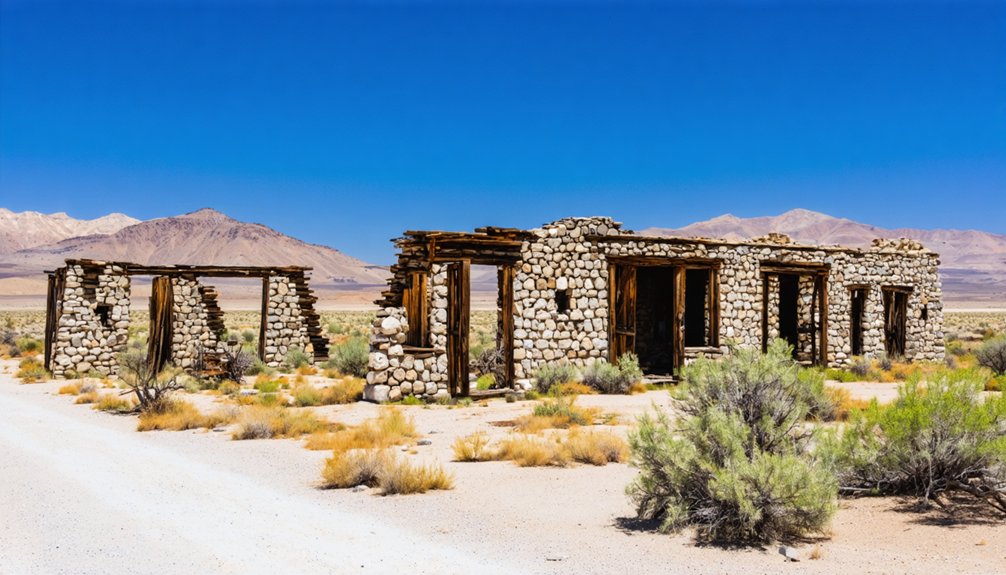
- Charcoal kilns: Over a dozen survive near town, built to fuel the silver smelters.
- Trowbridge Store: A remarkably intact 19th-century building that later served as a recreation hall.
- Mill foundations: Concrete ruins mark where serious industrial operations once thundered.
- Old house ruins: Crumbling walls greet you right at the canyon entrance.
A few occupied homes and a trailer remind you that Tybo never fully surrendered.
Explore freely, but tread respectfully through this open-air museum of Nevada’s mining era.
What to Know Before Driving Tybo’s Backcountry Roads?
Getting to Tybo means leaving pavement behind and committing to rugged backcountry roads that demand preparation. You’ll head off Route 6 into Nye County’s remote terrain, where road conditions shift fast — loose gravel, washboards, and soft shoulders can challenge even confident drivers. A high-clearance vehicle isn’t optional; it’s essential.
For navigation tips, don’t rely solely on your phone. Cell service disappears quickly out here, so download offline maps or carry a paper topographic map before you leave. GPS coordinates help, but knowing the Hot Creek Range landmarks keeps you oriented when trails fork unexpectedly.
Pack extra water, fuel, and a basic repair kit. Central Nevada’s isolation is exactly what makes Tybo worth chasing — just respect it, and the backcountry rewards you with something unforgettable.
Frequently Asked Questions
What Does the Shoshone Word “Tybo” Actually Mean?
You’ll find that in the Shoshone language, “tybo” means “white man.” It’s a fascinating piece of Tybo history that reveals how Indigenous people named this silver boomtown after the settlers who transformed their ancestral lands.
Are There Any Overnight Camping Options Near Tybo Ghost Town?
Craving freedom under Nevada’s stars? You’ll find dispersed camping near Tybo with no strict camping regulations. Explore nearby attractions like charcoal kilns and Tybo Canyon before settling in for an unforgettable off-grid night.
When Is the Best Time of Year to Visit Tybo?
Spring and fall offer the best season to visit Tybo, as you’ll enjoy mild weather conditions perfect for exploring ruins. Avoid summer’s scorching heat and winter’s harsh desert cold for a truly unforgettable adventure.
Is It Legal to Collect Artifacts or Souvenirs From Tybo’s Ruins?
You shouldn’t collect artifacts from Tybo’s ruins. Legal restrictions protect these historic remnants, and artifact preservation laws apply on public lands. Respect the site by leaving everything in place, so future explorers can enjoy Tybo’s fascinating history too.
Are Guided Tours Available for Visiting Tybo Ghost Town?
No formal guided tours exist for Tybo, so you’ll initiate independent guided exploration through its hauntingly beautiful ruins. Embrace the freedom of discovering its historical significance firsthand, traversing rugged backcountry roads to uncover Nevada’s fascinating silver mining past yourself.
References
- https://historynet.com/ghost-town-tybo-nevada/
- https://www.youtube.com/watch?v=YcopXrdIX_M
- https://forgottennevada.org/sites/tybo.html
- https://www.nevadaappeal.com/news/2014/sep/25/ghost-town-of-tybo-offers-history-scenery/
- https://www.backroadswest.com/blog/tybo-ghost-town-and-project-faultless/
- https://pinintheatlas.com/travel-blogs/tybo-ghost-town-nevada/
- https://www.nvexpeditions.com/nye/tybo.php
- https://en.wikipedia.org/wiki/Tybo