Planning a ghost town road trip to Westminster Station, Vermont starts with a straightforward drive up Interstate 91, exiting at 3 or 4, then following Vermont Route 5. You’ll find preserved rail-era architecture, wide open landscapes, and a quiet authenticity that curated tourist spots can’t replicate. Nearby abandoned communities like Glastenbury and Somerset add serious depth to your itinerary. Pack sturdy boots, a first-aid kit, and offline maps before you go — there’s far more to uncover here than most visitors expect.
Key Takeaways
- Westminster Station preserves Vermont’s lost rail era, featuring original waiting rooms, ticket offices, and woodwork that authentically evoke historic train travel.
- From Brattleboro, take I-91 north and exit at 3 or 4, then follow Route 5 to reach Westminster Station easily.
- Nearby ghost towns worth visiting include Somerset, Glastenbury, Greenbanks Hollow, Ricker Basin, and Lewiston, each offering unique abandoned history.
- Pack sturdy boots, a first-aid kit, offline maps, and a satellite communicator, as GPS signals are unreliable in remote areas.
- Always inform someone of your exact route and expected return time before exploring Westminster Station’s surrounding wilderness.
What Makes Westminster Station Worth the Drive From Southern Vermont
Although Vermont’s back roads hide plenty of forgotten places, Westminster Station stands out as one of the most tangible connections to the state’s lost rail era. You’ll find preserved waiting rooms and a ticket office that transport you back to when rail travel shaped New England life. That historical significance alone justifies the drive, but Westminster doesn’t stop there.
Positioned near Interstate 91, it’s genuinely accessible without sacrificing its remote, untamed character. The scenic beauty surrounding the station rewards you with sweeping views that feel earned rather than manufactured. Windsor County’s landscape stretches openly around you, giving that rare sense of unscripted exploration.
Whether you’re driving up from Brattleboro or cutting north from Bellows Falls, Westminster Station delivers authenticity that curated tourist destinations simply can’t replicate.
How to Reach Westminster Station From Boston, Brattleboro, and Bennington
Whether you’re starting from Boston, Brattleboro, or Bennington, Interstate 91 serves as your backbone for reaching Westminster Station.
From Boston, you’re looking at roughly 140 miles northwest — a straightforward drive that rewards you with increasingly rural landscapes as Vermont unfolds ahead.
140 miles northwest of Boston, Vermont slowly takes over — the skyline fades, and the rural world opens wide.
From Brattleboro, hop onto I-91 north and take exit 3 or 4, then follow Vermont Route 5 directly into Westminster. It’s a quick, scenic route that hints at the Westminster history waiting ahead.
From Bennington, head north approximately 1.5 hours, weaving through southern Vermont’s rolling terrain before connecting with I-91.
These scenic routes let you move freely through the landscape at your own pace, setting the mood perfectly before you step onto abandoned ground.
What to Expect When You Explore Westminster Station
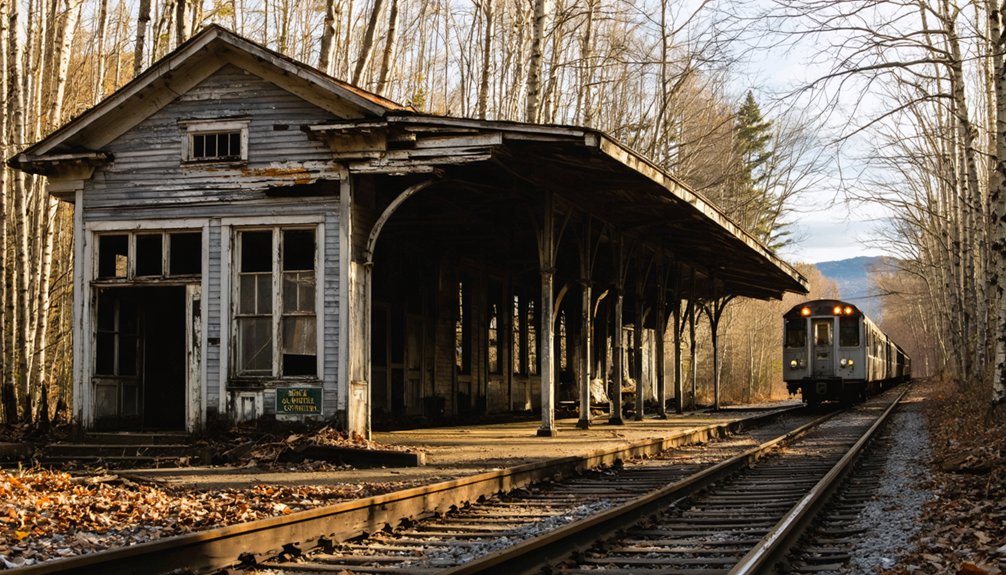
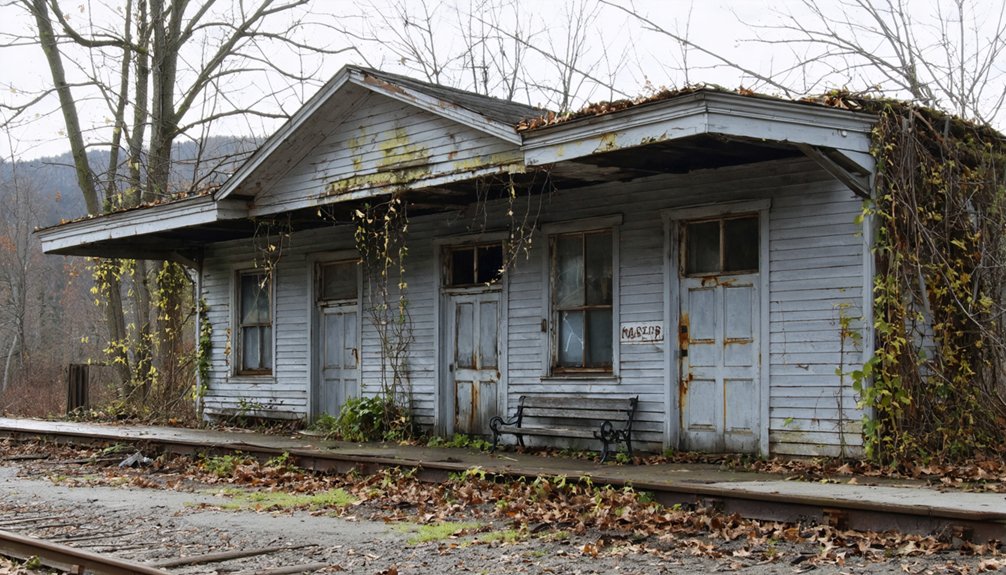
Once you arrive at Westminster Station, you’ll find a preserved waiting room and ticket office that pull you straight into the site’s layered past. Preservation efforts have kept the original structures remarkably intact, letting you move through spaces that once hummed with rail traffic and departing passengers.
Run your hand along the woodwork, study the architecture, and feel the station history settle around you.
Step outside and the surrounding landscape opens wide, offering views that reward anyone craving open space and quiet. The remoteness is part of the appeal — no crowds, no noise, just wilderness and weathered history.
Bring sturdy footwear, arrive during daylight, and give yourself enough time to absorb what the site genuinely offers before moving toward your next stop on the route.
The Closest Vermont Ghost Towns to Westminster Station
Westminster Station holds its own, but the surrounding region rewards those who keep moving.
Lewiston sits quietly in Windsor County, another chapter in ghost town history worth tracing. Head south and you’ll find Somerset clinging to existence with just six residents, its abandoned infrastructure slowly surrendering to forest.
Swing west toward Bennington County and Glastenbury pulls you into the eerie Bennington Triangle, where wilderness swallowed an entire community whole.
Further north, Greenbanks Hollow offers a former mill town complete with a covered bridge, while Ricker Basin waits inside a state park on Ricker Mountain.
Each stop deepens the story. Vermont’s forgotten places aren’t isolated curiosities — they’re connected threads in a landscape that rewards the curious traveler willing to follow the road wherever it leads.
Why the Bennington Triangle Ghost Towns Belong on Your Westminster Route
Few detours reward curiosity the way the Bennington Triangle does. Southwest of Westminster, this 36-square-mile wilderness shelters the ghost towns of Glastenbury, Fayville, and Somerset — each carrying layers of Bennington lore that’ll sharpen your sense of just how wild Vermont’s history runs.
You’re not just chasing ghost town history here. You’re stepping into a landscape tied to unexplained disappearances, colonial-era mysteries, and communities swallowed by wilderness.
Somerset barely qualifies as inhabited, with only six residents remaining. Glastenbury is pure abandonment.
Route 5 south to Interstate 91 connects Westminster to Bennington County efficiently, letting you loop these eerie stops into a single road trip.
Go during daylight — the terrain is remote, the atmosphere is dense, and the freedom to explore demands respect.
How to Build a Ghost Town Loop Starting From Westminster Station
Building a ghost town loop from Westminster Station is simpler than it sounds — and far more rewarding.
Start at Westminster, then head south on Vermont Route 5, picking up Interstate 91 toward Brattleboro. From there, cut west through Windham County to reach Somerset, a near-ghost town clinging to six remaining residents.
Push further into Bennington County, where Glastenbury’s ghost town history and the eerie Bennington Triangle demand exploration.
Swing north through scenic routes along Route 9 and Route 100, passing remnants of forgotten settlements tucked between forested ridgelines.
You’ll feel the weight of Vermont’s abandoned past pressing against every mile.
The full loop runs roughly two to three hours of driving, rewarding you with layered history, wilderness solitude, and the kind of freedom most road trips only promise.
How to Stay Safe Exploring Westminster Station and Remote Vermont Sites
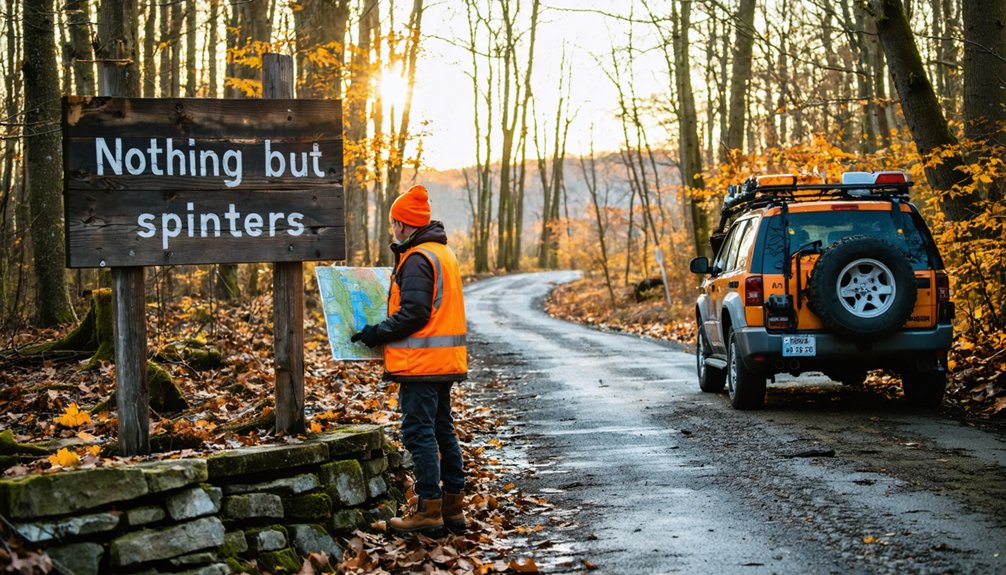
Before you set foot in Westminster Station or any remote Vermont site, you’ll want to pack essential safety gear — sturdy boots, a charged phone, a paper map, and a first-aid kit — since cell service can vanish in these wilderness stretches.
Traversing remote terrain means staying on marked trails, noting landmarks as you go, and telling someone your itinerary before you leave.
If an emergency hits, know your nearest exit route, keep Interstate 91 exits 3 and 4 in mind as your fastest path back to civilization, and always carry enough water and daylight to handle the unexpected.
Essential Safety Gear
Exploring abandoned sites like Westminster Station and the remote wilderness around the Bennington Triangle demands preparation you shouldn’t overlook.
Pack the right safety equipment and essential supplies before you venture into Vermont’s forgotten corners.
- First aid kit — bandages, antiseptic wipes, and pain relievers handle minor injuries on isolated trails.
- Navigation tools — a physical map and compass backup your phone when cell service disappears deep in Windsor County wilderness.
- Flashlight with extra batteries — station interiors and dense forest trails get surprisingly dark.
- Emergency whistle and charged phone — signal for help fast if something goes wrong miles from the nearest town.
Freedom means exploring on your terms, but smart preparation keeps that freedom intact.
Once you’ve packed your safety gear, knowing how to move through Vermont’s remote terrain is what keeps your adventure from turning into a crisis.
Trail navigation around Westminster Station and nearby ghost towns like Glastenbury demands more than a phone signal — download offline maps before you leave.
Terrain challenges here are real. Dense forest, uneven ground, and unmarked paths can disorient even experienced explorers.
Stick to established trails, watch for soft soil near abandoned structures, and never explore old buildings alone.
The Bennington Triangle‘s wilderness spans 36 square miles, where trails disappear fast.
Move deliberately, mark your entry points, and check conditions before hiking.
Vermont’s backcountry rewards those who respect it — and punishes those who don’t. Freedom means knowing your limits.
Emergency Preparedness Tips
Safety isn’t optional when you’re pushing into Vermont’s backcountry, and Westminster Station’s remote location makes preparation non-negotiable.
Windsor County’s wilderness can shift quickly, so you’ll want these essentials locked down before you leave:
- First aid kit — Pack wound care, blister treatment, and any personal medications you depend on.
- Safety communication device — Cell service dies fast out here; carry a satellite communicator or personal locator beacon.
- Navigation tools — Download offline maps and bring a physical backup; GPS signals aren’t guaranteed.
- Emergency contacts — Tell someone your exact route, destination, and expected return time before departing.
You’re chasing freedom on these forgotten roads, but smart preparation keeps that freedom intact when conditions turn unpredictable.
Frequently Asked Questions
Is Westminster Station Accessible Year-Round or Only During Certain Seasons?
You can visit Westminster Station year-round, but you’ll want to weigh seasonal accessibility carefully. Winter’s harsh Vermont weather considerations make summer and fall your best bets for freely exploring this hauntingly beautiful, remote abandoned treasure.
Are There Any Entry Fees or Permits Required to Visit Westminster Station?
You don’t need permits or pay entry fees to explore Westminster Station’s historical significance freely. There are no entry restrictions, so you can roam the preserved waiting room and ticket office on your own terms.
What Photography Equipment Works Best for Capturing Abandoned Station Interiors?
Like Ansel Adams capturing time’s remnants, you’ll want a wide-angle lens and tripod for abandoned photography. Bring a portable LED light to master interior lighting, revealing Westminster Station’s forgotten details in stunning, evocative clarity.
Are Pets Allowed When Exploring Westminster Station and Nearby Ghost Towns?
Pet-friendly policies vary by site, so you’ll want to check local regulations beforehand. When exploring these haunting landscapes with your furry companion, practice ghost town etiquette—keep pets leashed, respect preserved structures, and leave every eerie space undisturbed.
Which Nearby Towns Offer Overnight Accommodation Closest to Westminster Station?
Like seasoned explorer John Muir seeking refuge after a wilderness trek, you’ll find cozy overnight stays in Bellows Falls and Brattleboro, both offering charming historic inns and local eateries just minutes from Westminster Station.
References
- https://en.wikipedia.org/wiki/List_of_ghost_towns_in_Vermont
- https://vermontcountry.com/2023/10/26/the-haunting-of-glastenbury-mountain/
- https://www.youtube.com/watch?v=ScW-H7A8yL8
- https://www.gpttraveldiary.com/westminster-vt/