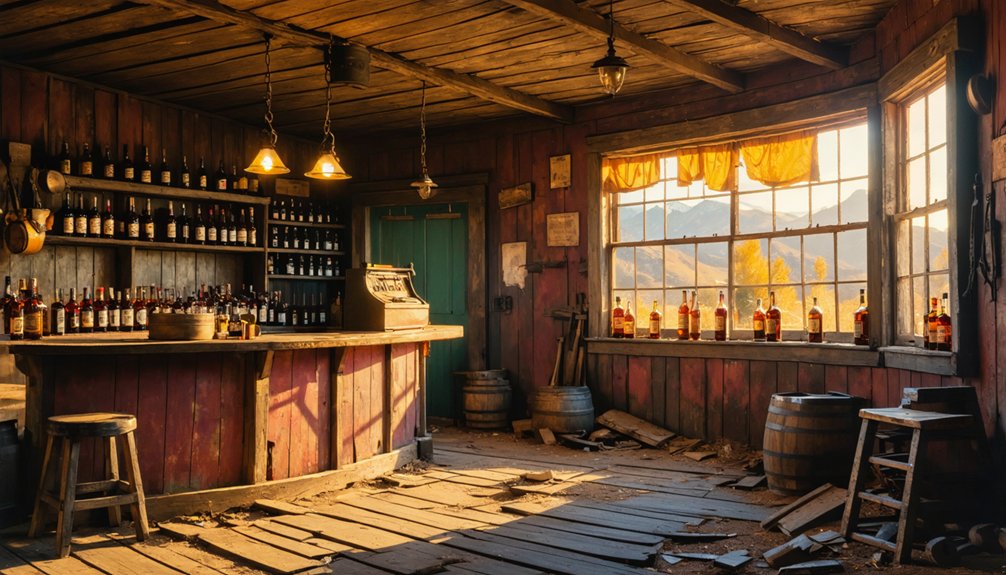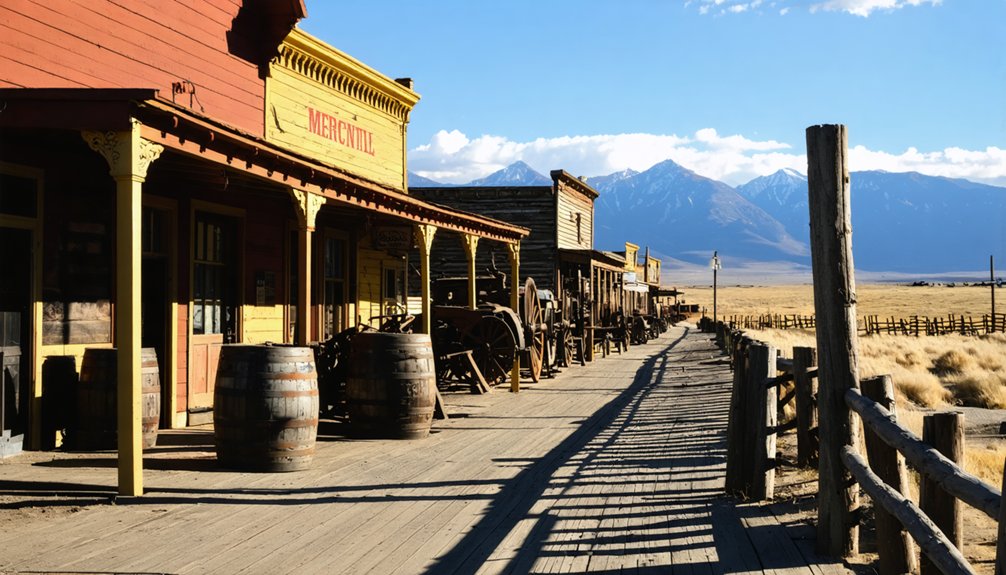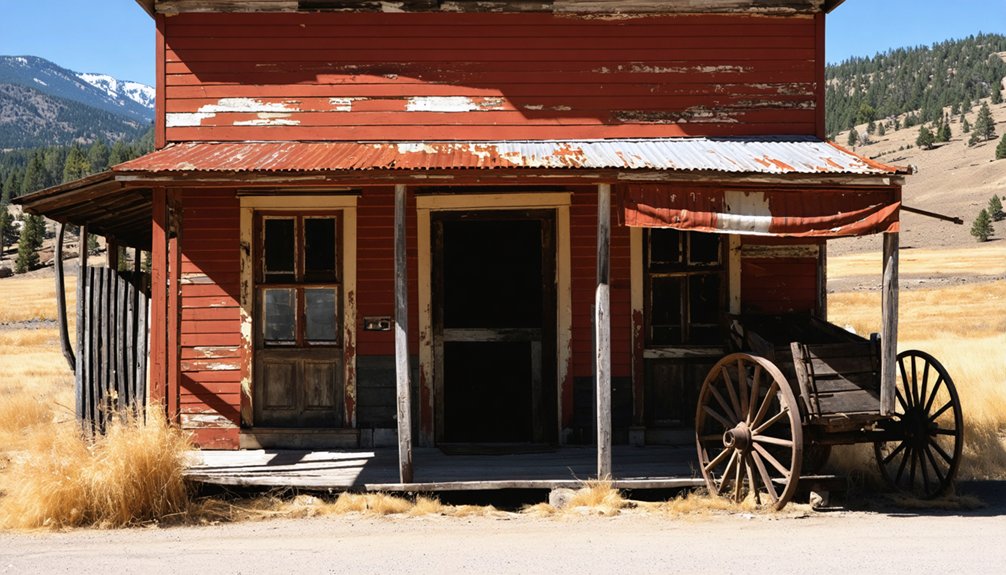
Politana was a short-lived settlement founded around 1840 by New Mexican pioneers led by Hipólito Espinosa along the Santa Ana River. You’ll find it was initially a thriving agricultural community with connections to the Old Spanish Trail trading network. The settlement faced devastating challenges including water disputes and the catastrophic Great Flood of 1862, which ultimately led to its abandonment. The cultural legacy of these Genízaro founders continues to influence Southern California’s multicultural history.
Key Takeaways
- Politana was established around 1840 by New Mexican pioneers led by Hipólito Espinosa along the Santa Ana River.
- The settlement served as an important trading post on the Old Spanish Trail linking New Mexican and Californian economies.
- Water disputes in the early 1900s threatened Politana’s agricultural livelihood as Los Angeles acquired critical water rights.
- The Great Flood of 1862 caused catastrophic damage to adobe structures, leading to permanent migration from Politana.
- Few archaeological remains exist today, primarily irrigation system remnants and artifacts that document the settlement’s brief existence.
The Birth of a New Mexican Settlement in California (1840)
Around 1840, the first Spanish settlement in the San Bernardino Valley emerged when New Mexican pioneers led by Hipólito Espinosa established Politana on land owned by the Lugo family. The settlement’s name derived from Espinosa’s given name, marking his vital role in its leadership.
The original colonizing party consisted of families from Abiquiú, New Mexico, who began arriving in 1840 with most reaching the area by 1842. Settlement leadership also included figures like Santiago Martínez and Francisco Esteban Quintana, who organized different groups throughout the region.
Settlers received tracts fronting the Santa Ana River, where they developed agricultural practices suited to the fertile valley. They built homes, cultivated crops, and raised livestock, establishing a self-sufficient community that served as an important waypoint for travelers on the Old Spanish Trail. The community would eventually contribute settlers to Agua Mansa, as the main colonizing party from Abiquiú had established both settlements during this period of migration. The expedition from New Mexico to California covered approximately 1200 miles and typically took between two and four months to complete.
Religious Life and Community Formation
Religious life in Politana began even before the New Mexican settlement, when Father Francisco Dumetz established an altar in 1810 as part of Mission San Gabriel‘s efforts to Christianize the indigenous Guachama Indians. The mission named the region after Saint Bernardino of Siena and left Native American converts like Hipolito to oversee religious outposts.
When an earthquake destroyed the chapel, local medicine men interpreted it as divine displeasure, driving priests away. Despite this setback, religious gatherings continued to shape the community’s identity. The San Bernardino Estancia was constructed around 1830 as a permanent religious outpost in the region. The mission system created social structures that fostered community resilience, clustering converts around religious institutions.
Later, Mormon pioneers established a religious colony with remarkable tolerance for diversity. Some pioneers arrived aboard the Ship Brooklyn which transported hundreds of Mormon settlers to California in 1846. Though Brigham Young recalled most settlers in 1857, their influence on community formation remained significant throughout Politana’s brief existence.
Economic Activities and Trade Along the Old Spanish Trail
The Old Spanish Trail, stretching approximately 700 miles from Santa Fe to Los Angeles, transformed Politana into a significant economic hub beginning in 1829.
As you explore this ghost town’s history, you’ll discover how it functioned as an essential outpost linking New Mexican and Californian economies through indigenous and Hispanic trade networks.
further along the coast lies the fascinating history of Port Chicago, California, a site marked by its role in military logistics during World War II. This small town became crucial for the transportation of cargo to support the war effort, shaping not only its own community but also the broader military infrastructure of the nation. Today, remnants of its past serve as a poignant reminder of the sacrifices made and the lives changed through its storied legacy.
Trade relationships flourished as mule-packed caravans carried handwoven textiles, hides, and crafted goods westward, returning eastward with California’s prized horses and mules. These exchanges typically involved 60-man expeditions traversing harsh terrain unsuitable for wagons.
Politana’s significance extended beyond mere commerce—it represented broader economic integration within a commercial triangle connecting the Santa Fe Trail and Mexico’s Camino Real. The trail was commonly known to Hispanos as el Camino de California rather than the Old Spanish Trail.
After 1848, though alternative routes emerged following the Mexican-American War, Politana’s legacy as an intercultural trading center continued to influence regional development throughout California’s frontier economy. Trading parties typically traveled in winter months due to extreme heat conditions that made summer journeys dangerous across the western portions of the trail.
Water Disputes and the Great Migration
While Politana’s position along the Old Spanish Trail established it as a trading center, water disputes would dramatically reshape its future in the early 1900s.
Los Angeles’ aggressive acquisition of water rights through agents Eaton and Mulholland threatened Politana’s agricultural livelihood as part of the broader Owens Valley conflict.
You’d have witnessed the devastating impact when the 1913 completion of the LA Aqueduct diverted essential water from the region, turning fertile lands barren. The project’s completion was marked by Mulholland’s famously brief “Take it” speech at the opening ceremony.
Farmers initially resisted, culminating in the 1924 dynamiting of the Alabama Gates by armed ranchers determined to protect their way of life. This resistance ultimately failed against LA’s urban expansion ambitions.
The economic devastation forced many residents to abandon their homes and livelihoods, contributing to Politana’s transformation from a thriving community into a ghost town. The creation of an irrigation cooperative in 1923 represented a final organized attempt by local farmers to maintain control of their water resources.
The Devastating Flood of 1862 and Its Aftermath
Devastating the western United States with unprecedented force, the Great Flood of 1862 arrived as a catastrophic series of atmospheric river events between December 1861 and February 1862, fundamentally altering Politana’s landscape and future prospects.
Like many settlements along California’s waterways, Politana faced unprecedented flood devastation when the Central Valley transformed into an inland sea 300 miles long.
You would’ve witnessed the region’s adobe structures dissolving in floodwaters that persisted for months. The flood began on Christmas Eve 1861 and continued relentlessly for 43 days, giving residents little time to evacuate or salvage possessions. The economic impact proved catastrophic—crops destroyed, livestock drowned, and land rendered unusable. The disaster bankrupted the state and destroyed approximately one-fourth of California’s economy.
Despite attempts at historical resilience, Politana joined settlements like Agua Mansa that never recovered.
The flood’s aftermath forced a permanent migration away from the site, ultimately cementing Politana’s fate as one of California’s ghost towns.
Archaeological Remains and Historical Traces
You’ll find minimal archaeological remains of Politana today, with excavations having uncovered primarily underground irrigation system remnants.
These waterworks, constructed by early settlers in the 1840s, featured hand-dug channels lined with local stone that distributed water from nearby springs to agricultural fields.
The irrigation network’s sophistication demonstrates the engineering capabilities of the community despite the settlement’s relatively brief occupation before the catastrophic 1862 flood washed away most surface structures.
Archaeological Excavations Revealed
Archaeological investigations at the Politana site have yielded limited but informative findings about this forgotten California settlement. The excavations have uncovered artifacts typical of early 19th-century settlements, including ceramics, glass, and metal objects consistent with other early California communities.
Through artifact analysis, archaeologists have documented evidence of domestic activity, including hearths and refuse pits, though no considerable architectural remains or foundations exist.
Excavation techniques have included intensive pedestrian surveys with 10-meter transects across open areas, though paved and disturbed sections remained unsurveyed due to poor visibility.
Despite being listed in the California Historical Resources Information System as historically noteworthy, no NRHP-listed sites or gold rush era remains have been identified. The landscape bears little visible evidence of Politana’s past, with modern development and agriculture having considerably altered the original setting.
Underground Irrigation Remnants
Despite thorough archaeological investigations, remnants of underground irrigation systems at Politana remain largely elusive, reflecting the settlement’s brief existence before its destruction. You won’t find sophisticated subsurface canals here, as early 19th-century irrigation techniques primarily utilized surface-level ditches rather than complex underground networks.
The most significant water management structure in the area, Mill Creek zanja (constructed 1820-1830), represents the valley’s oldest irrigation infrastructure, combining surface canals with occasional subsurface approaches to reduce evaporation.
While indigenous Serrano peoples likely employed simple earthworks for water control, archaeological evidence of these practices is minimal. The region’s early irrigation efforts laid groundwork for southern California’s later water projects, though Politana’s premature abandonment limited development of lasting irrigation infrastructure at the settlement itself.
Cultural Legacy of Politana’s Genízaro Founders
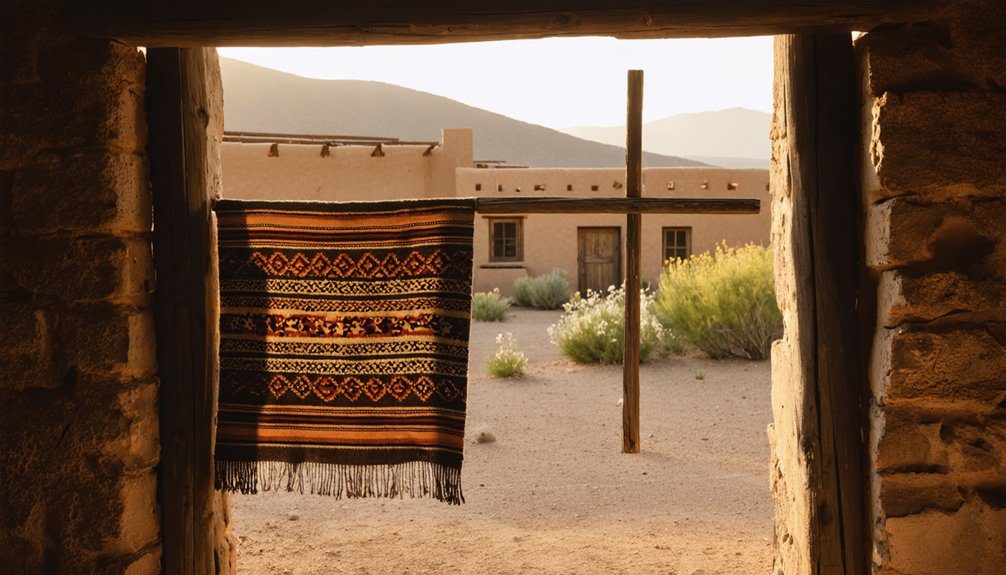
The cultural legacy of Politana’s Genízaro founders represents a distinctive chapter in California’s multicultural history that’s often overshadowed by the dominant Spanish-Mexican narrative.
These New Mexican settlers established a unique genízaro culture that combined frontier resilience with communal identity, creating settlements independent from mission control.
You’ll find their cultural influence persisted through:
- Religious autonomy – establishing Southern California’s first non-mission parish
- Agricultural innovation – developing irrigation systems that supported their independent communities
- Resilient community structure – forming pueblo-style settlements through kinship networks
- Enduring heritage – maintaining cultural continuity through descendants still present in Colton
Despite eventual displacement from Politana to Agua Mansa and La Placita, these settlers’ legacy lives on through their descendants and the pioneering spirit they brought to California’s borderlands.
Frequently Asked Questions
What Modern Landmarks Exist at the Former Politana Site Today?
Like ghosts of the past, you’ll find only historical markers and interpretive panels at Politana today. Modern remnants are limited to signage maintained by Colton Historical Society, with no dedicated historical preservation structures remaining.
Can Visitors Access Any Historical Markers Commemorating Politana?
You won’t find dedicated markers specifically commemorating Politana’s historical significance. Instead, your visitor experience might include nearby accessible sites like Agua Mansa Pioneer Cemetery or Fort Benson, which relate to the region’s early settlement chronology.
Were Any Artifacts From Politana Preserved in Local Museums?
Like missing pieces from history’s puzzle, you’ll find no Politana artifacts in local exhibitions. Despite regional artifact preservation efforts at nearby ghost town museums, Politana’s specific relics remain remarkably absent from collections.
Did Any Notable Historical Figures Visit Politana During Its Existence?
You’ll find Father Jose Sanchez’s 1821 exploratory visit most significant, as he assessed the area for mission potential. No major political events or famous visitors beyond Don Jose Tomas Salazar in 1843 are documented.
How Did Indigenous Populations Interact With Politana’s New Mexican Settlers?
You’ll find the Cahuilla formed complex relationships with New Mexican settlers through cultural exchange and mutual economic impact, serving as ranch workers, guards, and trade partners while maintaining distinct communities nearby.
References
- https://www.sanbernardino.gov/1030/S-3-Pageant-of-History
- https://foohowser.com/haunted-history-tour/
- https://californiamissionsfoundation.org/articles/agua-mansa-an-outpost-of-san-gabriel/
- https://www.cincinnatireview.com/articles/erasure-lineage/
- https://en.wikipedia.org/wiki/List_of_ghost_towns_in_California
- https://www.nps.gov/articles/000/hipolito-espinosa-the-old-spanish-trail.htm
- https://oldspanishtrail.org/chronology/
- https://manitos.net/2019/09/05/hipolito-espinosa-and-the-old-spanish-trail/
- https://en.wikipedia.org/wiki/Politana
- https://planning.lacity.gov/odocument/4f3c4825-6bf8-4c72-b8ac-ae4ff0efc2a0/Spanish Colonial and Mexican Era Settlement