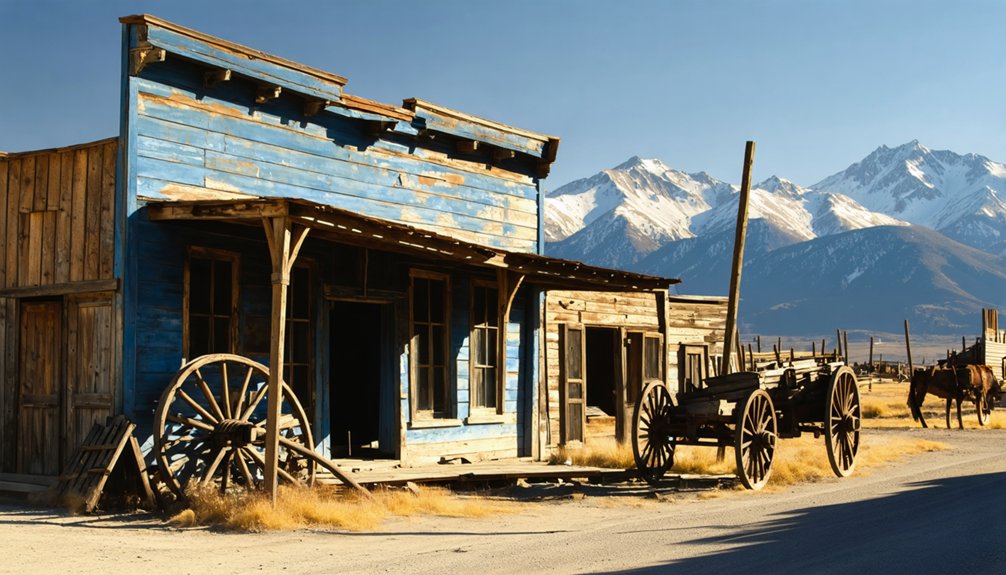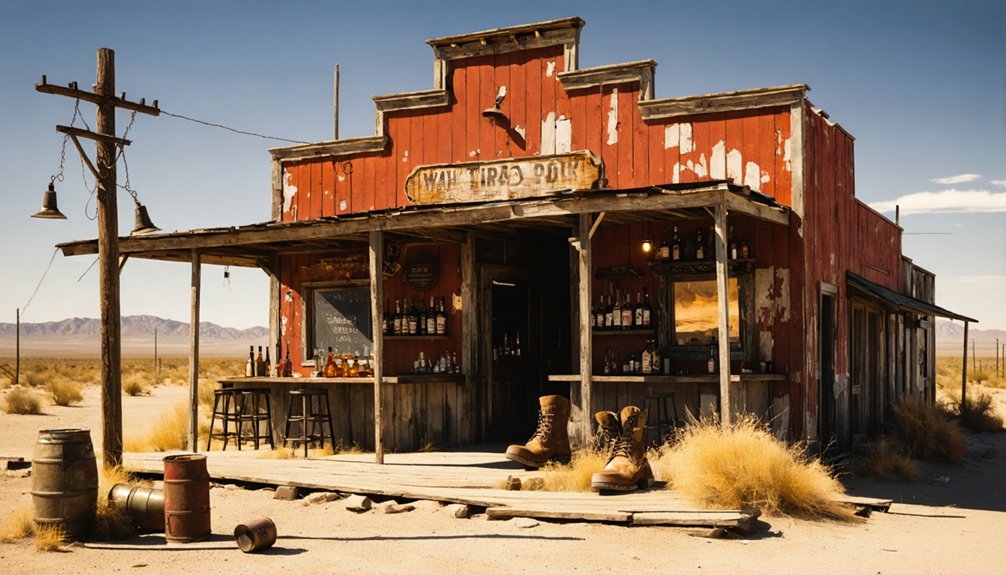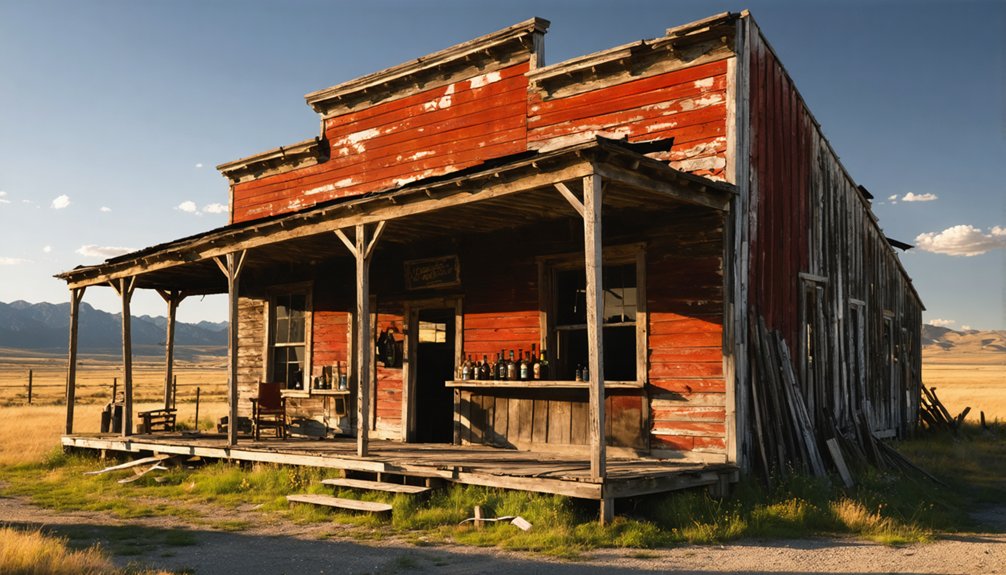
You’ll discover America’s best-preserved ghost towns scattered across the Western landscape, from Bodie’s 110 structures in “arrested decay” to St. Elmo’s resilient wooden buildings. These time capsules showcase the dramatic boom-and-bust cycles of mining communities, where economic prosperity vanished almost overnight. Through intimate guided tours, you can experience the authentic architecture, diverse social dynamics, and even paranormal encounters that make these silent settlements so compelling. The West’s forgotten chapters await your footsteps.
Key Takeaways
- Bodie, California maintains over 110 original structures in “arrested decay,” offering authentic glimpses into 19th century mining life.
- Ghost towns like St. Elmo and South Pass City preserve architectural heritage through specialized restoration techniques and 3D mapping.
- Guided small-group tours provide immersive historical experiences beyond casual sightseeing, including artifact handling and historical reenactments.
- Mining boom towns showcase the economic cycle from rapid growth to abandonment following resource depletion or market crashes.
- Locations like Jerome and Bannack attract visitors with both historical significance and reported paranormal activity, boosting tourism.
Time Capsules: America’s Best-Preserved Ghost Town Destinations
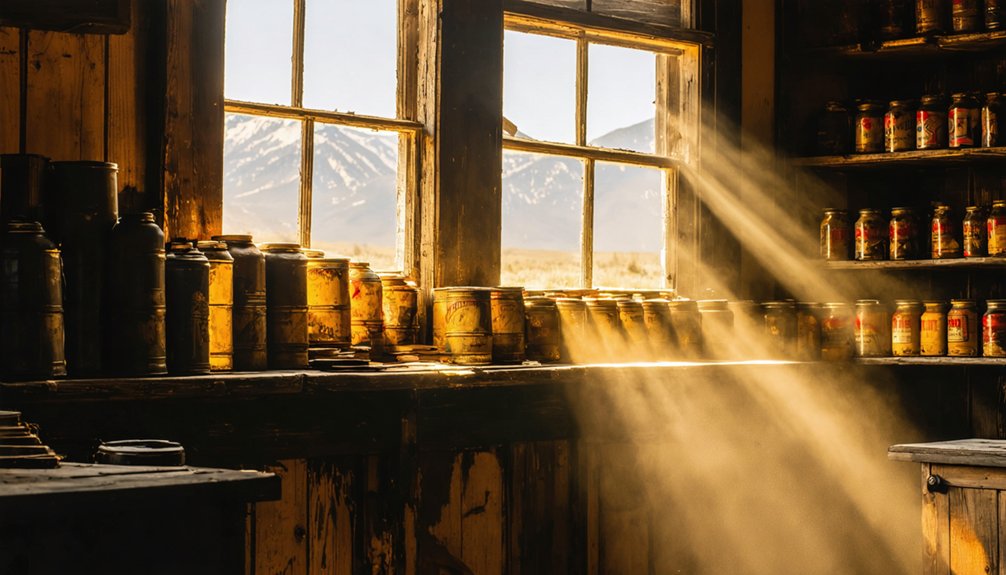
While many ghost towns across the Western United States have succumbed to the ravages of time, several remarkably intact settlements offer visitors authentic glimpses into America’s frontier past.
Bodie, California stands out with over 110 original structures maintained in “arrested decay,” preserving its cultural significance without compromising authenticity.
Bodie’s arrested decay philosophy preserves frontier authenticity while allowing visitors to experience genuine California gold rush heritage.
Meanwhile, St. Elmo’s wooden buildings have withstood a century of Colorado mountain seasons, protected by their isolation among towering pines.
In Wyoming, South Pass City represents exemplary historic preservation with 24 restored structures and period exhibits near the Oregon Trail.
For those seeking atmospheric ruins, Rhyolite, Nevada presents artistic decay in a dramatic desert setting, while Utah’s Grafton offers well-preserved pioneer buildings in peaceful proximity to Zion National Park—each a time capsule of Western ambition and resilience.
Jerome, Arizona transformed from a bustling copper mining town into an artist haven where visitors can experience paranormal encounters at the historic Jerome Grand Hotel, particularly in the notorious room 32.
Bannack, Montana captivates visitors with its meticulously preserved historic buildings including the iconic Hotel Meade with its original wallpaper and elegant curving staircase.
Mining Booms and Economic Busts: The Rise and Fall of Western Settlements
In the rough-hewn landscape of the American West, precious metal discoveries ignited explosive population growth that transformed barren outposts into bustling urban centers virtually overnight.
These mining impacts radically altered settlement patterns as fortune-seekers flooded territories from California to South Dakota.
You’ll find the boom-bust cycle defined Western development through:
- Dramatic population shifts with male-to-female ratios reaching 9:1 in newly established mining towns
- Ethnic diversity flourishing until exclusionary policies limited Chinese participation after 1882
- Corporate mining operations replacing individual prospectors as surface deposits depleted
- Economic collapse following ore depletion or market crashes, like the 1893 silver market collapse
When the mineral wealth vanished, so did the population.
Towns that couldn’t diversify their economies were abandoned, leaving behind the silent remnants you can explore today. The environmental legacy of these operations remains visible through poisonous contamination of local water sources from mercury used in gold extraction processes.
Nevada experienced this pattern dramatically with the discovery of the Comstock Lode in 1859, which triggered a silver mining boom that would dominate the territory’s economy for decades.
Architectural Wonders Frozen in Time: Building Preservation Techniques
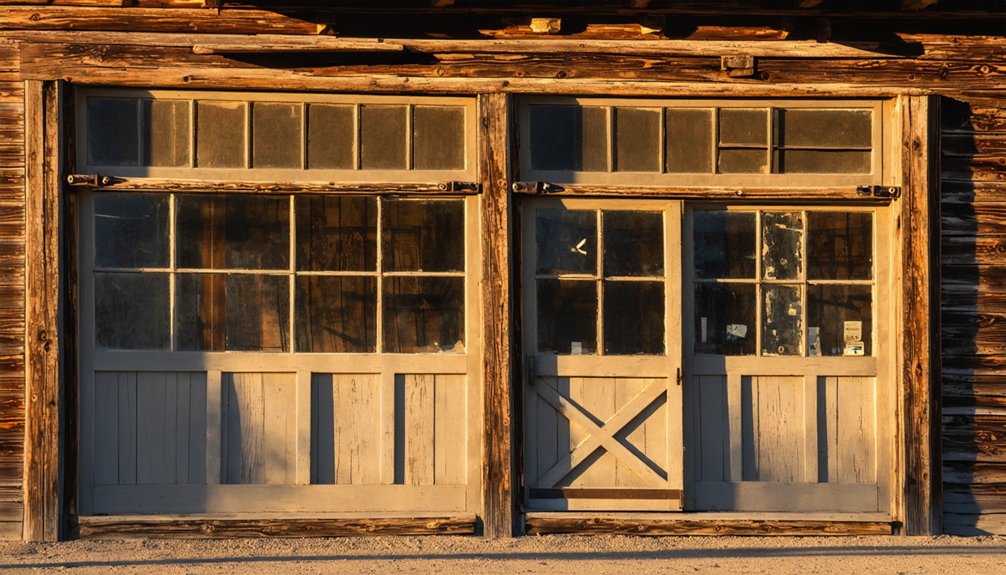
As time stands still in these abandoned settlements, preservation specialists employ sophisticated techniques to maintain architectural treasures without erasing their ghostly character.
You’ll witness the power of digital preservation as 3D mapping drones create detailed twins of weathered structures, generating precise architectural documentation for future generations.
The “arrested decay” approach you’ll encounter prioritizes structural stabilization while honoring authenticity—reinforcing foundations and supporting beams without sacrificing the hauntingly beautiful patina of age.
Craftsmen meticulously reproduce traditional materials, using lime plaster on adobe walls and creating exact duplicates of deteriorated wooden elements.
When you explore these sites, you’re seeing both preservation science and cultural respect at work—where new techniques protect historic places while indigenous building methods inform authentic replicas that educate visitors about the vanished communities that once thrived here.
Visitors to Garnet, Montana can explore one of the West’s best-preserved ghost towns featuring more than twenty wooden buildings that showcase late 1890s mining boom architecture.
Groups like the Ghost Town Club of Colorado have established dedicated Preservation Funds to support these critical restoration projects throughout the American West.
Beyond Tourism: Experiencing History Through Guided Exploration
Guided exploration transforms your ghost town experience from casual sightseeing to profound historical immersion, connecting you directly with the layered narratives of abandoned settlements.
as you uncover stories of resilience and survival, each crumbling building stands as a testament to a bygone era. preserving history in abandoned towns allows future generations to appreciate the rich tapestry of human experience, fostering a deeper understanding of the past. by engaging with these sites, visitors participate in a collective memory that honors those who once called these places home.
Step beyond ruins into stories—where abandoned doorways become portals to forgotten lives and vanished dreams.
When you join a tour led by locally trained experts, you’ll discover nuanced perspectives through local storytelling that casual visitors miss entirely.
- Small groups (12 or fewer) create intimate settings where questions flow freely
- Interactive experiences include artifact handling and historical reenactments
- Seasonal events offer expanded access to normally restricted areas
- Family-friendly options tailor historical content for all ages
You’ll encounter more than just empty buildings—you’ll walk through living history where guides disclose the economic booms, societal structures, and eventual abandonment that shaped these communities. In Jerome, discover how mining operations once resulted in 5-7 daily fatalities while copper production soared. In Bodie, explore the remnants of over 100 structures maintained in their weathered state for historical authenticity.
These curated journeys reveal authentic Western frontier life beyond tourist snapshots.
Paranormal Encounters: Ghostly Tales From Abandoned Western Towns
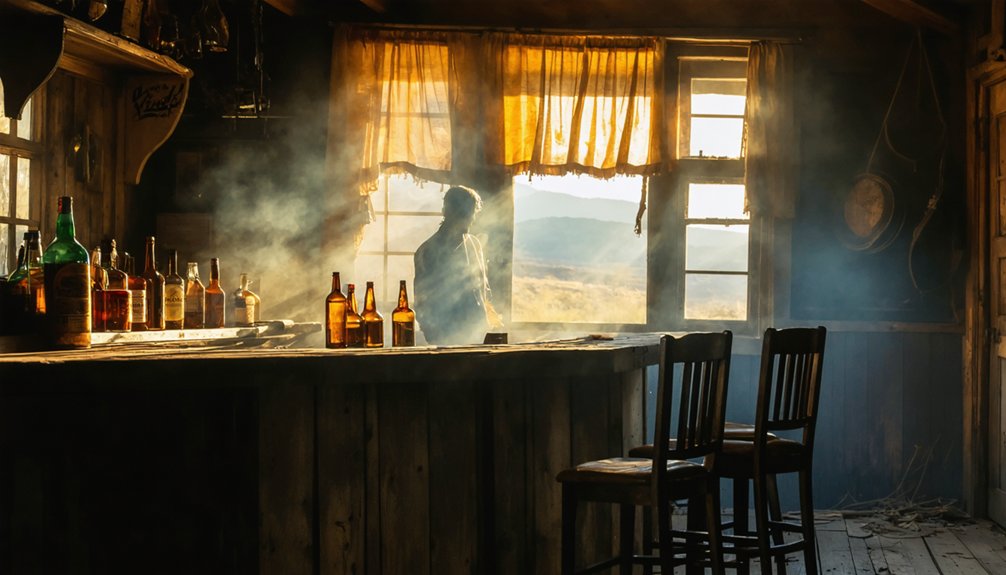
Venturing beyond historical fact into spectral mystery, you’ll find that America’s abandoned settlements harbor more than crumbling architecture—they contain lingering spirits of those who never truly departed.
In Bodie, California, a dark figure in a cowboy hat roams the haunted Bordello, while staff claim their late colleague Karen has returned. Visitors who take artifacts from Bodie often report misfortune due to the infamous curse associated with the ghost town.
Centralia’s few remaining residents witness unexplained phenomena amid toxic fumes rising from the perpetual underground fire.
St. Elmo’s well-preserved buildings host ghostly sightings of Annabelle Stark and disembodied voices that intrigue paranormal investigators. The town’s former general shop still stands as a reminder of its once-thriving mining community.
Frisco’s violent past manifests in spectral figures near the Horn Silver Mine and cemetery, where visitors hear phantom gunshots.
Meanwhile, Bannack’s dusty streets are allegedly haunted by corrupt sheriff Henry Plummer and his gang, making it a magnet for ghost hunters seeking encounters with the lawless spirits of the Wild West.
Frequently Asked Questions
How Are Ghost Towns Legally Protected From Vandalism and Theft?
You’ll find ghost towns protected through criminal penalties, historical designations, surveillance, and explicit warning signs that deter vandalism prevention efforts and enhance theft protection under state and federal laws.
Can Visitors Stay Overnight in Any Preserved Ghost Town Buildings?
Yes, you’ll find several ghost town accommodations where you can stay overnight in authentically preserved buildings, balancing historic preservation efforts with modern comforts in places like St. Elmo, Jerome, Calico, and Gold Point.
What Environmental Threats Most Endanger Remaining Ghost Town Structures?
You’ll face structural instability from mining tunnels, toxic soil contamination, water damage, and hazardous building materials, alongside climate change accelerating natural erosion through intensified precipitation and temperature fluctuations.
Are Any Ghost Towns Being Repopulated or Experiencing Modern Development?
Yes, you’ll find communities actively repopulating towns like Virginia City and Jerome, where modern development transforms these historic sites into arts hubs, tourism destinations, and affordable housing options for remote workers seeking freedom.
How Do Researchers Authenticate Artifacts Found in Abandoned Ghost Towns?
Like layers of earth revealing history’s secrets, you’ll authenticate ghost town artifacts through artifact dating, physical examination, provenance documentation, historical context verification, and laboratory testing when necessary.
References
- https://explorethearchive.com/western-ghost-towns
- https://www.mentalfloss.com/geography/american-ghost-towns-can-still-walk-through
- https://www.geotab.com/ghost-towns/
- https://www.youtube.com/watch?v=SC60gEY39us
- https://en.wikipedia.org/wiki/List_of_ghost_towns_by_country
- https://www.atlasobscura.com/lists/americas-best-preserved-ghost-towns
- https://featured.com/questions/spotlight-ghost-towns-american-west
- https://www.tripadvisor.com/Articles-loOISRppph64-American_ghost_towns.html
- https://mwg.aaa.com/via/places-visit/western-ghost-towns
- https://backroadplanet.com/10-ghost-towns-in-the-west-that-tell-forgotten-stories/