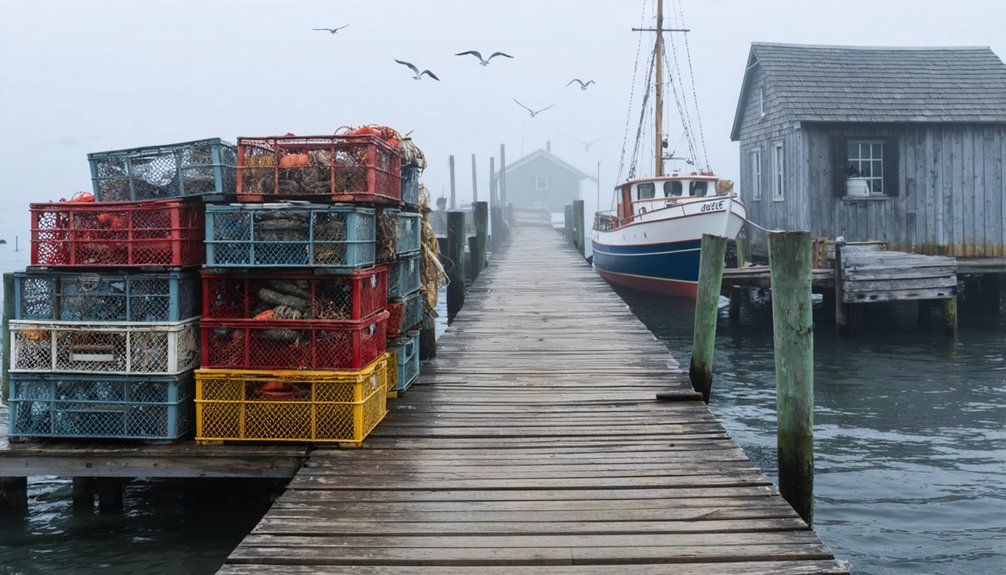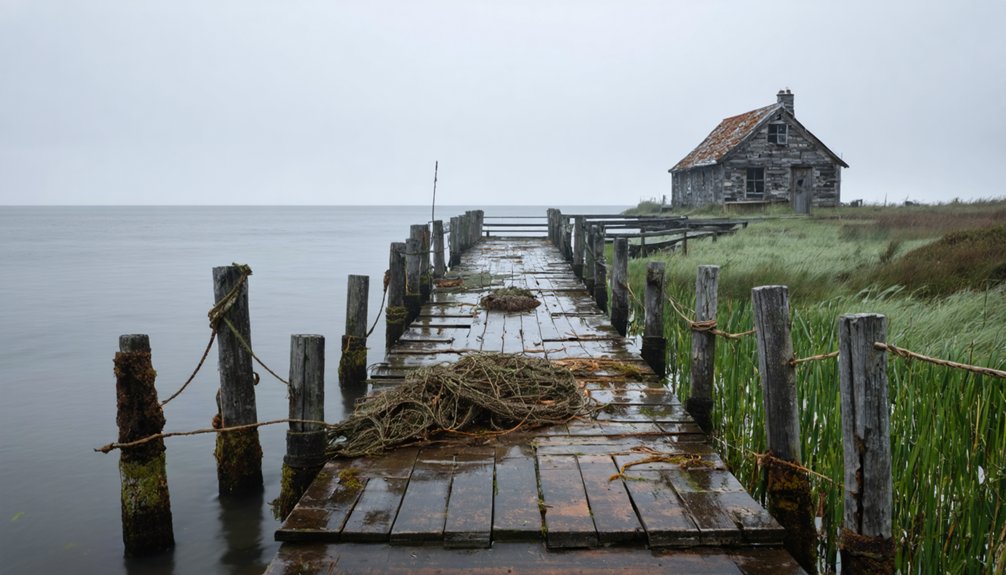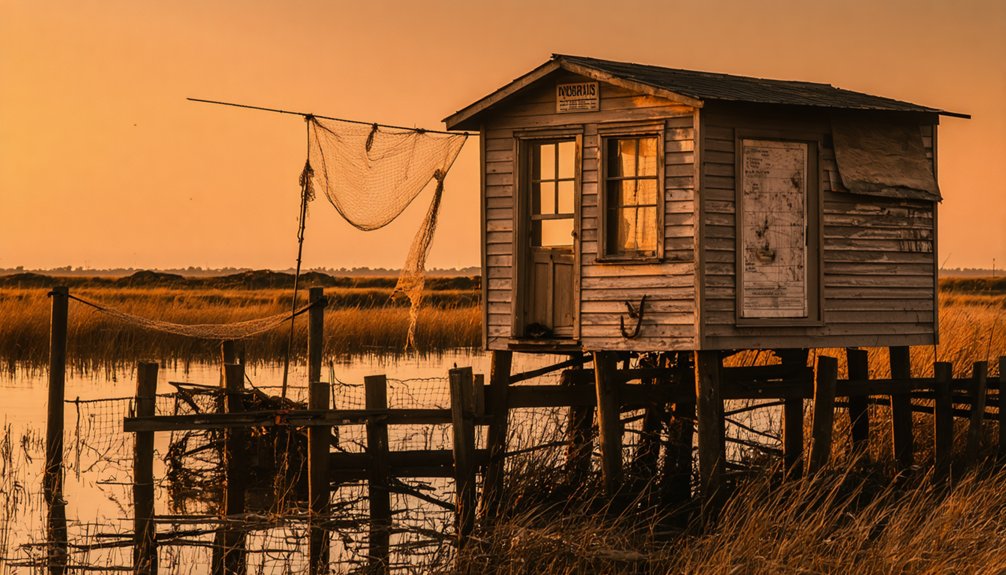
To preserve abandoned coastal communities, you’ll need three essential approaches: First, transform ruins into living heritage sites through art installations that document environmental change while reinforcing vulnerable structures. Second, implement nature-based solutions like native vegetation, oyster reefs, and mangroves to protect shorelines from erosion. Third, create economic incentives through mixed-financing models and subsidy programs that reward ecosystem maintenance. These strategies offer pathways to coastal revitalization where history and adaptation intertwine.
Key Takeaways
- Transform abandoned coastal sites through art installations that boost tourism while preserving local culture and history.
- Implement nature-based solutions like living shorelines and native vegetation to protect eroding coastal areas.
- Create economic incentives through mixed-financing models that align development interests with environmental preservation.
- Engage local communities in planning and execution to ensure authentic representation and foster ownership.
- Establish clear visitor pathways and waste management systems to protect fragile ecosystems while enhancing tourism.
Transform Coastal Ruins Into Living Heritage Sites
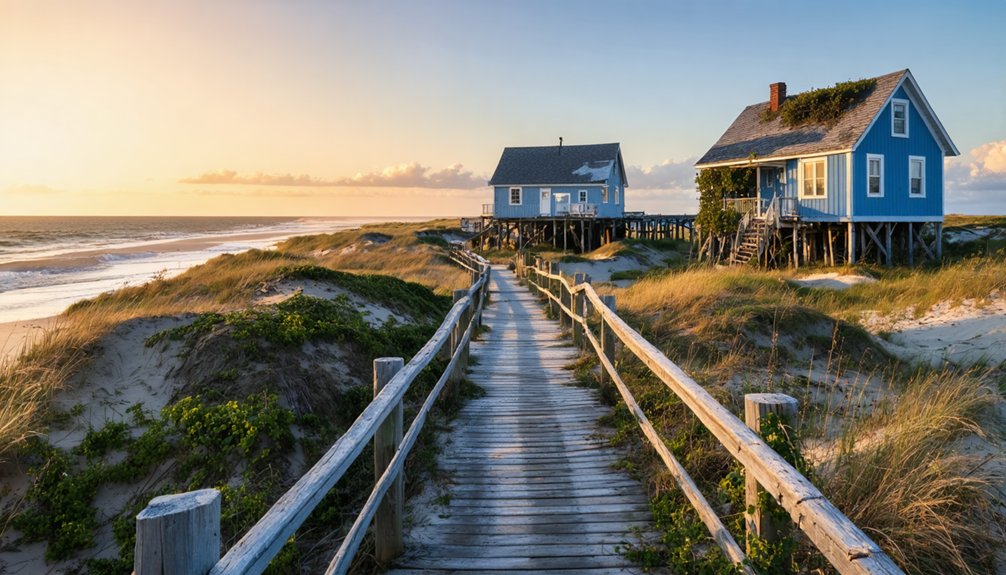
When coastal communities face abandonment due to environmental pressures, they needn’t be resigned to deterioration and loss.
Consider Bombay Beach‘s remarkable transformation, where over 50 art installations have converted derelict structures into open-air galleries since 2020, increasing tourism by 30%.
You can initiate similar revitalization by collaborating with local artists on culturally relevant projects that reflect your site’s history and environmental challenges.
These creative interventions simultaneously preserve structural integrity and educate visitors about coastal vulnerabilities.
Art becomes armor, reinforcing vulnerable coastal structures while telling stories of environmental adaptation that visitors carry home.
Community engagement is essential—involve residents in planning and execution to foster ownership and authentic representation.
Designate clear pathways and implement waste management systems to protect fragile ecosystems while allowing exploration.
The combination of artistic expression and historical interpretation creates dynamic spaces where heritage remains alive despite environmental threats. The visual landscape continuously evolves as water levels recede and new installations emerge, creating a living documentation of environmental change.
Exploring historic ghost towns in the US reveals stories of past communities and their resilience in the face of change. These remnants of history not only serve as reminders of days gone by but also inspire contemporary artists to reflect on the fluidity of time and memory. As visitors traverse these once-thriving sites, they become part of an ongoing dialogue between the past and the present, enriching their understanding of heritage.
Drawing inspiration from Al Zubarah’s approach, consider how a protective layer of sand can preserve delicate archaeological features when excavation isn’t immediately possible, providing natural conservation until proper resources are available.
Implement Nature-Based Solutions for Shoreline Protection
Unlike traditional “grey” infrastructure solutions, nature-based approaches to shoreline protection harness existing ecological processes to combat erosion while delivering multiple co-benefits.
For shoreline restoration projects, consider implementing living solutions that adapt naturally to climate change impacts, reducing long-term maintenance costs while enhancing coastal resilience.
- Plant native vegetation like beach grasses to stabilize dunes and prevent erosion
- Create living shorelines using oyster reefs that dissipate wave energy and regenerate naturally
- Restore mangroves in warmer climates for effective protection on muddy coastlines
- Combine nature-based techniques with existing infrastructure in hybrid approaches
- Utilize dredged sediments strategically to create new habitat while protecting intertidal areas
These methods not only secure your coastal property but foster habitat creation for wildlife, improve water quality, and preserve the freedom to enjoy natural shorelines. Examples like Montrose Beach demonstrate how regular sand replenishment can successfully maintain recreational areas while combating erosion effects. Implementing rectangular patterns of fences with brushwood materials can slow water currents and facilitate sediment accumulation, helping to rebuild eroded shorelines naturally.
Create Economic Incentives for Sustainable Coastal Redevelopment
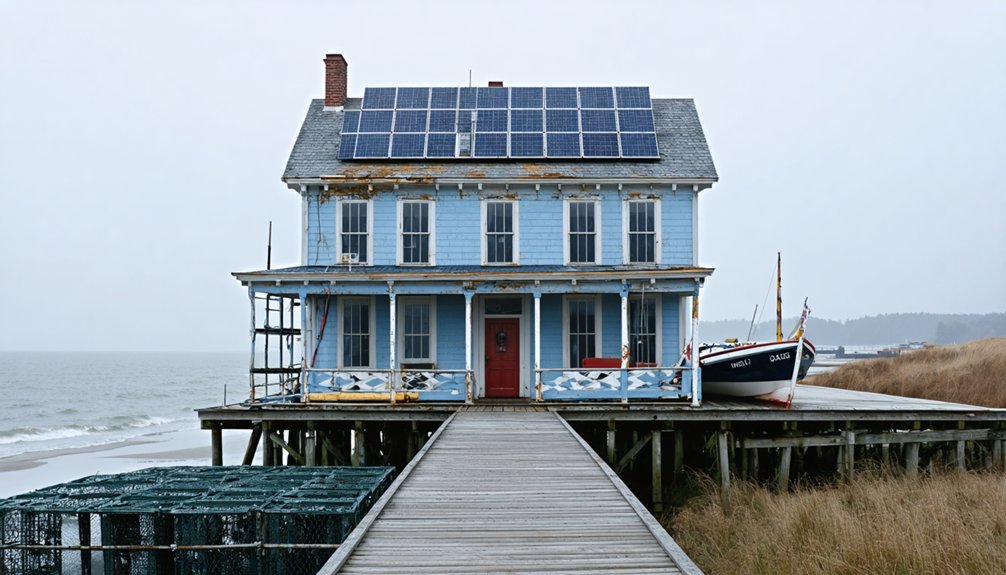
Sustainable coastal redevelopment requires more than physical infrastructure and nature-based solutions—it demands financial frameworks that align economic interests with environmental preservation.
You’ll find greater success implementing mixed-financing models that combine public subsidies with private investment for resilient waterfront projects.
Rights-based interventions offer your community exclusive management authority over local resources, fostering stewardship while generating economic returns.
Consider establishing subsidy programs that reward ecosystem service maintenance, reducing your redevelopment costs while preserving natural capital.
Diversify your economic base by supporting marine innovation sectors and sustainable tourism within ecological carrying capacity.
Cooperative business structures can help you pool resources and technical knowledge.
Implementing living shorelines that utilize natural materials for coastline stabilization can simultaneously create habitats and protect your redevelopment investments.
Investing in skills development programs that combine traditional ecological knowledge with modern sustainable practices creates an adaptable workforce essential for long-term community resilience.
Remember that regulatory coherence across jurisdictions provides investment certainty, enabling long-term planning for integrated coastal management that balances commercial development with public access and ecosystem restoration.
Frequently Asked Questions
How Do You Manage Hazardous Materials in Abandoned Coastal Structures?
Assess structures for hazardous waste, create containment plans, extract contaminants before demolition, document environmental impact, secure proper disposal permits, and follow all regulatory frameworks while maintaining site-specific remediation protocols.
What Legal Permissions Are Needed to Restore Privately-Owned Abandoned Properties?
Over 70% of abandoned property restorations fail due to legal barriers. You’ll need title verification, property rights documentation, coastal zone restoration permits, environmental clearances, and local building approvals before starting rehabilitation work.
Who Pays for Maintenance of Restored Coastal Heritage Sites?
You’ll find ongoing maintenance funded through federal grants, state matching funds, and public-private partnerships. Community-led initiatives and tribal governments often share stewardship responsibilities, while economic benefits from recreation support operational sustainability.
How Long Do Nature-Based Coastal Protection Solutions Typically Last?
While hard barriers falter, nature-based solutions thrive; you’ll find they typically last 20-50+ years. Their natural longevity depends on sediment supply and ecological resilience, often self-repairing as environmental conditions remain stable.
Can Abandoned Coastal Communities Qualify for Historic Preservation Tax Credits?
Yes, you’ll qualify if your property meets historic designation criteria including National Register listing and tax credit eligibility requirements for income-producing properties that follow Secretary of Interior’s Standards for Rehabilitation.
References
- https://asbpa.org/about-us/awards-program/best-restored-beaches-past-winners/
- https://psds.wcu.edu/publications/archived-publications/beach-preservation/
- https://coast.noaa.gov/states/fast-facts/natural-infrastructure.html
- https://atmos.earth/climate-solutions/how-abandoned-buildings-can-make-communities-more-climate-resilient/
- https://www.nwf.org/-/media/PDFs/Global-Warming/NWF_FINAL_BESCCH_070517.pdf
- https://oceanpanel.org/wp-content/uploads/2022/05/Coastal-Development-Full-Paper-Final.pdf
- https://www.carsoncenter.uni-muenchen.de/download/staff_and_fellows/projects/project-colten.pdf
- https://www.smithsonianmag.com/science-nature/ghost-gear-or-abandoned-fishing-equipment-is-haunting-the-oceans-heres-how-conservationists-are-fighting-back-180987605/
- https://www.coastal.ca.gov/publiced/marinedebris.html
- https://californiathroughmylens.com/bombey-beach-ruins/