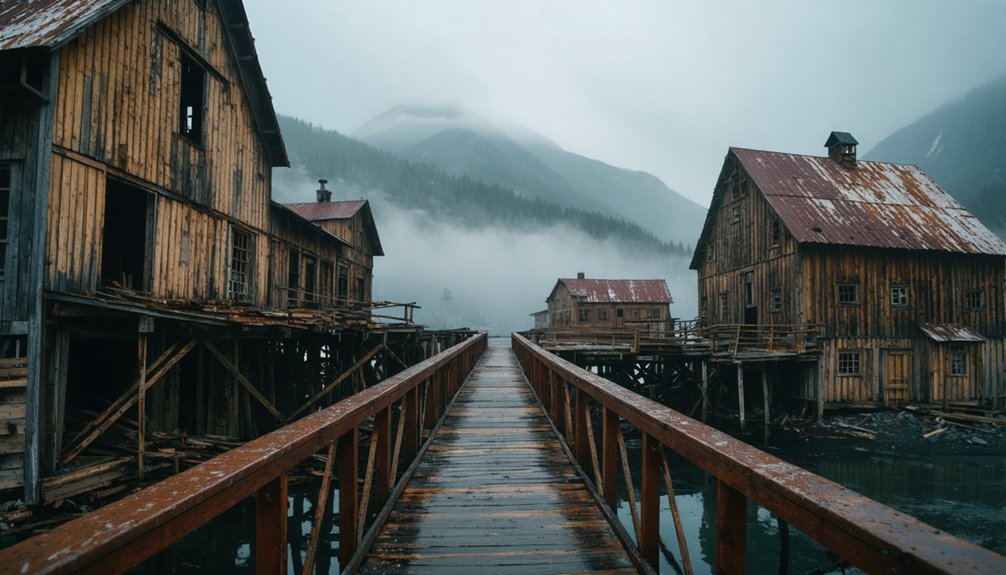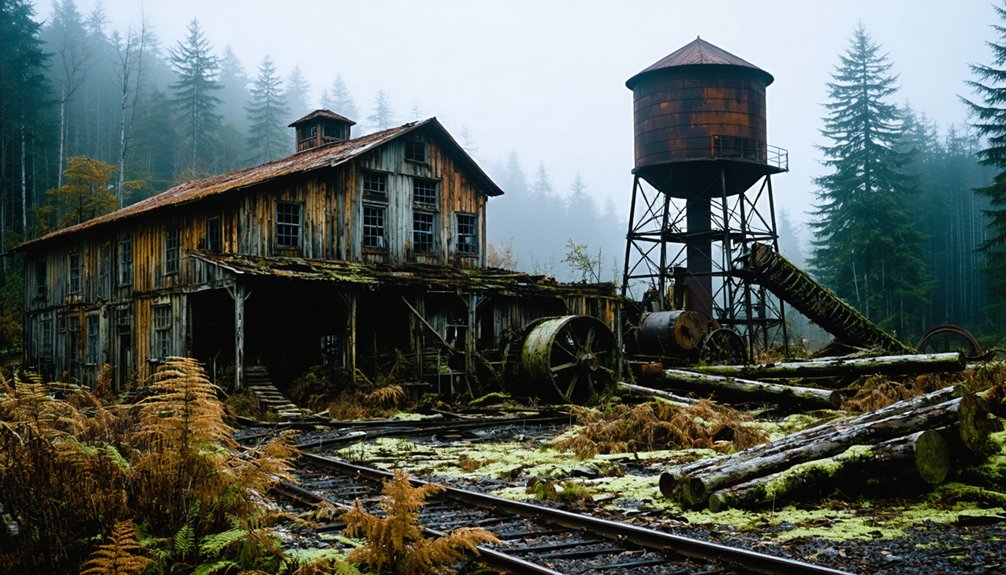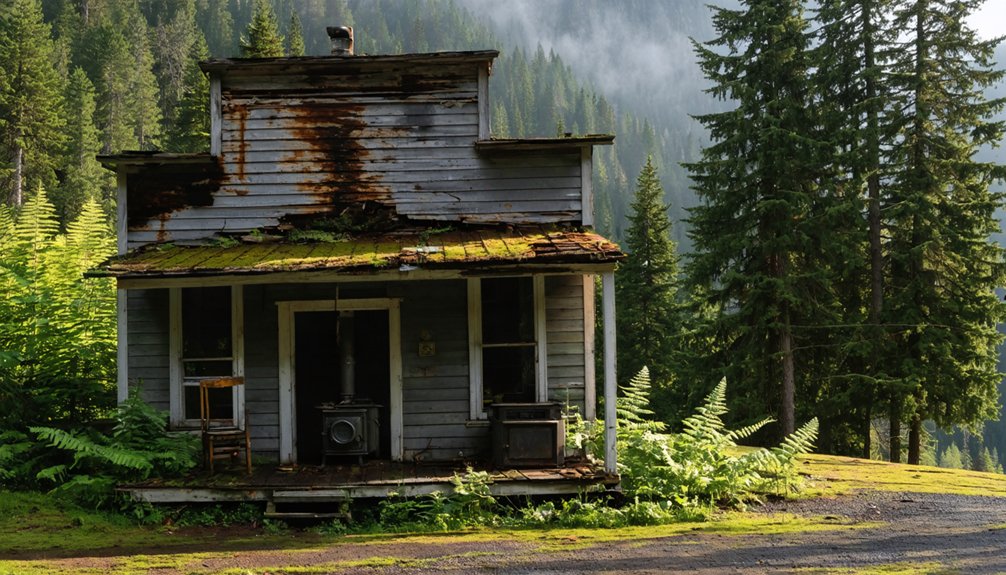
To preserve abandoned logging towns, start by documenting structures through historical records and precise measurements. Stabilize log buildings with foundation repairs and proper chinking. Secure funding through preservation grants, tax credits, and community partnerships. Balance historical preservation with environmental restoration using buffer zones and native plantings. Create sustainable tourism by developing authentic experiences and gathering oral histories. Your preservation efforts won’t just save buildings—they’ll revitalize forgotten chapters of America’s industrial heritage.
Key Takeaways
- Document historical structures using both archival research and precise digital recording methods from foundation to roof.
- Stabilize log buildings by reinforcing foundations, maintaining proper notching connections, and implementing effective moisture control.
- Secure funding through federal programs, state grants, tax credits, community partnerships, and targeted crowdfunding campaigns.
- Balance preservation with environmental restoration by creating buffer zones and incorporating native plants for sustainable landscape management.
- Develop authentic tourism experiences with guided tours, seasonal events, and oral histories from original inhabitants or their descendants.
Surveying and Documenting Historical Structures

The foundation of any successful preservation effort lies in thorough documentation. When approaching abandoned logging towns, you’ll need to gather historical material from archives, including original plans, photographs, and ownership records. These establish historical accuracy and provide context for your field observations.
On site, combine traditional measurement techniques with digital recording methods to capture the structures’ dimensions, construction details, and unique features. Document foundations, load-bearing elements, and building materials with precision. Consider implementing a systematic approach that moves from outside to inside and bottom to top when recording each structure, ensuring no details are missed.
Assign reference numbers to each structure and maintain detailed metadata including survey dates and personnel information. Your condition assessment should distinguish between original materials and later repairs while noting deterioration patterns. For inaccessible or unsafe buildings, digital survey technologies offer significant advantages in capturing comprehensive data without risk to personnel.
These documentation methods create an extensive record that serves as your blueprint for authentic preservation work.
Essential Stabilization Techniques for Log Buildings
Once you’ve thoroughly documented an abandoned logging town‘s structures, your attention must shift to physical intervention and stabilization.
Begin with foundation inspection—the cornerstone of all restoration work. Active settlement shifts weight away from intended bearing points, compromising the entire structure. Examine sill logs and corner notching carefully, as they’re most vulnerable to moisture damage. For structures built on challenging soil conditions like former moats, specialized polymer resin injection techniques may be necessary to stabilize the foundation.
- Reinforce floor joists by cutting three-inch-deep slits and inserting T-shaped angle irons before reinstalling flooring.
- Maintain proper log notching connections to preserve the structure’s rigidity and prevent lateral movement.
- Apply a three-part chinking system: rigid blocking, soft packing filler, and a protective coating (typically one part Portland cement, 4-8 parts lime, and 7-10 parts sand).
Ensure proper moisture management by improving drainage around the foundation—this prevents further deterioration and extends your preservation efforts.
Securing Funding and Community Support
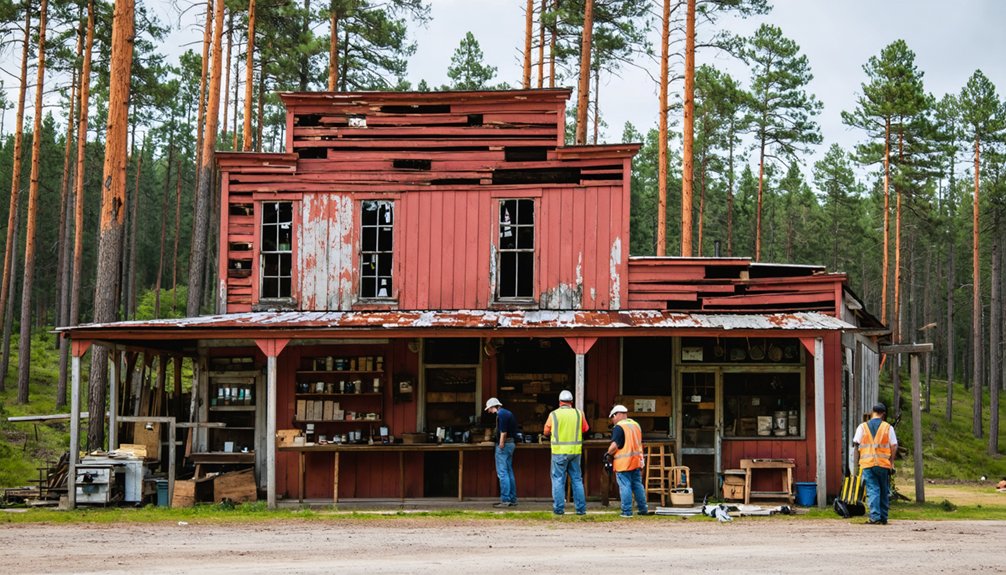
Securing adequate funding represents perhaps the most challenging aspect of preserving abandoned logging towns, requiring a strategic approach to navigate the complex landscape of grants, tax incentives, and community partnerships.
Start by exploring federal resources like the Historic Preservation Fund and Save America’s Treasures program, which have distributed over one billion dollars for preservation projects. These federal grants typically range from $2,000 to $500,000 depending on the specific program and preservation needs. You’ll find state-level opportunities too—Texas offers grants up to $50,000 through its Preservation Trust Fund, while local governments provide smaller but accessible grant opportunities.
Don’t overlook nonprofit organizations; the National Trust for Historic Preservation awarded over $1 million to 196 projects nationwide.
Community engagement proves essential—regional foundations often direct grants to projects with demonstrated local support. For example, the Mary and Eliza Freeman Center received a $750,000 AACR grant for preserving a historic African American settlement. For income-producing properties, federal tax credits can substantially offset rehabilitation costs, making preservation financially viable.
Balancing Preservation With Environmental Restoration
Effective preservation of abandoned logging towns requires thoughtful integration with environmental healing, addressing both historical structures and the ecological scars left by industrial forestry.
When establishing your restoration priorities, conduct baseline assessments of existing conditions while identifying historical structures worth preserving.
- Apply soil stabilization techniques around preserved structures using native deep-rooted plants that won’t damage foundations but will prevent erosion and rebuild soil health.
- Create buffer zones where ecological restoration shifts to historical preservation, using GIS mapping to delineate these boundaries thoughtfully.
- Install interpretive elements that explain both the cultural significance and the ecological balance you’re working to restore, connecting visitors to the site’s complete story. Incorporate large woody material placement strategies in nearby streams to help restore natural habitat conditions that existed before logging operations began.
Your preservation approach should honor both human history and nature’s recovery, creating a harmonious balance between past and future. Recognize that the restoration process is a long-term commitment that may require decades of stewardship before the full benefits become visible.
Creating Sustainable Tourism Opportunities
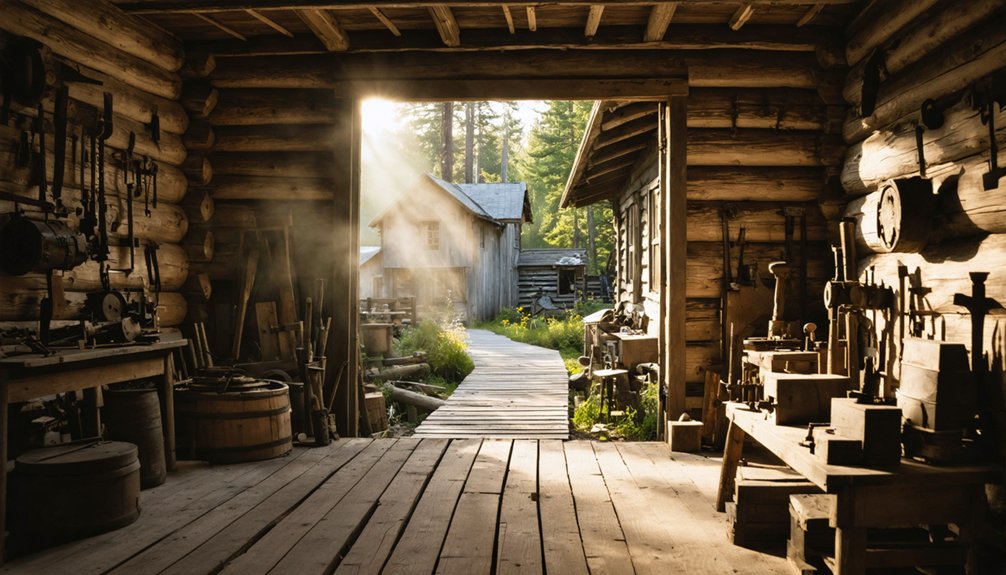
As abandoned logging towns fade into obscurity, transforming them into sustainable tourism destinations offers a powerful way to preserve their cultural significance while generating economic benefits for surrounding communities.
Exploring abandoned ghost towns not only revitalizes interest in local history but also invites adventure-seekers eager to uncover forgotten stories. These unique destinations can be developed into immersive experiences, highlighting the architectural remnants and natural beauty of the surroundings. By showcasing their haunting charm, communities can attract visitors year-round, transforming nostalgia into a vibrant economic opportunity.
You’ll want to focus on locations with intact structures and documented histories near established transportation routes.
Develop authentic visitor experiences that showcase the town’s unique logging heritage through guided tours, interactive exhibits of restored equipment, and storytelling installations.
Immerse visitors in authentic logging culture through thoughtfully curated experiences that bring history to life.
These elements create meaningful connections while educating visitors about the area’s past.
Community engagement is essential—partner with local historians and stakeholders to guarantee accuracy and build long-term support. The restoration process should involve innovative approaches that respect the site’s historical character while ensuring structural integrity.
Design seasonal events and craft workshops that encourage return visits, spreading economic impact throughout the year while maintaining the site’s historical integrity and fostering a distinctive visitor experience.
Drawing inspiration from Italy, where elderly residents often remain in near-abandoned villages, consider involving original inhabitants or their descendants in your preservation efforts to add authentic oral histories.
Frequently Asked Questions
How Do You Handle Indigenous Claims to Abandoned Logging Town Sites?
You’ll need to acknowledge indigenous rights through meaningful consultation, recognize traditional territories, develop co-management agreements, and practice cultural sensitivity when addressing sacred sites and historical claims.
What Legal Permits Are Required Before Starting Preservation Work?
Steering through permit requirements is like untangling ancient roots. You’ll need federal Section 106 approvals, state SHPO clearances, local Certificates of Appropriateness, and environmental permits—all following preservation guidelines that respect the site’s heritage significance.
How Can You Identify Toxic Materials in Historical Buildings?
You’ll identify toxic materials in historical buildings through visual inspections, historical records review, specialized databases, and analytical testing methods like XRF scanning, chemical spot tests, and HEPA-vacuum sampling for laboratory analysis.
How Do You Manage Wildlife That Has Inhabited Abandoned Structures?
You’ll discover wildlife nesting in weathered rafters. Begin with a thorough wildlife assessment spanning all seasons, then install species-appropriate gates. Prioritize habitat restoration while respecting creatures’ freedom within these accidental sanctuaries they’ve claimed.
Can Modern Amenities Be Added Without Compromising Historical Authenticity?
You can integrate modern amenities through discreet adaptive reuse, concealing technology integration behind period-appropriate features while preserving original materials, structural elements, and spatial relationships that define the building’s authentic character.
References
- https://www.hearthstonehomes.com/the-preservation-and-repair-of-historic-log-buildings/
- https://www.nps.gov/orgs/1739/upload/preservation-brief-26-log-buildings.pdf
- https://www.nature.org/en-us/magazine/magazine-articles/beyond-the-timber-wars/
- https://www.youtube.com/watch?v=I-cqQ_aITQU
- https://www.atlasobscura.com/articles/column-preservation-of-abandoned-places
- https://savingplaces.org/stories/six-essential-reasons-to-save-old-places
- https://www.drownedtowns.com/blog/2023/08/10/trees-aplenty-logging-in-the-pacific-northwest
- http://www.bill-blake.co.uk/files/Download/ICOMOS UK Guide to Recording Hist Blgs.pdf
- https://syrian-heritage.org/about-us/built-heritage-documentation/guideline-documentation/
- https://www.icomos.org/images/DOCUMENTS/Charters/archives-eng.pdf