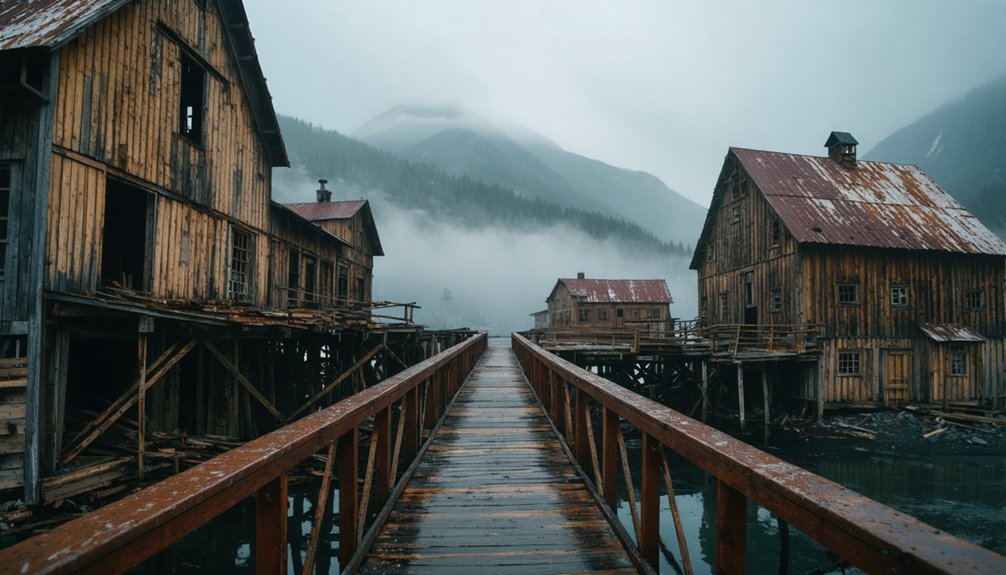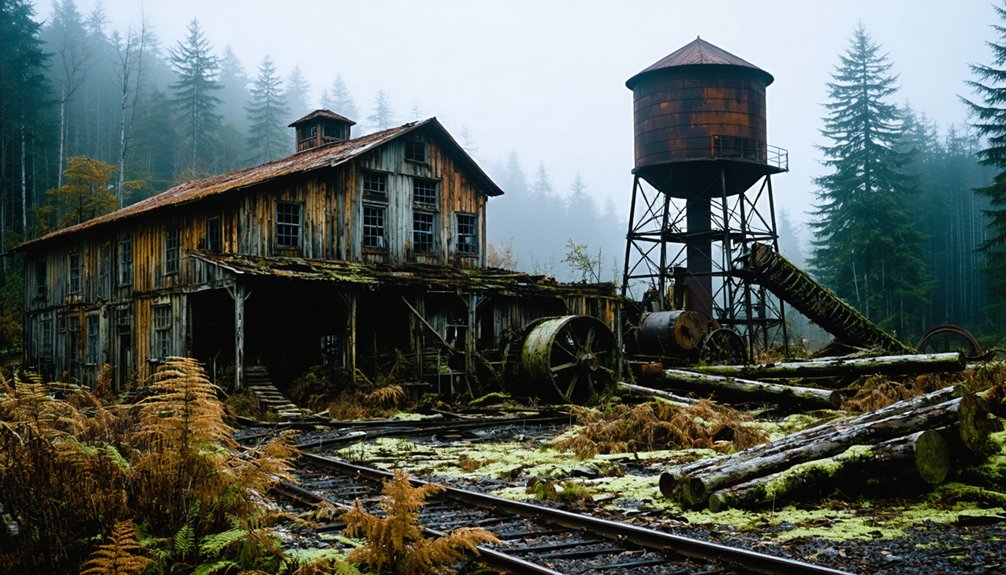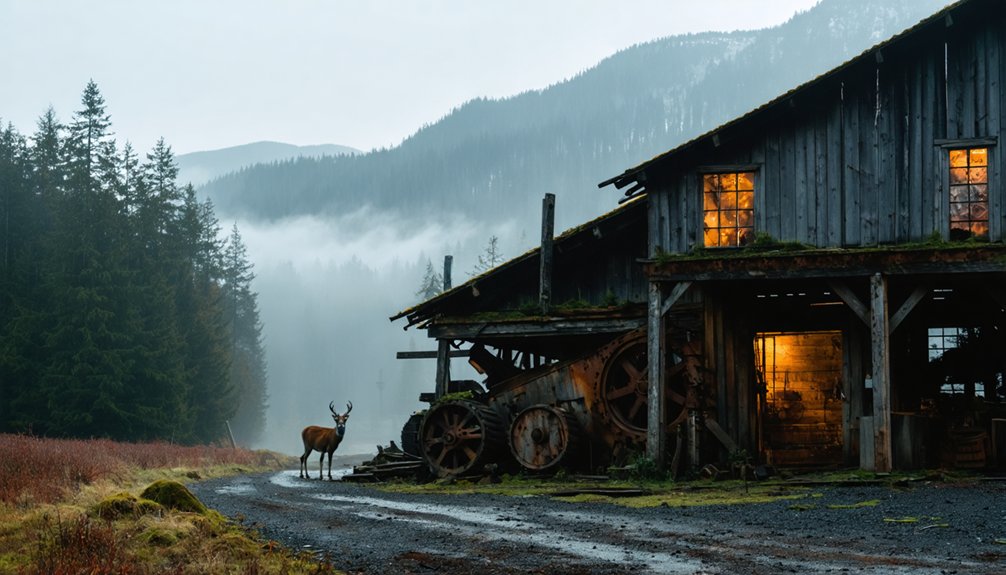
To preserve America’s abandoned timber towns, you’ll need to balance historic preservation with economic revitalization through adaptive reuse and rehabilitation incentives. Leverage surrounding natural assets by developing sustainable tourism infrastructure like trail networks and visitor centers. Implement community-driven ecological restoration initiatives that honor the timber heritage while reintroducing native plants and stabilizing degraded landscapes. These interconnected approaches guarantee these cultural treasures can thrive economically while maintaining their authentic character for future generations.
Key Takeaways
- Implement adaptive reuse strategies for vacant sawmills and industrial buildings to maintain historical character while creating new economic opportunities.
- Engage local residents in decision-making processes to ensure revitalization efforts honor the community’s timber heritage.
- Develop nature tourism infrastructure like trail networks and visitor centers to leverage surrounding natural landscapes as economic assets.
- Organize community-driven ecological restoration projects that combine local expertise with scientific monitoring methods.
- Balance preservation with economic growth by creating educational components that empower youth as future stewards of timber town history.
Blend Historic Preservation With Economic Revitalization

While many abandoned timber towns across America stand as silent monuments to bygone industrial eras, they simultaneously represent untapped potential for communities seeking sustainable futures.
You can incentivize property rehabilitation through vacant property taxes that prompt owners to utilize dormant structures rather than allowing continued decay.
Consider implementing adaptive reuse strategies that transform outdated sawmills and industrial buildings into vibrant mixed-use spaces, creating both housing and commercial opportunities.
Reimagine industrial relics as community hubs where history and innovation coexist, breathing new life into forgotten spaces.
Pursue economic incentives like grants and low-interest financing for structural modernization that maintains historic character while meeting contemporary needs.
Engaging local residents in decision-making processes ensures that revitalization efforts result in improved project outcomes that truly benefit the community.
When you employ eminent domain thoughtfully, it becomes a tool to acquire derelict properties and establish long-term leases that preserve affordability while reactivating spaces.
A systematic approach to revitalization should identify community needs before implementing new land uses in these historic timber settings.
This approach balances preservation with necessary economic growth, honoring your community’s timber heritage.
Leverage Natural Assets for Tourism and Recreation
The natural landscapes surrounding America’s abandoned timber towns represent their most enduring and valuable assets in a post-industrial economy.
preserving heritage in ghost towns is vital for maintaining a connection to the past and fostering cultural tourism. These remnants of history attract visitors eager to explore the stories embedded in the dilapidated structures and silent streets. By revitalizing these sites, communities can breathe new life into forgotten places while honoring their historical significance.
You’ll find these communities uniquely positioned between wilderness and civilization, offering unparalleled opportunities for nature tourism development. Transform your town by investing in trail networks, visitor centers, and restoration of historic structures that complement the outdoor experience. Unlike large tourism hubs, these small towns must develop innovative approaches given their economic diversification challenges.
Your competitive advantage lies in the authentic combination of timber heritage and pristine natural settings.
Develop distinctive outdoor activities—fishing expeditions on former log-running rivers, guided hikes through second-growth forests, or wildlife photography tours—that differentiate your destination from established parks.
Create infrastructure that supports year-round visitation while preserving ecological integrity.
Foster Community-Driven Ecological Restoration Projects
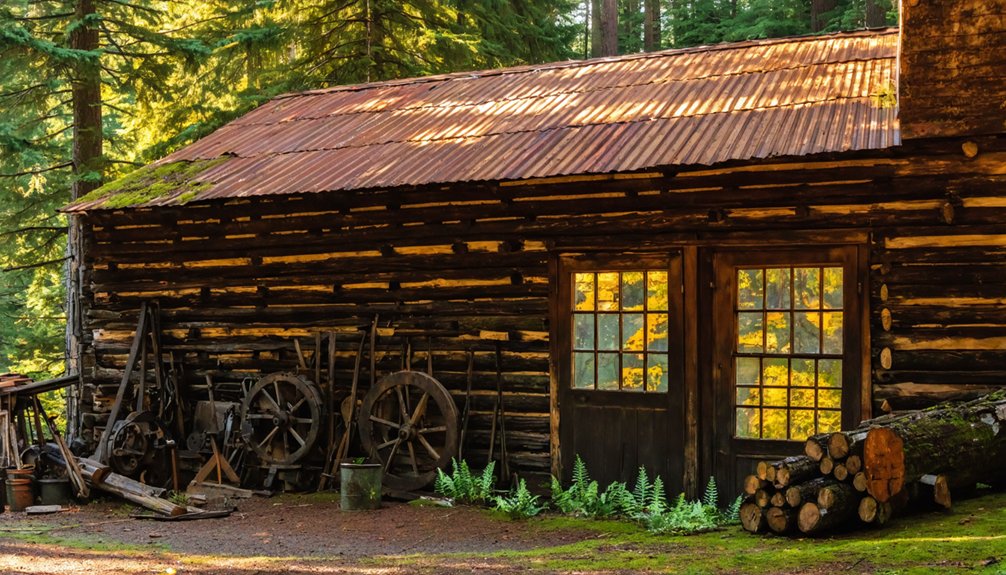
Abandoned timber towns, once stripped of their natural resources, now present extraordinary opportunities for community-driven ecological restoration that can heal both landscapes and social bonds.
Organize regular community meetings where residents can share ecological knowledge and collectively determine restoration priorities. You’ll find that volunteer programs not only accomplish physical restoration work but also cultivate deeper connections to place and purpose.
- Reintroduce native plants to stabilize degraded soils and support returning wildlife
- Implement erosion control through strategic terracing and mulching
- Combine local expertise with scientific monitoring to track ecosystem recovery
- Seek diverse funding through environmental grants and business partnerships
- Develop educational components that empower youth to become future stewards
These restoration efforts represent the ultimate freedom—reclaiming your community’s natural heritage while charting a sustainable future. Like the abandoned village of Houtouwan where climbing vines reclaimed walls and streets in less than 30 years, nature can quickly transform these forgotten places. Successful revival requires a careful balance between preservation and creating meaningful experiences for visitors, ensuring sustainability for generations to come.
Frequently Asked Questions
How Does Climate Change Impact Restoration Plans for Abandoned Timber Towns?
You’ll need to adapt your sustainable restoration practices to intensifying storms, droughts, wildfires, and pests that threaten regrowth. Implementing climate resilience strategies guarantees your projects withstand these escalating environmental challenges.
What Funding Sources Specifically Target Timber Town Revitalization Projects?
Waiting for funding? You’ll find salvation through USDA Rural Community Development grants, EPA Brownfields funding, Forest Service’s urban forestry allocations, and state-level community partnerships that specifically target timber town restoration projects.
How Do Indigenous Land Rights Intersect With Timber Town Preservation?
Indigenous land sovereignty directly shapes timber town preservation. You’ll need to acknowledge tribal cultural heritage claims, collaborate on stewardship models, and respect ancestral connections to forests once exploited by timber industries.
What Technologies Best Document Disappearing Timber Heritage for Future Generations?
You’ll best preserve timber heritage through drone-mounted thermal and multispectral imaging, 3D photogrammetry, digital archiving of high-resolution data, and thorough photographic documentation that captures structures before they’re reclaimed by nature.
How Do Multi-Generational Timber Families Transition to Restoration-Based Livelihoods?
You’re swapping chainsaws for seedlings! Diversify income through restoration projects, embrace sustainable practices through silviculture and agroforestry, leverage community engagement for knowledge-sharing, and utilize government subsidies while developing ecological compensation opportunities that honor your timber heritage.
References
- https://www.nature.org/en-us/magazine/magazine-articles/beyond-the-timber-wars/
- https://portal.ct.gov/-/media/deep/forestry/best_management_practices/beyond-the-illusion-of-preservation-web.pdf
- https://headwaterseconomics.org/wp-content/uploads/Lessons_Timber_Transition.pdf
- https://www.fs.usda.gov/sites/default/files/legacy_files/media/types/publication/field_pdf/forestfacts-2014aug-fs1035-508complete.pdf
- https://foresthistory.org/wp-content/uploads/2016/12/American_Forests.pdf
- https://www.richmondfed.org/-/media/richmondfedorg/publications/research/econ_focus/2011/q3/pdf/feature2.pdf
- https://www.americanprogress.org/article/americas-forgotten-forests/
- https://jrap.scholasticahq.com/api/v1/articles/9543-the-economics-of-ghost-towns.pdf
- https://www.residenturbanist.com/p/reviving-ghost-towns-turning-neglected
- https://montrose-env.com/blog/strategies-to-revitalize-americas-abandoned-properties-and-legacy-neighborhoods/