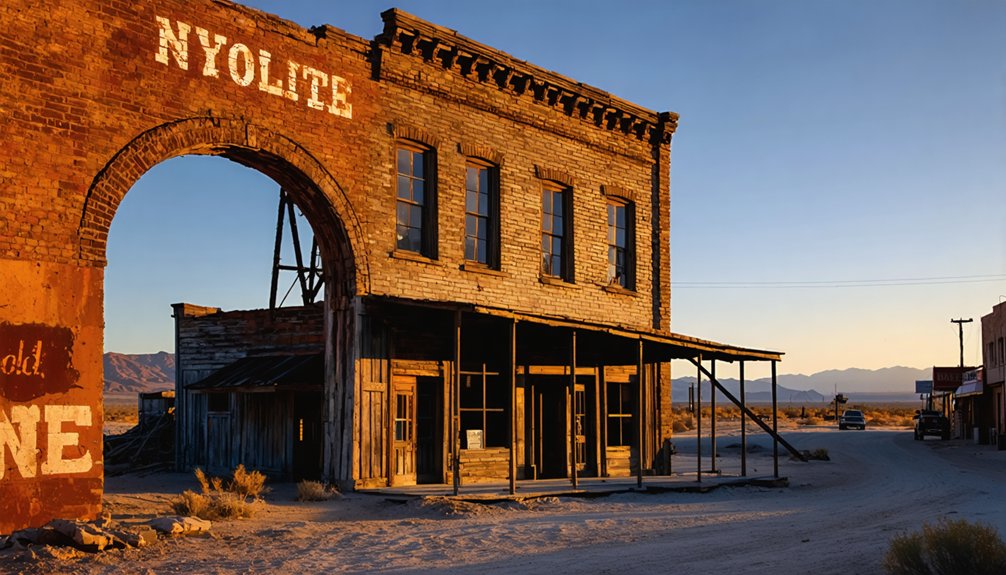
To preserve America’s historic industrial boom towns, you’ll need to evaluate physical structures, collect documentary evidence, and conduct community interviews with long-time residents. Focus on distinctive architectural features while pursuing funding through federal tax incentives and state grants. Implement adaptive reuse strategies that honor historical significance while meeting contemporary needs. Community-led preservation efforts yield the highest success rates, generating substantial tourism revenue while strengthening local identity. The economic impact of well-executed industrial heritage projects extends far beyond mere conservation.
Key Takeaways
- Conduct physical structure evaluations to assess integrity, construction techniques, and material authenticity in historic industrial buildings.
- Document industrial heritage through archival research, oral histories, and photography to create a comprehensive historical record.
- Engage community members in preservation planning through shared leadership positions and asset-based approaches.
- Pursue diverse funding strategies including federal tax incentives, state grants, and partnerships with academic institutions.
- Implement adaptive reuse projects like mill-to-museum conversions that balance preservation with modern community needs.
The Rise and Fall of America’s Industrial Powerhouses
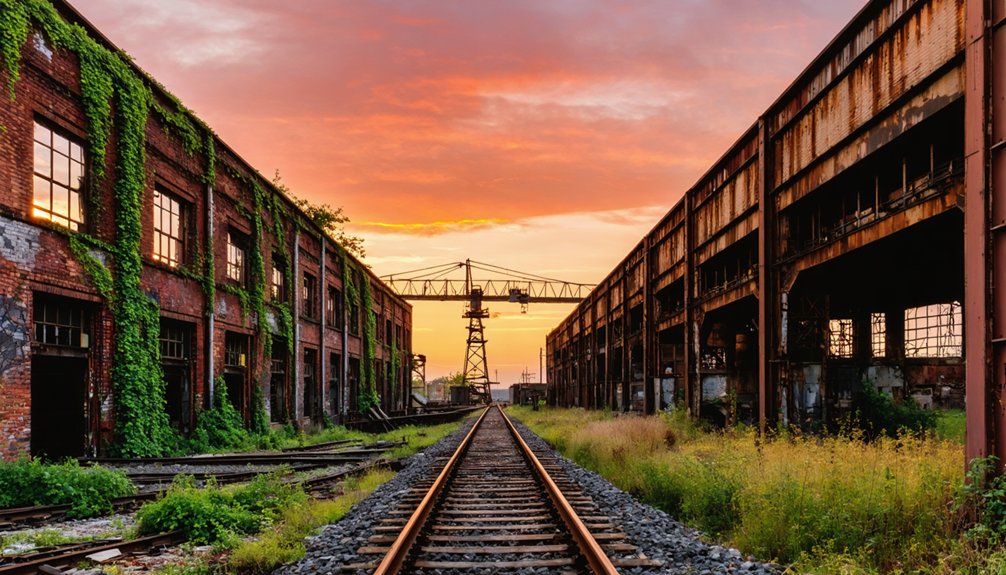
While America’s rural landscape dominated its early national identity, the period between 1870 and 1914 witnessed an unprecedented transformation that would forever alter the nation’s economic and social fabric.
The Second Industrial Revolution sparked massive urban migration as millions abandoned farms for factory work in emerging industrial centers.
You’ll find this industrial shift created powerful boom towns like Lowell, Homestead, and Pullman, each dominated by specific industries and companies.
The development of canal systems and railroads dramatically reduced transportation costs and facilitated the movement of raw materials and manufactured goods across the country.
By 1913, the United States produced one-third of the world’s industrial output, surpassing European industrial powers combined.
Identifying Historical Significance in Former Boom Towns
When determining a former boom town’s historical significance, you’ll need to conduct thorough physical structure evaluations that identify original architectural elements, industrial infrastructure, and preservation potential.
Your research should include collecting documentary evidence such as period photographs, manufacturing records, and newspaper accounts that establish the site’s economic and cultural importance.
Community memory interviews with long-time residents and former workers will provide invaluable first-hand perspectives on industrial operations, social dynamics, and the lived experiences that shaped these once-thriving American manufacturing centers. These interviews are especially important since many boom towns experienced rapid economic growth within a relatively short 5-12 year timeframe, making first-hand accounts critical to understanding their development.
For authentic preservation, study locations like Cass, West Virginia with its restored company houses and historic scenic railroad that effectively showcase the town’s original character and industrial purpose.
In addition to these sites, the exploration of eerie attractions in abandoned Wyoming reveals remnants of once-thriving communities and the stories they left behind. From crumbling ghost towns to decaying mines, these locations offer a haunting glimpse into the past, drawing in urban explorers and history enthusiasts alike. Whether seeking adventure or the stories hidden within the ruins, there’s a unique charm to be found in these desolate landscapes.
Physical Structure Evaluation
Physical structures in America’s former industrial boom towns serve as tangible witnesses to our nation’s manufacturing heritage and rapid economic expansion. When evaluating these sites, you’ll need to assess structural integrity through examination of original construction techniques and material authenticity.
Look for the distinctive typologies—factories with large footprints and utilitarian materials, repetitive worker housing layouts, mixed-use commercial blocks, and more ornate civic buildings.
Pay attention to locally sourced materials like brick, timber, and stone that reflect regional identity. The spatial arrangement of buildings provides essential insight into the town’s functional organization, with industrial zones typically positioned near transportation routes.
You’ll find that many structures demonstrate remarkable adaptability, having transformed from manufacturing spaces to modern uses while preserving key historical elements that document America’s industrial evolution. Many of these industrial buildings feature tall and open structures that provide flexibility for modern repurposing while maintaining their historical character. Similar to global urban growth patterns, many historic American industrial towns have evolved from lateral expansion to more vertical development as they transformed over the decades.
Documentary Evidence Collection
Thorough documentary evidence forms the foundation for identifying and establishing historical significance in former industrial boom towns across America. Your documentary analysis should begin with archival materials including governmental records, newspaper accounts, and photographic collections that chronicle the town’s developmental trajectory.
These primary sources reveal economic patterns, demographic shifts, and cultural changes essential to significance assessment. Visual storytelling through maps, architectural plans, and ethnographic documentaries adds critical dimensions by humanizing historical narratives. Recent projects like “Voices from Forgotten Streets: Boomtown Kilgore” demonstrate how feature-length documentaries can effectively preserve first-person recollections from transformative economic periods.
Incorporate archaeological findings and material culture studies to substantiate documentary claims with physical evidence. Government documentation—from town charters to environmental impact reports—provides regulatory context for boom developments.
For extensive evaluation, balance traditional archival research with oral histories and multimedia evidence that capture diverse perspectives, including those of minority communities and workers whose experiences might otherwise remain undocumented. Historical photographers like Thomas Anan, who documented urban slum life in industrial centers, provide invaluable visual evidence of living conditions during peak industrial periods.
Community Memory Interviews
Community memory interviews serve as critical instruments for uncovering nuanced historical significance that documentary evidence alone can’t capture. When designing your interview protocols, include open-ended questions about economic downturns that encourage emotional recollections and spontaneous memory narratives.
Select participants across generations who’ve experienced industrial boom-bust cycles, prioritizing long-term residents who provide deeper historical context. This intergenerational dialogue reveals how cultural resilience and community solidarity emerge during economic hardship.
During analysis, identify recurring themes that illustrate identity formation and heritage transmission. The most powerful insights often emerge when residents share unprompted stories of specific events like plant closures or community responses to crisis. Remember that discrepancies exist between what people report and their actual behaviors, making critical analysis essential for historical accuracy.
These oral storytelling traditions preserve authentic perspectives on industrial legacy while revealing how communities negotiate change through collective memory—maintaining freedom to define their own historical narrative despite economic impact. Consider how workers’ memories are often excluded from the unified national narrative that frames community identities during periods of urban renewal.
Economic Revitalization Through Heritage Tourism
Heritage tourism stands as a powerful economic engine for America’s historic industrial towns, transforming abandoned manufacturing centers into vibrant destinations that attract both domestic and international travelers.
Once forgotten factories now pulse with new life, drawing travelers seeking America’s industrial soul.
The numbers speak volumes: heritage tourism generates $1.3 billion in value-added effects to Pennsylvania’s economy alone and supports over 25,700 jobs.
You’ll find that revitalizing your historic industrial town through heritage tourism catalyzes growth across multiple sectors. Cultural heritage travelers spend nearly $1,000 per trip, stimulating retail, lodging, and restaurant industries while creating both direct and indirect employment opportunities.
With the heritage tourism market projected to reach $162 billion by 2030, your community can tap into this expanding economic resource. National heritage designations often enable federal grants, supporting sustainable tourism development and infrastructure improvements that benefit visitors and residents alike.
Adaptive Reuse: Transforming Industrial Spaces for Modern Needs

You’ll find remarkable transformations in mill-to-museum conversions across America’s industrial landscapes, where massive machinery and cavernous production floors now showcase the technological evolution that shaped our nation.
Factory housing rehabilitation projects preserve the architectural integrity of worker dwellings while upgrading interiors to contemporary living standards, creating authentic neighborhood experiences that connect residents to local heritage.
These adaptive reuse approaches maintain the physical fabric of industrial boom towns while ensuring their economic sustainability through new functions that serve current community needs.
Mill-to-Museum Conversions
While America’s industrial boom towns have left behind numerous vacant mill structures, a select few have found new life through carefully executed museum conversions that preserve their historical significance.
These adaptive reuse projects leverage buildings with exceptional historical importance—like Slater Mill, America’s first successful textile operation—transforming industrial relics into cultural preservation touchstones.
When evaluating potential mill-to-museum conversions, you’ll find these criteria essential:
- Architectural integrity that balances authenticity with practical adaptation
- Historic significance worthy of preservation investment
- Structural viability for public access and modern museum functions
The socioeconomic benefits extend beyond preservation.
Successful conversions like MASS MoCA attract hundreds of thousands of visitors annually, revitalizing post-industrial communities through employment opportunities and stimulating nearby businesses, while connecting residents with their manufacturing heritage through thoughtfully designed exhibition spaces.
Factory Housing Rehabilitation
Factory housing rehabilitation represents a significant but increasingly challenging frontier in America’s industrial heritage preservation movement.
You’ll find these conversions declining by 49% in 2022, with only 1,241 apartments created nationwide due to complex zoning challenges and limited stock availability.
When you transform these industrial spaces, you’re making an environmentally responsible choice that reduces embodied carbon emissions and construction waste compared to new builds.
The original factory design often requires structural modifications and safety upgrades that increase complexity and cost.
Despite these challenges, factory conversions remain essential for community revitalization.
Cities like Los Angeles lead this movement, with adaptive reuse accounting for 13% of all projects.
These rehabilitations not only preserve architectural heritage but also stimulate local economies, create jobs, and increase property values while providing unique living spaces.
Community Engagement in Preservation Planning
Participation lies at the heart of successful historic preservation efforts in America’s industrial boom towns. When you develop preservation strategies, community involvement must extend beyond superficial consultation to meaningful stakeholder collaboration.
Effective engagement empowers locals to become co-creators and decision-makers in shaping their historic landscape.
To maximize community participation:
- Establish governance structures that integrate community representatives at all planning levels
- Implement asset-based approaches that identify and leverage local knowledge and resources
- Create shared leadership positions for community members to guide project development
This collaborative approach guarantees preservation efforts reflect local values while building community capacity.
When residents actively participate in planning processes, projects gain authenticity, legitimacy, and sustainability. Your preservation initiatives will thrive when communities shift from passive observers to active stewards of their industrial heritage.
Funding Strategies for Industrial Heritage Projects

Securing adequate funding represents the vital foundation for any successful industrial heritage preservation project in America’s historic boom towns.
You’ll need to pursue multiple avenues simultaneously, combining federal tax incentives through the National Register with state-level grants administered by your SHPO. When preparing grant applications, emphasize collaborative funding approaches that leverage matching funds from diverse sources, including private foundations like the Charles Hayward Foundation.
Strengthen your funding partnerships by collaborating with academic institutions and local history organizations, which can provide both expertise and in-kind services to meet matching requirements.
Focus applications on extensive preservation efforts that include documentation and public education components. The National Trust’s annual grants and specialized programs like the DeLony Grants can provide essential supplemental funding for specific aspects of your industrial heritage project.
Balancing Preservation With Environmental Remediation
Although industrial heritage preservation celebrates America’s manufacturing past, the toxic legacy of these historic sites presents a formidable challenge for preservationists and environmental engineers alike.
When you’re tackling a brownfield or Superfund site, you’ll encounter regulatory challenges where CERCLA requirements must be harmonized with NHPA preservation standards.
Effective remediation strategies should:
Balancing historic integrity with environmental recovery demands innovative approaches that honor the past while ensuring a safer future.
- Prioritize less invasive techniques like in situ treatment that maintain structural integrity
- Address contaminant-specific concerns without compromising historic fabric
- Implement continuous monitoring systems that guarantee long-term environmental safety
You’ll need to balance thorough cleanup with preservation objectives, especially when dealing with underground storage tanks or soil contamination.
The intersection of environmental and preservation regulations requires creative solutions that protect both public health and cultural heritage, ultimately transforming toxic liabilities into community assets.
Case Studies: Successful Boom Town Transformations
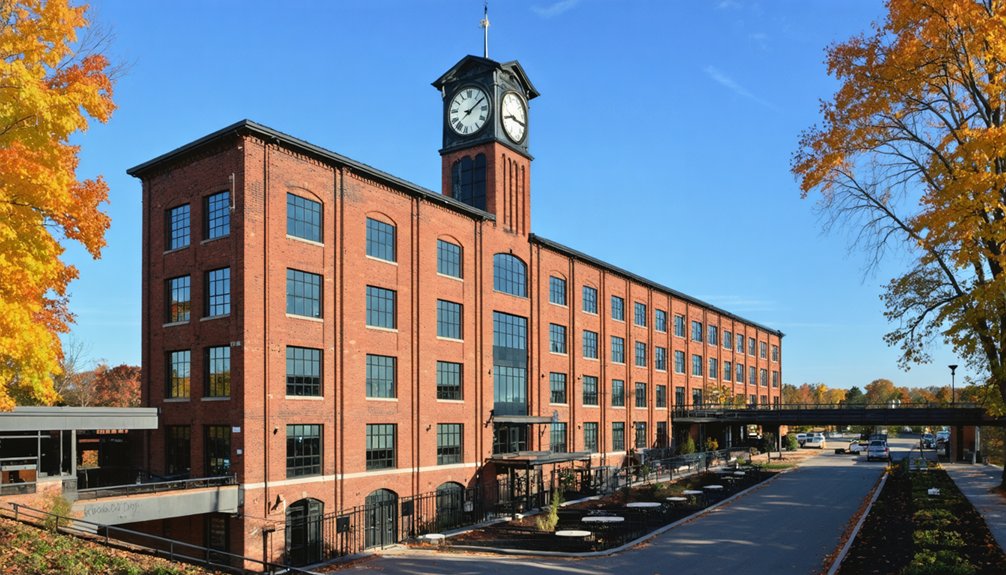
The transformation of America’s former industrial centers offers compelling evidence that preservation can coexist with economic revitalization.
New York’s High Line and Brooklyn Navy Yard exemplify how industrial infrastructure can be reimagined while maintaining cultural legacy. The High Line’s conversion from rail line to public park has catalyzed Chelsea’s development, while the Navy Yard now fosters innovation within historic structures.
Pittsburgh demonstrates thorough reinvention, evolving from steel production to technology and healthcare. By housing Google in a former Nabisco factory, the city preserves architectural heritage while embracing modern industries.
Similarly, Minneapolis has repurposed its industrial waterfront into cultural venues that celebrate its manufacturing history, strengthening community identity.
These cases prove that successful industrial town revitalization doesn’t require abandoning the past—rather, it leverages historic foundations to build sustainable futures.
Frequently Asked Questions
How Do Preservation Laws Differ for Company-Owned Versus Publicly-Owned Structures?
You’ll find that company ownership faces fewer preservation constraints unless properties are landmarked, while publicly-owned structures undergo stricter reviews with greater transparency requirements but enjoy better public access incentives and funding opportunities.
What Skills Are Needed for Specialized Industrial Architecture Preservation?
You’ll need technical drawing proficiency, materials science knowledge, BIM expertise, familiarity with industrial systems, regulatory compliance understanding, structural analysis capabilities, and documentation skills for effective historic restoration and architectural conservation of industrial structures.
How Can Schools Integrate Local Industrial History Into Educational Curricula?
You’ll strengthen curriculum development through local partnerships that connect interdisciplinary subjects to industrial heritage sites, allowing students to analyze technological innovations while experiencing authentic community connections across STEM and social studies disciplines.
What Role Did Women Play in Industrial Boom Towns?
Women drove industrial boom towns through their labor in mills, formed labor organizations, contributed economically to urban growth, and expanded beyond traditional roles while supporting families with their unprecedented earnings.
How Do International Preservation Approaches Differ From American Methods?
While you might assume all preservation is similar, international standards emphasize universal value and standardized documentation, whereas American methods prioritize adaptive reuse, local identity, and community involvement in preservation techniques.
References
- https://931coast.com/10-us-cities-built-up-by-specialized-manufacturing/
- https://www.richmondfed.org/publications/research/econ_focus/2023/q3_economic_history
- https://www.brookings.edu/articles/older-industrial-cities/
- https://en.wikipedia.org/wiki/Industrial_Revolution_in_the_United_States
- https://ohioline.osu.edu/factsheet/cdfs-sed-2
- https://www.gilderlehrman.org/history-resources/essays/rise-industrial-america-1877-1900
- https://www.loc.gov/classroom-materials/united-states-history-primary-source-timeline/rise-of-industrial-america-1876-1900/city-life-in-late-19th-century/
- https://ushistoryscene.com/article/second-industrial-revolution/
- https://www.legendsofamerica.com/company-towns/
- https://pmc.ncbi.nlm.nih.gov/articles/PMC2760060/