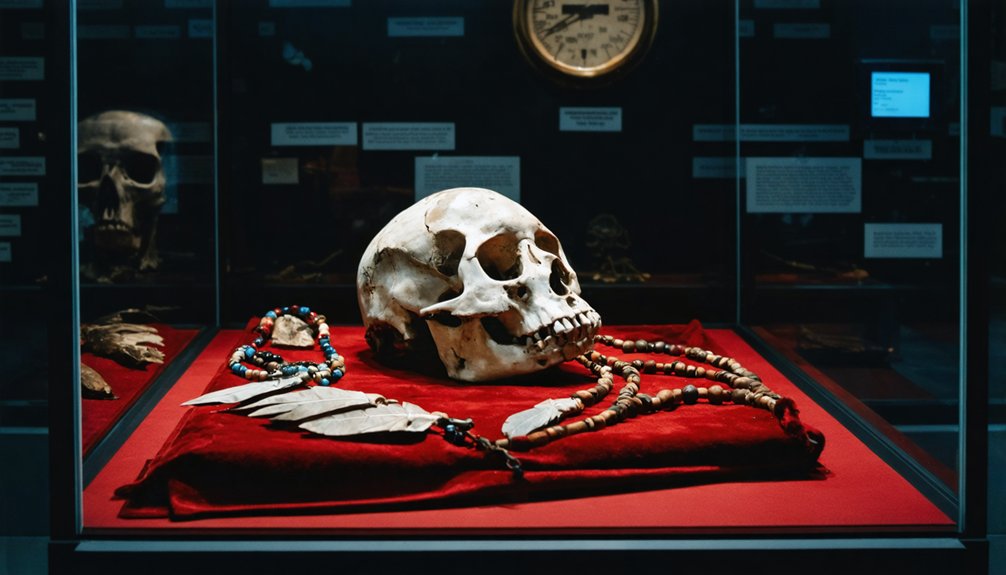
Preserving ancient tribal remains in the U.S. centers around NAGPRA, the landmark 1990 legislation that requires federal agencies and museums to return Native American cultural items to their rightful tribes. You’ll find that 90.5% of culturally affiliated human remains have been repatriated as of 2021. The process involves complex consultation, identification, and ceremonial transportation that honors the sacred nature of burial grounds. New 2024 regulations aim to address remaining implementation gaps that continue to challenge complete repatriation.
Key Takeaways
- NAGPRA provides a legal framework for the repatriation of Native American remains, with 90.5% of culturally affiliated remains returned as of 2021.
- Preservation efforts must honor indigenous knowledge systems that recognize burial grounds as living cultural landscapes with ongoing sacred connections.
- Collaborative approaches between tribes and institutions have evolved toward shared stewardship models integrating traditional knowledge with modern conservation techniques.
- Tribal Historic Preservation Offices play a crucial role in protecting ancestral remains by engaging early in project planning processes.
- Balancing archaeological evidence with tribal oral histories remains essential for proper identification and respectful treatment of ancient remains.
NAGPRA: A Landmark Legal Framework for Repatriation
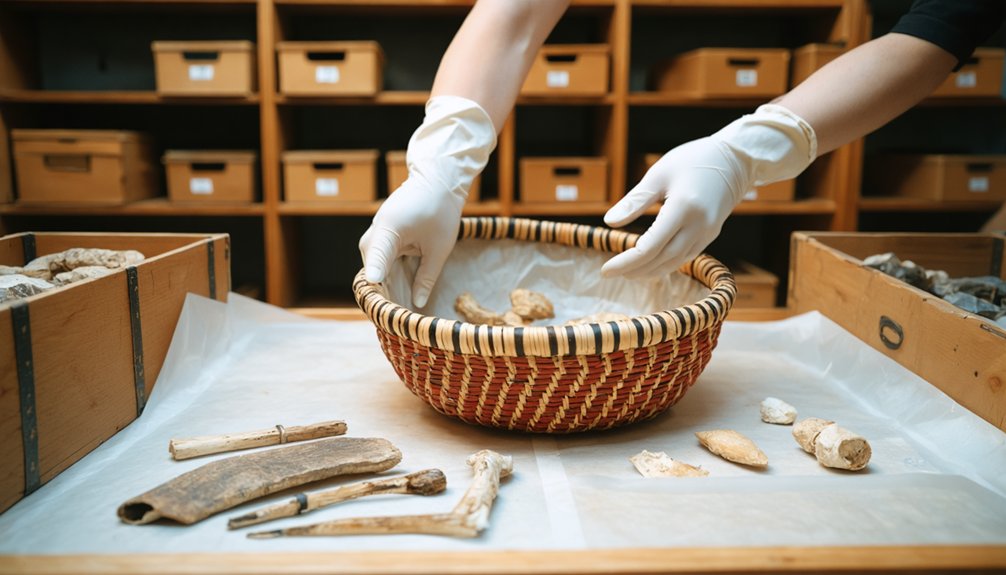
Since its enactment, the Native American Graves Protection and Repatriation Act (NAGPRA) has established itself as a cornerstone legal framework protecting indigenous cultural heritage.
You’ll find NAGPRA implementation has achieved remarkable repatriation success, with 90.5% of culturally affiliated human remains completing the process as of 2021, alongside 1.8 million associated funerary objects.
The Act created systematic processes for federal agencies and museums, establishing accountability through civil penalties while forming a Review Committee to oversee compliance.
Despite these achievements, challenges persist—including resource limitations and the exclusion of approximately 60 California tribes without federal recognition.
Recent regulatory changes in January 2024 aim to address implementation gaps, though estimates suggest another 26 years may be needed to complete all repatriation processes based on current progress.
The Sacred Nature of Native Burial Grounds
Sacredness permeates Native burial grounds as living cultural landscapes that transcend mere historical significance. These sites embody an ongoing sacred connection between Indigenous communities and their ancestors, representing crucial touchstones for cultural identity and intergenerational continuity.
When you visit or learn about these sacred spaces, you’re encountering living spiritual traditions protected under the First Amendment. Disturbance of these grounds doesn’t just damage artifacts—it disrupts religious beliefs and spiritual practices essential to Indigenous peoples.
The preservation of these sites requires honoring Indigenous knowledge and perspectives. The epidemic of grave desecration continues to threaten these sacred sites, particularly those located on private lands where protections are limited. Community-led approaches have proven most effective, allowing for open designs that acknowledge living Native communities while educating the public.
Far West Texas Lipan Apache burial restoration efforts demonstrate how culturally informed preservation respects Indigenous worldviews while maintaining crucial spiritual connections. The Cementerio Del Barrio de los Lipanes now includes dedicated areas for the repatriation of remains from institutions, addressing a critical aspect of ancestral dignity.
From Museum to Tribe: The Journey of Ancestral Remains
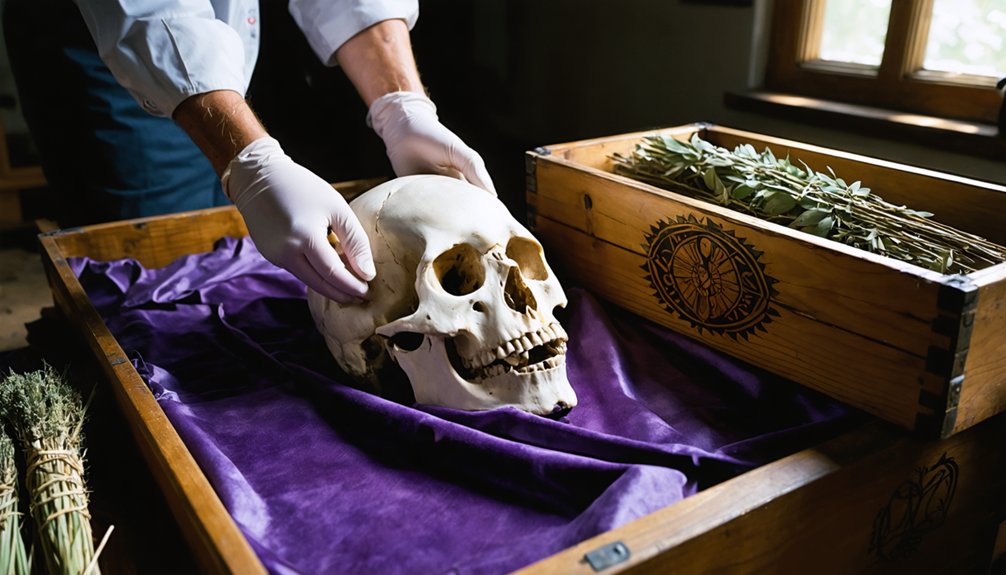
The journey of ancestral remains from institutional collections back to tribal lands represents one of the most profound acts of cultural justice in modern America. Under NAGPRA, you’ll witness a meticulous process that honors ancestral connections while addressing ethical considerations at every step.
This sacred journey typically involves:
- Initial consultation with tribal representatives to establish cultural affiliation through collaborative research
- Formal repatriation requests requiring proper tribal permissions and documentation
- Logistical coordination for culturally appropriate handling and transportation back to tribal homelands
Museums now actively partner with tribes rather than merely complying with legal requirements. This shift represents America’s evolving recognition that freedom includes the right of Indigenous communities to reclaim their ancestors and cultural patrimony after generations of institutional separation. Staff are committed to respecting tribal protocols throughout the entire repatriation process, from consultation to physical return. The California version of NAGPRA, known as CalNAGPRA or AB-275, has further strengthened these rights by requiring proactive consultation with both federally and non-federally recognized California Indian Tribes.
Challenges in Cultural Preservation and Identification
Despite significant progress in repatriation efforts, preserving and identifying ancestral tribal remains continues to present formidable challenges for both Indigenous communities and cultural institutions.
You’ll find complex tensions between scientific research interests and cultural sensitivity, especially when determining appropriate tribal affiliations for remains classified as “culturally unidentifiable.”
Institutions often lack resources to properly investigate claims, while over 90% of Native archaeological sites have already suffered damage from looting or development.
The identification process requires ethical considerations that balance archaeological evidence with tribal oral histories—often creating conflicts when these sources diverge.
Limited federal enforcement compounds these issues, as institutions prioritize research over repatriation.
The new 2024 NAGPRA regulations attempt to address these delays by imposing stricter deadlines, though meaningful tribal consultation remains inconsistent across institutions.
Prestigious institutions like Harvard, UC Berkeley, and the Field Museum each hold over 1,000 Native remains, continuing the historical injustice of treating Indigenous ancestors as research objects rather than individuals deserving dignified treatment.
Despite the existence of the Native American Graves Protection and Repatriation Act, antiquities markets continue to drive illegal excavation and selling of cultural items that should be protected.
Collaborative Approaches to Protection and Mitigation
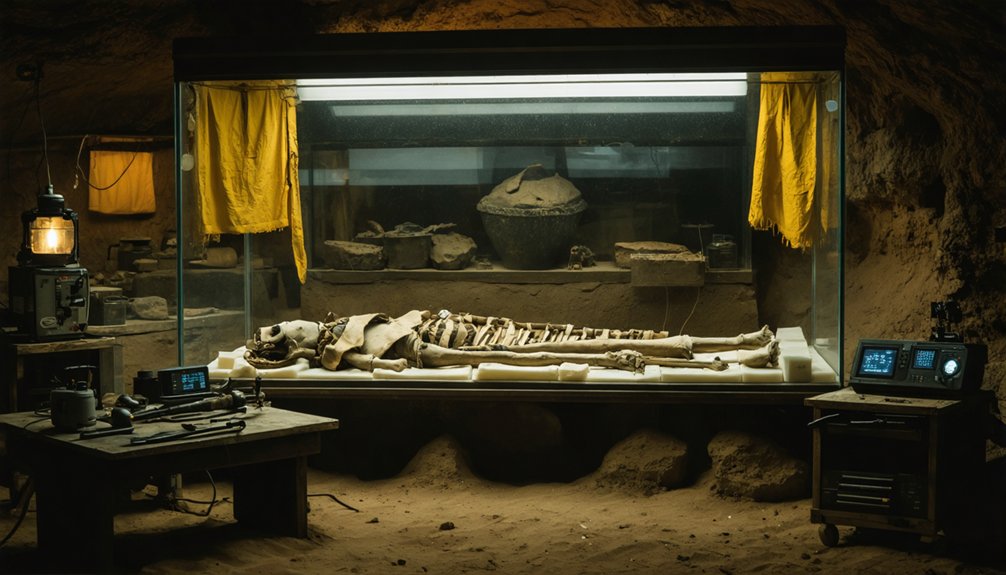
Collaborative strategies have emerged as powerful solutions to the complex challenges of preserving tribal ancestral remains, shifting the paradigm from institutional control to shared stewardship.
The paradigm shift toward shared stewardship represents a vital evolution in how we honor and protect tribal ancestral heritage.
You’ll find Tribal Historic Preservation Offices (THPOs) at the forefront of this collaborative preservation movement, integrating traditional knowledge with modern conservation techniques to protect cultural heritage.
Exploring historic ghost towns in Arizona allows visitors to step back in time and experience the remnants of a bygone era. These sites offer valuable insights into the lives of those who once inhabited the region, showcasing the unique blend of cultures and histories that have shaped Arizona. As preservation efforts continue, these towns provide an opportunity to connect with the past while fostering appreciation for the rich tapestry of local heritage.
The most effective collaborative frameworks include:
- Integration of tribal oral traditions and cultural values when documenting and managing ancestral sites
- Implementation of holistic Cultural Landscape Approaches that don’t artificially separate natural and cultural resources
- Early engagement of THPOs in Section 106 reviews and project planning to identify protection strategies before damage occurs
This partnership model respects tribal sovereignty while leveraging the technical and financial resources of government agencies to guarantee thorough protection of irreplaceable cultural assets. THPOs ensure meaningful consultation with tribal elders and spiritual leaders is prioritized during the preservation process of ancient remains.
Frequently Asked Questions
How Do Tribes Fund Repatriation Efforts and Ancestral Reburials?
You can access NAGPRA grants ($1,000-$25,000), pursue federal and private funding sources, leverage community involvement through partnerships, and collaborate with museums that offer support for your repatriation and reburial efforts.
What Happens When Multiple Tribes Claim the Same Remains?
When multiple tribes claim remains, they’ll either form coalitions to strengthen legal positions, resolve issues through intertribal agreements respecting tribal sovereignty, or face legal disputes requiring courts to evaluate competing claims.
Can Private Landowners Refuse Access to Burial Sites?
While many believe otherwise, you can legally refuse access to burial sites on your private property. Landowner rights typically supersede tribal claims for burial site access under current federal law’s significant gaps.
How Are DNA Testing Protocols Handled for Ancient Remains?
You’ll find DNA analysis of ancient remains follows stringent protocols, combining traditional STR testing with specialized aDNA extraction techniques, while prioritizing ethical considerations like tribal consultation and informed consent.
What Role Do Non-Native Archaeologists Play in Repatriation Decisions?
You’ll find non-native archaeologists wielding mountains of authority in repatriation decisions, serving as institutional representatives who review claims while balancing scientific evidence, cultural sensitivity, and ethical considerations during required tribal consultations.
References
- https://bannerstone.fitnyc.edu/exhibits/show/nagpra
- https://en.wikipedia.org/wiki/Native_American_Graves_Protection_and_Repatriation_Act
- https://lawreview.uchicago.edu/online-archive/defining-scope-burial-rights-under-native-american-graves-protection-and
- https://savingplaces.org/files/preserving-native-american-places-by-will-cook
- https://www.nps.gov/subjects/nagpra/
- https://www.fcnl.org/updates/2016-09/reclaiming-identity-repatriation-native-remains-and-culture
- https://nahc.ca.gov/native-americans/understanding-cultural-resources/
- https://www.bpr.org/2025-03-26/ohio-museum-collaborates-with-native-american-tribes-to-repatriate-human-remains
- https://www.auditor.ca.gov/reports/2024-047/
- https://www.facadatabase.gov/FACA/apex/FACACommitteeLevelReportAsPDF?id=a10t0000001gzr8AAA