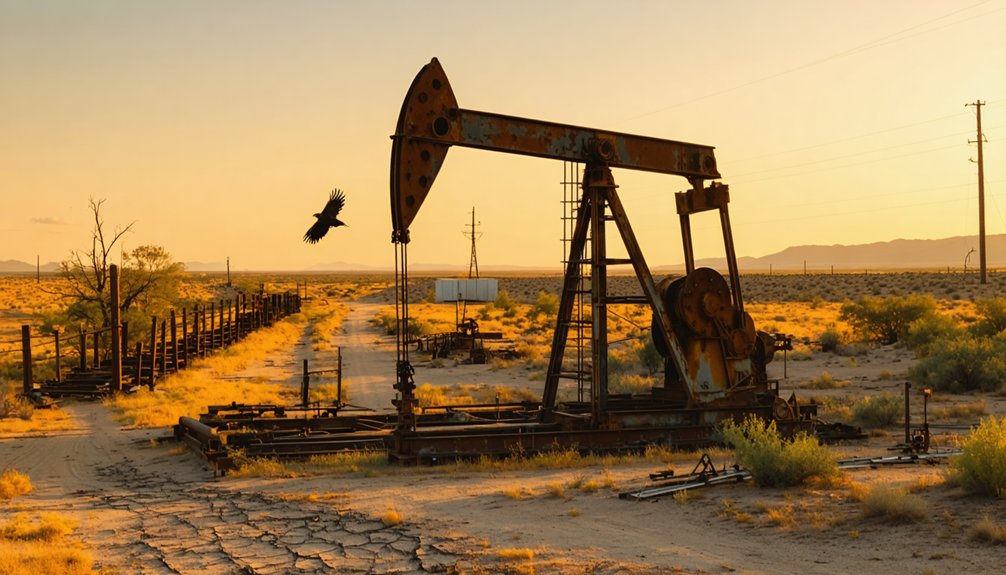
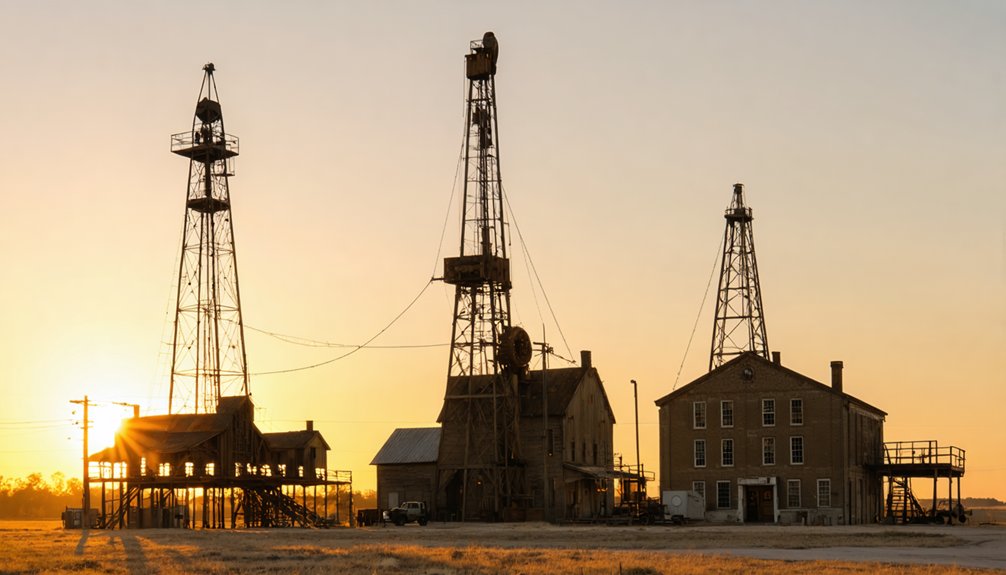
To preserve deserted oil rig town remains effectively, you’ll need three key approaches. First, conduct thorough structural assessments using NDT methods and UAVs to identify critical deterioration points. Second, implement extensive digital documentation through 3D scanning and cloud-based archiving with robust metadata standards. Third, establish community ownership models with sustainable funding mechanisms like public-private partnerships for adaptive reuse. These preservation strategies guarantee industrial heritage sites maintain their historical significance while finding new purpose.
Key Takeaways
- Establish community ownership models like non-profit trusts to prevent speculative redevelopment of abandoned rig towns.
- Implement comprehensive digital archiving using 3D scanning and photogrammetry to create detailed records of historic structures.
- Deploy structural health monitoring systems with sensors to track degradation and identify maintenance needs.
- Transform industrial sites into educational facilities or ecological museums that celebrate local heritage.
- Secure sustainable funding through public-private partnerships and revenue-generating adaptive reuse strategies.
Structural Assessment and Hazard Mitigation for Long-Term Preservation
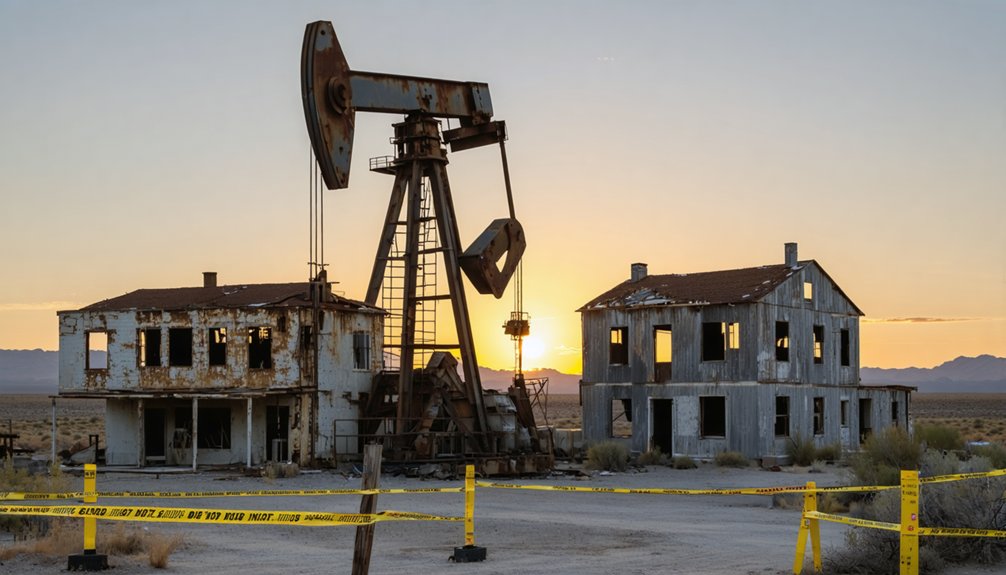
While addressing the challenge of preserving oil rig town remains, extensive structural assessment methodologies must form the foundation of any long-term conservation strategy.
You’ll need to evaluate structural integrity through detailed analysis of design records, fabrication documentation, and current condition assessments.
Implement risk assessment protocols that identify critical hazards like corrosion-induced failures, fatigue cracks, and potential structural weakening.
Thorough risk assessment is essential for identifying structural vulnerabilities before they compromise historical preservation efforts.
Verify all identified risks remain ALARP by deploying targeted mitigation measures.
Consider using NDT methods including electromagnetic and ultrasonic techniques to detect early deterioration signs.
Deploy UAVs and AUVs to inspect hazardous or inaccessible areas, establishing effective monitoring systems that incorporate strain, corrosion, and vibration sensors to track degradation trends and emergent risks.
Similar to production platforms, preservation efforts must account for varying structural designs based on water depths and environmental conditions.
Documentation and Digital Archiving of Industrial Heritage Sites
In preserving oil rig town remains, thorough documentation and digital archiving stand as critical components for safeguarding industrial heritage sites against inevitable physical deterioration.
Implement extensive metadata standards to guarantee all digital assets include proper provenance, technical specifications, and contextual information for future retrieval and interpretation.
- Deploy 3D scanning and photogrammetry techniques to create precise digital twins of structures before they deteriorate further.
- Utilize cloud-based storage solutions integrated with GIS capabilities for spatial context preservation.
- Conduct regular digital archive audits to verify compliance with OAIS and ISO 16363 standards.
You’ll achieve both democratized access and perpetual conservation by combining these technologies with non-destructive documentation methods, empowering researchers while protecting the physical integrity of these industrial time capsules. Modern multidimensional imaging solutions enable unprecedented levels of detail capture that future generations can study even if the physical sites are lost. Partnering with organizations that possess deep expertise in handling unique historical assets ensures proper preservation and compliance with international digitization standards.
Community-Led Adaptive Reuse and Sustainable Funding Models
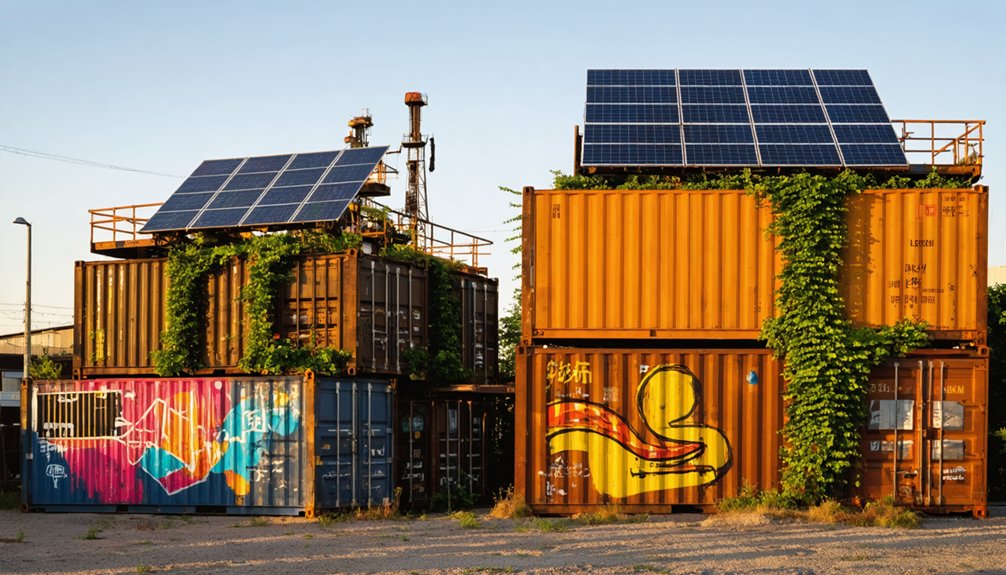
Beyond digital preservation lies the physical transformation of oil rig town remains through community-driven initiatives.
You’ll achieve sustainable outcomes by implementing participatory planning processes that engage local stakeholders from conception through implementation.
Consider establishing community ownership models—cooperatives or non-profit trusts—to guarantee long-term stewardship and prevent speculative redevelopment.
Community ownership transforms oil rig towns from industrial relics to civic assets, preventing speculation while ensuring sustainable preservation.
Secure diverse funding through public-private partnerships, combining government grants with private investment.
Explore crowdfunding platforms for grassroots capital generation and revenue-producing models like space leasing for ongoing maintenance.
Integrate workforce development programs that create local construction and management jobs while building specialized preservation skills.
In addition, initiatives focused on preserving frontier settlements in history can foster a deeper connection to local heritage. These projects not only encourage tourism but also create opportunities for community engagement and education. By highlighting the significance of these historical sites, we can inspire future generations to appreciate and protect their cultural legacy.
These efforts parallel initiatives like the Ecological Salvation project that transform industrial relics into ecological museums and marine habitats.
Form community advisory boards to maintain transparent decision-making and alignment with local priorities.
These governance structures guarantee the adaptive reuse honors industrial heritage while delivering equitable benefits—jobs, amenities, and reclaimed spaces—to all residents.
Projects like America’s Green Corps’ repurposing of Platform Holly demonstrate how preserving non-operational structures can protect marine biodiversity while creating new sustainable purposes.
Frequently Asked Questions
How Do Preservation Efforts Impact Local Property Values?
You’ll watch your home’s value dance between despair and hope as preservation efforts require impact assessment, documenting market fluctuations that typically increase values by offsetting the industrial stigma of abandoned extraction infrastructure.
Can Visitors Safely Access Partially Preserved Rig Structures?
You can’t safely access partially preserved rigs without extensive safety measures. Visitor guidelines must address structural instability, gas emissions, and contamination risks that threaten your freedom of movement.
What Wildlife Species Typically Colonize Abandoned Oil Installations?
Like underwater metropolises, abandoned rigs host corals, sponges, and barnacles within weeks. You’ll observe remarkable wildlife adaptation as jacks, groupers, snappers, and even marine mammals transform oil rig ecosystems into thriving habitats.
How Long Does Complete Ecological Restoration Typically Take?
You’ll face ecological timelines spanning 10-25+ years for complete restoration, progressing through distinct restoration phases from immediate response to long-term monitoring, with timelines varying substantially by habitat type and damage severity.
Are There Tax Incentives for Private Investors in Preservation Projects?
Like telegrams of yore, yes—you’ll access federal historic preservation tax credits (20%) and R&D incentives. Many states offer additional investment grants, creating multi-layered financial advantages for your preservation undertaking.
References
- https://www.ecomena.org/repurposing-of-abandoned-oil-platforms/
- https://payneinstitute.mines.edu/best-methods-for-abandoning-an-idle-oil-well-and-the-longevity-of-wellbore-cement/
- https://jpt.spe.org/texas-has-thousands-of-abandoned-oil-and-gas-wells-who-is-responsible-for-cleaning-them-up
- https://www.weforum.org/stories/2024/04/decommissioning-oil-and-gas-platforms/
- https://www.planetizen.com/news/2025/03/134665-using-old-oil-and-gas-wells-green-energy-storage
- https://www.aveva.com/en/our-industrial-life/type/article/turning-abandoned-oil-wells-into-energy-storage/
- https://pubs.acs.org/doi/10.1021/acs.est.1c02234
- https://oilprice.com/Energy/Crude-Oil/How-Abandoned-Oil-Rigs-Could-Help-Fight-Climate-Change.html
- https://www.texastribune.org/2016/12/21/texas-abandoned-oil-wells-seen-ticking-time-bombs/
- https://www.klmtechgroup.com/PDF/ess/PROJECT_STANDARDS_AND_SPECIFICATIONS_offshore_structure_integrity_structures_Rev01.pdf