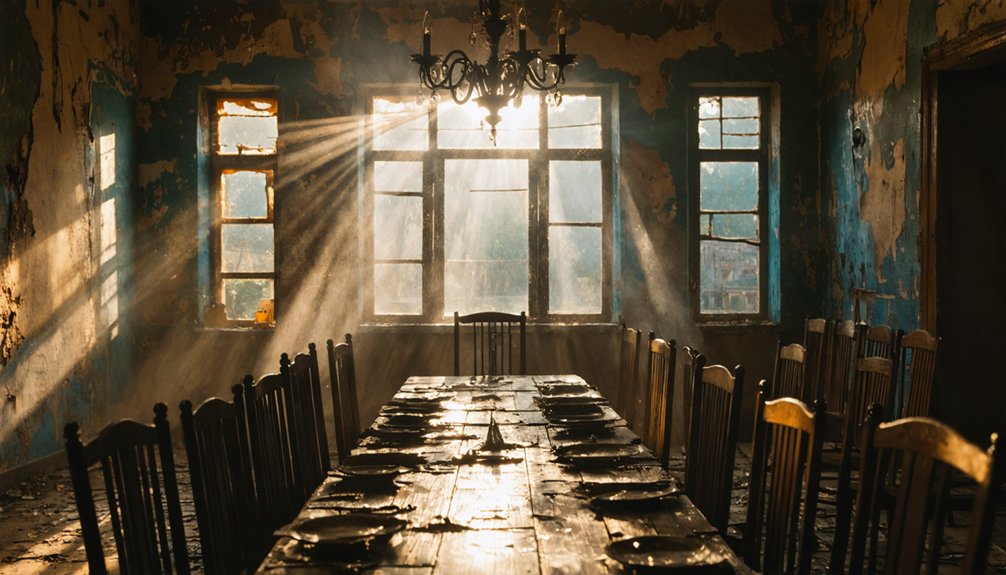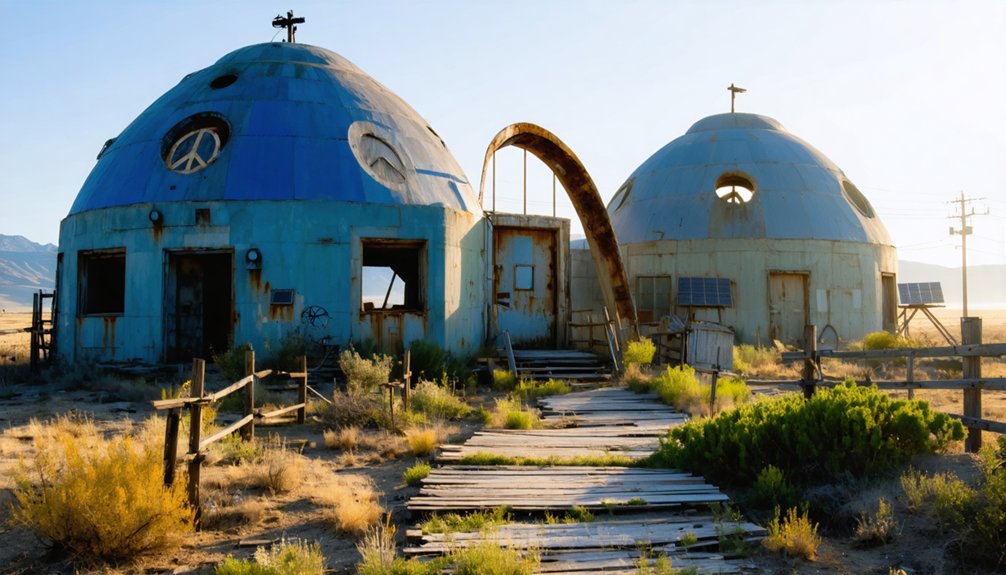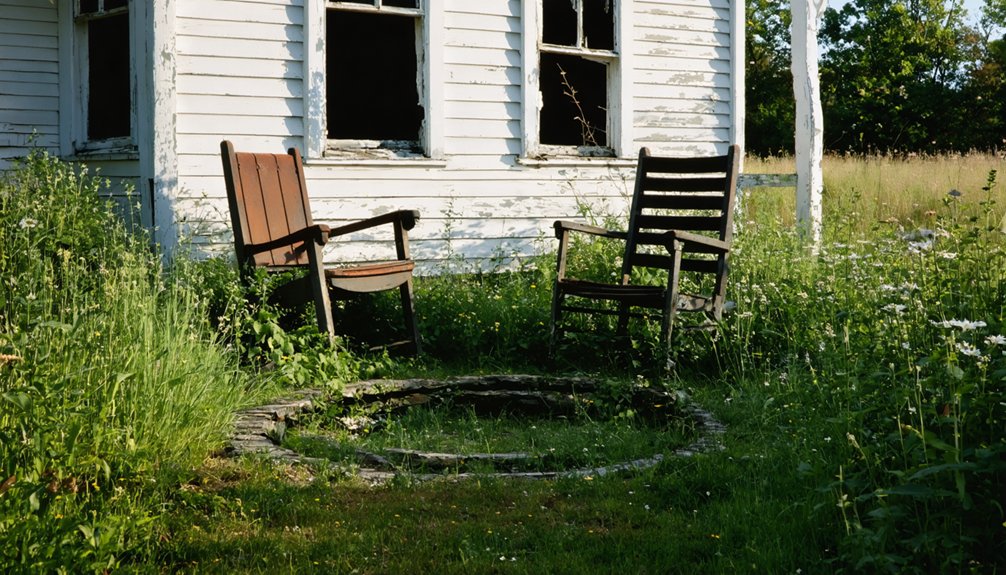
America’s failed utopian communities offer valuable historical insights despite their short-lived existence. You’ll find preservation efforts challenged by physical deterioration, funding limitations, and public skepticism about their controversial legacies. Documentation strategies now combine traditional archival methods with digital technologies to capture these vanishing histories. Religious communities like the Amish have demonstrated greater longevity than secular experiments. The 119+ utopian sites established between 1800-1859 reveal tensions between American individualism and communal ideals that continue to resonate today.
Key Takeaways
- Failed utopian communities face deterioration from weathering, fires, vandalism, and environmental hazards requiring urgent preservation intervention.
- Systematic documentation through oral histories, archival preservation, and digital technologies like GIS mapping preserves vanishing communal histories.
- Preservation funding relies on government grants, private donors, and strategic partnerships with educational institutions and community organizations.
- Physical remnants provide valuable insights into American idealism, communal experimentation, and the tension between individualism and collective values.
- Strategic public outreach can reframe controversial sites as educational opportunities about both aspirational ideals and practical failures.
The Historical Significance of America’s Failed Utopias
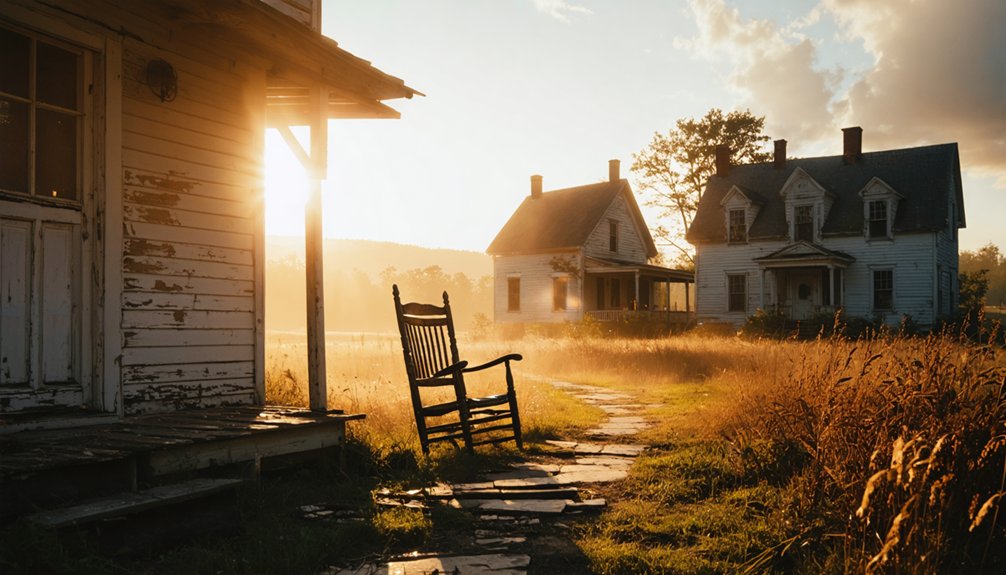
While America is often celebrated for its successful pioneering settlements, the nation’s historical landscape is equally shaped by its failed utopian communities, which offer profound insights into the complex interplay of idealism and pragmatism in American society.
These experimental societies—from Brook Farm’s transcendentalist haven to Owen’s socialist collectives—serve as cultural reflections of America’s perpetual tension between individualism and communal values. Their ambitious architectural remnants and documented governance systems illustrate the collective aspirations that challenged mainstream society.
When you study these failures, you’re examining not just what went wrong, but the boundaries of American social experimentation itself. Religious communities like the Rappites and early Mormons, despite their ultimate dissolution or transformation, established enduring patterns of communal organization that influenced subsequent social movements throughout American history. Many of these communities, like Oneida in New York, initially found economic success through shared labor before ultimately dissolving due to various pressures. At least 119 utopian communities were established between 1800-1859 by idealists dissatisfied with contemporary American society.
Why Utopian Communities Failed: Lessons for Modern Preservation
Despite their fervent idealism and ambitious social visions, America’s utopian communities collapsed under predictable patterns of failure that offer essential insights for contemporary preservation efforts.
You’ll find their economic sustainability undermined by poor management, lack of practical skills, and unsustainable ownership models that created inequitable labor burdens. These communities often emerged during periods of societal upheaval, reflecting attempts to create alternative social structures during wars or economic crises.
Community cohesion fractured along predictable fault lines—gender roles reverted to traditional patterns, ideological rigidity prevented adaptation, and charismatic leadership created dangerous dependencies.
Religious communities with strong doctrinal commitments typically outlasted their secular counterparts, suggesting preservation efforts should acknowledge how spiritual conviction sustained these experiments longer. The historical evidence clearly demonstrates that faith-based communities, like the Amish who grew from 5,000 to 350,000 members since 1900, have achieved remarkable longevity compared to secular utopian experiments.
When you’re preserving these historical sites, remember that their failures reveal as much about human nature as their aspirations—the tension between collective idealism and individual autonomy remains the essential story these places tell.
Physical Remnants and Deterioration Challenges
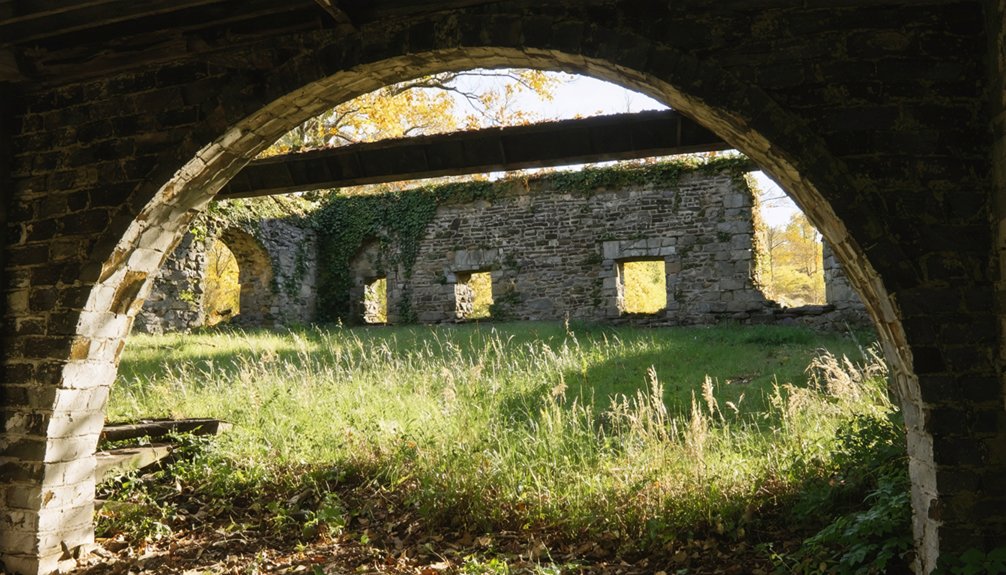
The physical legacy of America’s utopian experiments exists today in stark contrast to their once-ambitious social visions.
America’s failed utopias now speak through silent ruins—physical monuments to dreams that flourished briefly before surrendering to reality.
You’ll find only crumbling buildings, scattered ruins, and historical plaques marking where vibrant communes once thrived. Fordlandia’s dilapidated structures and Soul City’s empty roads stand as poignant reminders of collapsed dreams.
The stories of these southern suburban ghost towns preservation echo through the silence, offering a glimpse into a past that has been largely forgotten. As time marches on, efforts to reclaim and restore the history of these areas grow increasingly important, drawing attention to their unique cultural narratives. Preservation initiatives can serve as a foundation for revitalizing communities while honoring the legacies of those who once called these towns home.
These sites face relentless physical decay from multiple fronts: weathering, fires, and vandalism accelerate structural deterioration, while maintenance funding consistently falls short.
Environmental hazards present particularly insidious challenges—from toxic PCB contamination near Soul City to unsuitable soil conditions that undermine foundations. Soul City’s residents protested against the toxic waste dumping in 1982, highlighting early environmental justice concerns. The Pennsylvania Historical and Museum Commission manages seventeen restored historic structures from the Harmony Society settlements as a preservation effort against these threats.
Geographic isolation exposes these fragile remnants to extreme weather, while urban expansion threatens whatever remains.
The freeze-thaw cycles in northern climates particularly damage the wood and masonry common in 18th and 19th century communal buildings.
Documentation Strategies for Vanishing Communal Histories
As utopian communities fade into history, systematic documentation becomes essential for preserving their vanishing legacies.
You’ll find that thorough approaches combine oral histories with archival preservation, capturing both tangible records and experiential narratives. Ethnographic research methods document cultural practices and governance systems before they disappear completely.
Modern preservation leverages technology effectively: GIS mapping reconstructs spatial layouts and land use patterns, while digital humanities projects create accessible repositories that contextualize historical data. Communities like Amana, Iowa, which maintained communal society status for an impressive 89 years, provide particularly valuable case studies for researchers. The fragility of these experimental communities often stems from their lack of strong social ties or religious foundations that bind members together through shared purpose.
These platforms facilitate community engagement through crowdsourcing initiatives that expand documentation scope.
The most successful preservation efforts operate at this intersection of traditional and innovative approaches—integrating personal testimonies, physical artifacts, and digital reconstruction to guarantee that even failed utopian experiments continue to inform our understanding of alternative social possibilities.
Funding and Public Engagement in Preserving Controversial Heritage Sites
While funding utopian community preservation presents significant challenges, securing financial support becomes particularly complex when sites carry controversial or failed legacies.
You’ll find that most preservation efforts rely on a patchwork of funding sources, from limited government grants to nonprofit initiatives that must overcome public skepticism about investing in “failed” experiments.
Successful preservation often depends on strategic public outreach that reframes these sites as valuable learning opportunities rather than cautionary tales.
By developing interpretive narratives that highlight both idealistic aspirations and instructive failures, preservationists can engage visitors meaningfully.
Digital platforms extend reach to broader audiences, while partnerships with educational institutions and community organizations provide sustainable engagement models.
Sites like Brook Farm demonstrate how preservation efforts thrive when they acknowledge controversies while emphasizing historical significance beyond perceived failures.
The Harmonists’ century-long existence demonstrates how communities that establish practical economic foundations can sustain their cultural heritage even after their social ideals fade.
Llano del Rio’s recognition as California Historical Landmark No. 933 represents an important milestone in acknowledging utopian experiments despite their ultimate collapse.
Frequently Asked Questions
Can Failed Utopian Sites Be Repurposed While Preserving Historical Integrity?
Yes, you can repurpose failed utopian sites through adaptive reuse while maintaining historical integrity by contextualizing their ideological frameworks within contemporary usage, preserving physical elements that embody their original communal vision.
How Do Former Residents’ Descendants Influence Preservation Decisions?
Guardians of fading embers, you’ll find descendants wielding potent influence through descendant engagement, providing authentic community narratives, serving on advisory boards, donating artifacts, advocating for funding, and ensuring interpretation honors their ancestors’ genuine ideological intentions.
What Paranormal Activity Is Reported at Abandoned Utopian Sites?
You’ll encounter ghost sightings and haunting legends at these sites, including apparitions, unexplained sounds, temperature drops, moving objects, and electronic malfunctions—often connected to the communities’ tragic endings and spiritual foundations.
How Do Religious Versus Secular Utopian Site Preservation Approaches Differ?
Like two different gardens—one cultivating prayer, the other progress—you’ll find religious preservation embraces spiritual symbolism and faith continuity, while secular approaches emphasize historical context and social narratives without religious underpinnings.
Are There Ethical Concerns in Preserving Sites of Psychological Manipulation?
Yes, you face profound manipulation ethics challenges when preserving sites where psychological impact manifested through coercive control. You’re memorializing both victims’ experiences and potentially dangerous ideological mechanisms simultaneously.
References
- https://www.mentalfloss.com/history/failed-utopias
- https://fee.org/articles/the-dark-side-of-paradise-a-brief-history-of-americas-utopian-experiments-in-communal-living/
- https://www.yesmagazine.org/health-happiness/2022/06/01/american-communes-failed-experiment
- https://isismagazine.org.uk/2012/05/top-5-failed-utopias/
- https://tools4literature.weebly.com/utopia-failures.html
- https://www.vice.com/en/article/failed-utopias-throughout-history-v25n1/
- https://constitutingamerica.org/90day-aer-americas-founding-knowledge-of-failed-utopian-ideologies-establishing-a-us-constitution-based-on-tradition-and-natural-rights-to-prevent-tyranny-guest-essayist-joerg-knipprath/
- https://historycollection.com/10-american-utopian-communities-rose-perfection-dramatically-collapse/
- https://open.baypath.edu/his114/chapter/utopian-communities/
- https://www.nps.gov/articles/utopias-in-america.htm