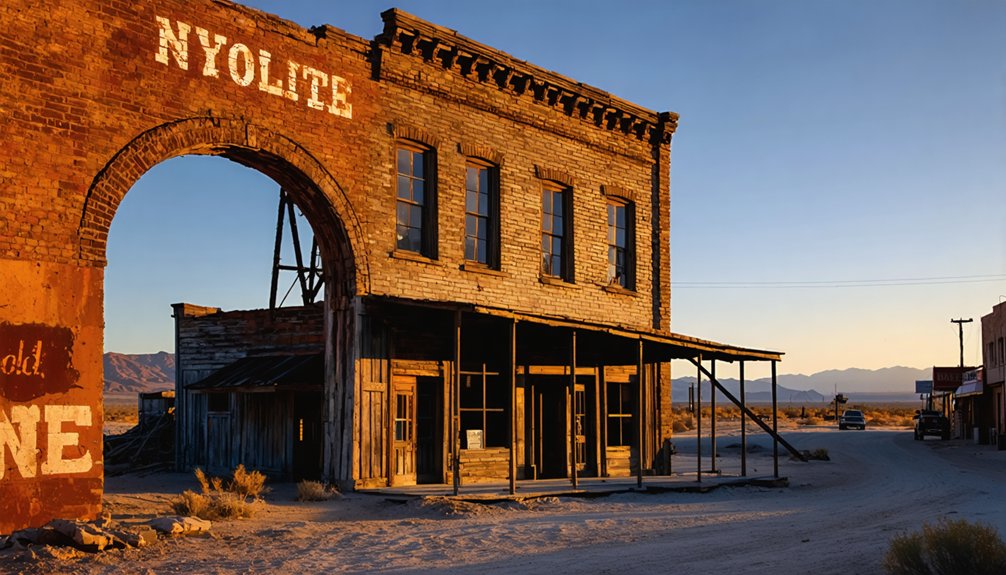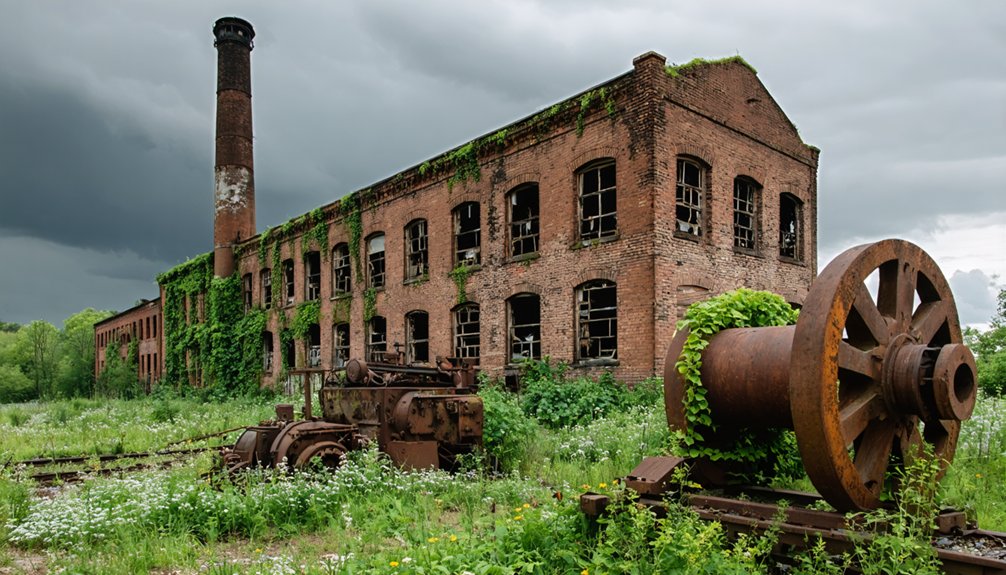
Preserving deserted mill towns requires a three-pronged approach: economic revitalization through adaptive reuse, environmental remediation of brownfield sites, and community engagement in planning processes. You’ll find success through public-private partnerships that leverage historic tax credits, preservation grants, and innovative funding models. These efforts can transform industrial relics into mixed-use districts, creating jobs and increasing property values while maintaining cultural heritage. Successful revitalization projects demonstrate up to 19% crime reduction alongside significant economic returns.
Key Takeaways
- Adaptive reuse of mill structures creates economic revival through mixed-use development while preserving historical architecture.
- Public-private partnerships provide crucial funding mechanisms through tax credits and grants for sustainable mill town preservation.
- Community engagement in planning ensures revitalization efforts reflect local needs and strengthen social capital.
- Environmental remediation transforms industrial brownfields into community assets while maintaining historic character.
- Successful preservation combines economic, environmental and social metrics to evaluate long-term sustainability of mill town revitalization.
The Economic Renaissance of Abandoned Mill Properties

As abandoned mill complexes continue to dot the landscape of post-industrial America, their transformation represents one of the most significant economic revival stories of the twenty-first century.
You’ll find these adaptive reuse projects generating remarkable returns—over 4,000 jobs at Lawrence’s Riverwalk development alone, with commercial spaces achieving near-perfect occupancy rates.
These revitalization efforts leverage substantial public-private investments, like Columbus’s $26.2 million Mill District redevelopment.
The economic impact extends beyond property boundaries, increasing surrounding property values and tax revenues in previously struggling communities.
Through community engagement, these complexes evolve into mixed-use hubs featuring housing, businesses, and recreational infrastructure.
With small businesses benefiting from affordable commercial space, these former industrial giants are catalyzing entrepreneurship in regions previously facing double the statewide poverty rates.
Due to changes in local zoning codes and financial support through state tax credits, developers are increasingly converting historic mills into housing units that serve diverse community needs.
Greenville’s Judson Mill exemplifies this trend with its ambitious transformation into a 36-acre mixed-use district that combines residential, commercial, and entertainment spaces.
Environmental Restoration: Turning Brownfields Into Community Assets
While former mill towns once represented industrial pollution hotspots, today’s environmental restoration efforts transform these brownfields into valuable community assets through extensive remediation strategies.
Green remediation techniques incorporate advanced site characterization to identify contaminant profiles before implementing targeted solutions.
Precise contaminant profiling enables tailored remediation approaches, transforming ecological challenges into targeted restoration opportunities.
You’ll find these restoration projects employ circular economy principles that benefit both environment and economy:
- Phytoremediation and bioremediation approaches that naturally cleanse soils
- Reuse of existing structures and materials, reducing waste and preserving heritage
- Integration of green infrastructure like permeable surfaces and stormwater systems
- Community engagement throughout planning, ensuring spaces reflect local needs
These innovative approaches convert contaminated industrial zones into ecological havens while supporting economic revitalization.
The transformation creates multipurpose spaces where biodiversity flourishes alongside human activity, embodying sustainable redevelopment‘s promise.
Pittsburgh’s brownfield redevelopment success stories along the Monongahela River demonstrate how former steel plants can be transformed into thriving commercial and residential areas.
Employing 3D subsurface imaging techniques provides detailed mapping of underground contaminants, ensuring more effective and precise remediation planning.
Social Fabric: Rebuilding Communities Around Historic Infrastructure
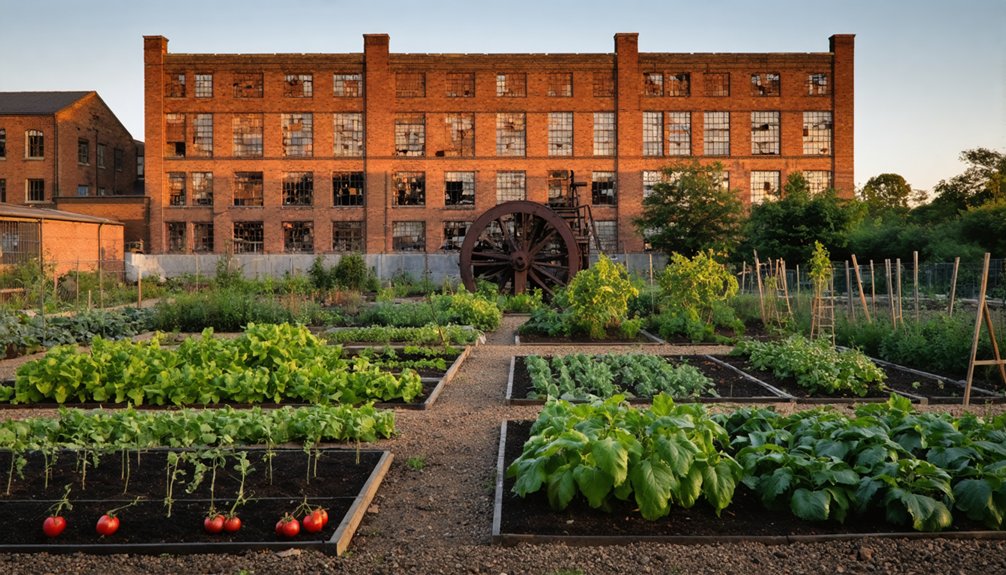
Revitalizing abandoned mill towns extends far beyond architectural preservation, fundamentally reshaping the social fabric of communities through strategic infrastructure redevelopment.
You’ll witness how mill conversion directly addresses neighborhood deterioration by enhancing social capital and improving perceptions of safety, with data showing citywide reductions in crime rates following remediation projects.
These historically pedestrian-oriented structures, when thoughtfully redeveloped, reconnect communities to their cultural heritage while meeting contemporary needs.
Mixed-income housing models guarantee equitable development, preventing displacement while creating diverse neighborhoods.
Community engagement through master planning processes puts decision-making power in residents’ hands, fostering ownership and sustainable revitalization.
The transformation of walkable mill districts increases downtown foot traffic, benefiting local businesses and restoring riverfront access—creating vibrant public spaces where social bonds flourish amid repurposed historic infrastructure.
Research demonstrates that remediation of these industrial sites can lead to approximately 19% reduction in violent crime rates once vacant buildings are repurposed for community use.
In Vernon, the successful transformation of the former sweater mill into Loom City Lofts demonstrates how brownfield remediation can directly address affordable housing needs while preserving historical character.
Rural Preservation Challenges and Creative Solutions
When you’re tackling rural mill town preservation, securing adequate financing often requires innovative combinations of tax credits, grants, and public-private partnerships that address the specialized restoration needs of deteriorating industrial structures.
Your efforts must simultaneously combat accelerating population decline through strategic economic development initiatives that create compelling reasons for residents to remain and newcomers to invest.
Repurposing industrial architecture demands creative vision to transform cavernous manufacturing spaces into viable contemporary uses—from data centers and vertical farms to mixed-use developments that honor historical significance while meeting modern market demands.
Successful preservation strategies often incorporate adaptive reuse techniques that breathe new life into abandoned mills while maintaining their historical integrity and architectural character.
Integrating arts and culture-related strategies into redevelopment plans has proven effective for economic revitalization in former industrial centers that struggle with deindustrialization.
Financing Historic Restorations
Despite their historical significance, rural mill towns face considerable financial hurdles when undertaking preservation projects. Your funding strategies must adapt to compete with urban initiatives for limited preservation dollars.
When preparing grant applications, remember rural communities often lack administrative capacity for complex paperwork.
Creative financing solutions you can explore include:
- Preservation NC’s Stedman Incentive Grant for nonprofit-led restorations
- The Marion Stedman Covington Foundation’s rehabilitation grants
- National Trust for Historic Preservation’s planning and education grants
- Local fundraising and crowdfunding partnerships with private donors
Federal programs like Historic Preservation Fund (HPF) grants and state resources through SHPOs provide essential support, though matching requirements present challenges.
The Rural Paul Bruhn Historic Revitalization Grants specifically target rural historic structures, making them particularly valuable for mill town preservation efforts.
The Hart Family Fund for Small Towns offers grants of up to $15,000 specifically designed to address preservation needs in communities with populations under 5,000.
Consider using USDA’s Rural Housing Service as they provide funds for housing in rural areas that can be leveraged for historic residential restorations.
Combating Population Decline
Rural mill towns facing depopulation confront a complex demographic crisis that threatens both preservation efforts and community viability.
You’ll notice the dual challenges of natural decrease—where deaths outnumber births—combined with outmigration have reduced working-age populations in over 77% of rural counties compared to two decades ago.
Effective population strategies must address this demographic imbalance. The recent rural growth of 134,000 residents (2023-2024) demonstrates how migration incentives can reverse decline trends.
Without the 974,379 migrants (69% domestic, 31% international) between 2020-2024, rural America would have lost over 500,000 residents.
Your preservation efforts depend on attracting newcomers while rebuilding economic foundations. The tax base erosion in depopulating areas directly impacts infrastructure maintenance and historic preservation funding, making migration-focused policies essential for rural mill town survival.
Repurposing Industrial Architecture
While abandoned mill complexes often represent economic decline, they simultaneously offer exceptional opportunities for architectural preservation that balances historical significance with contemporary function.
Through adaptive reuse, these industrial structures transform from relics of the past into vibrant community assets that generate economic importance.
Your community can reimagine these spaces by considering:
- Multi-use designs that accommodate seasonal needs—housing agricultural workers during harvest and tourists during festivals
- Transformation of historic buildings into co-working hubs, event venues, and visitor centers rather than static museums
- Integration of traditional knowledge systems like climate-adapted architecture
- Creation of cultural spaces that strengthen community engagement and reinforce civic pride
This approach protects architectural heritage while making it economically viable, supporting the three essential pillars of rural identity: identity preservation, sustainability, and economic opportunity.
Case Study: Tilton’s Transformation From Industrial Past to Vibrant Present
When you examine Tilton’s Riverfront Reclamation Project, you’ll find a remarkable shift from contaminated industrial sites to recreational spaces that highlight the town’s connection to the Winnipesaukee River.
The community-driven economic revival, spearheaded by descendants of original mill owners like Charles E. Tilton, demonstrates how historic preservation can catalyze commercial resurgence.
Tilton’s transformation represents a model case of post-industrial revitalization, where Victorian architecture and repurposed mill buildings now support tourism and local commerce rather than textile production.
Riverfront Reclamation Project
The transformation of Tilton’s riverfront exemplifies how post-industrial communities can reclaim and revitalize abandoned mill sites through strategic partnerships and environmental remediation.
You’ll find this $10 million reclamation project converted the contaminated 1868 Endless Belt textile mill—vacant since 1985—into a vibrant public space that honors industrial heritage while embracing contemporary riverfront aesthetics.
The project’s success hinged on four critical elements:
- Environmental cleanup funded by EPA grants and $1 million from United Technologies
- Infrastructure development including Victorian pavilion and ADA-accessible fishing piers
- Preservation of historic elements like Charles Tilton’s commissioned pedestrian bridge
- Community engagement through public-private partnerships between town government and developers
This waterfront transformation demonstrates how brownfield remediation can transform industrial blight into community assets, preserving historical significance while creating new recreational opportunities.
Community-Driven Economic Revival
Despite decades of industrial decline following the golden age of textile manufacturing, Tilton’s economic revival emerged as a community-driven process that strategically leveraged historical assets while embracing contemporary market opportunities.
You’ll find Tilton’s transformation mirrors successful models like Maynard’s, where multiple small businesses replaced singular industrial operations. The town’s “room and power” approach encouraged local entrepreneurship by enabling small-scale manufacturers to access industrial space without prohibitive capital investments.
Community engagement flourished as municipal governance maintained infrastructure while allowing market forces to operate freely.
Unlike towns that desperately clung to dying industries, Tilton’s patient, market-oriented approach attracted diverse enterprises. By maintaining local fiscal control and supporting strategic infrastructure improvements, you’re witnessing how former mill towns can achieve economic diversification and renewed vibrancy while honoring their industrial heritage through adaptive reuse.
Contamination to Recreation
Tilton’s environmental narrative represents a remarkable evolution from industrial contamination to recreational revival, demonstrating how post-industrial landscapes can experience ecological rebirth.
You’ll find once-contaminated landscapes transformed through deliberate remediation efforts that addressed textile mill pollutants and tannery waste.
The Winnipesaukee River corridor, previously degraded by industrial discharge, now offers:
- Revitalized parks and trails where toxic soils once prevented public access
- Restored fishing habitats in waters previously uninhabitable for aquatic species
- Repurposed historic mill structures that honor industrial heritage while serving community functions
- Improved water quality supporting diverse recreational opportunities from boating to swimming
This transformation exemplifies environmental resilience, proving that industrial legacies need not permanently constrain a community’s relationship with its natural resources.
Measuring the Impact: Metrics That Matter in Mill Town Revitalization
Successful revitalization of abandoned mill towns requires rigorous measurement frameworks that capture both tangible and intangible outcomes across multiple dimensions.
You’ll need to track property value increases, job creation figures, and household income growth to quantify economic revitalization. Simultaneously, measure social metrics like community pride, safety perceptions, and downtown business formation to assess broader impacts.
Environmental improvements can be evaluated through contamination remediation statistics, green space creation, and sustainability features implemented.
For heritage preservation, monitor visitor numbers, tourism revenue, and cultural event frequency.
The most compelling metric may be the ratio of private capital leveraged per public dollar invested, demonstrating market confidence in your revitalization efforts.
These multifaceted measurements help communities understand true progress beyond simplistic economic indicators, ensuring that preservation efforts deliver holistic benefits to residents.
The Role of Public-Private Partnerships in Saving Mill Town Heritage
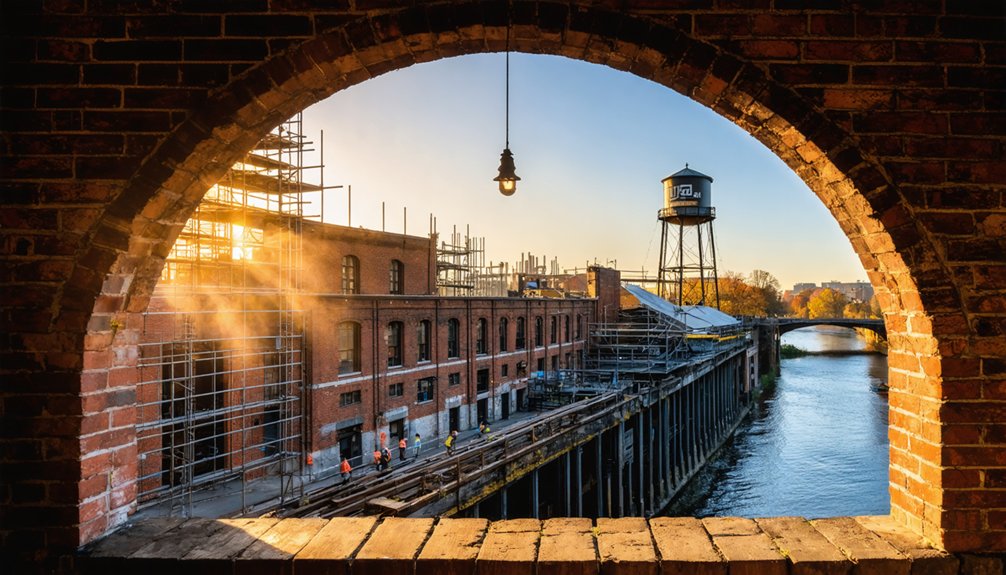
When public and private sectors join forces strategically, they create powerful mechanisms for rescuing and revitalizing historic mill towns that might otherwise face demolition or continued decay.
These community partnerships typically operate through Special Purpose Vehicles (SPVs) that focus governance while balancing financial risks across stakeholders.
Effective P3s for mill town preservation offer:
- Adaptive reuse strategies leveraging private investment while avoiding costly demolition
- Financial tools including Historic Tax Credits, which attracted $6.1 million for The Mill House in Greensboro
- Transparent collaborative governance structures involving community input and nonprofit bridges
- Property tax incentives through programs like California’s Mills Act, incentivizing private preservation
You’ll find these arrangements particularly successful in cultivating heritage tourism when they incorporate community vision through participatory decision-making processes while simultaneously addressing economic sustainability through diversified funding mechanisms.
Sustainable Development Through Historic Mill Preservation
The preservation of historic mills represents a cornerstone of sustainable development practice that simultaneously addresses economic, environmental, and cultural dimensions of community revitalization.
When you invest in mill heritage preservation, you’re capitalizing on existing embodied energy while preventing wasteful demolition. These adaptive reuse projects achieve up to 30% improvement in energy efficiency while maintaining character-defining features that strengthen community identity.
Investing in mill preservation conserves embodied energy while enhancing efficiency and preserving the cultural touchstones that define our communities.
You’ll find that restored mills function as economic catalysts—hosting farmers markets, training local residents in preservation techniques, and increasing surrounding property values.
Their transformation into multi-functional spaces accelerates small business development while creating destination venues that boost tourism.
Most notably, mill preservation maintains the physical anchors of local heritage, allowing you to honor regional history while implementing forward-thinking sustainable technologies.
Frequently Asked Questions
How Do Communities Finance Initial Preservation Assessments Before Securing Grants?
Like pioneers charting unexplored territory, you’ll finance initial preservation assessments through community fundraising events, preservation partnerships with local businesses, low-interest loans from foundations, and pre-development capital from revolving loan funds before grants materialize.
What Training Programs Exist for Specialized Mill Restoration Craftspeople?
You’ll find specialized training through IICRC certifications, Restoration Training Collaborative workshops, craft preservation programs at Restoration Academy, and hands-on restoration techniques courses at RTI’s training facilities with masonry-specific skill development.
How Are Water Rights Handled When Revitalizing Historic Mill Properties?
When crossing that water rights bridge, you’ll need thorough documentation of historic usage, legal agreements establishing ownership, and updated water allocation permits that balance your restoration needs with environmental regulations and downstream users’ interests.
Can Mill Towns Leverage Their Industrial Past for Heritage Tourism?
Yes, you’ll revitalize your mill town through heritage marketing that showcases authentic industrial storytelling. Transform factories into museums, employ former workers as guides, and integrate AR technologies to create compelling economic development opportunities.
exploring urban renewal in detroit can serve as a blueprint for other cities facing similar challenges. By fostering community involvement and encouraging local investment, such initiatives can lead to sustainable growth. Furthermore, partnerships with artists and entrepreneurs will infuse creativity into the revitalization process, resulting in vibrant public spaces and unique cultural experiences.
What Digital Preservation Tools Document Mill History Before Physical Restoration Begins?
Time waits for no structure. You’ll utilize LiDAR scanning, photogrammetry, GeoSLAM tools, digital archiving platforms, drone-based systems, and historical mapping techniques to create point clouds preserving mill towns before physical intervention begins.
References
- https://nepis.epa.gov/Exe/ZyPURL.cgi?Dockey=P1005NQI.TXT
- https://www.preservationsociety.org/news/the-economics-of-historic-preservation-2/
- https://www.atlasobscura.com/articles/column-preservation-of-abandoned-places
- https://aarch.org/learn/additional-resources/rural-preservation/
- https://jrap.scholasticahq.com/api/v1/articles/9543-the-economics-of-ghost-towns.pdf
- https://www.achp.gov/sites/default/files/guidance/2018-06/Economic Impacts v5-FINAL.pdf
- https://grokipedia.com/page/Ghost_Town
- https://www.thc.texas.gov/public/upload/publications/economic-impact-historic-preservation.pdf
- https://www.wgbh.org/news/housing/2023-05-11/once-abandoned-mills-are-now-home-to-thousands-of-massachusetts-residents
- https://upstatebusinessjournal.com/square-feet/mill-projects-update/