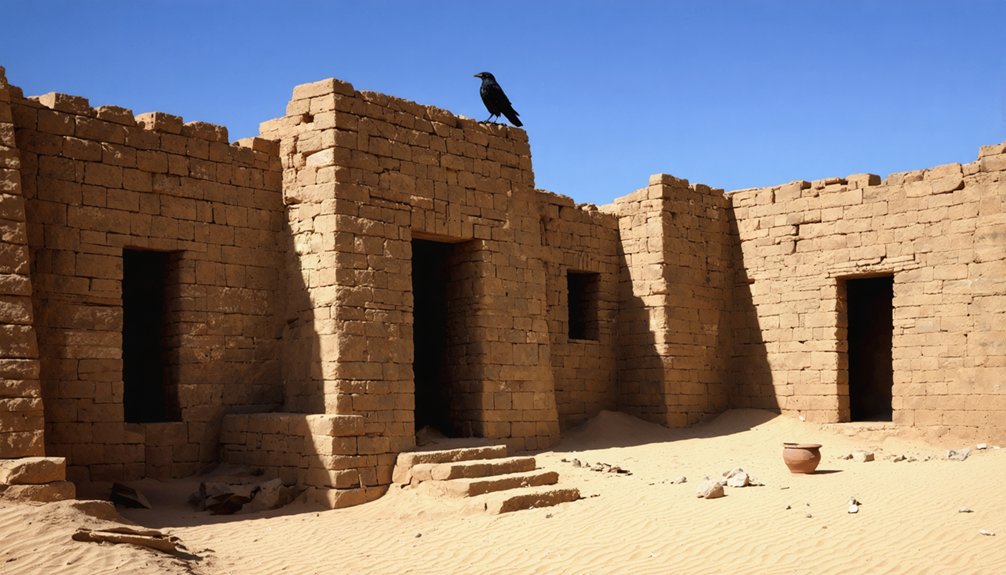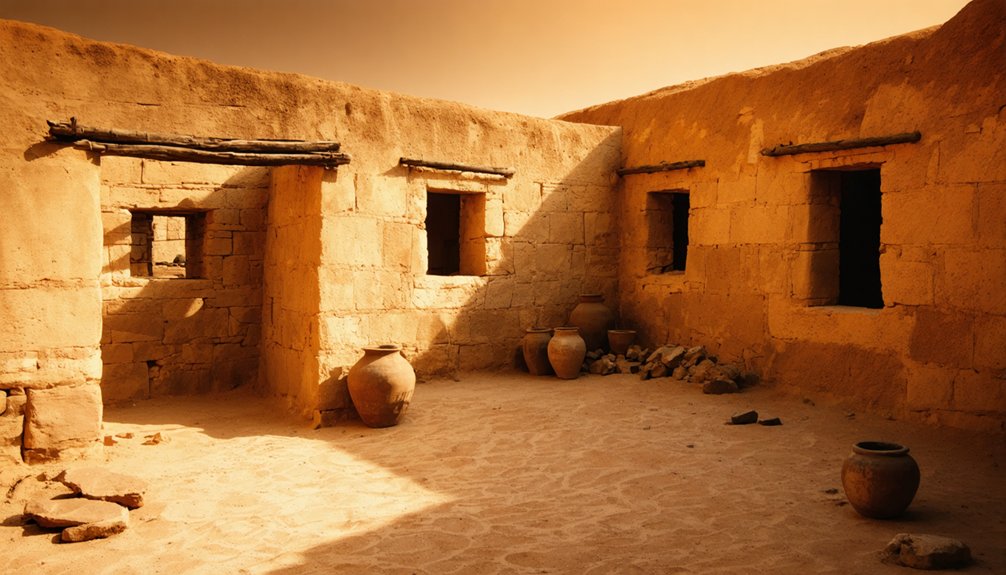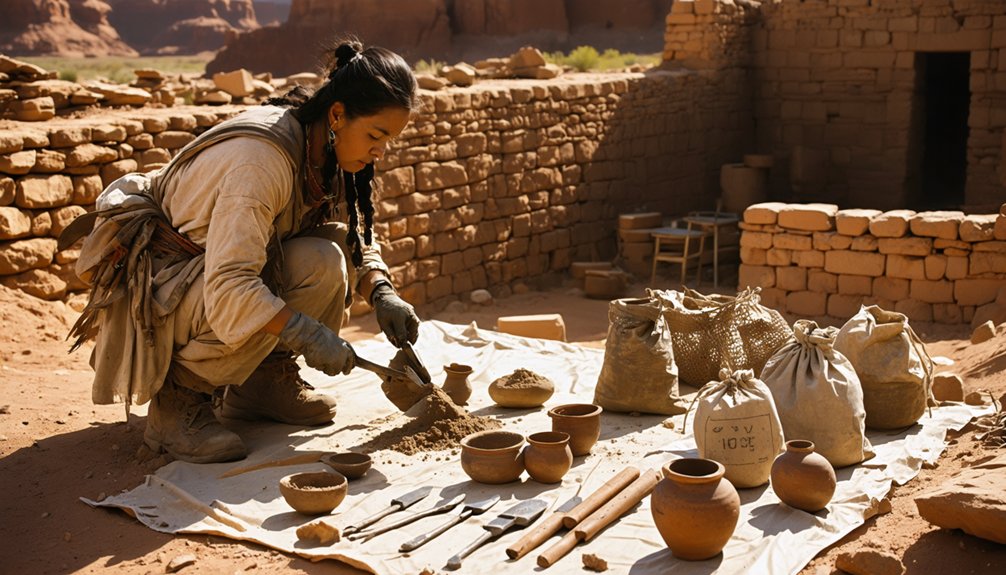
When preserving Native American settlement remnants during development, you’ll benefit from three essential approaches: implement avoidance strategies by conducting early surveys and consulting with tribal representatives; utilize site capping techniques with appropriate fill materials that extend beyond the frost line; and establish thorough monitoring protocols with both archaeological and Native American monitors present during ground disturbance. These scientifically-validated methods honor cultural heritage while satisfying legal requirements under NAGPRA and ARPA. The following techniques offer practical solutions for ethically managing these irreplaceable resources.
Key Takeaways
- Establish early tribal collaboration through consultation with affiliated tribes and Tribal Historic Preservation Officers before development begins.
- Conduct thorough site assessments using ground penetrating radar and incorporate traditional knowledge into preservation strategies.
- Implement site capping with appropriate fill material that matches original soil matrix to prevent artifact degradation.
- Monitor all ground-disturbing activities with qualified archaeologists and Native American representatives present during initial excavation.
- Secure long-term preservation through legal protections such as deed restrictions and conservation easements.
Avoidance Strategies for Development Projects
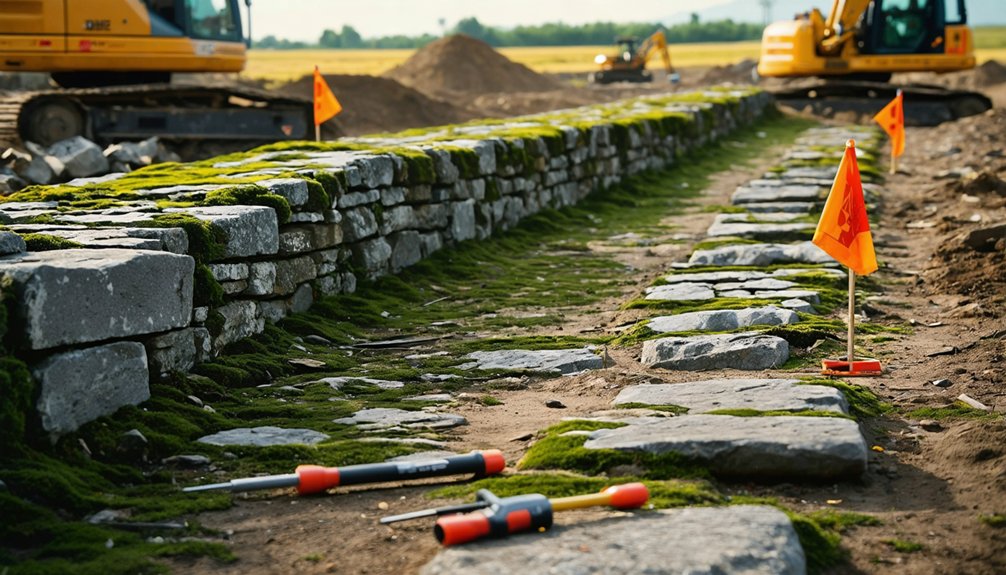
When undertaking development projects in areas with potential Native American cultural significance, implementing thorough avoidance strategies represents the most ethical and legally sound approach to site preservation.
Your first step should be commissioning extensive cultural resource management surveys that utilize ground penetrating radar and literature reviews to identify subsurface features before any disturbance occurs.
Begin with comprehensive cultural resource surveys using advanced technologies to identify hidden cultural features before breaking ground.
You’ll need to design development plans that circumvent known settlement remnants, using existing infrastructure as buffers.
Establish tribal collaboration early by consulting with affiliated tribes and Tribal Historic Preservation Officers, incorporating their traditional knowledge into avoidance strategies. This partnership isn’t just respectful—it’s essential for compliance with NAGPRA, ARPA, and other protective legislation.
Remember that removing or disturbing artifacts is strictly forbidden by federal and tribal laws that protect these non-renewable cultural resources.
Remember to monitor all ground-disturbing activities and immediately halt work if cultural resources are discovered.
Working with organizations like the CTUIR Cultural Resources Protection Program can provide valuable expertise as they have been managing cultural resources since 1987 with a focus on preserving significant tribal places.
Site Capping and Protective Burial Techniques
In cases where complete site avoidance proves impossible, site capping offers a scientifically validated alternative that preserves archaeological deposits while allowing for controlled development.
Before implementing this technique, you’ll need to conduct a thorough site significance assessment involving stakeholders from archaeological and indigenous communities. Your documentation must precisely map boundaries of buried deposits for future reference.
When selecting fill material, verify its physical and chemical properties match the original soil matrix to prevent degradation of artifacts. The protective layer must extend beyond the frost line and accommodate structural loads from planned construction. This approach respects cultural heritage integrity while balancing development priorities.
Proper horizontal excavation techniques should be employed prior to capping to document spatial relationships between artifacts and features that will be preserved beneath the protective layer.
Secure long-term preservation through deed restrictions and conservation easements that legally protect the capped site from future disturbance.
Remember that while capping isn’t permanent, it provides a practical balance between development needs and cultural heritage preservation.
Effective Monitoring During Construction Activities
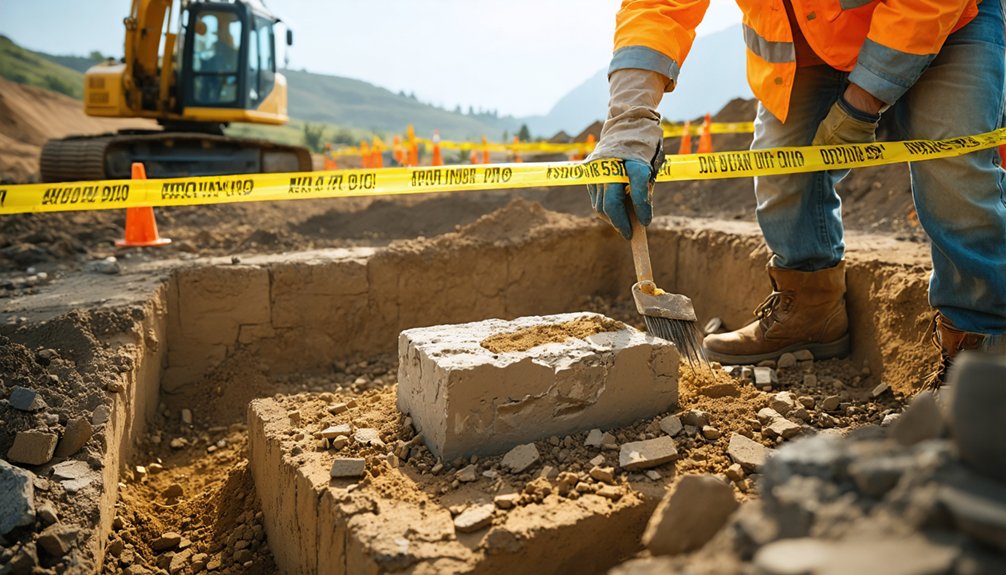
While site capping protects archaeological remains physically, effective monitoring during construction activities provides the vigilant oversight needed to prevent accidental damage to Native American settlement remnants.
You’ll need to establish clear monitoring protocols before construction begins, ensuring all parties understand their responsibilities. Designate qualified archaeologists and Native American representatives who’ll maintain daily logs, photographic documentation, and GPS coordinates of archaeological sites.
Native American monitors must be present during all initial ground disturbance within 50 feet of identified cultural resources, respecting the cultural significance these locations hold for tribal communities. Consultation with tribal leaders often involves collaborative approaches that enhance protection of culturally significant areas.
Maintain open communication between archaeological and tribal monitors, as their priorities may differ based on spiritual connections and historical importance.
Weekly summary reports should document all observations and discoveries, creating a thorough record of monitoring activities throughout the construction process.
Frequently Asked Questions
How Do Tribes Fund Acquisition of Ancestral Settlement Sites?
Seeking to reclaim heritage sites? You’ll find tribes fund ancestral lands acquisition through Native CDFIs, federal loan programs, philanthropic grants, and sustainable revenue-generating mechanisms that support Indigenous self-determination and sovereignty.
What Qualifications Are Required to Become a Tribal Historic Preservation Officer?
You’ll need a bachelor’s degree (preferably master’s) in anthropology or related fields, 3-5 years of cultural resource management experience, demonstrable tribal cultural knowledge, and expertise in preservation regulations like NHPA and NAGPRA.
Can Private Landowners Receive Tax Benefits for Preserving Settlement Remnants?
Like unearthing ancestral treasures, you can secure significant tax incentives through rehabilitation credits, conservation easements, and charitable deductions when preserving culturally significant land containing Native American settlement remnants. Jurisdiction and qualification criteria warrant meticulous examination.
How Are Underwater or Submerged Native American Sites Preserved?
You’ll preserve underwater Native American sites through specialized underwater archaeology techniques: remote sensing, re-burial, protective barriers, satellite monitoring, and legal frameworks that safeguard this submerged cultural heritage from degradation and unauthorized access.
What Technologies Help Identify Settlement Remnants Without Excavation?
You’ll identify settlement remnants non-invasively through remote sensing technologies including LiDAR, which penetrates forest canopy, Object-Based Image Analysis, and drone-based aerial archaeology that captures high-resolution topographic signatures of anthropogenic features.
One intriguing area of investigation involves ghost sightings at military bases, where reports often tie into the historical significance of these locations. The psychological aspects of such phenomena could be further explored through interviews with personnel who have witnessed these occurrences. Moreover, analyzing the environmental conditions during reported sightings may provide insights into how surroundings influence perceptions of the paranormal.
References
- https://nahc.ca.gov/native-americans/understanding-cultural-resources/
- https://www.audubon.org/magazine/how-tribes-are-reclaiming-and-protecting-their-ancestral-lands-coast-coast
- https://savingplaces.org/files/preserving-native-american-places-by-will-cook
- https://barnettcenter.osu.edu/sites/default/files/2019-08/conservation_of_indigenous_heritage.pdf
- https://www.heraldtimesonline.com/story/lifestyle/home-garden/2018/06/30/food-preservation-old-settler-style/47017527/
- https://plimoth.org/for-students/homework-help/growing-food
- https://historicgeneva.org/food-and-cooking/early-food-preservation-in-the-finger-lakes/
- https://blogs.loc.gov/folklife/2015/11/native-american-cultural-revitalization/
- https://www.ebsco.com/research-starters/social-sciences-and-humanities/preservation-indigenous-cultures
- https://nahc.ca.gov/wp-content/uploads/2015/10/Protecting-California-Native-American-Sites-During-Drought-and-Wild-Land-Fire-Emergencies-jbl-edits.pdf