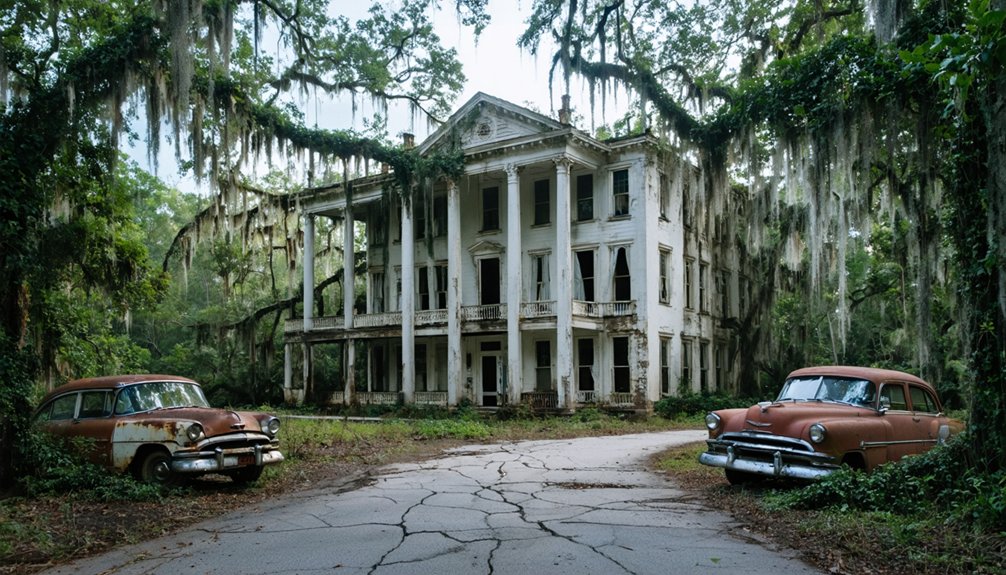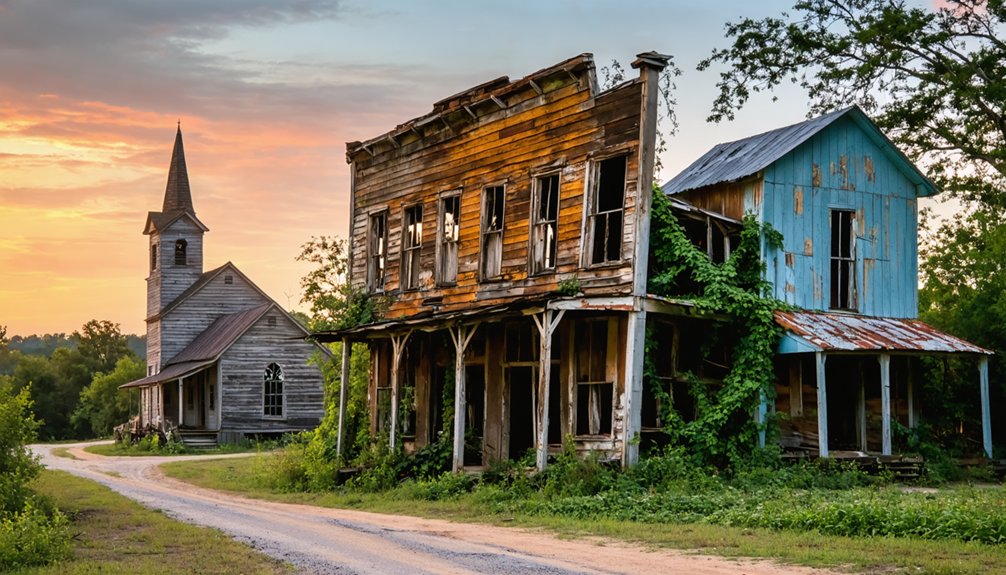
To preserve southern suburban ghost towns effectively, you’ll need to prioritize three essential actions. First, guarantee structural stability by addressing humidity challenges above 70% and implementing immediate bracing of weakened elements. Second, mobilize local historical societies to establish 501(c)(7) non-profits for dedicated fundraising campaigns. Third, implement tourism management strategies that balance revenue with preservation imperatives. These foundational steps guarantee authentic character remains intact while sustainable restoration proceeds.
Key Takeaways
- Seal building envelopes and install temporary roofing to control moisture, preventing further structural deterioration in humid southern climates.
- Document architectural details through drone-based 3D mapping to create accurate restoration blueprints for future preservation work.
- Establish 501(c)(7) non-profit historical societies to launch fundraising campaigns before beginning major restoration projects.
- Implement sustainable tourism strategies with capacity limits and designated visitor zones to generate revenue without damaging structures.
- Focus on addressing humidity levels above 70% through proper ventilation and minimal heating to prevent mold and pest infestation.
Securing Immediate Structural Stability in Humid Southern Climates
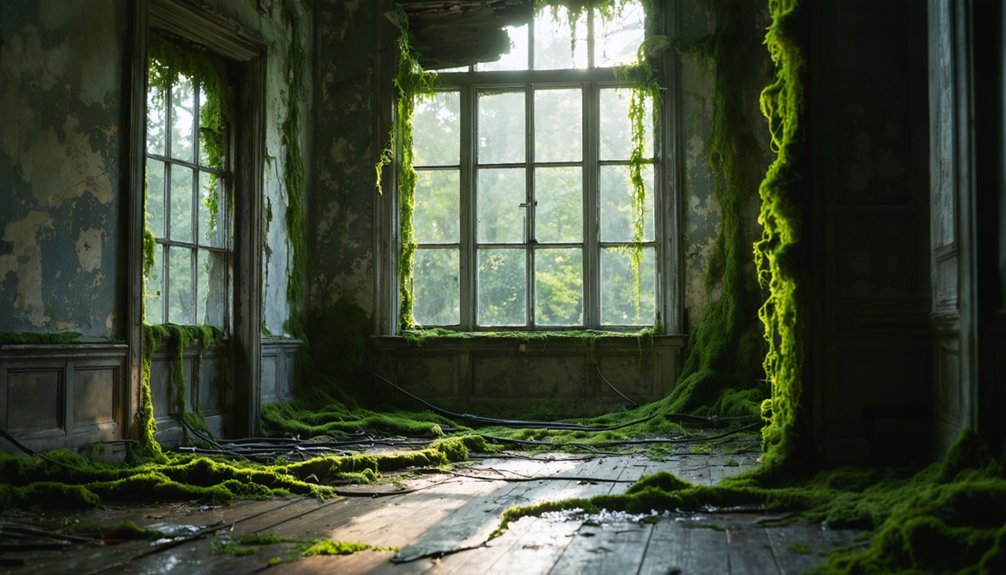
Securing immediate structural stability in humid southern climates presents unique challenges that must be addressed through methodical assessment and intervention.
Begin with a thorough structural inspection of load-bearing elements, focusing on foundations, walls, and roof systems where water infiltration typically occurs. Document all deficiencies with photographs to establish repair priorities.
Your primary concern should be identifying and controlling moisture pathways. Seal openings in the building envelope, install temporary roofing patches, and guarantee proper drainage away from foundations.
Identify and control moisture paths—seal envelope openings, patch roofing, and ensure proper foundation drainage.
Brace weakened structural members immediately to prevent potential collapse. Remember that humidity levels above 70% accelerate deterioration through mold growth and pest infestation, so implement cross ventilation strategies while maintaining minimal heat to regulate moisture content within structural materials.
Mobilizing Local Historical Societies for Documentation and Fundraising
While historical buildings deteriorate rapidly without intervention, mobilizing local historical societies creates a powerful infrastructure for both thorough documentation and sustainable fundraising efforts.
Leverage 501(c)(7) non-profit structures to guarantee 100% of donations directly support restoration projects while establishing multi-year fundraising campaigns before initiating major preservation work.
Community partnerships between historical societies, government agencies, and volunteer groups exponentially increase your preservation capacity through shared resources and aligned priorities. Many successful restoration projects implement honor system donations similar to Independence Ghost Town to fund ongoing maintenance.
Implement drone-based 3D digital mapping to capture architectural details for future restoration blueprints.
The Ghost Town Club of Colorado demonstrates how passionate individuals can make significant impacts in preservation by establishing dedicated funds and volunteering time for historic projects.
- Experience the visceral connection to your regional heritage through hands-on preservation
- Witness abandoned structures transform into living historical narratives
- Become part of a legacy extending beyond your lifetime
- Safeguard the freedom to access and learn from authentic historical spaces
Balancing Tourism Revenue With Heritage Protection Measures

Although the influx of tourism presents significant revenue opportunities for Southern suburban ghost towns, establishing equilibrium between economic benefits and preservation imperatives requires sophisticated management frameworks.
Similarly, the ongoing economic decline in Midwestern towns further complicates matters, as communities wrestle with dwindling job opportunities and decreasing populations. These challenges not only threaten local economies but also strain social services, which are already stretched thin. Addressing these issues requires innovative strategies that blend economic revitalization with community engagement.
Tourism brings revenue to ghost towns, but requires balanced management to protect their authentic character.
You’ll need to implement capacity management systems that prevent infrastructure strain while maintaining revenue streams. Consider instituting designated visitor zones that concentrate tourism impact away from residential areas.
Your heritage preservation strategies should include admission limits on popular attractions and restoration funding sourced directly from tourism fees. Learning from destinations like Branson, Missouri, where nearly 70% of small theaters closed due to post-pandemic tourism decline, demonstrates the importance of sustainable preservation approaches.
To protect your community’s integrity, establish short-term rental regulations preventing conversion of residential properties into tourist accommodations. This approach is especially relevant as data shows housing vacancies in Sunbelt cities now mirror those in Rustbelt regions. Property tax assessment policies must shield long-term residents from tourism-driven displacement.
Sustainable tourism infrastructure should incorporate strategic parking and transportation solutions that reduce congestion without limiting access. These balanced tourism strategies guarantee economic benefits while safeguarding the authentic character that attracted visitors initially.
Frequently Asked Questions
How Do Preservation Efforts Impact Nearby Property Values?
Your property investment benefits considerably from preservation efforts, as they drive higher value appreciation, increase tax revenues, accelerate community revitalization, and reduce crime compared to non-designated areas in your neighborhood.
What Insurance Options Exist for Stabilized Historical Properties?
You’ll find specialized historic property insurance policies offering authentic restoration coverage, while preservation funding options include National Trust Insurance Services’ PastForward® policy, ordinance compliance endorsements, and customizable masterpiece coverage through specialty insurers like Chubb.
How Can We Involve School Programs in Ghost Town Preservation?
Develop curriculum-based field trips where you’ll engage students through hands-on preservation activities. Form community partnerships with local schools to establish service-learning projects that document architectural features and oral histories at ghost town sites.
What Digital Technologies Best Document Deteriorating Southern Architecture?
Ever wonder how dilapidated mansions regain their former glory digitally? You’ll need 3D scanning for millimeter-accurate documentation, drone photography capturing decay patterns, virtual reality for immersive exploration, and historical mapping to contextualize architectural transformations scientifically.
Can Temporary Protective Structures Be Installed During Hurricane Seasons?
Yes, you can deploy TrapBag hurricane barriers around vulnerable structures and install hurricane fabric on fenestrations. These temporary shelters provide effective protection while maintaining aesthetic integrity during seasonal storm threats.
References
- https://travelnoire.com/reviving-ghost-towns-sustainable-tourism-in-abandoned-places
- https://www.youtube.com/watch?v=I-cqQ_aITQU
- https://www.ezhomesearch.com/blog/ghost-towns-in-georgia/
- https://www.nps.gov/slbe/learn/historyculture/ghosttowns.htm
- https://www.sdpb.org/rural-life-and-history/2023-08-21/some-black-hills-ghost-towns-and-their-origins
- https://www.youtube.com/watch?v=UujbImwiLfA
- https://www.iheart.com/podcast/105-stuff-you-missed-in-histor-21124503/episode/six-impossible-episodes-us-ghost-towns-301955004/
- https://www.archives.gov/preservation/environmental-control/realistic-preservation-environment.html
- https://www.getty.edu/conservation/publications_resources/pdf_publications/pdf/icomcc1.pdf
- https://drexel.edu/news/archive/2024/December/natural-ventilation-in-historic-buildings-can-reduce-energy-use