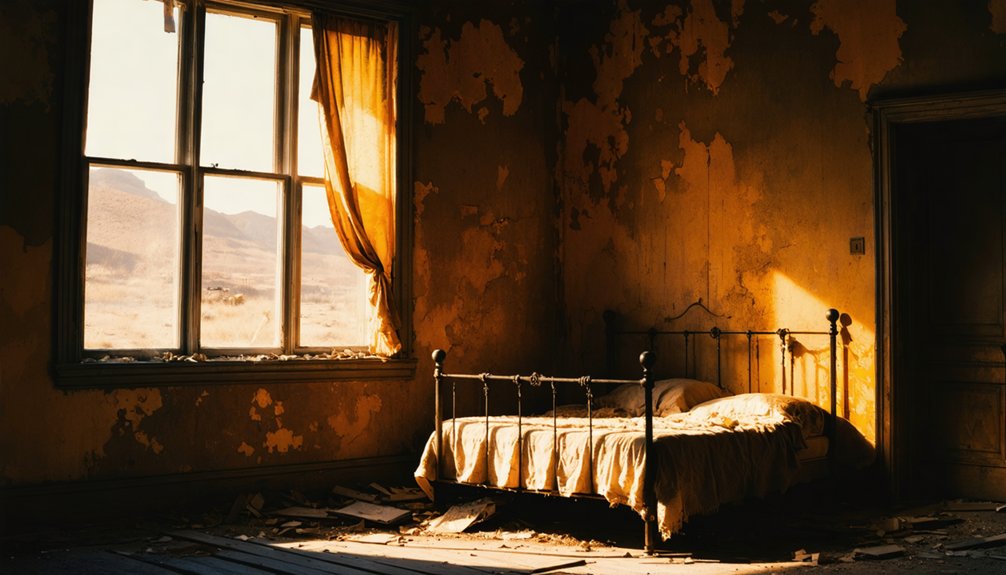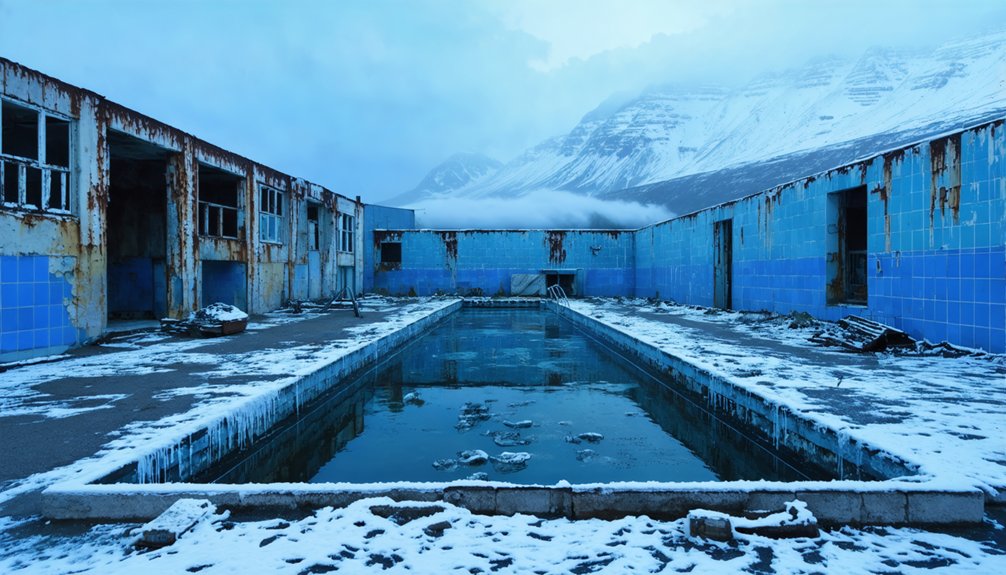
Pyramiden is a remarkably preserved Soviet ghost town in Svalbard, Norway, abandoned since 1998. You’ll find Soviet architecture with rounded edges designed for Arctic winds, centered around the iconic Lenin statue. Originally a Swedish mining settlement (1910) before Soviet acquisition (1927), it once housed 1,000 residents with advanced amenities like a swimming pool and cultural center. Today, you can visit via boat from Longyearbyen to explore this frozen-in-time communist outpost where polar bears now roam empty streets.
Key Takeaways
- Pyramiden is an abandoned Soviet coal mining settlement on Svalbard, preserved as a time capsule of Soviet Arctic life since 1998.
- Founded by Sweden in 1910 and later purchased by the Soviet Union in 1927, the town was named after its pyramid-shaped mountain.
- The settlement features pristine examples of Soviet Arctic architecture with rounded edges designed to deflect harsh winds.
- Visitors can access Pyramiden via boat in summer or snowmobile in winter, with guided tours mandatory for safety reasons.
- Only about 20 temporary caretakers maintain the ghost town today, while Arctic wildlife gradually reclaims the abandoned structures.
The Soviet Arctic Utopia: Rise of Pyramiden
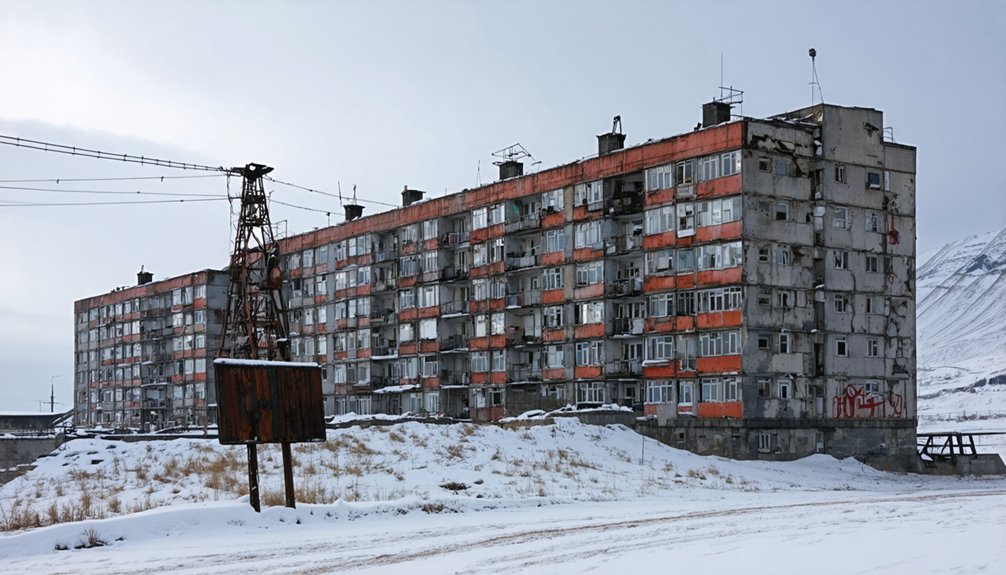
Though initially founded as a Swedish coal mining settlement in 1910, Pyramiden transformed dramatically after being purchased by the Soviet Union in 1927, becoming a strategic foothold on Svalbard under the 1920 Treaty’s provisions.
Despite Arctic isolation, the Soviets ambitiously expanded Pyramiden post-World War II, creating an idealized communist community. You’d find impressive infrastructure: a cultural palace housing theaters and libraries, the world’s northernmost swimming pool, and round-the-clock dining facilities—all designed for Soviet socialization in the harsh north. The town proudly displayed the northernmost Lenin statue in its main square as a powerful symbol of Soviet presence.
The settlement achieved remarkable self-sufficiency through its power plant, greenhouse operations, and livestock facilities, supporting up to 1,100 residents at its 1980s peak. This remote outpost symbolized Soviet power beyond the Iron Curtain while providing essential coal supplies to northern Soviet cities. The town was named for the pyramid-shaped mountain that towered above its coal mines.
Pyramiden stood as physical proof that communist ideals could flourish even in extreme environments.
Life at 79° North: Inside a Polar Mining Community
Living at 79° North presented extraordinary challenges and unexpected rewards for Pyramiden’s Soviet citizens. You’d witness a tightly structured existence where higher wages and superior living standards compensated for extreme isolation.
The community cohesion fostered through collective activities created what many former residents nostalgically describe as utopian.
Daily routines revolved around mining shifts while specialized infrastructure—central heating, swimming pools, and greenhouses—insulated residents from the harsh Arctic environment. The settlement faced sea ice coverage for most of the year, further intensifying the sense of isolation from the outside world.
Your life would include cultural performances, sports competitions, and communal meals, all within walking distance of your state-provided apartment. The town was designed with Soviet ideals of creating the perfect society, complete with various facilities for residents.
As the 1990s brought economic challenges, the carefully maintained social fabric began unraveling.
Mining output declined from 150,000 tons annually, subsidies disappeared, and eventually, this remarkable experiment in Arctic living ceased—leaving behind a fully equipped ghost town frozen in Soviet time.
The Abandoned Soviet Architecture of Svalbard
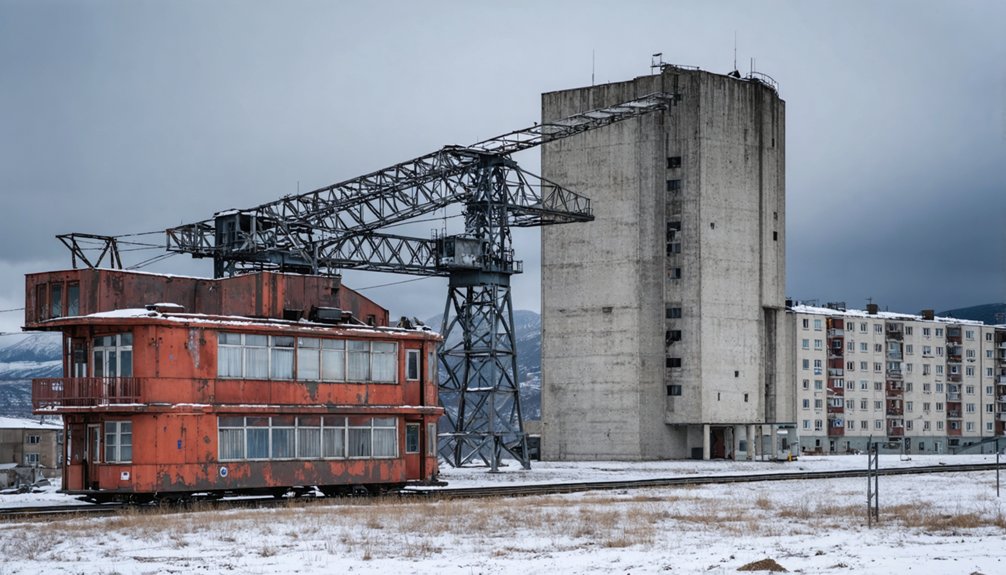
When you stand amid the weathered structures of Pyramiden today, you’re witnessing one of the world’s most pristine examples of Soviet Arctic architecture, abandoned yet remarkably intact since 1998.
The town’s distinctive buildings, with their rounded edges designed to deflect Arctic winds, represent the USSR’s ideological expansion beyond the Iron Curtain. These abandoned structures retain unique features: the cultural palace with its grand mosaics celebrating Norse heroes, the 24-hour cantina, and the northernmost Lenin statue in the world. The iconic Lenin statue in the town square stands as a silent testament to the Soviet era that once dominated this remote Arctic settlement.
Architecture as ideology—Soviet Arctic buildings with wind-deflecting curves embodying communist expansion beyond borders.
Soviet block-style buildings weren’t merely functional—they embodied propaganda through architectural significance. The layout showcased socialist ideals with centralized facilities: libraries, art studios, and swimming pools demonstrating supposed Soviet superiority.
Despite poor coal quality making operations unsustainable, this frozen-in-time settlement remains a powerful symbol of Soviet ambition in one of Earth’s harshest environments. The abandonment happened rapidly with residents departing in the late 1990s as financial crises during Russia’s transition from a centralized economy to a free market severely impacted Trust Arktikugol’s operations.
Frozen in Time: Exploring Today’s Arctic Ghost Town
Despite its abandonment over twenty years ago, Pyramiden stands today as a perfectly preserved Arctic time capsule, where the permafrost’s unyielding grip has suspended Soviet life in remarkable detail.
You’ll witness frozen history in everyday objects—cups left on tables, ski equipment leaning against walls—all untouched since the 1998 mining closure.
When you visit this remote outpost, the mining legacy reveals itself through intact machinery and infrastructure that once supported over 1,000 residents. The settlement is notable for housing the northernmost Lenin statue in the world, a powerful symbol of its Soviet heritage.
Today, just 20 temporary caretakers maintain this living museum. Visitors can explore the extensive network of mining tunnels that stretch over 50km with 32 openings throughout Pyramiden Mountain.
Arctic wildlife now claims the settlement, with foxes and birds making homes in abandoned Soviet structures.
Access remains challenging—summer boats or winter snowmobiles are your only options—especially as sanctions against Russian enterprises complicate travel arrangements to this surreal historical artifact.
Journey to Pyramiden: Visitor’s Guide to the Arctic Relic
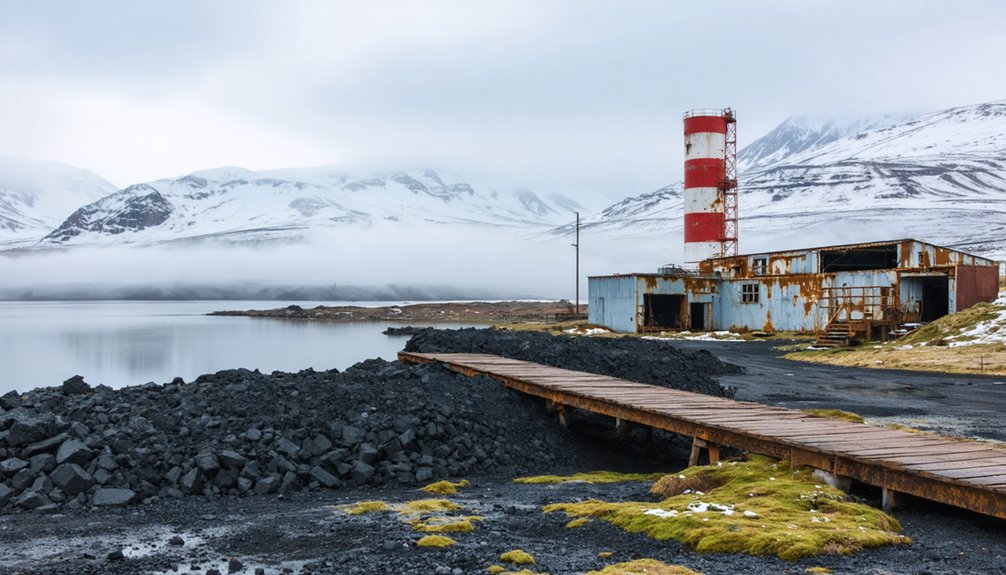
You’ll find Pyramiden accessible primarily via boat from Longyearbyen during summer months or by snowmobile treks in winter, with each season offering dramatically different photographic opportunities.
When planning your visit, pack layers regardless of season, confirm tour availability in advance, and prepare for extended daylight hours or polar night depending on your timing. The Arctic settlement remains remarkably preserved since its abandonment in 1998, creating a time capsule of Soviet life.
Your camera will capture the most compelling images during the golden hours when the Arctic light casts long shadows across abandoned Soviet architecture, though you should bring extra batteries as the cold considerably reduces their lifespan. Visitors can explore the remnants of the once-thriving Cultural Palace, which previously housed community activities, a swimming pool, and library.
Accessing The Ghost Town
Reaching the isolated Soviet outpost of Pyramiden presents a fascinating logistical challenge for Arctic travelers. Your primary summer access comes via boat tours from Longyearbyen, operating three days weekly with six-hour round-trips.
During winter, snowmobile expeditions offer the only viable approach across the frozen landscape.
You’ll need to join guided tours—mandatory for safety and building access. These typically last two hours on-site, with guides carrying rifles for polar bear protection.
Remember, you can’t wander independently due to wildlife risks; stay with your guide at all times.
While helicopter transfers exist for those willing to pay premium rates, most visitors arrive by sea. The journey itself becomes part of the adventure, as you’ll navigate waters where communication infrastructure vanishes and self-reliance becomes paramount.
Seasonal Planning Essentials
Planning your Pyramiden expedition demands careful seasonal consideration, complementing the logistical challenges of reaching this Arctic outpost.
Target late June through August when sea ice recedes, enabling boat access and offering milder 0°C to +5°C temperatures. This window transforms seasonal activities from impossible to manageable—you’ll navigate marked hiking trails and explore industrial relics without extreme cold exposure.
Your gear strategy must include layered clothing (thermal base, insulating mid-layers, waterproof shells), sturdy boots, and polarized eyewear.
Winter visits remain largely impractical except for specialized expeditions.
Prepare physically for extended outdoor exploration in challenging terrain while remaining vigilant for wildlife encounters, particularly polar bears. Guides carry firearms for protection, but your awareness remains essential.
Secure thorough insurance with Arctic rescue coverage—Pyramiden’s isolation demands meticulous preparation for your safety.
Photography Tips Galore
Capturing Pyramiden’s haunting beauty demands specialized photographic preparation beyond standard travel equipment. Equip yourself with a sturdy tripod for stability against Arctic winds, and pack both wide-angle (16-35mm) and telephoto (200-600mm) lenses to alternate between vast landscapes and detailed wildlife photography.
Carry multiple batteries as the cold rapidly depletes their charge. Exploit the unique “arctic yellow” light during extended golden hours for dramatic landscape composition. Frame Soviet industrial remnants against pristine snows for compelling contrast.
When photographing wildlife, maintain fast shutter speeds (1/1000-1/1500) to freeze motion. For depth, incorporate foreground elements like abandoned machinery or ice formations.
Join small-group guided tours from Longyearbyen for professional assistance and access to prime shooting locations while respecting wildlife distance regulations and structural safety concerns.
The Lenin Statue and Other Soviet Relics in No Man’s Land
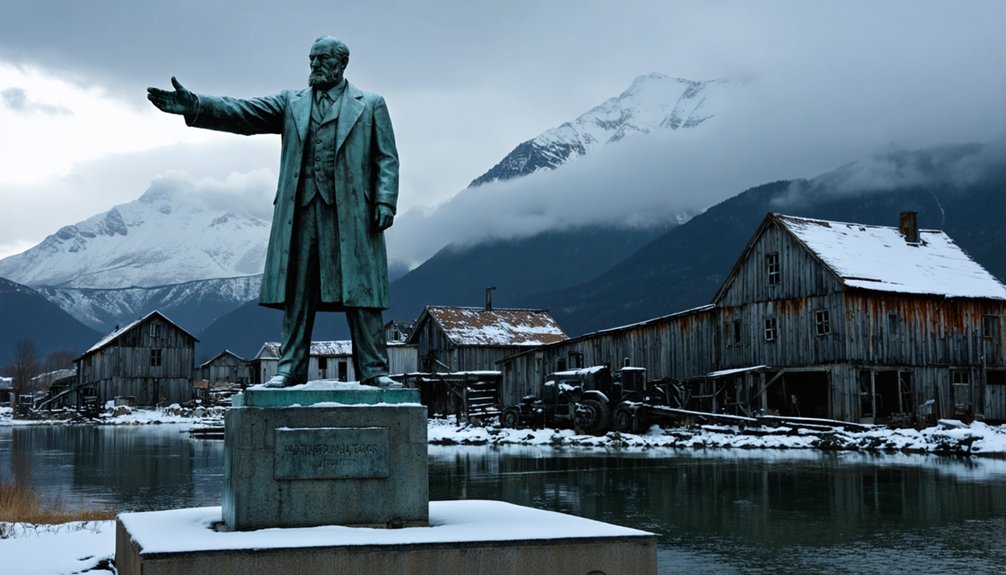
Standing tall at 78° North, the Lenin statue in Pyramiden’s central square commands your attention as the world’s northernmost monument to the Soviet revolutionary.
You’ll notice how the statue’s positioning deliberately faces the glacier—a calculated arrangement that symbolizes communist ideals conquering even the harshest Arctic frontiers.
This bronze sentinel serves as the centerpiece among numerous Soviet relics scattered throughout the settlement, including propaganda murals, hammer-and-sickle emblems, and Cyrillic signage that collectively transform this Norwegian territory into an otherworldly Soviet time capsule.
Northernmost Lenin Monument
A towering bronze sentinel, the Lenin statue in Pyramiden stands as the northernmost monument to the Soviet revolutionary leader in the world, positioned at approximately 79 degrees north latitude.
You’ll find this stoic figure facing the Nordenskiöld Glacier, a permanent witness to the Arctic’s brutal elements and the town’s abandonment.
This bronze representation of Lenin’s Arctic ideology remains perfectly preserved despite the ghost town surrounding it.
The statue’s placement was deliberate—a calculated symbol of communist presence in this Norwegian territory.
Trust Arktikugol strategically positioned this Lenin legacy on a stone pedestal in the town square, ensuring maximum visibility and impact.
Today, it serves as both historical artifact and tourist attraction, a reminder of when Soviet influence extended even to this remote Arctic outpost.
Soviet Arctic Symbolism
Beyond the Lenin monument, Pyramiden’s landscape brims with Soviet ideological markers strategically positioned to assert geopolitical influence in this Norwegian territory.
You’ll find a memorial stele displaying both Cyrillic and Latin script, symbolically bridging East-West divides while reinforcing Moscow’s Arctic claims under the Spitsbergen Treaty.
The Cultural Palace stands as perhaps the most deliberate expression of Soviet symbolism, featuring imposing mosaic artwork depicting Norse heroes against Svalbard landscapes—a visual assertion blending Soviet aesthetics with Nordic cultural appropriation.
This calculated fusion wasn’t accidental but represented Moscow’s Arctic geopolitics strategy.
Even the standardized block architecture with rounded edges communicated Soviet technological mastery over harsh Arctic conditions.
The settlement’s very existence, despite economically unviable coal deposits, demonstrated the Kremlin’s determination to maintain its northernmost foothold in Western spheres of influence.
Frequently Asked Questions
What Happened to Former Residents After the 1998 Evacuation?
You’ll find former residents split their post-evacuation lives between relocating to Barentsburg with Arktikugol or returning to Russia entirely, losing access to medical services and community infrastructure they’d relied upon.
Are There Any Plans to Revitalize or Repopulate Pyramiden?
Yes, Russia’s revitalization efforts include establishing a research center, inviting BRICS countries, and investing $40+ million. You’ll notice future plans focus on tourism, research activities, and modernized infrastructure in Pyramiden.
How Do Guides Protect Visitors From Polar Bear Encounters?
Your guides enforce strict polar bear safety protocols, carrying .308 rifles, flare guns, and deploying tripwires around camps. They’ll train you on visitor regulations while maintaining constant surveillance during your adventure.
What Environmental Impact Did Coal Mining Leave in Pyramiden?
You’ll find coal mining left a significant pollution legacy, including soil contamination, permafrost disturbance, and habitat fragmentation. Ecosystem recovery remains challenged by persistent contaminants and climate change amplification effects.
Do Any Former Soviet Archives Document Daily Life There?
Like pieces of a scattered puzzle, Soviet archives documenting Pyramiden’s daily life are limited. You’ll find most records focus on mining operations rather than social aspects you’re seeking to understand.
References
- https://allthatsinteresting.com/pyramiden
- https://www.smithsonianmag.com/travel/soviet-ghost-town-arctic-circle-pyramiden-stands-alone-180951429/
- https://floratheexplorer.com/pyramiden-svalbard-arctic-ghost-town/
- https://goarctica.com/ghosttownpyramiden
- https://en.wikipedia.org/wiki/Pyramiden
- https://www.svalbardtrek.com/a-history-lesson-about-pyramiden
- https://www.thearcticinstitute.org/changing-nature-russia-arctic-presence-case-study-pyramiden/
- https://www.youtube.com/watch?v=UFynq8dnQl0
- https://www.jonaa.org/content/2018/10/18/pyramiden
- https://www.quarkexpeditions.com/blog/the-other-face-of-svalbard-soviet-ghost-town-experiences