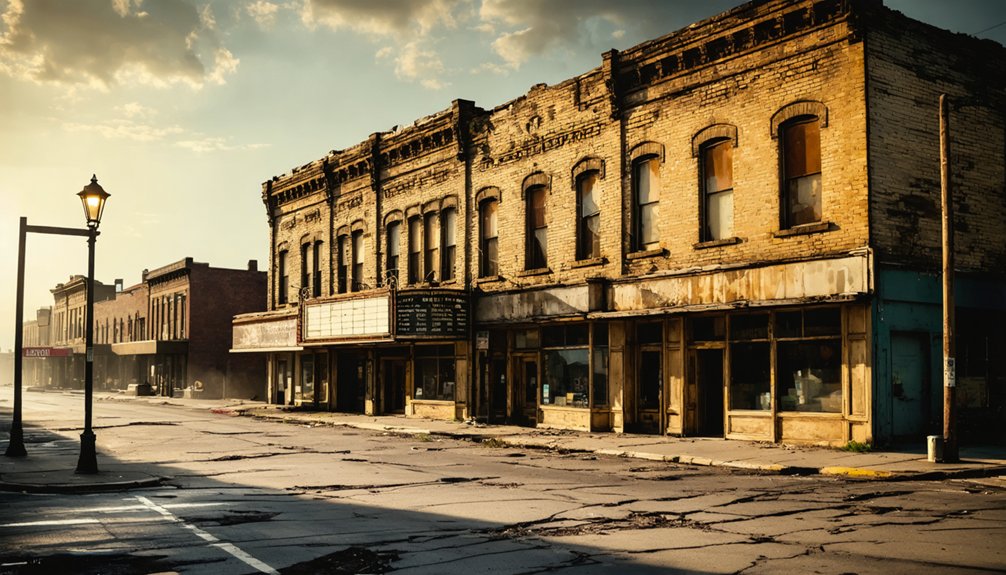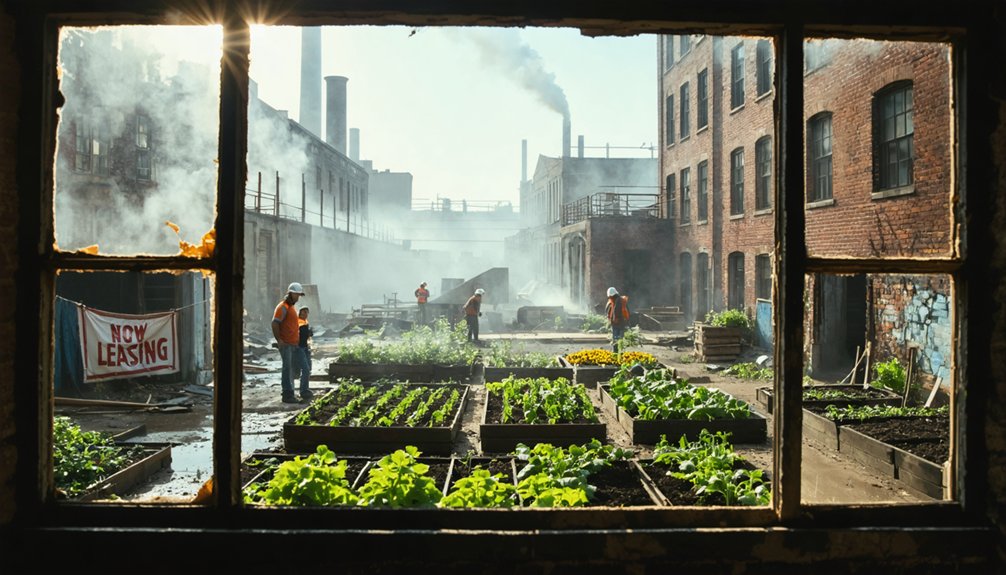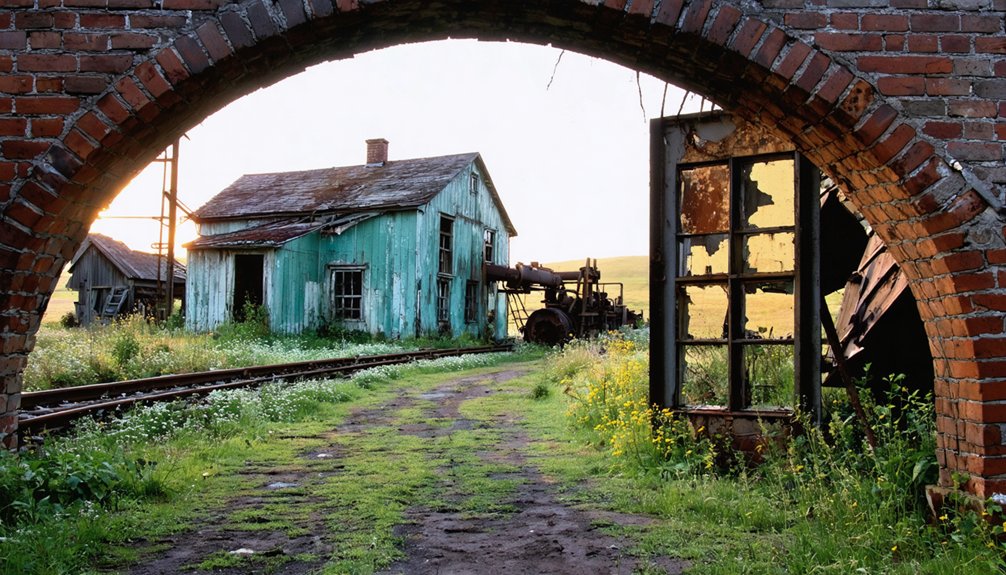
You’ll discover America’s abandoned mining towns throughout the Rust Belt as windows into industrial history. These settlements—once thriving with mineral extraction operations—declined sharply in the mid-20th century due to resource depletion and economic shifts. Today, towns like Kennicott and Bodie offer architectural remnants of industrial prosperity, featuring weathered structures and deteriorating machinery. Exploring these historic sites provides insight into the harsh environmental challenges and isolation miners endured during their operational heyday.
Key Takeaways
- Tourism initiatives transform abandoned mining towns into living museums preserving America’s industrial heritage.
- Strategic economic development includes tax incentives for remediation of environmentally damaged mining sites.
- Ghost towns like Kennicott experienced 30-60 year prosperity periods before mineral depletion triggered their abandonment.
- Community engagement in restoration efforts helps document and preserve important industrial history.
- Towns like Pittsburgh successfully pivoted from mining dependency to healthcare, education, and technology sectors.
The Rise and Fall of America’s Industrial Heartland
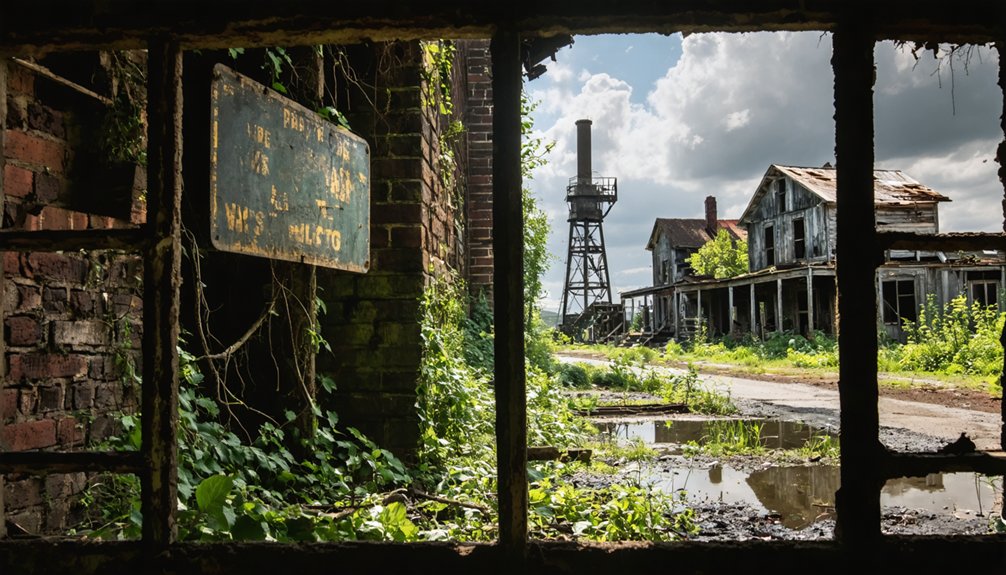
While the Industrial Heartland emerged gradually during the second half of the 19th century, its expansion accelerated dramatically through the first half of the 20th century, fundamentally reshaping America’s economic landscape.
The region’s economic resilience stemmed from strategic access to iron ore and coal reserves via Great Lakes shipping routes and innovative transportation networks including the Ohio River and Erie Canal. Major cities like Chicago, Youngstown, and Pittsburgh became industrial hubs with thriving manufacturing sectors.
You’ll find the pinnacle of industrial innovation in Ford’s River Rouge plant, which revolutionized manufacturing by reducing automobile production time from 12 to 2.5 hours. This remarkable achievement followed Henry Ford’s introduction of the moving assembly line in 1913, transforming production efficiency across American manufacturing.
By the 1950s, nearly half of all American manufacturing jobs concentrated in this region.
The industrial heartland commanded America’s economic engine, housing half the nation’s manufacturing workforce by mid-century.
This prosperity reversed sharply in the 1970s as foreign competitors with lower labor costs, aging infrastructure, and increased globalization challenged the once-dominant industrial heartland, triggering a 28% decline in total jobs between 1950 and 1980.
Ghost Towns of the Mineral Frontier: Mapping the Forgotten
As the industrial giants of America’s heartland crumbled under economic pressures, a parallel narrative of abandonment had already been unfolding across the nation’s western frontier.
You’ll find these mineral frontier settlements followed remarkably similar trajectories—explosive growth followed by inevitable decline. Places like Kennicott (Alaska), Bodie (California), St. Elmo (Colorado), and Steins (New Mexico) experienced brief but intense prosperity spanning merely 30-60 years before mineral depletion rendered their primary economies non-viable.
The 1940s proved particularly devastating as wartime resource reallocation accelerated closures. Heritage tourism has become an important economic driver for areas surrounding these abandoned communities.
Yet these abandoned landscapes now serve a different purpose. Ghost town preservation initiatives have transformed places of extraction into spaces of remembrance.
The approximately 110 structures still standing in Bodie and the picturesque buildings of St. Elmo represent more than mining heritage—they’re living museums where you can experience America’s resource-driven past firsthand. These preservation efforts stand in stark contrast to Stubenville, where economic decline since the 1980s led to abandoned buildings on the National Register slowly decaying without intervention.
Economic Aftershocks: How Mining Closures Transformed Communities

When mining operations ceased across America’s resource frontier towns, they triggered economic aftershocks that permanently altered community landscapes far beyond the immediate loss of extraction jobs.
You’ll recognize similar patterns to the Rust Belt’s manufacturing collapse—property values plummeted as unemployment rates surged above 10%, creating widespread physical deterioration reminiscent of Youngstown’s steel mill closures in 1977. The phenomenon parallels the industrial heartland’s decline that began in the late 20th century when manufacturing peaked and subsequently diminished as a percentage of U.S. GDP.
Tax revenues evaporated, crippling municipal budgets and essential public services. As residents migrated away seeking opportunity elsewhere, these towns experienced demographic hollowing that mirrored the 35% manufacturing employment reduction in traditional industrial regions.
Community resilience became severely tested as educational disparities emerged, further limiting economic adaptation possibilities. The ripple effects extended beyond miners to local businesses that once served them, creating cycles of displacement similar to those witnessed when manufacturing hubs lost 5.5 million jobs since 1970.
Rust Belt Revival Stories: Towns Finding New Purpose
Across America’s former industrial heartland, remarkable revival stories have emerged from the economic wreckage of shuttered mining and manufacturing operations.
You’ll find Pittsburgh, Cleveland, and Detroit pivoting strategically from steel dependency toward healthcare, education, and technology sectors. Columbus exemplifies this community resilience, having developed robust service and tech ecosystems while neighboring cities faltered. Successful transformation often requires strategic investment policies that provide tax incentives tied to job creation and environmental remediation commitments.
In smaller satellites like Lakewood and Middletown, you’re witnessing sustainable redevelopment through infrastructure investments and housing renewal projects that transform industrial wastelands into vibrant cultural hubs. The decline of these areas often began with the departure of major employers, as seen when Armco’s headquarters relocated from Middletown to New Jersey in 1985.
These towns leverage their affordability to attract residents who enjoy lower living costs while accessing larger economic centers.
The architectural detail of these transformations often includes repurposed industrial facilities, where workforce retraining programs cultivate specialized skills for emerging industries—creating economic niches that honor industrial heritage while embracing innovation-driven futures.
Exploring the Remnants: A Visitor’s Guide to Historic Mining Sites
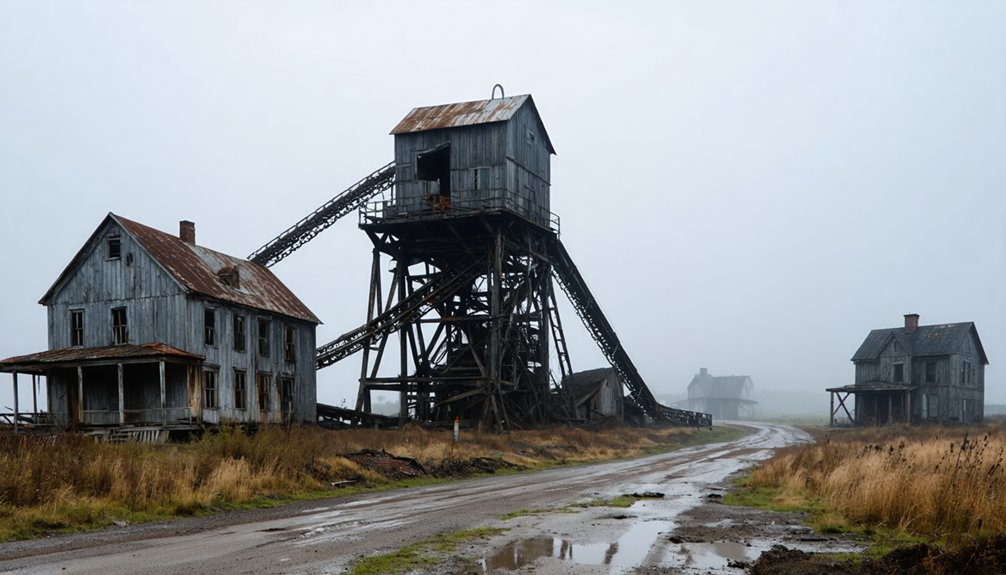
Visitors to America’s abandoned mining towns encounter haunting time capsules where industrial ambition collided with economic reality.
When you explore these sites, you’ll find mid-century commercial districts frozen in the 1940s-1950s aesthetic, with kerosene lamps and wooden poles still standing as silent witnesses to bygone prosperity.
Urban exploration opportunities abound in Johnstown and surrounding areas, where over 4,600 abandoned properties create a tableau of industrial decline.
Revitalizing communities in southern suburbs involves innovative approaches to repurposing these derelict spaces. Local organizations are spearheading initiatives to breathe new life into these areas, transforming abandoned buildings into vibrant community centers and affordable housing. This effort not only enhances the aesthetic of the neighborhoods but also fosters economic growth and social cohesion among residents.
Johnstown’s landscape of 4,600+ abandoned structures offers urban explorers unparalleled access to America’s industrial past.
Historical preservation efforts focus on mining infrastructure—mills, shafts, and waterwheel systems that once powered economic booms.
The “Millionaires’ Row” neighborhoods that emptied from 40,000 residents to fewer than 14,000 provide architectural insights into social stratification of mining eras.
Summer homes maintained by descendants offer glimpses of authenticity amidst the decay of these once-thriving communities.
The economic trajectory of these communities dramatically changed when foreign competition intensified in the 1980s, leading to widespread closures of manufacturing facilities that had supported these towns for generations.
Daily life in these towns was exceptionally difficult with residents enduring isolation for up to eight months during harsh winters when snow cut off all access to supplies and communication with the outside world.
Frequently Asked Questions
What Personal Safety Concerns Should Visitors Have in Abandoned Mining Towns?
You’ll face catastrophic mine shaft falls, toxic gas exposure, and potential drowning hazards. Your personal safety during urban exploration demands meticulous research of structural integrity and environmental contaminants before venturing forth.
How Do Former Residents Maintain Connections to Abandoned Mining Communities?
You’ll observe former residents maintaining connections through meticulously organized community gatherings, digital networks preserving shared memories, annual pilgrimages to architectural remnants, and active participation in historical preservation societies that document collective experiences.
What Environmental Hazards Persist in Former Mining Areas Today?
You’ll encounter persistent heavy metal contamination in soil and water systems, acid mine drainage affecting aquatic ecosystems, toxic remnants in waste rock piles, and water contamination from unplugged wells threatening drinking sources and wildlife habitats.
How Have Indigenous Communities Been Affected by Mining Town Abandonment?
Indigenous communities face ongoing cultural heritage loss and land rights violations following mine abandonment, enduring contaminated traditional territories, disrupted social structures, and exclusion from remediation decisions that could restore their ancestral connections.
What Legal Issues Surround Property Ownership in Ghost Mining Towns?
You’ll face a mountain of nightmares maneuvering property rights in ghost towns. Ownership disputes arise from fragmented title chains, adverse possession claims, zoning restrictions, and parcels with multiple stakeholders requiring extensive judicial resolution.
References
- https://www.arizonahighways.com/article/arizona-ghost-towns
- https://www.youtube.com/watch?v=inRD6vYBy8M
- https://www.altaonline.com/dispatches/a6466/ghost-town-wild-west-laura-fraser/
- https://www.industryweek.com/talent/article/22028380/the-abandonment-of-small-cities-in-the-rust-belt
- https://www.britannica.com/place/Rust-Belt
- https://en.wikipedia.org/wiki/Rust_Belt
- https://www.loveexploring.com/gallerylist/127789/then-and-now-us-rust-belt-cities-that-bounced-back
- https://www.youtube.com/watch?v=GCgQyULh3Wk
- https://rustbeltrecruiting.com/a-timeline-of-significant-moments-in-american-manufacturing/
- https://www.youtube.com/watch?v=_Cvw5gENzQ8