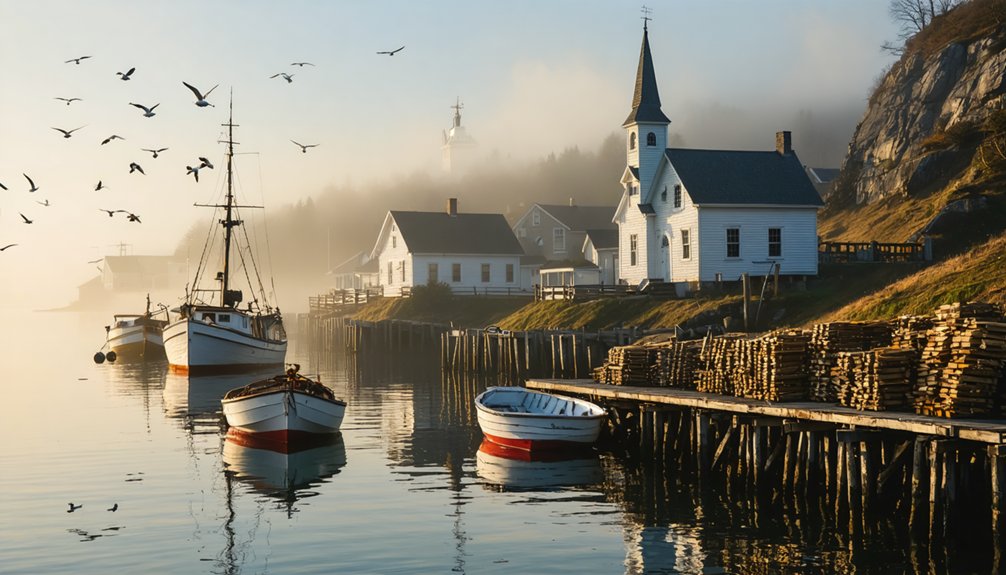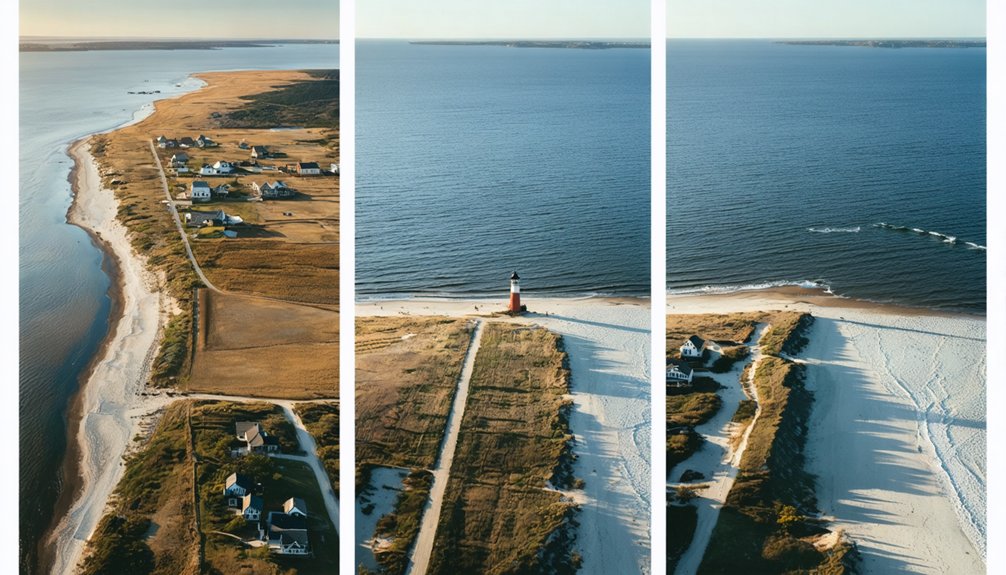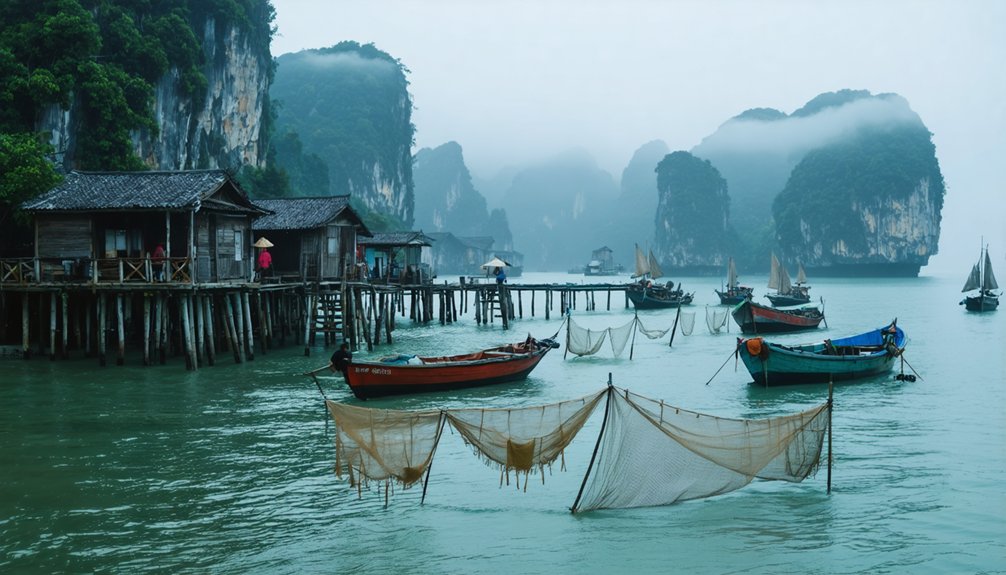
Remote coastal villages in the East offer authentic cultural experiences away from mainstream tourism. You’ll discover Indonesia’s pristine Kei Islands with their white beaches and traditional fishing communities, Georgia’s Batumi with Byzantine influences, and Mediterranean Sveti Stefan’s preserved heritage. Don’t miss the tranquil fishing havens of East Asia’s island chains or the isolated Nordic eastern seaboards like Vardø and Skarsvåg. These villages reveal centuries-old maritime traditions shaped by their unique geographical settings.
Key Takeaways
- Kei Islands in eastern Indonesia feature over 70 islands with white beaches and preserved fishing communities maintaining traditional practices and language.
- Amed Beaches offer untouched snorkeling sites accessible via local fishermen’s boats at locations like Pasir Panjang and Ohoieu Island.
- Batumi in Georgia balances Byzantine influences with modern architecture along 7km of beaches while facing cultural preservation challenges.
- Eastern Mediterranean fishing communities maintain traditions with 80% operating small-scale fleets, particularly along Turkey’s eastern coast.
- Nordic eastern seaboards include Vardø (easternmost fishing village), Bugøynes (unique ethnic mosaic), and Skarsvåg (world’s northernmost fishing village).
Hidden Gems of Indonesia: The Kei Islands and Amed
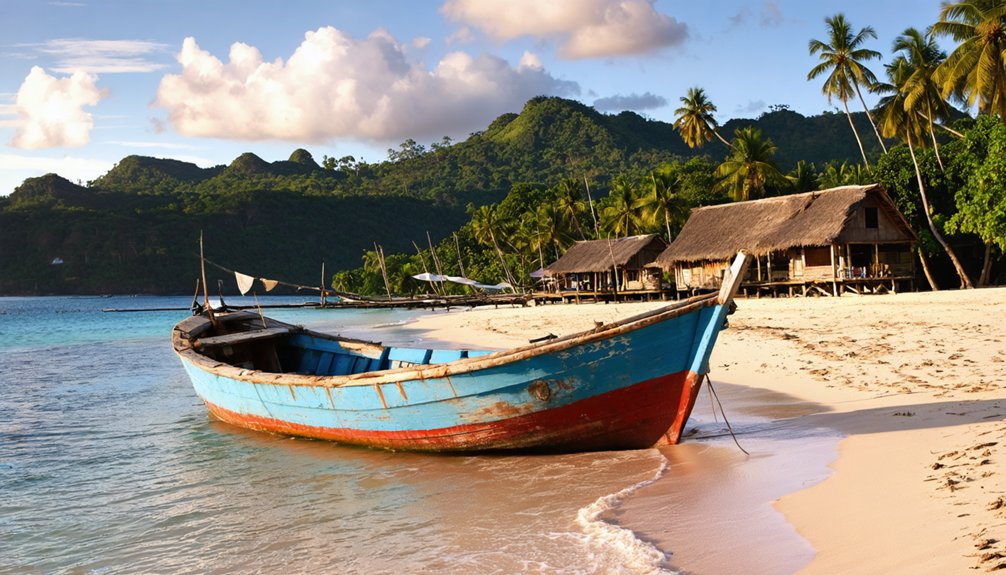
While tucked away in the easternmost reaches of Indonesia’s vast archipelago, the Kei Islands represent one of Southeast Asia’s most enchanting yet overlooked destinations. Spanning over 70 islands between the Banda and Arafura Seas, this remote haven boasts powdery white beaches and crystalline waters that rival any in the region.
Unlike the developed shores of Bali, the Kei Islands offer you freedom from commercial tourism. The islands’ diverse settlement patterns—from hilltop villages enclosed by stone walls to coastal communities with stilt houses—reflect centuries of cultural blending. The main islands of Kai Besar and Kecil feature dramatically different landscapes, with the former rising nearly 3,000 feet in mountainous terrain.
Local Tanimbarese communities maintain fishing traditions while preserving their unique Kei language. The archipelago’s prime city of Langgur serves as the capital of Southeast Maluku Regency and the main gateway for travelers exploring these islands.
For adventurous travelers seeking alternatives to Amed Beaches, Pasir Panjang and the coral-fringed Ohoieu Island provide untouched snorkeling sites accessed only by local fishermen’s boats, promising authentic encounters with Indonesia’s maritime frontier.
Coastal Sanctuaries of Eastern Europe: Batumi and Sveti Stefan
In Batumi, you’ll witness centuries-old Byzantine influences merge with modern architecture as the Georgian coastal city transforms while preserving its cultural identity. The city’s 7 km of beaches and subtropical climate make it an increasingly popular destination for international visitors. This is evidenced by the 52% increase in passenger traffic at Batumi International Airport, which welcomed 945,000 travelers in 2024.
Montenegro’s Sveti Stefan offers you an exclusive island experience where fishing village traditions remain intact despite luxury tourism development.
Both destinations face the delicate challenge of balancing cultural preservation with tourism growth, as diverse ethnic communities work to maintain authentic coastal settlement patterns against commercial pressures.
Byzantine History Meets Modernity
Along the mist-shrouded shores of the eastern Black Sea, Byzantine history emerges from ancient stones to greet modern visitors at sanctuaries like Gonio and Petra Fortress.
You’ll walk where Romans, Byzantines, and Ottomans once ruled, touching walls over 2,000 years old.
Gonio’s sprawling 7-hectare museum-reserve reveals Byzantine influence through layered defensive architecture, while nearby Petra’s 6th-century remains showcase Emperor Justinian’s military genius. The castle’s impressive rectangular design with 22 towers demonstrates the advanced military engineering of ancient civilizations.
Both sites embody the region’s unique ethnic tapestry—where local Georgian traditions meld with imperial legacies.
In Batumi itself, modern architecture nods to this rich past.
Europe Square features Medea’s statue, connecting mythology to contemporary identity.
You’re free to explore this borderland where cultures converge, religions intertwine, and settlement patterns tell stories of civilizations adapting to this strategic coastal frontier.
As you wander through the landscape, you’ll encounter historical remnants of frontier towns that reveal the rich tapestry of life here. Each structure whispers tales of resilience and innovation, highlighting the human spirit in the face of challenges. This unique heritage enhances the beauty of the land, inviting deeper reflection on the journeys that shaped this region.
Many visitors are intrigued to learn the fortress is believed to be the burial site of Saint Matthias, one of Jesus’s twelve apostles.
Exclusive Island Retreat Experiences
Have you ever dreamed of escaping to a coastal sanctuary where ancient stone walls whisper tales of centuries past? Sveti Stefan offers precisely this allure—a 15th-century fishing village transformed into island luxury on Montenegro’s Adriatic coast.
Connected to the mainland by a narrow tombolo, this 12,400 m² island preserves its Mediterranean heritage through meticulously restored stone cottages and cobbled pathways, while accommodating modern amenities.
The historical transformation from a settlement of 400 inhabitants to an exclusive retreat attracted legends like Marilyn Monroe and Sophia Loren during its 1970s heyday. The island was converted into a luxury hotel by Yugoslav government after relocating the remaining inhabitants.
Three private beaches with pink sand and emerald waters complete this exclusive experience.
Though currently closed due to disputes between Montenegrin authorities and management, Sveti Stefan remains an emblem of freedom—where diverse cultural identities blend with natural coastal beauty. Visitors seeking this coastal gem can expect a typical median monthly revenue of $946 for accommodations in the area.
Cultural Preservation Challenges
While the azure waters of the Adriatic and Black Sea embrace Eastern Europe’s coastal treasures, communities in Batumi and Sveti Stefan face mounting challenges in preserving their cultural identities.
You’ll find Batumi’s homogeneous Ottoman and Russian colonial fabric crumbling under modernization pressure, with 250 heritage sites endangered by unchecked development. The historic seaside panorama faces erasion as skyscrapers replace authentic coastal character, disconnecting the city from its maritime roots.
In Adjara’s highlands, wooden mosques built between 1817-1926 deteriorate while awaiting meaningful heritage conservation initiatives. These structures represent unique remnants of Georgia’s Islamic heritage, blending seamlessly with local architecture.
The region’s cultural sustainability suffers from institutional weaknesses—decisions made without professional expertise, protection zones arbitrarily removed, and stakeholder values misaligned.
This freedom to develop without restraint paradoxically threatens the very regional identities that make these coastal settlements culturally significant. The recent influx of digital nomads has created a seasonal community that impacts Batumi’s traditional character while extending economic activity beyond the summer months.
Cultural Heritage Villages Along the Black Sea
The Black Sea’s coastal villages stand as living museums of cultural resilience, where centuries of diverse influences have shaped distinct regional identities.
You’ll find UNESCO treasures like Safranbolu with its timber Ottoman homes and Orta Mahalle in Trabzon where Byzantine and Islamic architectural heritage seamlessly blend.
These settlements reveal layers of civilization—from Nessebar’s Thracian foundations to Amasra’s Roman fortifications.
The cultural preservation efforts protect not just buildings but living traditions: Horon dances performed at mountain plateau festivals, traditional blacksmithing in village markets, and ancient agricultural practices still sustaining communities.
When you visit these villages, you’re experiencing places where people have maintained their freedom and autonomy through cultural continuity, despite centuries of imperial powers washing over these shores like the Black Sea’s persistent waves.
Tranquil Fishing Communities in Eastern Mediterranean
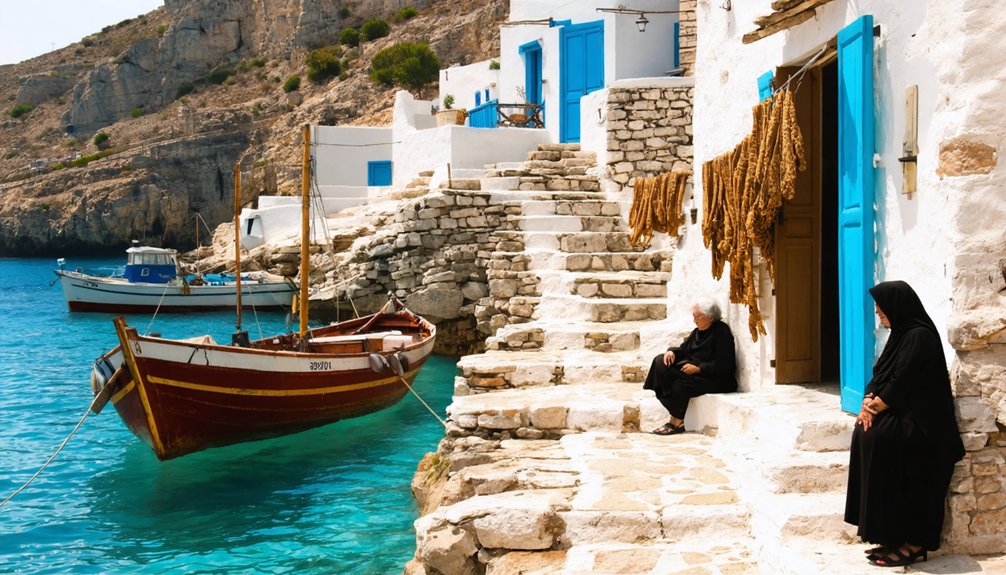
Along the cerulean waters of the Eastern Mediterranean, tranquil fishing villages persist as vibrant symbols of maritime heritage, where over 80% of the region’s vessel fleets operate on a small scale.
You’ll find Turkey’s eastern coast dotted with communities supporting nearly 8,000 small vessels, mostly operated by experienced fishermen with deep generational ties. These settlements maintain rich fishing traditions despite challenging economic conditions and limited formal education among practitioners.
The cultural mosaic of these coastal villages—from Greece to Tunisia—represents distinctive regional identities where daily life revolves around 6-10 hour fishing excursions.
While facing threats from overfishing (58% of commercial stocks remain depleted), many communities are adopting sustainable practices to preserve their way of life and the marine ecosystems that have sustained their freedom for generations.
Remote Paradises of East Asia’s Island Chains
You’ll find remote fishing villages scattered throughout East Asia’s island chains, where indigenous communities like the Ivetan and Unangax̂ maintain centuries-old maritime traditions despite geographic isolation.
These settlements, positioned along strategic corridors from Japan through the Philippines, have preserved distinct cultural identities despite frequent typhoons and limited mainland access.
The residents’ resilience reflects deep connections to ancestral waters, with fishing practices adapted to the challenging conditions of these distant Pacific paradises.
Hidden Fishing Havens
Scattered across the eastern seas like forgotten jewels, hidden fishing havens of East Asia remain some of the region’s best-kept secrets.
You’ll discover places like Xiangshan Fishing Town along Ningbo’s coast, where rugged cliffs and peaceful harbors maintain centuries-old maritime traditions far from tourist crowds.
Nearby, Shiru Fishing Port beckons with empty beaches and authentic seafood culture.
Venture to Fujian’s island villages, accessible only by boat, where collective fish ponds and concrete homes blend with abandoned architecture – offering glimpses into life from decades past.
Some villages, like Houtouwan on Shengshan, have surrendered to nature, with vegetation reclaiming once-bustling communities.
Others, like Luk Chau Tsuen, maintain small populations of fishermen who preserve coastal tranquility amid modern pressures.
Untouched Island Cultures
Beyond the fishing havens lie even more secluded treasures—the untouched island cultures stretching across East Asia’s remote archipelagos.
You’ll discover communities like the Kankanaey Igorots, whose genetic lineage represents the closest living ancestors of Austronesian expansion throughout the Pacific. These island societies preserve untouched traditions that reveal surprising historical patterns—many ancient communities practiced matrilocal structures where women remained while men relocated after marriage.
The region’s settlement patterns tell a fascinating story of human migration, with five distinct waves populating remote Pacific islands. Most intriguing are the Mariana Islanders, who uniquely lack New Guinea ancestry among Pacific peoples. Their island heritage derives almost entirely from East Asian migrations.
When you visit these isolated communities, you’re witnessing living embodiments of ancient demographic shifts and cultural practices that have evolved over thousands of years.
Eastern Atlantic’s Maritime Treasures: Wales and Ireland
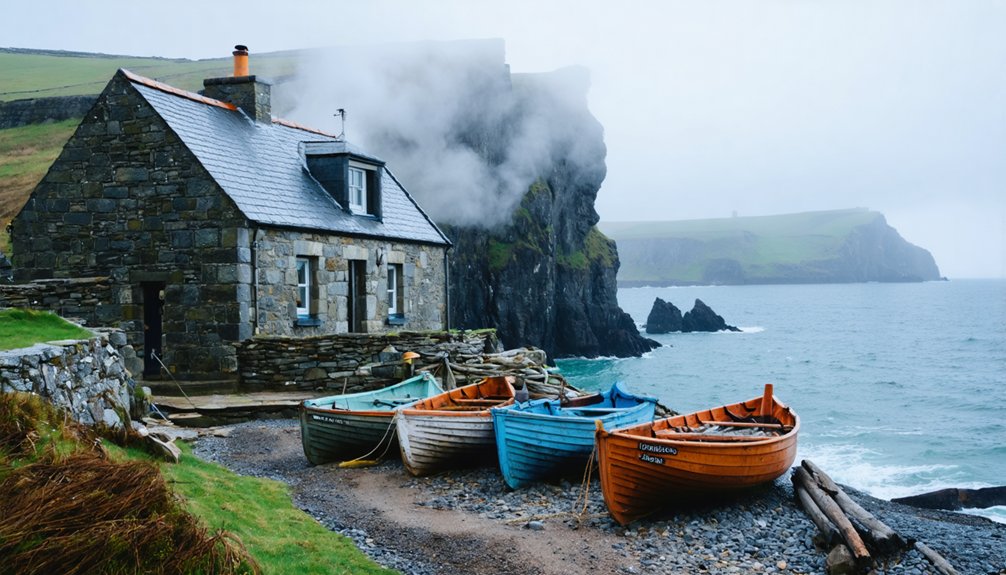
Along the rugged shoreline of the Eastern Atlantic, Wales and Ireland’s remote coastal villages form a tapestry of maritime heritage that has endured for centuries.
You’ll find tiny Welsh settlements like Benllech and Barmouth, where fewer than 150 people maintain traditional fishing practices despite demographic challenges.
These coastal communities stretch across both nations, from the wave-washed Grassholm Island to Ireland’s Gaeltacht regions where 25% of the country’s coastline preserves distinctive cultural identities.
The Irish Sea connects rather than divides these settlements, with ferry routes between Holyhead and Dublin serving as modern extensions of ancient trade networks.
Both regions face similar sustainability challenges as they balance economic development with coastal preservation.
Local initiatives now focus on climate resilience while honoring the maritime heritage that defines these resilient Atlantic communities.
Nordic Eastern Seaboards: Isolated Fishing Havens
The eastern reaches of Nordic coastlines harbor some of Europe’s most isolated fishing communities, where centuries-old maritime traditions endure against the backdrop of Arctic conditions.
You’ll discover Vardø, the easternmost Nordic fishing village facing Russia across the Barents Sea, where diverse cultural influences blend seamlessly.
Nearby, Finnish-speaking Bugøynes represents the region’s unique ethnic mosaic, its fish processing center anchoring local identity.
For true isolation, venture to Skarsvåg, the world’s northernmost fishing village, where king crab expeditions await against dramatic Arctic landscapes.
Sweden’s Ulvöhamn preserves its distinctive regional heritage with the historic chapel dating to 1622.
Meanwhile, Hamninberg’s remote charm offers you liberation from modern distractions along scenic coastal drives where traditional Nordic fishing practices remain largely unchanged by time.
Comparing Eastern Coastal Villages: What Makes Them Unique
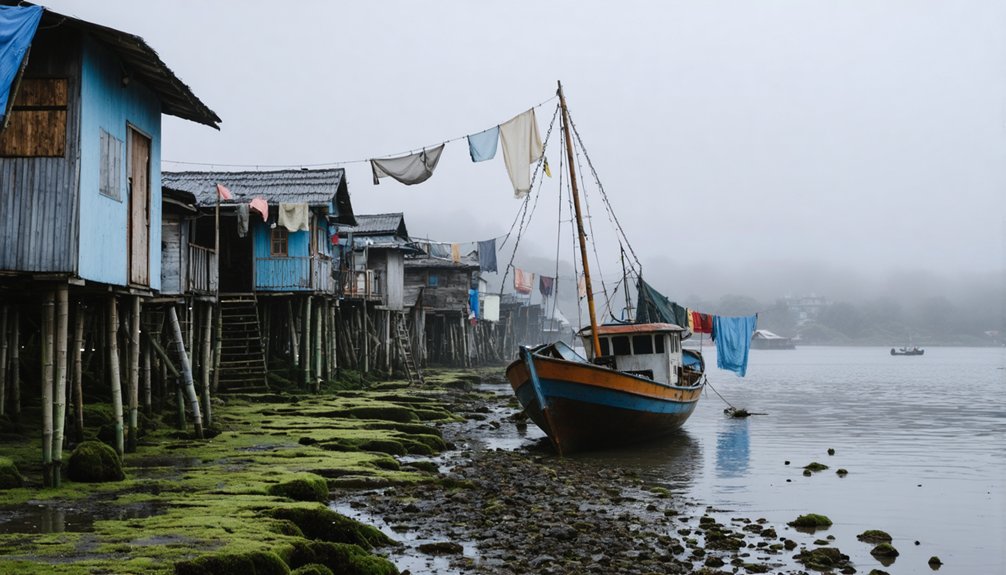
What distinguishes eastern coastal villages from one another extends far beyond their picturesque waterfronts and maritime heritage.
You’ll discover Cape May’s vibrant Victorian facades contrasting sharply with Beaufort’s Southern-styled wraparound porches—each embodying their region’s distinct cultural identity.
Tangier Island preserves traditional crabbing methods while balancing isolation with cultural preservation, creating seafood traditions unlike anywhere else.
Centuries-old crabbing practices survive on Tangier Island, where isolation has become the guardian of irreplaceable maritime traditions.
In New Shoreham, you’ll find Italianate towers standing proudly alongside modern aquaculture operations, demonstrating how coastal communities adapt without surrendering their heritage.
Across the Atlantic, Golspie’s Scottish shores blend fishing traditions with tourism and mountain biking against dramatic backdrops.
These communities aren’t just geographical dots on a map—they’re living expressions of how different peoples have claimed their freedom through distinctive relationships with the sea.
Frequently Asked Questions
How Do Locals in Remote Coastal Villages View Tourists?
You’ll find local attitudes toward tourists mixed—they value economic opportunities while worrying about tourism impact on cultures and ecosystems. Many embrace visitors as livelihood sources, though they’ll protect their communal resources and traditional identities.
What Sustainable Practices Protect These Villages From Overtourism?
You’ll see community engagement driving sustainable tourism, empowering locals to manage visitor numbers through benefit-sharing models while traditional settlement patterns shape capacity limits that preserve each village’s unique regional identity and ethnic diversity.
Which Eastern Coastal Villages Are Most Endangered by Climate Change?
You’ll find Outer Banks settlements, Alaska Native villages, and Delaware’s Bayshore communities facing dire climate migration pressures. These diverse coastal enclaves confront accelerating erosion and habitat loss, threatening your cultural heritage and autonomy.
How Accessible Are Medical Facilities in These Remote Locations?
You’ll find virtually no hospitals in these isolated communities. Instead, you’re relying on mainland trips, limited emergency transportation during good weather, and growing telemedicine access that connects your tight-knit settlement to distant healthcare providers.
What Traditional Festivals Occur Uniquely in Eastern Coastal Communities?
You’ll find seaside gatherings like the Maine Lobster Festival, Mullet Festival, and Calamari Festival celebrating fishing traditions. Maritime events honor pirate history, while diverse harvest celebrations reflect the rich cultural tapestry of eastern coastal communities.
References
- https://www.loveexploring.com/gallerylist/104543/the-worlds-most-beautiful-coastal-towns-and-villages
- https://www.adventurous-travels.com/posts/10-beautiful-beaches-and-coastal-towns-youve-never-heard-about
- https://www.outsideonline.com/adventure-travel/destinations/most-remote-places-on-earth/
- https://www.expeditions.com/expedition-stories/stories/10-hidden-islands-of-the-us-east-coast
- https://www.diygenius.com/10-tropical-islands-and-beach-towns-for-digital-nomads/
- https://matadornetwork.com/read/remote-islands-around-the-world/
- https://www.britannica.com/place/Kai-Islands
- https://www.keiislands.indonesia-tourism.com
- https://www.noonsite.com/place/indonesia/eastern-indonesia-kai-islands/kai-kei-islands/
- https://www.wheresidewalksend.com/visit-kei-islands-indonesia/