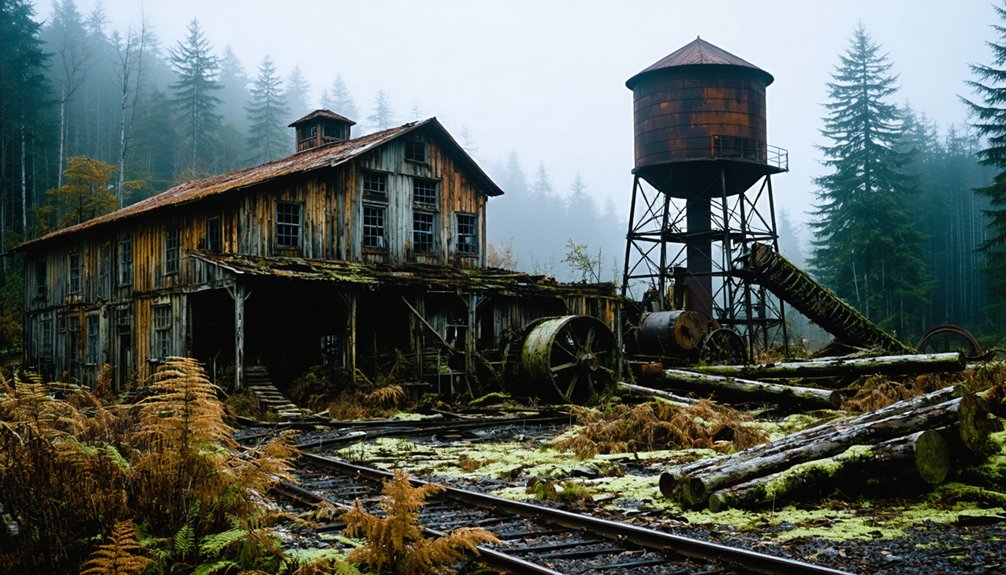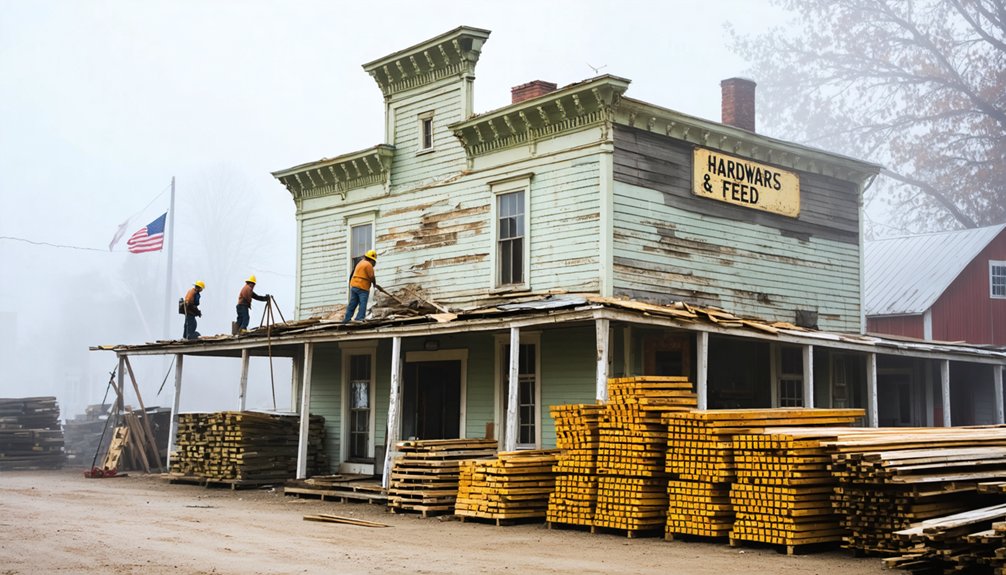
Restoring abandoned lumber towns requires systematic assessment of historical value, physical structures, and environmental concerns. You’ll need to secure proper permits, stabilize dangerous structures, and implement hazard containment protocols before beginning restoration work. Source period-appropriate materials while planning modern infrastructure upgrades that respect historical character. Community engagement throughout the process guarantees revitalization efforts honor the town’s heritage while creating sustainable economic opportunities. The following extensive approach transforms deteriorating history into living heritage.
Key Takeaways
- Document historical significance through maps, photographs, oral histories, and community engagement to inform authentic restoration.
- Assess physical structures and environmental conditions to identify preservation challenges and categorize restoration priorities.
- Secure necessary permits including Clean Water Act compliance and building permits before beginning restoration work.
- Implement structural stabilization using temporary shoring, continuous monitoring, and hazard containment following safety protocols.
- Reclaim and catalog original materials while sensitively integrating modern infrastructure to maintain historical authenticity.
Assessing the Abandoned Town’s Potential and Historical Significance
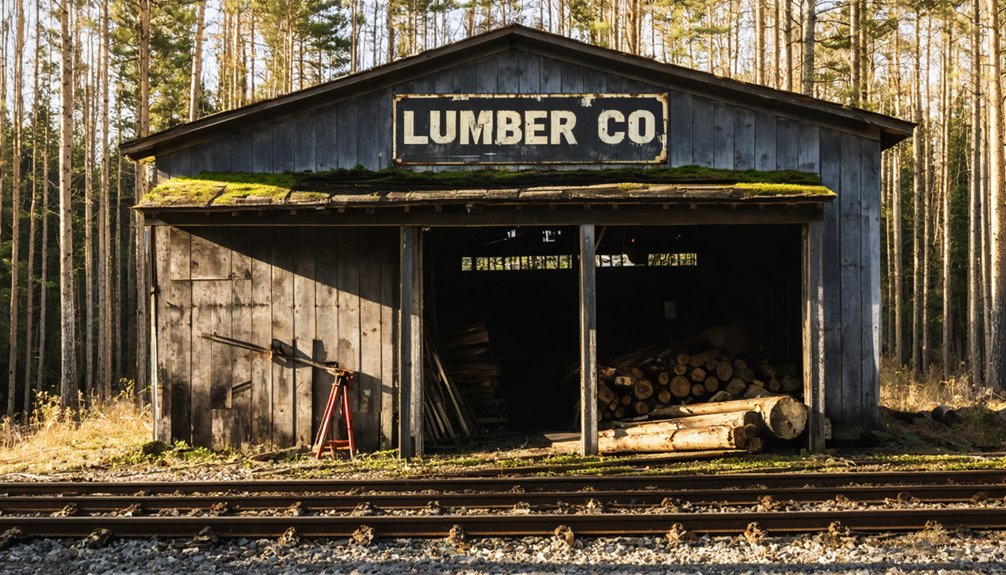
Five critical steps form the foundation of any abandoned lumber town assessment.
Begin with a thorough historical documentation review, gathering maps, photographs, and property records to establish the town’s historical context.
Next, conduct a physical site assessment to map remaining structures and spatial organization. Look for clear signs of disrepair such as structural damage, broken windows, and collapsing roofs to accurately evaluate preservation challenges. Proper documentation through photographic evidence may be required when categorizing properties as public nuisances for revitalization applications.
Your environmental evaluation should identify both ecological concerns and opportunities, noting contamination areas and habitat value.
Environmental assessment must balance hazard identification with recognizing the site’s ecological potential and natural value.
The community impact analysis is equally essential—interview descendants and research demographic trends to gauge cultural significance and potential community involvement.
Finally, navigate the legal landscape by determining current ownership and reviewing preservation regulations.
This multifaceted approach reveals not just what the town was, but what it could become—balancing heritage preservation with practical revitalization opportunities.
Establishing a Comprehensive Restoration Plan and Budget
When establishing your thorough restoration plan, you’ll need to anchor the project around structures and features that hold the greatest historical significance to the lumber town’s identity.
Your budget must include reality checkpoints at each project phase to prevent cost overruns, particularly for unexpected structural remediation or contamination issues discovered during implementation.
These checkpoints should align with your phased timeline, allowing you to adjust scope or seek additional funding before proceeding to subsequent restoration activities.
Engaging local stakeholders through participatory workshops ensures the redevelopment reflects community values and preserves the town’s unique heritage.
Prioritizing Historical Significance
Establishing a thorough restoration plan begins with a meticulous assessment of historical significance to guarantee limited resources are allocated effectively. Document the town’s founding date, primary industry, and population peaks through archival records and oral histories from descendants of original residents. This evidence-based approach assures you’re preserving authentic heritage rather than creating idealized reconstructions.
Prioritize structures that served as community hubs—sawmills, schoolhouses, and general stores—as these offer the richest opportunities for heritage education and storytelling. For towns like Waldport West, the remains of the once-vibrant sawmill represent both historical economic engines and focal points for restoration efforts. For Proctor, North Carolina, a comprehensive survey of the remaining Calhoun House provides crucial architectural insights for historically accurate restoration work. Consult with historical societies to determine if the site qualifies for historic register status, which may open up additional funding streams.
Exploring the forgotten towns of the American West reveals a tapestry of unique stories and cultural heritage waiting to be uncovered. By engaging with local historians and residents, one can learn about the pivotal events that shaped these communities and witness the impact of time on their development. Investing in the preservation of these towns not only honors their past but also enriches the present by fostering a deeper connection to the landscape and its history.
Community involvement in this assessment phase builds vital support for your project while uncovering hidden historical elements that official records might miss.
Budget Reality Checkpoints
While documenting historical significance provides direction for your restoration project, financial realities will ultimately shape its execution. Establish critical budget tracking checkpoints throughout your timeline, allocating 10-20% as contingency for unexpected expenses—essential for lumber towns where hidden structural damage often lurks beneath weathered facades.
Prioritize structural assessments first, as foundation repairs typically consume the largest portion of your budget. Site condition directly impacts restoration costs; degraded buildings require substantially higher investment per square foot. Conduct a comprehensive walkthrough of each structure to identify major issues before finalizing your budget.
Remember that larger restoration sites benefit from economies of scale, potentially reducing per-acre costs.
To prevent cost overruns, distinguish between contractor and volunteer labor expenses. Contractors cost more but deliver higher productivity, particularly valuable for structural repairs where professional expertise is non-negotiable.
Regular expenditure monitoring against established benchmarks will keep your project financially viable. Similar to the successful bridge restoration, setting aside specific funding allocations for different stages of your project will ensure completion without interruptions.
Securing Permits and Addressing Legal Considerations

Maneuvering the complex permitting landscape represents one of the most challenging aspects of restoring abandoned lumber towns.
You’ll need to secure Clean Water Act Section 404 permits for any in-water work, alongside Section 401 Water Quality Certification from state authorities. California projects require additional CEQA compliance and Porter-Cologne Act adherence. Building rapport with regulatory agencies early can significantly expedite your permitting process and improve outcomes.
Strategically limit your project scope to under 5 acres and 500 linear feet to qualify for streamlined permitting processes.
Pursue Programmatic General Permits where available, as they consolidate multiple regulatory requirements into a single application. You’ll also need consultations with the USACE, FERC if hydroelectric infrastructure exists, and endangered species reviews under Section 7.
Don’t overlook local requirements—municipal demolition permits, building permits for restoration work, and zoning compliance verification are mandatory before breaking ground.
Environmental regulations often change, so verify current requirements before filing any permit application.
Stabilizing Critical Structures and Managing Safety Hazards
You’ll need to implement a foundation-first approach when stabilizing abandoned lumber town structures, addressing critical load-bearing elements through epoxy injections, steel bracing, or carbon fiber reinforcement before any restoration work begins.
Establish clear hazard containment protocols to identify and manage risks from compromised beams, damaged walls, hazardous materials, and soil erosion that threaten worker safety and structural integrity.
Install temporary shoring, protective coverings, and safety barriers while continuously monitoring structural movement to prevent collapse during the stabilization process. A comprehensive assessment by trained professionals is essential to determine the most appropriate stabilization techniques for each unique structural challenge. Success in these historical restoration projects depends on meticulous planning and precision execution where errors cannot be tolerated.
Foundation First Approach
The foundation first approach represents the cornerstone of any successful lumber town restoration, establishing both structural integrity and worker safety before further rehabilitation can proceed.
Begin with thorough foundation inspection of original stone, brick, or log foundations, documenting cracks and deterioration while evaluating settlement patterns in timber structures.
Install temporary cribbing or jacking systems to support buildings during restoration techniques like rebuilding masonry piers with lime-based mortar.
You’ll need to replace rotted sill logs with matching wood species—preferably red cedar or oak—using traditional joinery methods.
Address moisture issues immediately by improving drainage away from structures and applying appropriate waterproofing to historic masonry.
For structural reinforcement, strengthen compromised floor joists with T-shaped angle irons and supplement broken members with compatible new stock, ensuring long-term stability without sacrificing historical authenticity.
Hazard Containment Protocols
With foundation work complete, implementing proper hazard containment protocols becomes your next priority in lumber town restoration projects.
Conduct thorough structural assessments to identify compromised timber, subsidence risks, and failing supports that threaten public safety.
Replace deteriorating wooden supports with steel bat gates or concrete collars reinforced with rebar while preserving historical timber cribbing where feasible.
For subsidence features, utilize polyurethane foam fills and properly compacted earthen berms to prevent collapse.
Don’t overlook hazardous materials—particularly asbestos.
Follow NESHAP guidelines by submitting advance notifications, keeping materials adequately wetted during removal, and maintaining proper disposal procedures.
Ascertain an asbestos-trained supervisor oversees all abatement work.
For structures beyond salvage, implement formal notices and hearings before proceeding with boarding, securing, or demolition.
Your hazard containment strategy must balance historical preservation with non-negotiable safety requirements.
Sourcing Period-Appropriate Materials and Restoration Techniques

Successful restoration of abandoned lumber towns hinges critically on sourcing period-appropriate materials and implementing authentic techniques that honor the historical integrity of these structures.
You’ll need to prioritize reclaiming materials from the demolition zones, implementing period-specific sourcing practices that maintain authenticity rather than introducing new stock. Establish a robust cataloging system to track salvaged components and guarantee proper reassembly.
For authentic material preservation, extend drying periods to a full year, allowing reclaimed logs to stabilize before reconstruction.
When addressing rot, utilize chainsaw carving with rounded blade ends to preserve sound material while removing compromised sections. Apply traditional finishes like two-coat oil systems and cedar sawdust chinking mixtures that replicate historical methods while providing lasting protection against environmental elements.
Modernizing Infrastructure While Preserving Historical Character
Modernizing abandoned lumber town infrastructure presents a complex balancing act between installing contemporary systems and preserving the historical essence that makes these sites culturally valuable.
The delicate art of revival: bringing modern utility to historic spaces without sacrificing their cultural soul
You’ll need to address contaminated soil removal, asbestos abatement, and underground storage tank extraction before proceeding with structural rehabilitation.
Infrastructure innovation comes through underground utility placement and smart septic system design that maintains period-appropriate appearances while delivering modern functionality.
When retrofitting electricity and plumbing into heritage structures, careful planning prevents visible alterations that would compromise authenticity.
For successful historical preservation, implement adaptive reuse strategies that transform industrial structures into marketable mixed-use developments.
Connect your restored community to essential services through thoughtfully designed transportation networks that don’t overwhelm the historic character.
Leverage EPA Brownfields grants and state tax credits to fund these infrastructure upgrades while managing long-term costs.
Revitalizing Community Spaces and Creating Economic Opportunities
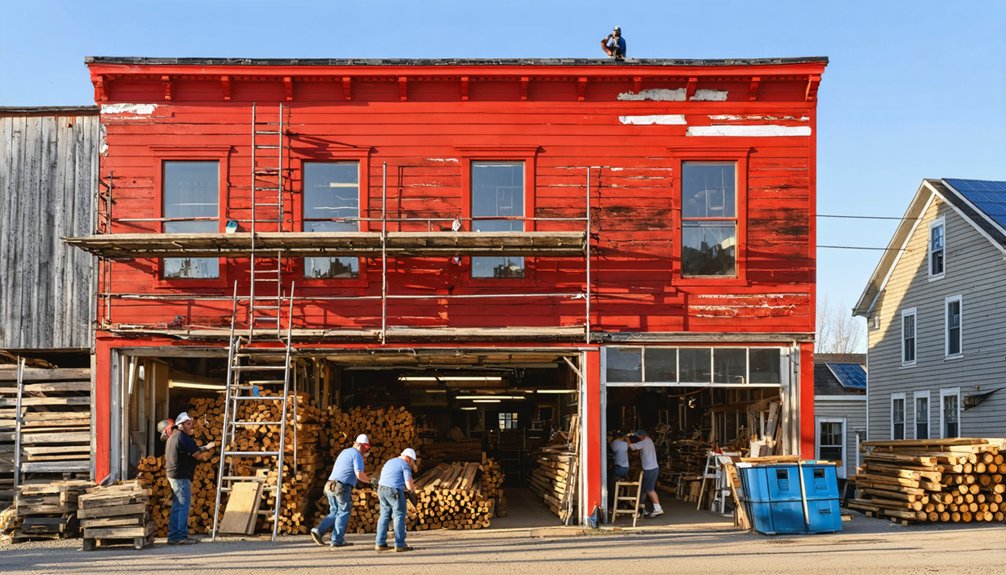
Revitalizing abandoned lumber towns requires systematic economic diversification that transforms historical assets into sustainable revenue streams.
You’ll generate maximum impact by converting salvaged materials into high-end products while establishing workforce development programs that achieve near-zero recidivism rates through industrial skill-building.
Implement community engagement strategies centered around mixed-use spaces that combine residential, commercial, and recreational functions.
The superior quality of old-growth virgin lumber recovered from abandoned structures creates unique market opportunities unavailable through conventional timber sources.
Through local partnerships between government agencies, nonprofits, and private companies, you can reinvest resource recovery revenue directly into infrastructure improvements and community services.
This approach not only preserves architectural identity but creates vibrant community centers where shared labor experiences rebuild social bonds and collective confidence.
Developing a Long-Term Preservation and Maintenance Strategy
Developing a long-term preservation strategy extends beyond initial revitalization efforts, requiring systematic planning that balances heritage conservation with practical sustainability.
Begin with thorough condition assessments to document structural integrity and identify character-defining features that demand preservation.
Establish realistic timelines—typically 12-18 months for complex sites—while implementing mothballing techniques to prevent irreversible damage during interim periods.
Community engagement proves essential for gathering input on priorities and developing shared ownership of the vision.
Integrate sustainable solutions by incorporating renewable energy systems and adaptive reuse approaches that maintain historical integrity while allowing contemporary functionality.
Develop diversified funding strategies through partnerships with regional organizations to distribute fiscal responsibilities.
Test preservation tactics through experimental management plots before scaling successful approaches across the property, ensuring both heritage protection and operational viability.
Frequently Asked Questions
How Do You Manage Resident Expectations During Multi-Year Restoration Projects?
Engage your community through transparent communication about timelines, challenges, and milestones. Establish advisory committees, provide regular updates, and acknowledge emotional attachments while setting realistic expectations for restoration phases.
What Wildlife Displacement Concerns Arise When Revitalizing Abandoned Towns?
Like Prometheus’ gift, your restoration brings light but disrupts wildlife habitat. You’ll face fragmentation issues, altered migration patterns, and ecological balance challenges when species encounter construction activity and human resettlement.
How Do You Balance Authenticity With Accessibility Requirements?
You’ll maintain authenticity through non-invasive preservation techniques while implementing discreet accessibility solutions. Document original features meticulously, use compatible materials, and leverage community engagement to validate both historical accuracy and accessibility needs.
Can Restoration Work Continue Safely During Winter Months?
Want safety during winter preservation? You can’t continue full restoration work safely. Limited indoor tasks only, while implementing strict safety protocols for temperature control and structural monitoring.
How Do You Address Competing Historical Narratives in Restoration Decisions?
You’ll incorporate narrative inclusivity by establishing stakeholder committees, documenting multiple perspectives, and employing interpretive strategies that present layered histories. Historical interpretation should transparently acknowledge gaps while balancing celebratory industrial narratives with critical social consequences.
References
- https://www.youtube.com/watch?v=HvjVdlMqwH4
- https://www.deseret.com/utah/2024/06/03/how-to-visit-utah-ghost-towns/
- https://www.youtube.com/watch?v=eyOASXxAmMI
- https://www.youtube.com/watch?v=Jc7br6xrvA4
- https://www.loveexploring.com/gallerylist/494432/before-and-after-abandoned-towns-that-came-back-from-the-dead
- https://rockymountainreclaimed.com/2019/06/14/colorados-ghost-towns-reclaimed-wood/
- https://goliathdata.com/understanding-abandoned-properties-and-verifying-ownership
- https://wyoleg.gov/InterimCommittee/2023/03-202306263-03WYDORRulesChapter9PropertyTaxValuationMethodologyandAssessment.pdf
- https://tallpinesforestmanagement.com/2023/04/09/timber-assessments-5-reasons-every-landowner-should-know-about-them/
- https://avitarassociates.com/Portals/0/PDF/UnderstandingYourPropertyRecordCard.pdf