Restoring abandoned southern suburban communities requires addressing multiple interconnected challenges. You’ll need to tackle regulatory barriers that increase housing costs, implement economic revitalization strategies combining business attraction with workforce development, support aging populations through healthcare and transportation solutions, and leverage public-private partnerships for sustainable renewal. Community engagement throughout the process guarantees local needs drive restoration efforts. The following thorough guide will equip you with proven frameworks for breathing new life into distressed neighborhoods.
Key Takeaways
- Implement zoning reforms to reduce regulatory costs and increase housing options in abandoned suburban neighborhoods.
- Develop public-private partnerships that leverage funding at 10:1 ratios for infrastructure renewal and community development.
- Address racial segregation impacts through equitable investment strategies targeting historically disadvantaged communities.
- Create economic revitalization through business attraction, workforce development, and small business support programs.
- Engage existing residents in all restoration phases to rebuild community identity and ensure sustainable neighborhood transformation.
Understanding the Root Causes of Southern Suburban Abandonment
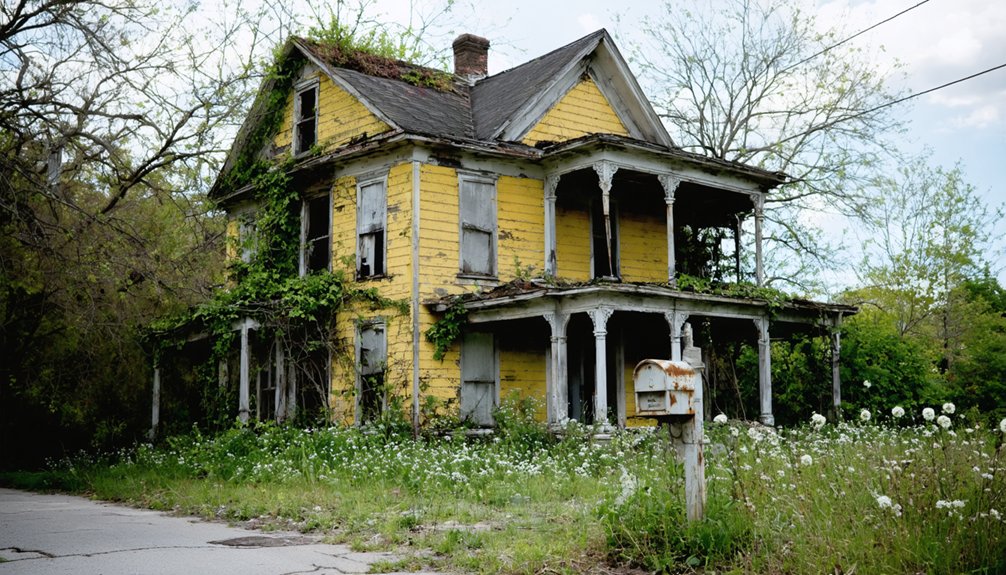
While examining the abandoned southern suburban landscape, we must understand that multiple interrelated factors have driven community decline rather than a single cause.
The historical context reveals how deindustrialization eliminated stable, well-paying jobs that once sustained these communities, triggering cycles of foreclosure and outmigration.
The collapse of industrial employers tore through neighborhoods like wildfire, leaving foreclosed homes and fleeing residents in its wake.
Racial segregation has profoundly shaped abandonment patterns, with Black-majority neighborhoods experiencing the most severe decline.
This wasn’t accidental—discriminatory housing practices forced Black residents into specific areas that were subsequently pathologized and underserved.
Meanwhile, newer suburban developments flooded housing markets, drawing residents away from older communities.
As tax bases eroded, municipal services deteriorated, further accelerating abandonment.
Over-assessment of property values by cities seeking to address funding shortfalls has created unsustainable tax burdens that drive homeowners to abandon properties.
Predatory lending practices targeting minority communities with high fees and interest rates have significantly contributed to the foreclosure crisis in these vulnerable neighborhoods.
Effective community engagement must acknowledge these structural forces rather than blaming residents for neighborhood conditions they didn’t create.
Economic Revitalization Strategies for Distressed Communities
Addressing the systemic abandonment of southern suburban communities requires extensive economic revitalization strategies that extend beyond surface-level interventions.
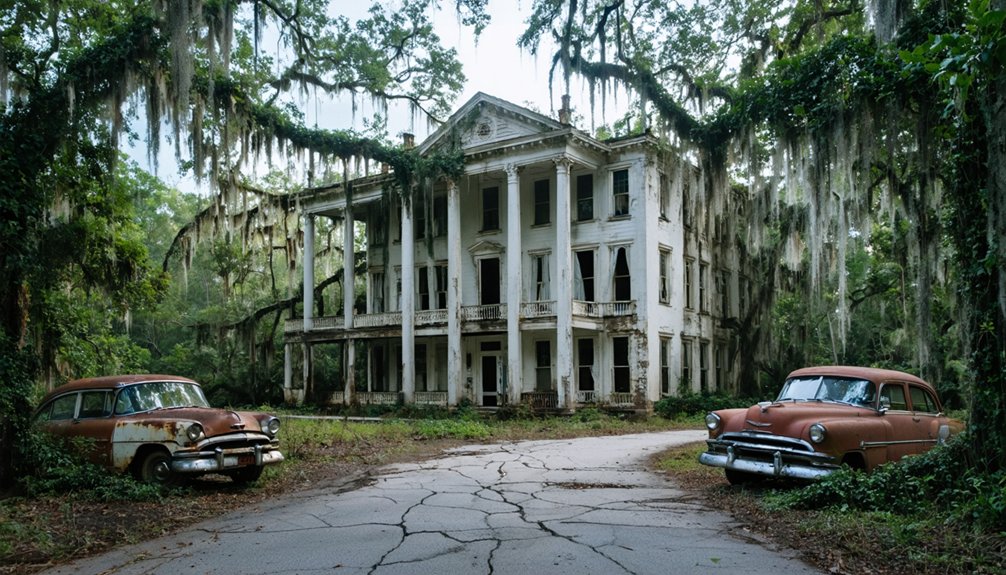
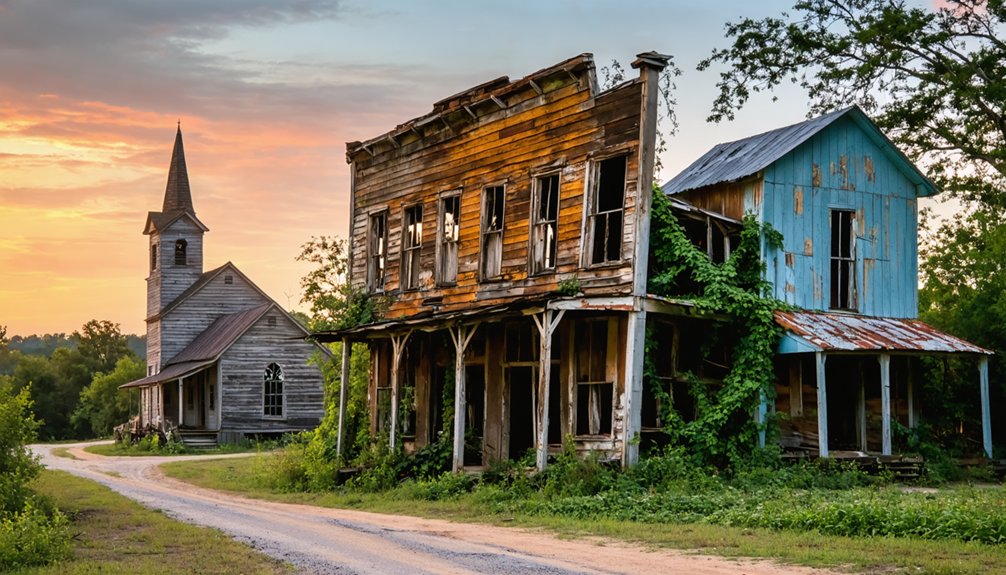
One area that illustrates this challenge is the exploration of abandoned places in the southern United States, where once-thriving neighborhoods have fallen into disrepair. These locations not only serve as reminders of economic decline but also present unique opportunities for redevelopment and cultural renewal. By focusing on innovative approaches to transform these spaces, communities can foster a sense of identity while encouraging local engagement and investment.
You’ll need a three-pronged approach: business attraction, worker investment, and job matching to create sustainable economic renewal.
Your business attraction efforts work best when tax incentives combine with infrastructure improvements and expanded public services.
Don’t overlook workforce development—addressing the fundamental skills mismatch between local workers and employer demands is critical.
Leverage federal resources available through bipartisan programs like Opportunity Zones and Tech Hubs.
Use the Distressed Communities Index to identify specific neighborhood needs and monitor progress through prime-age employment rates.
Success stories in manufacturing and high-tech sectors demonstrate that targeted investments yield results when coupled with strategic community readiness assessment and infrastructure modernization.
These distressed areas often require longer recovery periods compared to national averages after experiencing economic downturns.
Displaced workers often face substantial lifetime earnings losses that persist long after initial layoffs, making comprehensive retraining programs essential components of community recovery efforts.
Addressing Housing Regulatory Barriers and Supply Challenges
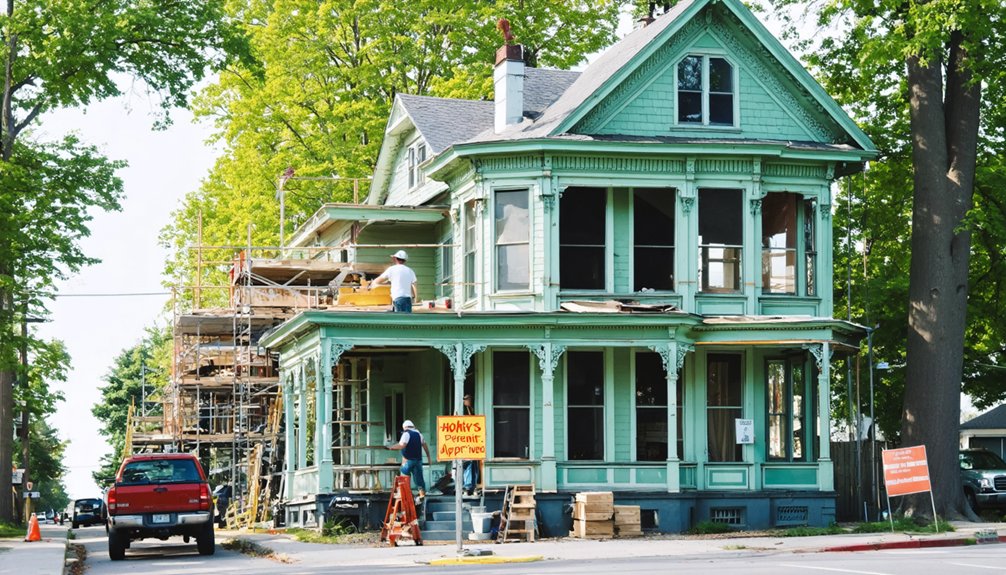
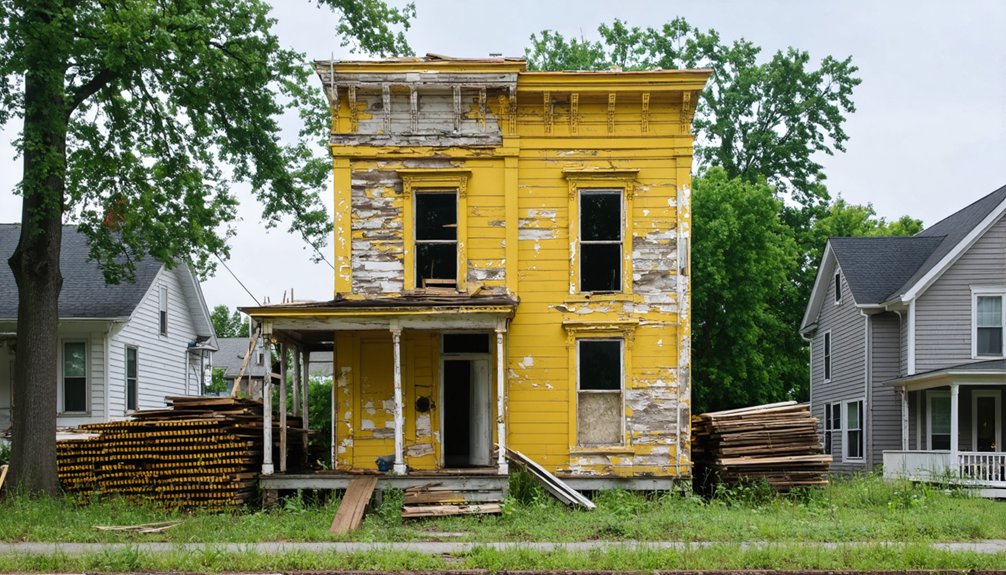
The regulatory landscape surrounding housing development in southern suburbs has evolved into a complex web of barriers that systematically chokes off new supply and drives up costs for residents.
To restore abandoned communities, you’ll need to tackle zoning reform head-on. State-level interventions offer your best path forward, as demonstrated by successful ADU preemptions in California and administrative approval reforms in Arizona.
- Your community pays nearly $94,000 per home in unnecessary regulatory costs
- Your children are excluded from good schools through invisible rental barriers
- Your neighbors face housing insecurity while rental deserts expand
- Your economic freedom is constrained by artificial supply restrictions
- Your community’s revitalization depends on dismantling these regulatory walls
Housing affordability can’t return without removing minimum lot requirements, streamlining permitting, and eliminating excessive subdivision controls that make development financially infeasible. Suburbs containing rental deserts predominate at 68 percent despite representing just 55 percent of all neighborhoods. The persistent shortage of inventory in the housing market continues to drive prices higher, further complicating restoration efforts in abandoned southern communities.
Supporting Aging Populations to Prevent Further Abandonment
As aging demographics reshape southern suburban landscapes, supporting older residents has become critical to preventing further community abandonment. The alarming 40:100 older-to-working-age dependency ratio in rural counties creates unsustainable service burdens that accelerate population loss. This situation is exacerbated in the 746 counties experiencing significant depopulation across America.
You’ll need to address critical healthcare access gaps, particularly as only 1.4% of rural seniors have skilled-nursing facility access compared to 3.1% in urban areas. Implement mobile healthcare solutions and telehealth options to overcome spatial distribution challenges.
Focus on boosting senior mobility through innovative transportation systems that connect isolated residents to essential services. With over 10% of rural communities having majority older adults, targeted transportation solutions are essential to combat isolation and maintain quality of life.
With poverty rates reaching 11% among rural seniors, develop affordable housing strategies and economic support programs. This extensive approach prevents the downward spiral where service shortages drive out remaining residents, further depleting community resources.
Public-Private Partnership Models for Sustainable Neighborhood Restoration
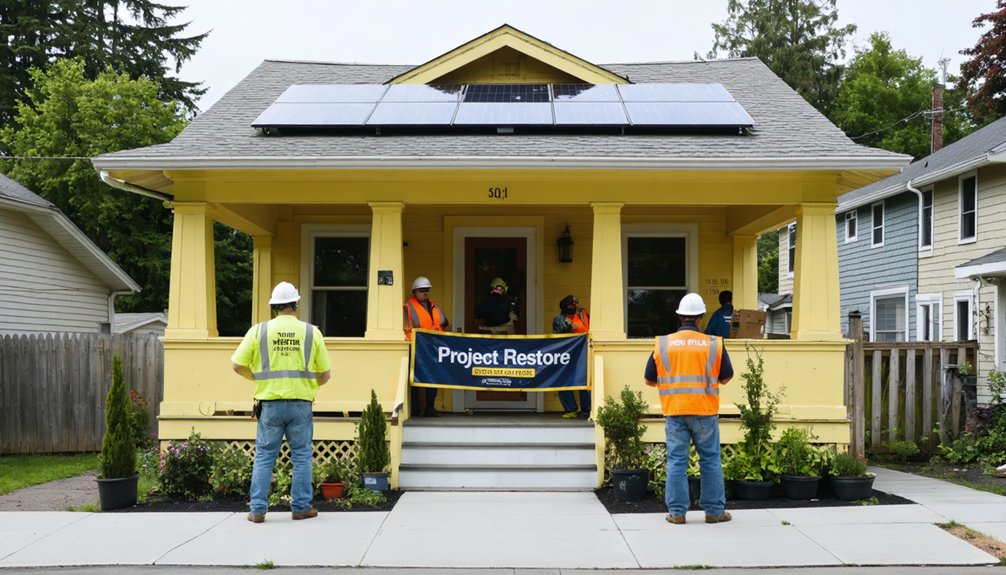
While abandoned southern suburban communities face mounting challenges, innovative public-private partnership (PPP) models offer powerful frameworks for sustainable restoration. The 5P model integrates public, private, and people components with policy frameworks to maximize resource efficiency. The DBFOM model can be particularly effective for comprehensive suburban infrastructure renewal.
You’ll find these partnerships can leverage public dollars at impressive 10:1 ratios, markedly expanding available funding mechanisms beyond traditional government allocations.
- Empower your voice through community involvement in all project phases from planning to operation
- Break free from financial limitations by combining resources across sectors
- Reclaim your neighborhood’s identity through balanced commercial and public interests
- Transform abandoned spaces into vibrant community assets through shared risk allocation
- Create sustainable economic opportunities that remain long after initial restoration
Frequently Asked Questions
How Do Environmental Factors Impact Abandonment Patterns in Southern Suburbs?
Withered neighborhoods symbolize how climate change, poor infrastructure, and environmental degradation accelerate urban decay in your community. You’ll notice population decline when automobiles become necessities and resources diminish amid socioeconomic disparities.
What Role Do School Districts Play in Suburban Revitalization Efforts?
School districts serve as community hubs, leveraging school funding and promoting community engagement through repurposed facilities, shared-use agreements, and partnerships that address residents’ needs while creating social cohesion in struggling neighborhoods.
How Can Residents Prevent Property Devaluation in Partially Abandoned Neighborhoods?
You’ll protect property values by reporting maintenance issues, joining community watch groups, advocating for code enforcement, maintaining your own property, and forming resident advisory boards for neighborhood oversight.
What Insurance Challenges Arise When Restoring Abandoned Suburban Properties?
Like walking through a ghost town, you’ll face inadequate insurance coverage for vacant properties, water damage risks, increased liability risks from trespassers, and higher reconstruction costs when restoring abandoned suburban properties.
How Do Cultural and Historical Preservation Efforts Affect Community Restoration?
Cultural heritage and historical significance drive economic revitalization, boost property values, strengthen community identity, and foster social cohesion. You’ll find these preservation efforts attract investment while honoring residents’ connections to place.
References
- https://schoolofcities.utoronto.ca/neighbourhood-abandonment-in-the-american-rust-belt/
- https://www.youtube.com/watch?v=hS27BhfMojc
- https://www.attomdata.com/news/most-recent/q1-2025-vacant-property-and-zombie-foreclosure-report/
- https://www.worldpropertyjournal.com/real-estate-news/united-states/irvine/real-estate-news-2025-home-foreclosure-data-attom-zombie-home-foreclosure-report-rob-barber-abandoned-foreclosure-properties-data-14533.php
- https://davisvanguard.org/2025/07/us-missing-15-million-homes/
- https://www.fingerlakes1.com/2025/04/28/zombie-foreclosures-rise-2025-states-hit-hardest/
- https://www.urban.org/sites/default/files/2025-07/Bringing-Housing-Shortage-Into-Sharper-Focus.pdf
- https://www.nahb.org/blog/2025/08/housing-supply-suburbs
- https://www.governance.fyi/p/americas-suburban-building-boom-declared
- https://pmc.ncbi.nlm.nih.gov/articles/PMC10883667/