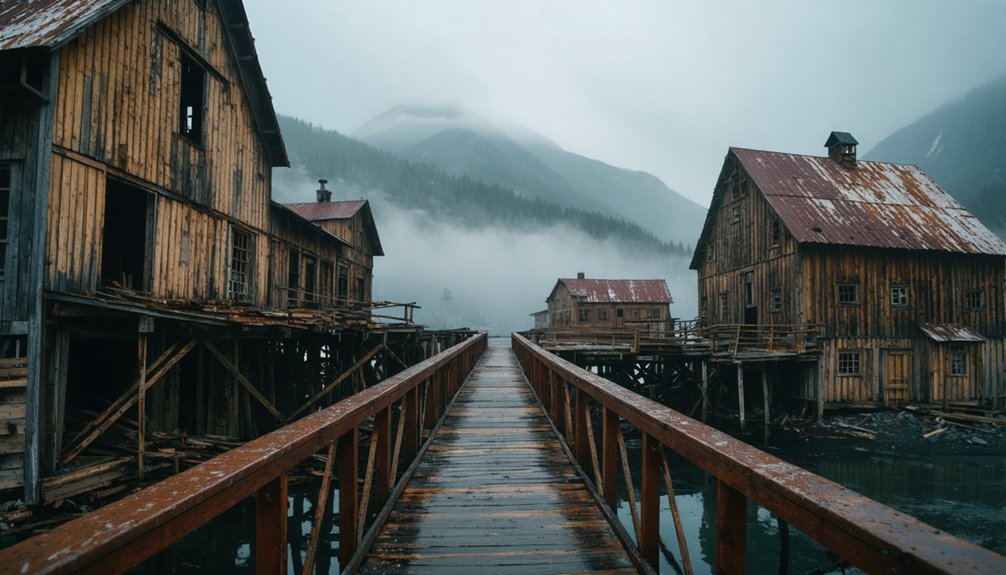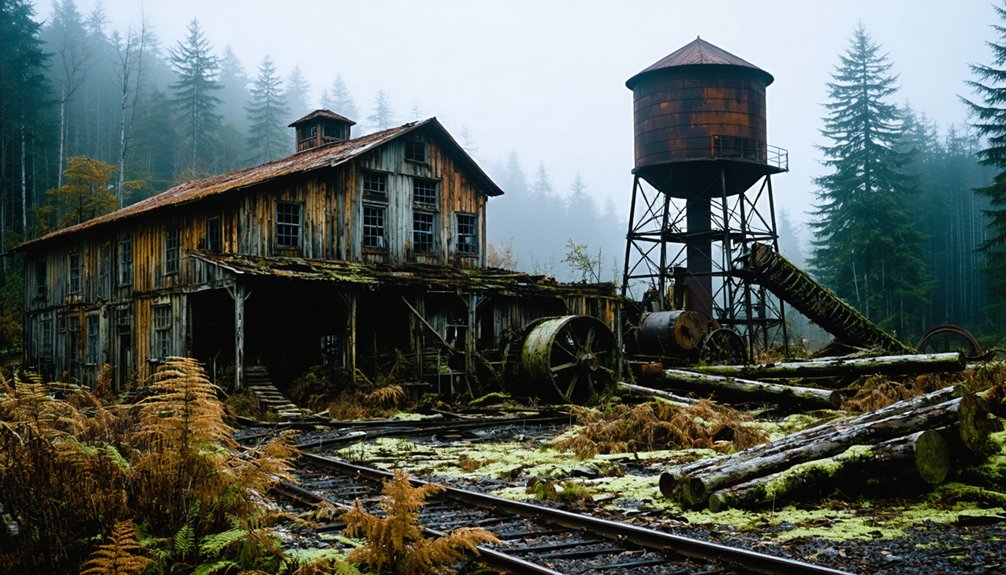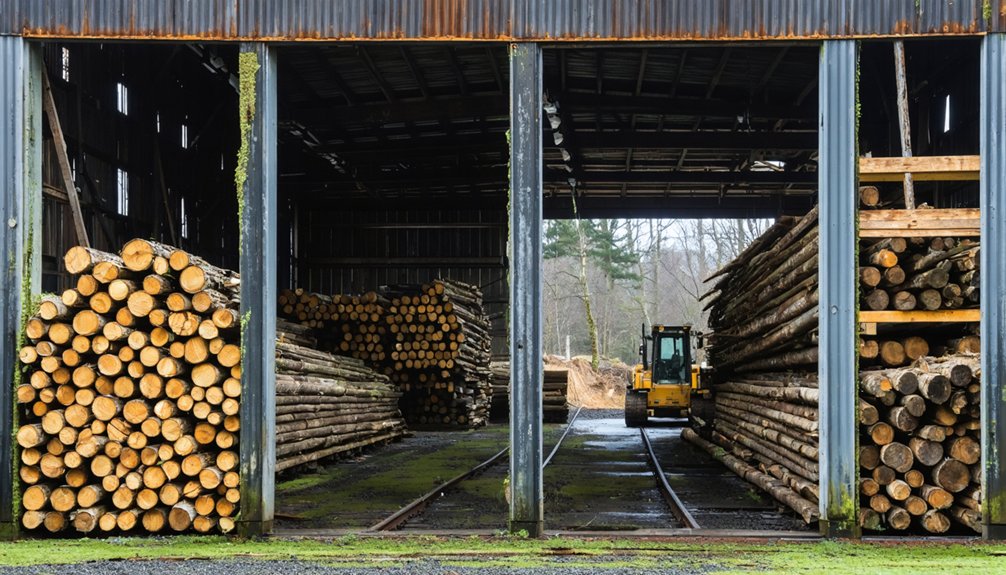
To revive your abandoned timber town, start by cataloging natural assets and historic sites while building diverse partnerships across sectors. Develop tourism around your unique heritage, invest in broadband and sustainable infrastructure, and attract remote workers with affordable housing and natural beauty. Balance forest conservation with innovative wood products manufacturing, and preserve community identity through participatory planning. Your transformation requires multiple revenue streams – the strategies ahead will show you exactly how to secure them.
Key Takeaways
- Repurpose abandoned timber structures into museums and community centers to preserve heritage while creating tourism opportunities.
- Establish community forests with sustainable harvesting practices to generate revenue and protect ecological assets.
- Develop trail systems connecting historic logging sites to natural attractions for recreation-based economic development.
- Attract remote workers by highlighting affordable housing, natural beauty, and investing in broadband infrastructure.
- Create collaborative networks across public, private, and nonprofit sectors to diversify the economy beyond single industries.
Assessing Existing Community Assets and Natural Advantages
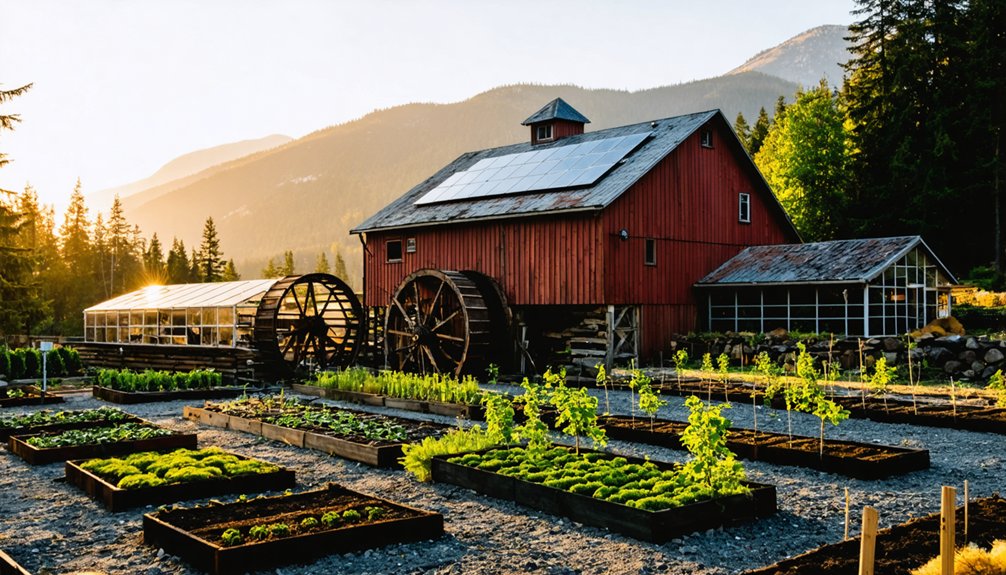
When timber-dependent communities face economic decline after the harvest industry shifts, an extensive assessment of existing assets becomes the foundation for successful revitalization.
Begin by identifying town-owned natural resources—mature forests, scenic features, and underutilized conservation lands hold untapped potential.
The cornerstone of economic renewal lies in cataloging overlooked community assets—from maturing woodlands to underutilized public lands with regenerative potential.
Your community assessments should catalog strategic timberland parcels that could function as community forests, providing both ecological value and economic opportunities.
Look beyond timber extraction to natural advantages like waterfalls, coastal views, and old-growth patches that support biodiversity and attract tourism.
Partner with land trust alliances who offer technical support for sustainable resource management.
Remember that abandoned buildings contain valuable old-growth wood—a hidden asset that can fuel urban wood recovery initiatives while creating inclusive employment opportunities.
restoring heritage woodcutting sites can also provide local communities with a chance to connect with their history and craftsmanship. By engaging artisans and skilled tradespeople, these initiatives can foster a deeper appreciation for traditional techniques and sustainable practices. This not only preserves culture but also stimulates the local economy through tourism and education.
Programs focused on wood waste reclamation and reuse can create high-value products that generate revenue while reducing landfill usage.
Consider towns like Butte Falls, Oregon that successfully acquired surrounding timberland for community forest initiatives aimed at both wildfire protection and economic revival.
Building Collaborative Regional Networks for Economic Resilience
How can isolated timber towns survive economic upheaval? The answer lies in proactive network development before crises hit.
You’ll need to establish formal or informal partnerships across public, private, and nonprofit sectors that can quickly adapt when disruption occurs.
Start by engaging diverse stakeholders from business, government, education, and community organizations. These multi-sector partnerships provide access to external support and help identify vulnerabilities in your economic structure.
Don’t wait for disaster to strike—create information-sharing hubs that facilitate regular communication about challenges and opportunities. Continuous assessment of community needs is vital for maintaining relevant support systems and services during transition periods. Regions with high human capital levels demonstrate greater stability and network formation capacity when facing economic shocks.
The most resilient timber communities diversify beyond single industries through collaborative efforts.
Developing Tourism and Recreation-Based Economic Opportunities
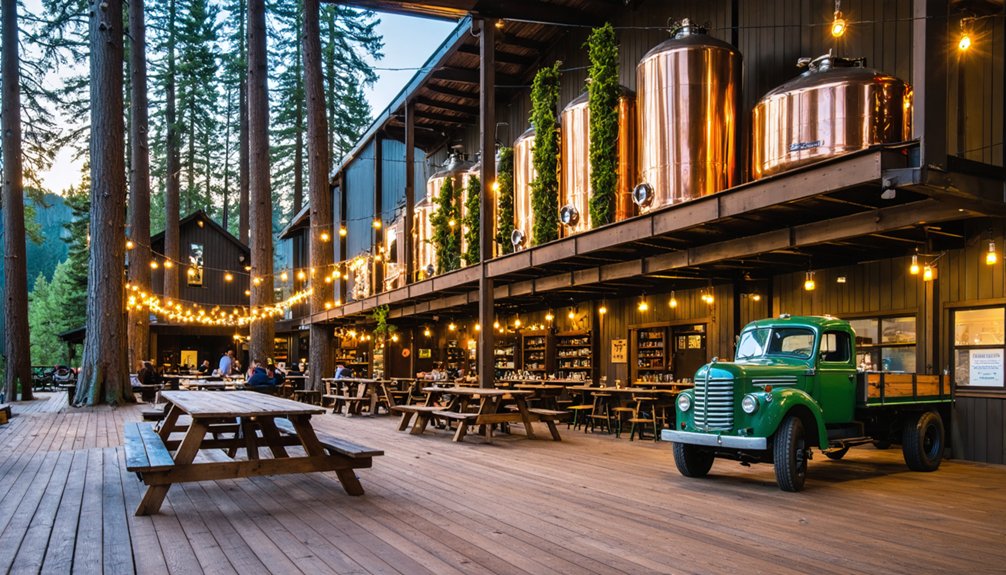
While many former timber towns possess untapped tourism potential, transforming these assets into economic drivers requires strategic development and marketing.
You’ll find success by leveraging your town’s unique historical narrative—convert old logging structures into museums that tell your story through interpretive signage and immersive tours.
Develop recreation opportunities by establishing trail systems connecting historic sites to natural attractions. Your tourism strategies should emphasize what makes your town distinct: geological features, frontier history, or traditional craftsmanship.
Host seasonal festivals that celebrate local culture while drawing visitors year-round.
Create a thorough brand identity that captures your town’s essence and promote it through digital platforms. Learn from towns like Laquin that were completely abandoned when timber resources depleted, ensuring your economic revitalization plan includes diverse industries beyond tourism alone. Focus on maintaining a balance between historical preservation and creating engaging visitor experiences to ensure sustainable development.
Support growth by investing in visitor amenities—lodging options, dining establishments, and well-trained staff—to encourage longer stays and increased spending.
Infrastructure Investments to Support New Business Ventures
For timber towns seeking revival, strategic infrastructure investments serve as the foundation for sustainable economic renewal and business growth.
You’ll need to prioritize water and wastewater upgrades to meet regulatory requirements while supporting commercial development.
Broadband expansion—the “second highway”—enables education, workforce development, and remote business operations essential for your town’s future.
Reliable high-speed internet transforms rural communities from isolated outposts to connected hubs of opportunity and innovation.
Consider repurposing abandoned industrial sites into community assets that attract tourism and hospitality ventures.
Infrastructure modernization should include clean energy systems that reduce operational costs for new businesses.
Don’t overlook childcare and housing infrastructure—they’re vital for workforce retention.
Appalachian communities have successfully developed resilience hubs and trail networks that transform former industrial areas while creating construction jobs.
These investment strategies can create economic stability in previously disinvested areas by increasing local spending power and raising property values in neighborhoods.
Through community engagement in identifying priorities, you can leverage federal funding from IIJA, IRA, and regional commissions like ARC or DRA to create integrated infrastructure systems that address both business needs and quality of life improvements.
Balancing Sustainable Forestry With Economic Diversification

Beyond infrastructure development lies the forest itself—the very resource that once sustained your town’s economy.
You’ll find lasting revival by implementing sustainable practices that honor ecological balance while creating diverse income streams. Community engagement through participatory forest conservation empowers locals to make governance frameworks that protect their future. Community forests can perform as well as protected areas in conserving forests while supporting economic development.
Integrate non-timber forest products alongside traditional harvesting—fruits, medicinal plants, and resins can provide economic incentives while reducing pressure on timber stocks.
Certification programs open premium markets for your sustainably harvested goods, while resource management approaches like Reduced Impact Logging maintain biodiversity protection while allowing economic extraction.
Through local empowerment, your community can develop markets that blend conservation with commerce, supporting 280-2,480 regional jobs through diversified forest-based enterprises.
Attracting Remote Workers and Semi-Retired Professionals
How can your former timber town transform into a thriving hub for the digital workforce? Data shows prime-age workers are flocking to smaller communities, reversing decades of population decline.
You’re perfectly positioned to capitalize on this migration by emphasizing your region’s natural beauty and housing affordability.
Rural communities hold the key to economic rebirth by leveraging their scenic landscapes and budget-friendly housing markets.
Implement these remote work incentives to attract digital nomads:
- Develop diverse housing options ranging from luxury cabins to affordable family homes, showcasing large windows that integrate with surrounding nature.
- Highlight your dramatically lower property values compared to metropolitan areas, a primary motivation for relocation decisions.
- Create sanctuary-like environments that appeal to workers seeking freedom from urban constraints.
The economic revitalization follows naturally—as remote workers arrive, property values appreciate and create sustainable growth opportunities. Areas with high natural amenities are seeing an average income increase of new arrivals $30,000 since 2019.
Leveraging Technology for Economic Revitalization
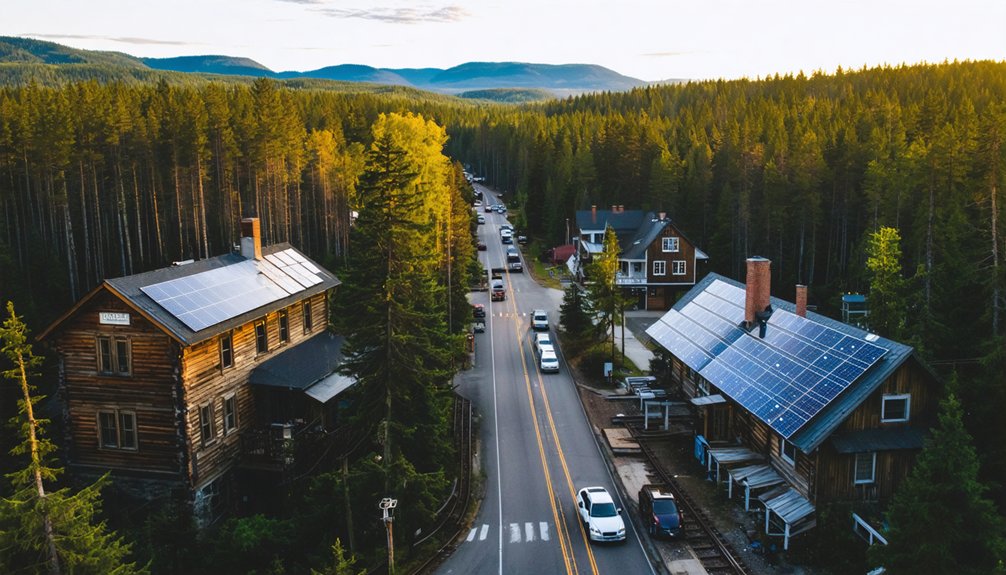
While attracting remote workers builds your community’s residential foundation, technology innovations offer the industrial backbone needed for thorough economic renewal.
Mass timber manufacturing presents a compelling opportunity, requiring just 25% of traditional construction labor while creating higher-paying factory jobs with safer conditions.
Pair this with strategic broadband deployment to enable technology integration across industries. Though digital tools alone show mixed employment results, they’re essential infrastructure for attracting advanced manufacturing and renewable energy operations.
The offshore wind sector particularly shows promise, with Pacific Coast projects potentially generating $127 million to $6 billion in economic benefits.
For maximum impact, develop workforce training programs specifically tailored to these emerging technologies.
Preserving Community Identity While Embracing Change
When timber towns undergo economic transformation, preserving community identity becomes as essential as creating new jobs. Your town’s heritage isn’t just in buildings, but in collective memory.
Community storytelling and heritage documentation create sustainable connections between past and future while allowing necessary change.
Three strategies for balancing preservation with progress:
- Implement adaptive reuse initiatives that transform historic timber structures for modern purposes while maintaining architectural authenticity.
- Organize participatory “memory walks” where longtime residents share place-based stories with newcomers.
- Develop inclusive preservation policies that recognize diverse contributions to your town’s history.
Strategic Land Use Planning for Long-Term Sustainability

Strategic land use planning represents the foundation for any timber town’s sustainable revival, transforming abandoned properties into community assets while preventing further deterioration of the local environment.
You’ll need to address land use challenges through collaborative frameworks that align local interests with broader territorial development goals.
Engage your community in participatory planning processes where residents articulate their vision for vacant land reuse. This approach not only builds ownership but also generates practical solutions like converting abandoned properties into gardens, parks, or affordable housing.
Community-driven planning transforms vacant lots into shared spaces that reflect local vision and build neighborhood pride.
For lasting success, connect your land reuse strategies to economic development initiatives.
Consider establishing a land banking system to manage vacancy systematically while building cross-sector support.
Remember that the most sustainable transformations occur when local communities drive the planning process while receiving support from government and private sector partners.
Securing Funding and Resources for Transition Initiatives
To secure federal funding for your timber town’s shift, you’ll need to target specialized programs like the Northern Border Regional Commission grants and USDA’s Rural Community Development Initiative that address infrastructure, housing, and economic capacity building.
You can strengthen your funding applications by forming public-private partnerships that demonstrate community involvement and align with local priorities, as evidenced by successful multi-million-dollar initiatives in similar communities.
Developing advisory committees that include diverse stakeholders will maximize resource allocation effectiveness and help leverage impact investment funds, Community Opportunity Zone financing, and green bonds to support your long-term economic diversification strategy.
Federal Grant Opportunities
As timber-dependent communities seek economic revitalization, federal grant programs have emerged as crucial lifelines providing both financial resources and technical assistance.
The USDA’s $80 million in grants and the Forest Service’s $106 million investment through Forest Legacy projects offer significant opportunities to reinvigorate your local timber economy.
When pursuing federal funding for your community’s change, focus on:
- Conservation easements that balance forest protection with sustainable timber production
- Infrastructure development grants for modernizing sawmills and wood processing facilities
- Community capacity building through programs like SFI’s grant initiative, which has awarded over $1 million since 2010
These targeted investments help prevent land conversion while creating jobs, supporting local mills, and developing transferable forestry skills—essential components for communities seeking economic freedom through sustainable forest management.
Public-Private Partnership Models
Public-private partnerships (PPPs) represent powerful vehicles for securing both funding and implementation capabilities when shifting abandoned timber towns toward sustainable futures.
You’ll find various PPP models—from ordinary tenders to formal concessions—each offering different approaches to risk sharing between government and private investors.
For maximum impact, incorporate the “5P” framework that integrates public, private, people, policy, and partnerships.
This stakeholder engagement guarantees community voice while attracting investment. Economic incentives through balanced contractual arrangements can accelerate diversification beyond timber harvesting.
When structuring your PPP, embed social impact goals like workforce development programs—which have demonstrated 97.5% non-recidivism rates in urban wood initiatives.
Proper benefit sharing arrangements between all parties guarantees equitable outcomes while policy integration coordinates resources across sectors, creating sustainable livelihoods in formerly timber-dependent communities.
Frequently Asked Questions
How Do Former Timber Workers Adapt to Service-Oriented Employment?
You’ll navigate through tough terrain by leveraging transferable talents in machinery operation, embracing skill retraining programs, and adopting employment diversification strategies that match your existing capabilities with growing service sectors.
What Psychological Impacts Do Community Transitions Have on Long-Term Residents?
You’ll experience loss of community identity, isolation, depression, and distrust toward institutions. Building emotional resilience through informal networks helps mitigate these effects while reclaiming your sense of belonging and purpose.
How Do Timber-To-Tourism Transitions Affect Local Housing Affordability?
Imagine your humble forest dwelling now a coveted castle. You’ll face skyrocketing housing market pressures as tourism demand transforms affordable timber towns into playgrounds where local wages can’t compete with vacation rental economics.
Can Abandoned Mill Sites Be Repurposed for Industrial Hemp Processing?
Yes, you can transform abandoned mill sites into thriving hemp processing facilities, creating jobs and sustainable economies. Case studies across North America show promising returns and integration with local agricultural ecosystems.
How Do Successful Timber Towns Handle Demographic Aging Challenges?
You’ll thrive by investing in workforce development programs for younger residents while fostering community engagement for seniors. Successful towns embrace retirees’ economic contributions while diversifying beyond timber to maintain balanced age demographics.
References
- https://headwaterseconomics.org/wp-content/uploads/Lessons_Timber_Transition.pdf
- https://www.fs.usda.gov/pnw/pubs/pnw_gtr560.pdf
- https://rga.lis.virginia.gov/Published/2023/RD16/PDF
- https://www.esfpa.org/assets/Just The Facts_Final_webversion.pdf
- https://wou.edu/history/files/2015/08/Ron-Vorderstrasse.pdf
- https://www.congress.gov/crs-product/R45688
- https://harvardforest1.fas.harvard.edu/publications/pdfs/Kittredge_ForEcol&Man_2003.pdf
- https://www.hcn.org/articles/forests-in-logging-country-a-community-protects-its-woods-as-an-act-of-resilience/
- https://chesapeaketrees.net/2019/08/30/baltimore-reclaiming-wood-lives-and-communities/
- https://usnature4climate.org/saving-americas-forestlands-one-community-forest-at-a-time/