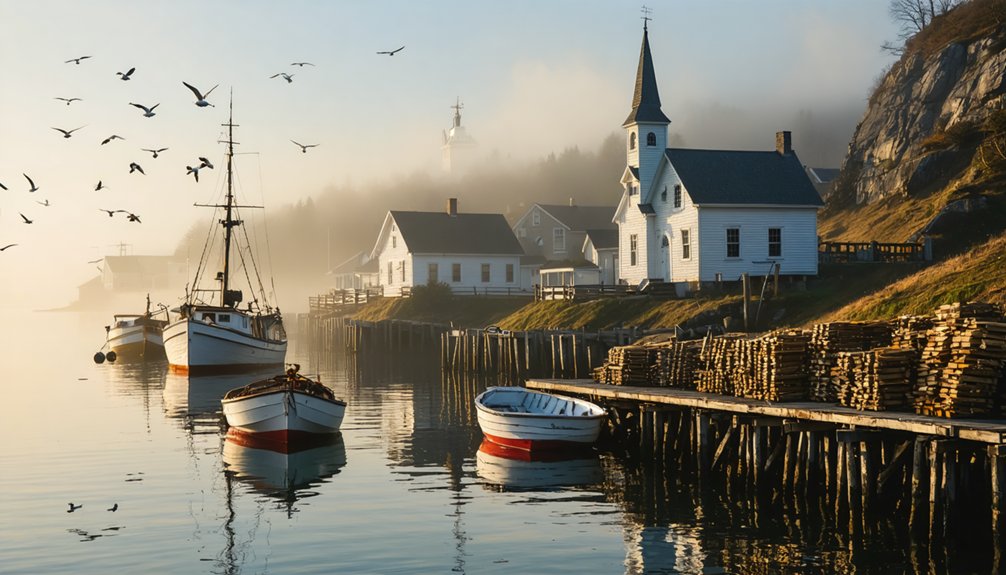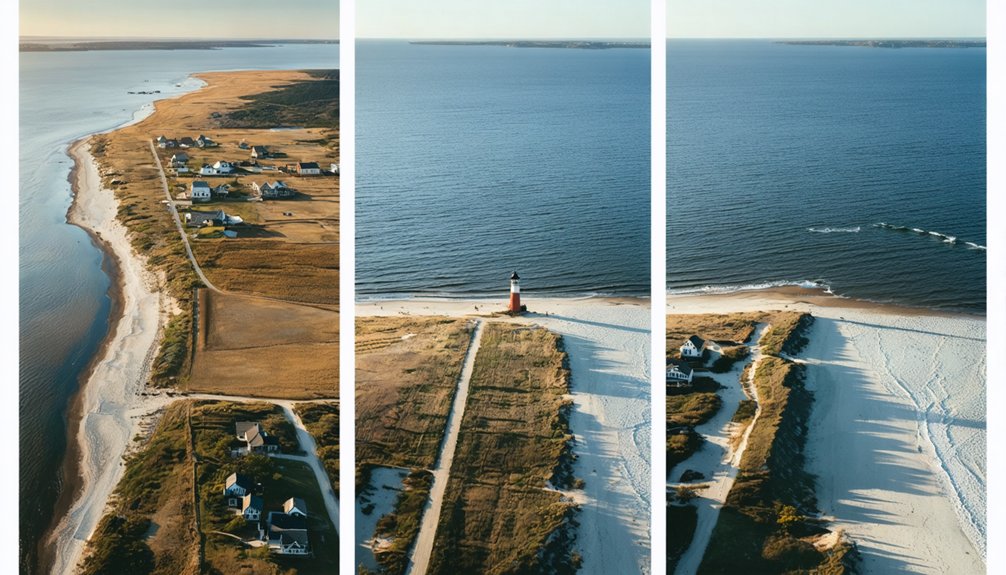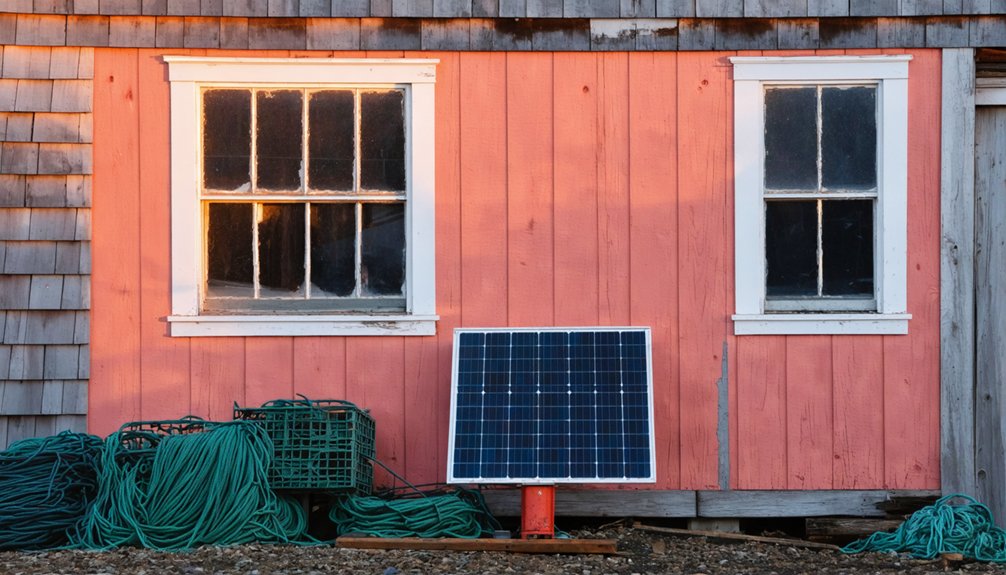
You’ll find Northeast coastal communities implementing integrated adaptation approaches that combine infrastructure protection with economic revitalization. Hybrid solutions like living shorelines and advanced foundation systems protect vulnerable areas while creating jobs. Community-driven action plans guarantee local expertise shapes resilience strategies, particularly in marginalized neighborhoods facing disproportionate flood risks. Strategic investments in nature-based solutions offer triple benefits: reduced flooding, ecosystem preservation, and economic growth—proving desolate coastal areas can transform into models of sustainable renewal.
Key Takeaways
- Living shorelines with native vegetation and natural materials stabilize coastlines while creating habitat and economic opportunities for desolate communities.
- Hybrid adaptation strategies balance ecological preservation with economic growth by involving communities in developing locally-tailored revitalization solutions.
- Targeted subsidy programs support private adaptation measures while preserving coastal character and preventing capital losses in struggling areas.
- Flexible zoning regulations promote resilient economic growth in coastal areas by adapting to evolving climate data and market conditions.
- Nature-based coastal restoration creates jobs, reduces flood risks, and preserves ecosystems simultaneously in economically challenged communities.
The Rising Threat: Northeast Communities at Greatest Risk

As coastal communities along the Northeast face unprecedented challenges, the statistics reveal a sobering reality that demands immediate attention.
With 82% of the Northeast’s 70 million residents living in coastal counties, you’re witnessing an unprecedented exposure to climate risks.
The Northeast faces a climate reality we can no longer ignore—57 million coastal residents now stand in harm’s way.
Your community engagement efforts must address the projection that flooding will occur 10 times more frequently in the next 25 years.
The Port of Boston could experience 50 high tide flooding days annually by 2050, while New York City faces the highest population risk with 271,000 residents in flood-prone areas.
Effective risk assessment tools like Climate Central’s Coastal Risk Finder can help identify where infrastructure investments are urgently needed.
Recent incidents of coastal erosion in North Carolina, where 21 homes collapsed into the ocean on Hatteras Island in just five years, demonstrate the immediate threat communities face.
The socioeconomic impacts will be devastating, with home values at risk reaching up to US$64 billion on the Atlantic coast alone by 2050.
Your freedom to live safely in coastal regions depends on confronting these escalating threats with evidence-based solutions.
Environmental Justice Concerns in Eastern Coastal Areas
You’ll find that marginalized communities along the eastern coast are disproportionately exposed to industrial pollution, with toxic facilities concentrated in flood-prone areas where low-income and minority populations reside.
These environmental burdens compound existing socioeconomic challenges when flooding and sea level rise threaten homes near industrial zones that release hazardous chemicals during extreme weather events.
Limited affordable housing options in safer locations effectively trap vulnerable residents in high-risk areas, creating a cycle of environmental injustice that requires targeted policy interventions and meaningful community engagement in resilience planning. The Waterfront Justice Project identified that Significant Maritime Industrial Areas are located within storm surge zones, placing environmental justice communities at heightened risk during coastal storms. Systemic discrimination has historically limited these communities’ access to resources needed for recovery from increasing climate impacts.
Marginalized Communities Face More
While global sea levels rise at an alarming rate, marginalized communities along the eastern coastline face substantially greater environmental justice burdens than their more affluent counterparts.
You’ll find these neighborhoods experience accelerated flooding with limited capacity to adapt—outdated infrastructure fails as contaminated water introduces health disparities affecting your most vulnerable populations. These consequences reflect a pattern of environmental racism that has historically placed pollution facilities in poor communities of color.
Community displacement through managed retreat disproportionately impacts those with generational ties to coastal lands. Without adequate representation in adaptation planning, you’re often excluded from critical decisions affecting your future. Historical discrimination in buyout programs has exacerbated challenges for communities already struggling with climate impacts.
However, grassroots advocacy is changing this landscape. Local organizations now partner with researchers to document risks and develop community-led solutions.
Through public testimony and strategic campaigns, you’re creating pathways to resilience while preserving cultural heritage—essential steps toward equitable climate adaptation in eastern coastal regions.
reviving local economies in oil towns is a crucial part of this process, ensuring that communities can thrive amid the transition to sustainable energy sources. By investing in local businesses and encouraging diverse economic opportunities, we can build a more resilient future that benefits all residents. This approach not only empowers individuals but also strengthens the fabric of these towns as they adapt to changing circumstances.
Toxic Sites Concentrate Regionally
The concentration of toxic sites across eastern coastal regions follows a disturbing pattern of environmental injustice that directly threatens public health and ecosystem stability.
You’ll find that nearly 80% of flood-vulnerable hazardous sites cluster in just seven states, with New Jersey, New York, and Massachusetts bearing significant burdens along the eastern seaboard.
Coastal vulnerability assessment reveals communities near these sites are disproportionately comprised of renters, Hispanic populations, and economically disadvantaged households.
When flooding occurs, these residents face elevated exposure to contaminants without adequate resources to evacuate or recover. Analysis shows households in these areas often experience linguistic isolation, making emergency communications and evacuation plans even more challenging.
Toxic site mapping demonstrates particularly alarming statistics for eastern coastal infrastructure—22% of sewage facilities and 44% of fossil fuel terminals risk inundation by 2100.
These facilities become environmental time bombs when flooding mobilizes heavy metals, chemicals, and pathogens into surrounding communities.
Current projections indicate the East Coast will see 11 inches of sea level rise by 2100, exacerbating flooding risks at these hazardous locations.
Housing Access Limits Safety
As environmental hazards intensify along eastern coastlines, affordable housing shortages have created a perfect storm of vulnerability for disadvantaged residents.
You’ll find market-driven development pushing low-income populations into flood-prone zones where safety measures remain inadequate.
The data reveals a troubling pattern: communities facing racial and socioeconomic marginalization experience higher exposure to flooding, while simultaneously encountering prohibitive insurance costs.
When hurricanes strike, these same communities receive disproportionately less rebuilding assistance.
Seven states including New Jersey, New York, and Massachusetts are among those with nearly 80% of at-risk coastal hazardous facilities projected to experience flooding by 2100.
Emerging solutions include spatial analysis tools that identify at-risk neighborhoods where affordable housing interventions should be prioritized.
By combining sea level rise projections with demographic data, communities can strategically address housing insecurity.
Recent studies utilizing Sea Level Rise Index demonstrate the disproportionate impacts on underserved coastal communities where financial consequences include increased poverty and infrastructure damage.
Freedom from environmental threats requires recognizing that housing access and climate adaptation must advance together, particularly for those systematically excluded from safe shelter options.
Infrastructure Solutions for Sea Level Rise in the Northeast
You’ll find Northeast coastal communities implementing extensive barrier systems that combine traditional seawalls with innovative tide gate technologies to manage increasingly frequent flooding events.
Elevated housing approaches have evolved beyond simple stilts to include advanced foundation systems that can withstand both flooding and storm surge while meeting updated building codes requiring structures to rise above projected 2100 flood levels.
Engineered shoreline defense strategies now integrate hard infrastructure with living shorelines, where restored wetlands and dune systems work alongside human-built protections to absorb wave energy and prevent erosion.
Barrier Systems Implementation
Facing unprecedented challenges from accelerating sea level rise, coastal communities in the Northeast are implementing innovative barrier systems to protect vulnerable shorelines and infrastructure.
These barrier restoration strategies combine nature-based solutions with engineered approaches, offering both protection and coastal ecosystem benefits.
You’ll find several approaches gaining traction across the region:
- Hybrid systems that integrate restored dunes and wetlands with strategic breakwaters and groins
- Living shorelines using native vegetation and natural materials to stabilize coastlines while enhancing habitat
- Adaptive management frameworks like Dynamic Adaptive Policy Pathways that allow flexible responses as conditions change
Elevated Housing Approaches
While coastal communities confront rising sea levels, elevated housing has emerged as a primary infrastructure adaptation strategy throughout the Northeast region.
You’ll find this approach particularly effective post-Superstorm Sandy, where thousands of homeowners elevated structures above base flood elevations.
The elevation benefits are considerable: your flood insurance premiums decrease markedly under FEMA guidelines, and property values typically increase as investors recognize reduced risk.
Research on Long Island demonstrates that non-elevated homes exposed to sea level rise sell at a 7% discount compared to protected properties.
Financial assistance through FEMA’s Hazard Mitigation Grant Program helps offset project costs.
Beyond individual advantages, elevated housing strengthens community resilience by maintaining population stability and protecting affordable housing stock—critical since flood-vulnerable affordable units will triple by 2050 under high emissions scenarios.
Engineered Shoreline Defense
As sea levels continue to rise along the Northeast coast, innovative engineered shoreline defense systems have become essential for community preservation and infrastructure protection.
These coastal innovations blend natural elements with engineered structures to create resilient barriers against storm surges and erosion.
You’ll find several approaches to shoreline sustainability being implemented across the region:
- Hybrid systems by the Army Corps of Engineers combine conventional flood walls with marshes and reefs, saving an estimated $1.3 billion in storm damage.
- Living shorelines using logs, rocks, and native plants offer cheaper, less carbon-intensive alternatives to traditional seawalls.
- Floating wetland systems like the Emerald Tutu project mimic marshes to dissipate wave energy along hardened coastlines.
These solutions protect communities while simultaneously creating habitat and improving water quality—a win for both residents and ecosystems.
Building Community Resilience Through Local Action Plans
Successful coastal resilience initiatives depend on collaborative, locally-driven action plans that blend scientific knowledge with community expertise. When you participate in community workshops, you’re not just sharing concerns—you’re actively shaping solutions tailored to local realities. Evidence shows these participatory approaches greatly improve adaptation planning while raising awareness of coastal vulnerabilities.
Resilience training delivered to village leaders and local representatives builds critical capacity for implementing climate-smart land use decisions. In Samoa, over 300 community members received training that transformed how they approach hazard planning.
This localized approach guarantees your community’s unique needs and traditional knowledge inform resilience strategies, creating ownership and acceptance of implemented solutions. The most effective coastal plans emerge when scientific assessment meets community wisdom, fostering cross-sector collaboration that addresses infrastructure, ecosystems, and social vulnerabilities simultaneously.
Economic Revitalization Strategies for Flood-Prone Areas

Economic revitalization in flood-prone coastal regions demands a multifaceted approach that balances risk reduction with sustainable growth opportunities.
Sustainable coastal economies require integrated strategies that mitigate flood risks while fostering robust growth pathways.
You’ll find greater resilience through integrated adaptation strategies that protect both physical infrastructure and regional economies.
Consider these proven pathways to economic revival:
- Implement targeted subsidy programs that support private adaptation measures like home elevation, preventing capital losses and subsequent unemployment.
- Invest in nature-based solutions that simultaneously create jobs, reduce flood risks, and preserve coastal ecosystems.
- Develop cost-effective structural protections guided by rigorous cost-benefit analysis that incorporates future economic growth projections.
Economic incentives create powerful motivation for widespread adoption of flood-proofing measures.
When you combine bottom-up private adaptation with strategic public investments, you’ll maintain regional fiscal stability despite increasing flood frequency.
Case Studies: Successful Eastern Coastal Restoration Projects
The eastern seaboard has witnessed remarkable coastal restoration successes through innovative, science-based approaches that combine ecological recovery with community resilience.
Virginia’s 20-year seagrass initiative stands as the world’s largest restoration project, planting 70 million seeds across 8,896 acres with impressive carbon sequestration results and 3,500 volunteer hours driving community engagement.
The North Wildwood Emergency Beach Nourishment prevented economic losses while Keansburg’s restoration used 1.1 million cubic yards of sand to rebuild 2.5 miles of shoreline post-Sandy.
The Sagaponack Bridgehampton project demonstrated effective public-private partnerships reducing federal funding dependence.
These successful projects share common elements: combining ecological approaches with infrastructure protection, leveraging local participation, and implementing science-based solutions that outperform traditional structural defenses.
Policy Frameworks Supporting Coastal Community Adaptation
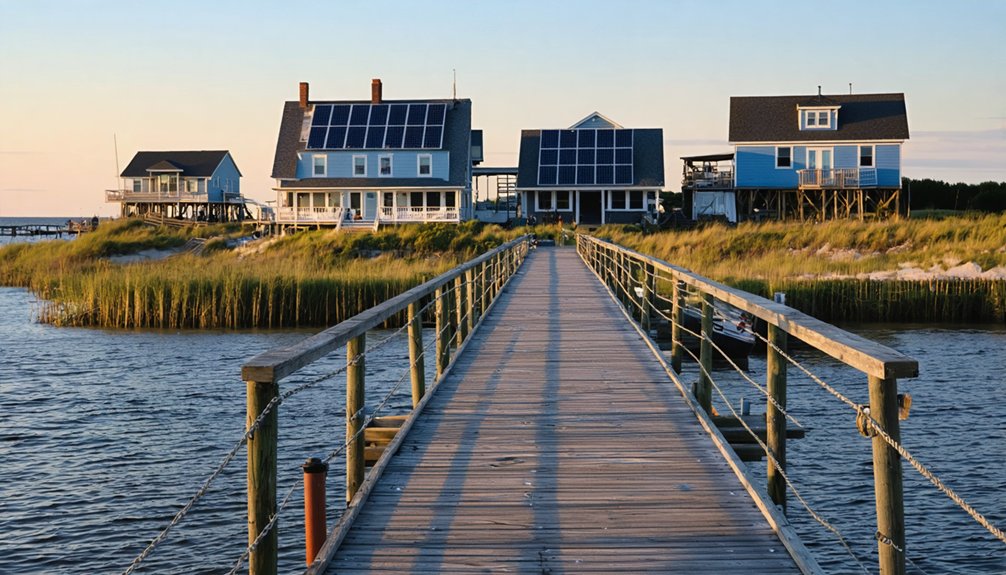
Building upon the successful restoration projects along the eastern seaboard, effective policy frameworks now serve as the foundation for sustainable coastal adaptation nationwide.
You’ll find these frameworks incorporate multiple approaches that maximize both ecological restoration and community protection. Adaptation funding increasingly prioritizes equity-focused initiatives that benefit historically underserved populations while strengthening coastal partnerships.
Key policy elements supporting coastal communities include:
- Flexible zoning regulations that adjust to evolving climate data while promoting resilient growth
- Incentive programs encouraging private investment in nature-based solutions that protect both infrastructure and ecosystems
- Decision support tools like Coastal ADAPT that integrate economic assessments with vulnerability analyses
These frameworks empower you to implement hybrid adaptation strategies tailored to local conditions, ensuring both ecological preservation and community resilience against intensifying coastal hazards.
Frequently Asked Questions
What Psychological Impact Does Coastal Flooding Have on Long-Term Residents?
After Hurricane Sandy, you’ll face increased PTSD, anxiety and depression. Your mental health deteriorates as flooding threatens your home and identity, while community resilience weakens through displacement and loss of place-attachment.
How Does Coastal Flooding Affect Local Cultural Heritage Preservation?
Coastal flooding threatens your cultural identity through heritage loss, damaging historic structures, eroding archaeological sites, and disrupting preservation efforts. You’ll need integrated approaches combining scientific modeling with traditional knowledge to protect communal legacies.
Can Insurance Companies Legally Drop Coverage in High-Risk Coastal Zones?
Yes, insurers can legally drop your coverage in high-risk coastal zones after fulfilling state-specific notice requirements and moratoriums. You’ll need to understand local insurance regulations governing coastal risk assessment.
What Career Opportunities Emerge From Coastal Restoration and Adaptation Initiatives?
NOAA’s restoration of Massachusetts’ Herring River created 300+ jobs. You’ll find opportunities as coastal planners, environmental engineers, and field technicians implementing green infrastructure solutions that build resilience while restoring critical habitats.
How Do Seasonal Tourism Patterns Shift in Response to Flooding Threats?
You’ll notice tourism fluctuations as visitors avoid peak flood seasons, shift to shoulder months, and seek higher elevation accommodations. Flooding awareness drives adaptation in travel timing and destination selection patterns.
References
- https://www.wwno.org/2025-04-03/flood-risks-getting-worse-along-u-s-coastlines-new-analysis-shows
- https://www.vims.edu/newsandevents/topstories/2025/slrc.php
- https://abcnews.go.com/US/thousands-toxic-sites-us-risk-flooding-coming-decades/story?id=127635958
- https://www.c40.org/what-we-do/scaling-up-climate-action/water-heat-nature/the-future-we-dont-want/sea-level-rise/
- https://www.epa.gov/climate-indicators/climate-change-indicators-coastal-flooding
- https://www.sciencedaily.com/releases/2025/06/250602155338.htm
- https://www.prnewswire.com/news-releases/half-of-americas-beaches-could-vanish-by-2100–heres-whats-working-to-save-them-302576969.html
- https://www.nature.com/articles/s41586-024-07038-3
- https://www.cbsnews.com/news/maps-port-cities-climate-change/
- https://www.drought.gov/drought-status-updates/drought-status-update-northeast-2025-09-11