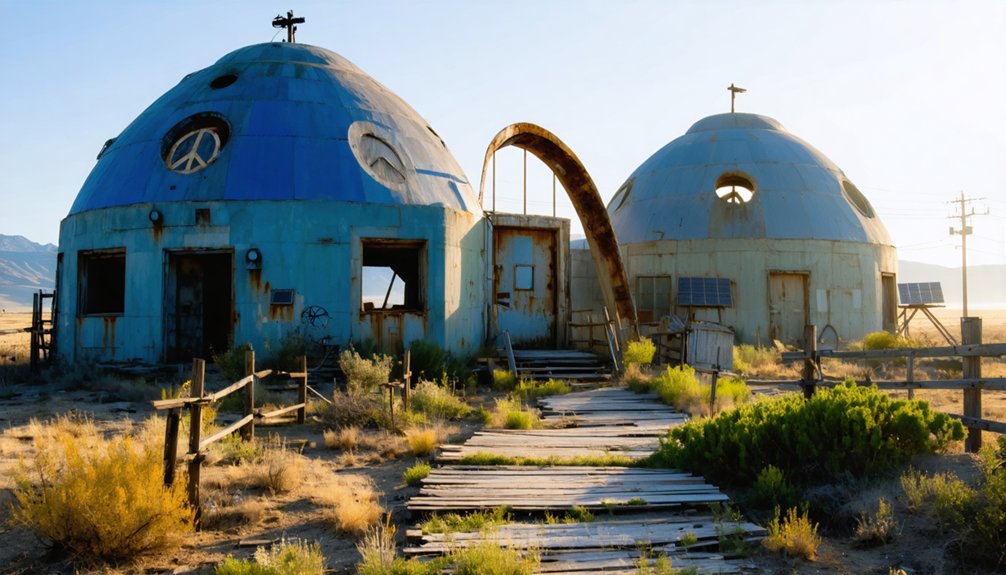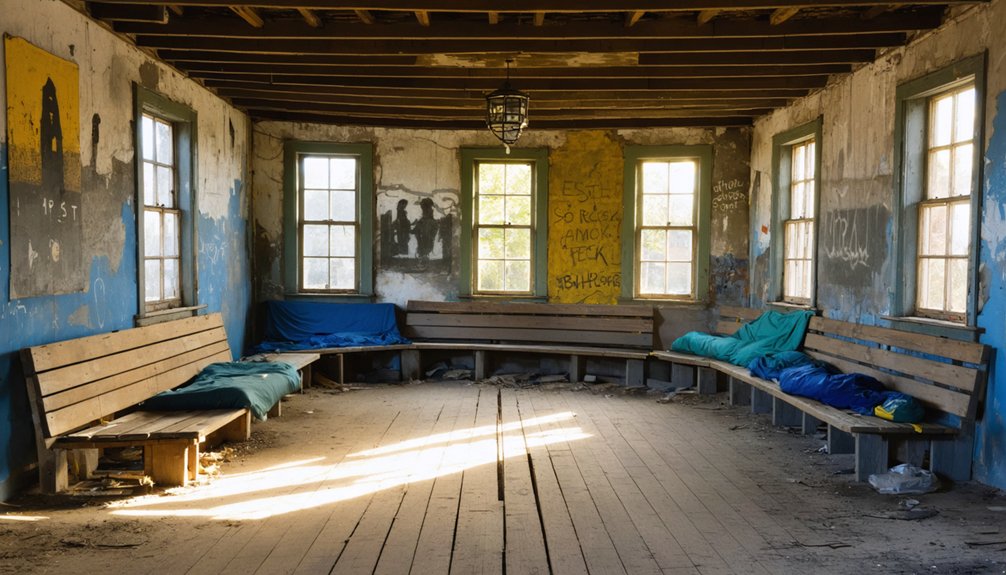
Reviving failed utopian communities requires addressing their original downfalls—leadership disputes, economic instability, and environmental challenges. You’ll need to implement sustainable infrastructure like microgrids and water catchment systems, while balancing historical preservation with modern functionality. Establish diverse economic frameworks through tax incentives and heritage tourism, and prioritize social equity through transparent community engagement. The transformation of ghost towns like Centralia and Cisco offers valuable blueprints for your community revival journey ahead.
Key Takeaways
- Understanding historical failures of utopian communities provides critical lessons for avoiding ideological rigidity and leadership disputes in revival efforts.
- Environmental remediation through phytoremediation and water catchment systems is essential before infrastructure development in abandoned communities.
- Diverse economic frameworks combining heritage tourism, tax incentives, and support for local entrepreneurs create sustainable revival models.
- Modern infrastructure including microgrids, digital connectivity, and sustainable transportation networks must balance with historical preservation.
- Community ownership models with adaptive reuse of historic structures and climate resilience planning ensure long-term sustainability.
The History and Vision Behind American Utopian Communities

While most modern Americans associate communal living with the 1960s counterculture, the foundation of utopian communities in the United States stretches back nearly three centuries. The Ephrata Community established in Pennsylvania in 1732 marked the beginning of a movement that would flourish throughout the 19th century—America’s golden age of utopianism.
America’s utopian experiment began long before the hippie communes—flourishing across the nation nearly 300 years ago.
You’ll find these settlements were meticulously designed around specific frameworks: religious groups like the Shakers constructed distinctive architecture reflecting their values, while secular socialist experiments engineered economic systems based on cooperation rather than competition. This shift toward communal living arrangements emerged as a response to the rapid transformation from a pre-capitalist culture centered around family units to an increasingly market-driven economy after 1815.
Transcendentalist intellectuals at Brook Farm built educational infrastructure that attracted literary luminaries. The Oneida Community, founded by John Humphreys Noyes, practiced what they called Bible Communism while developing renowned craftsmanship traditions.
Each community implemented utopian ideals through deliberate physical and social structures. Their architectural innovations and organizational systems weren’t merely philosophical—they were practical blueprints for alternative societies that rejected conventional American individualism in favor of communal living.
Learning From the Past: Why These Communities Failed
Despite their ambitious designs and visionary frameworks, these historical utopian communities eventually collapsed under predictable structural weaknesses.
Examining their failures reveals vital insights for anyone pursuing contemporary communal experiments. Understanding these historical lessons enables you to avoid the same pitfalls in your quest for freedom.
- Ideological rigidity created factional splits, destroying social cohesion through inflexible adherence to utopian ideals
- Leadership disputes eroded community trust, particularly when power concentrated among charismatic founders
- Economic sustainability faltered due to poor practical planning and insufficient diversification of income sources
- Environmental resilience suffered from poor site selection and agricultural inexperience
- Internal conflicts intensified under challenging conditions, accelerating community breakdown
These communities didn’t fail because their ideals were wrong, but because their implementation lacked balance between vision and pragmatism—a significant distinction for modern community builders. At least 119 utopian communities were established in early 19th century America by idealists dissatisfied with contemporary society, yet nearly all collapsed. Even short-lived experiments like Fruitlands collapsed after only seven months due to food shortages and poor living conditions despite their lofty agrarian ideals.
Environmental Challenges and Sustainable Solutions

When establishing communities in former ghost towns, you’ll face significant environmental challenges that demand innovative, systems-oriented solutions. Many abandoned towns contain toxic legacies—from lead contamination in mining communities to chemical plumes from industrial sites. You’re inheriting decades of environmental injustice.
Begin with thorough environmental remediation. Test soil, water, and air quality before developing infrastructure. Implement phytoremediation techniques using native plants to extract toxins naturally.
Environmental healing must precede community building. Let the land recover through nature’s own detoxifying power.
Design water catchment systems to replace crumbling infrastructure, particularly in areas experiencing climate-related deterioration. This approach becomes especially critical as basic services disrupt when populations decline in affected regions.
Community agriculture provides both sustenance and healing. Create permaculture food forests on remediated land to restore ecological balance. The devastation seen in places like Picher, Oklahoma, where lead poisoning affected 34% of children, demonstrates why soil testing must precede any farming initiatives.
Consider installing solar microgrids to establish energy independence. These regenerative approaches transform toxic sacrifice zones into resilient communities while addressing the environmental injustices that forced previous residents to abandon their homes.
Economic Frameworks for Ghost Town Revival
Establishing a resilient economic foundation serves as the cornerstone of any successful ghost town revival project. Your freedom to transform these forgotten spaces depends on implementing diverse economic frameworks that balance preservation with innovation. Rejuvenating these properties helps prevent the downward spiral that can transform viable towns into ghost towns through neglect.
By leveraging tax incentives and property redevelopment strategies, you’ll create sustainable ecosystems for growth.
- Implement vacant property taxes to incentivize productive land use while offering grants for modernization.
- Develop heritage tourism programs that emphasize local ownership and community engagement.
- Diversify investment beyond single industries to prevent future boom-bust cycles.
- Support entrepreneurs through affordable insurance options and small business assistance.
- Balance infrastructure investment with cultural tourism to create authentic experiences that generate revenue.
This methodical approach guarantees your ghost town revival doesn’t just recreate the past but builds resilient systems designed for long-term prosperity. Fostering vibrant, reflective, and cohesive social environments is essential for the successful revitalization of these abandoned communities.
Addressing Social and Racial Equity in Community Rebuilding
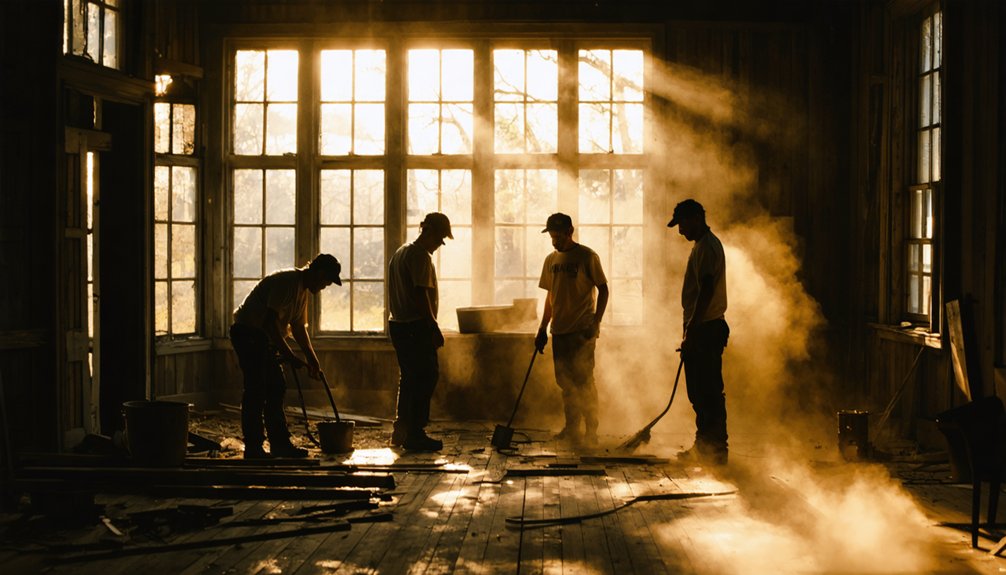
Rebuilding ghost towns as utopian communities requires confronting the historical inequities that shaped America’s built environment.
You’ll need to implement equity frameworks that acknowledge how federal policies systematically segregated neighborhoods and limited opportunity for communities of color.
When designing your revival strategy, incorporate community narratives through transparent engagement processes that build trust and center local priorities.
This departure from top-down approaches guarantees infrastructure investments address historical disinvestment patterns.
Use disaggregated data by race and income to measure progress and guide resource allocation.
The economic potential is substantial—racial equity in income could add trillions to GDP.
Leverage the $215 billion committed by private and philanthropic sectors toward community development, directing investments to correct historical imbalances in transportation, housing, and public resources.
By 2044, people of color will constitute the majority of Americans, making equitable development essential for sustainable revival efforts.
Focus on skills rather than credentials when creating workforce opportunities to avoid perpetuating systemic barriers that have historically limited economic mobility.
Modern Infrastructure and Technology for Renewed Viability
Modern infrastructure and technology form the backbone of any viable ghost town revival, transforming abandoned locations into sustainable utopian communities.
You’ll need integrated systems that work harmoniously with both nature and human needs.
- Implement smart energy microgrids combining solar, wind, and storage to achieve independence from failing legacy systems.
- Deploy digital infrastructure with high-speed connectivity enabling remote work, telemedicine, and community management platforms.
- Design sustainable transportation networks featuring EV charging, shared autonomous vehicles, and pedestrian-friendly layouts.
- Install advanced water management technologies including greywater recycling, smart monitoring, and stormwater capture systems.
- Utilize modular green building techniques with passive design, smart home integration, and environmentally responsive materials.
These technologies don’t just modernize—they liberate communities from outdated dependencies while preserving their unique character.
Preserving Historical Legacy While Embracing Progress
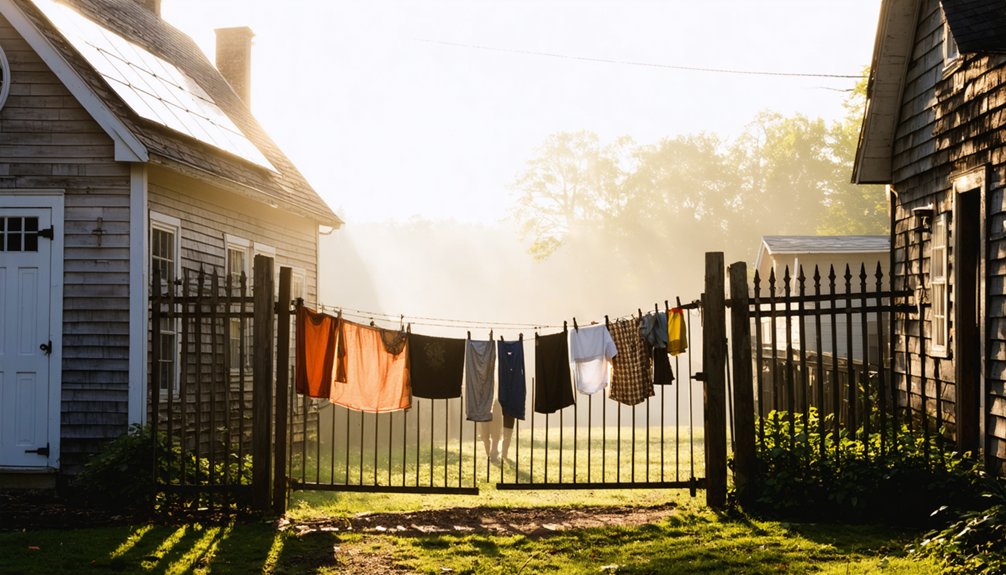
When reviving a ghost town, the delicate balance between historical authenticity and modern functionality creates the framework for a successful utopian community.
You’ll need to implement drone mapping to create digital twins of structures while commissioning architectural drawings that document original specifications.
Strip interiors to original materials, then construct modern frames inside that prevent collapse without compromising historical integrity.
Apply protective roofing before installing contemporary systems.
Leverage community engagement through partnerships between historical societies and volunteer networks.
These collaborations guarantee donated funds directly support qualified preservation projects.
Embrace historical storytelling through educational programming and community events that generate tourism revenue.
This approach—documented through Victorian tea parties, heritage festivals, and seasonal celebrations—creates economic incentives for preservation while maintaining authentic cultural narratives.
Case Studies of Successful Ghost Town Transformations
You’ll find that successful ghost town transformations balance architectural conservation with economic renewal catalysts to create viable communities.
Infrastructure projects in Beckley and Centralia demonstrate how historical structures can be repurposed while introducing modern energy systems and community spaces.
The $55 million coal shift fund in Centralia and the $1.4 million private investment in Cerro Gordo represent two distinct but effective funding models that you can adapt to your revitalization project.
Historical Preservation Strategies
Successful ghost town transformations across the United States demonstrate that strategic preservation approaches can breathe new life into abandoned communities while maintaining their historical integrity.
This can be particularly evident in abandoned neighborhoods in southern suburbs, where revitalization efforts focus on community engagement and sustainable development. By converting dilapidated properties into thriving spaces for small businesses and public parks, local governments can foster a sense of belonging among residents. Moreover, collaborations between urban planners and preservationists often lead to innovative designs that respect the historical context while providing modern amenities.
National Register listings serve as the foundation for these revitalization efforts, releasing essential funding and protection mechanisms.
To implement effective historic preservation in your own project, consider these proven strategies:
- Secure National Register designation to access grants and legal protections
- Conduct thorough structural assessments before beginning stabilization work
- Employ local labor for restoration to boost community engagement
- Create climate-controlled archives for artifact preservation
- Adapt historic structures for contemporary use while respecting original character
These approaches balance preservation requirements with the freedom to reimagine spaces for modern visitors, creating sustainable models that honor the past while building toward a vibrant future.
Economic Revival Catalysts
Ghost towns across America have transformed into thriving hubs of economic activity through innovative approaches that leverage their unique historical assets.
You’ll find entrepreneurial initiatives like Cisco, Utah’s transformation into an artist residency, where creative collaborations turn abandoned structures into revenue-generating Airbnb rentals.
Community engagement thrives in Shaniko, Oregon, where grassroots movements converted gas stations into essential service points, while tiny houses bypass restrictive building codes.
Heritage tourism emerges through artistic interventions in these forgotten spaces—murals, skateparks, and sculptures attract visitors while honoring local culture.
Economic diversification comes through resource sharing and local partnerships, as seen in proposals for North Truro’s multi-use cultural center.
Despite infrastructure challenges like California City’s expensive grid maintenance, these communities demonstrate how cultural programming can revitalize abandoned spaces through intentional design.
Building Resilient Communities: Strategies for Long-Term Success
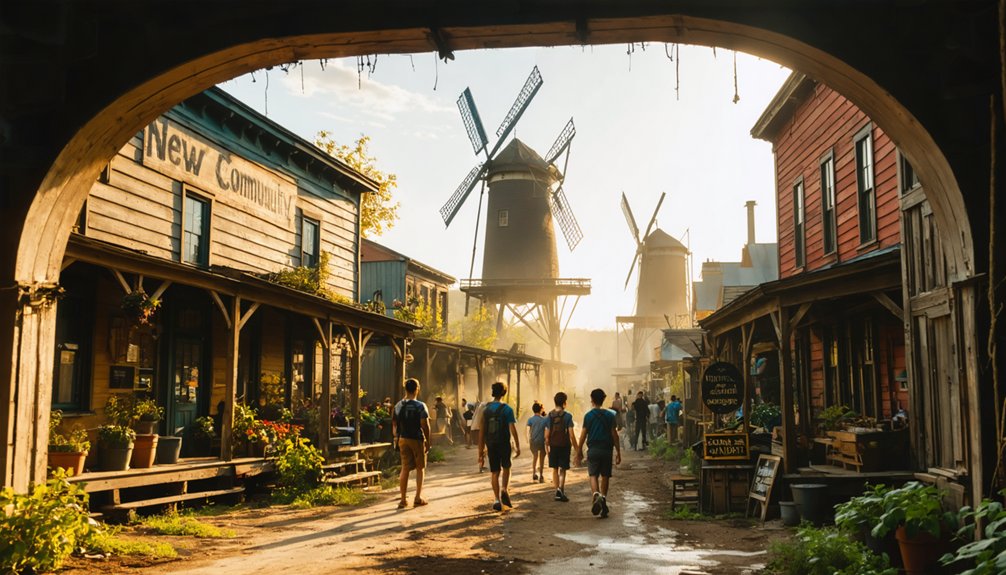
While reviving abandoned settlements captures the imagination, building resilient communities demands methodical planning and strategic implementation. Sustainable revival hinges on community ownership and local leadership functioning as catalysts for change.
Breathing new life into forgotten places requires both vision and method, with community voices steering the renewal journey.
Your framework for long-term resilience should include:
- Adaptive reuse of historic structures that preserve character while meeting modern needs
- Diversified economic foundations spanning tourism, remote work, and local enterprise
- Strategic infrastructure investments prioritizing connectivity and essential services
- Consistent rebranding that highlights your unique cultural assets
- Environmental stewardship systems designed for climate resilience
These interlocking systems create a self-reinforcing structure of community dynamism.
When locals drive the vision through regular forums and volunteer programs, settlements evolve from fleeting experiments to enduring communities where freedom and sustainability coexist.
Frequently Asked Questions
Can Former Residents Reclaim Property Rights in Abandoned Utopian Communities?
Though communal property arrangements complicate your claim, you can pursue property reclamation through adverse possession laws, while documenting historical ownership patterns to establish legitimate rights within existing legal infrastructure.
How Do Modern Zoning Laws Affect Revival of Historical Planned Communities?
You’ll face restrictive zoning laws that block multi-family housing and mixed-use development. Modern community planning requirements often contradict historical designs, requiring variances or rezoning to liberate these spaces from bureaucratic constraints.
What Role Do Paranormal Tourism Opportunities Play in Ghost Town Economies?
You’ll find paranormal events creating substantial tourism impact, generating up to 20% of local revenues. They’re integrated within infrastructure development, transforming abandoned structures into revenue-generating destinations that sustain year-round economic freedom.
How Has Climate Change Altered the Viability of Previously Uninhabitable Locations?
You’re witnessing climate adaptation strategies transform once-submerged ghost towns like Whiskey Flats into habitable spaces, while drought-induced landscape shifts create opportunities for sustainability innovations in previously flooded regions across the American West.
Can Failed Utopian Ideologies Be Ethically Repurposed for Modern Communities?
You can ethically repurpose failed utopias by redesigning their infrastructure around community engagement, critically examining their exclusionary practices, and implementing transparent decision-making systems that honor autonomy while addressing historical shortcomings.
References
- https://www.messynessychic.com/2016/04/19/the-all-black-utopian-ghost-city-that-lost-its-soul/
- https://archive.curbed.com/2019/5/31/18639098/california-city-failed-utopia-ghost-town
- https://www.latimes.com/lifestyle/image/story/2023-05-11/architecture-of-communes-in-california-tells-a-story-of-utopia
- https://listverse.com/2016/05/16/10-attempts-to-create-utopian-cities-that-failed-spectacularly/
- https://www.atlasobscura.com/lists/12-abandoned-utopias-that-didnt-last
- https://tools4literature.weebly.com/utopia-failures.html
- https://www.kb.brl.by/index.php/fccbecyshop/news/11-failed-utopias-you-can-visit
- https://open.baypath.edu/his114/chapter/utopian-communities/
- https://www.legendsofamerica.com/ah-utopias/
- https://en.wikipedia.org/wiki/List_of_American_utopian_communities