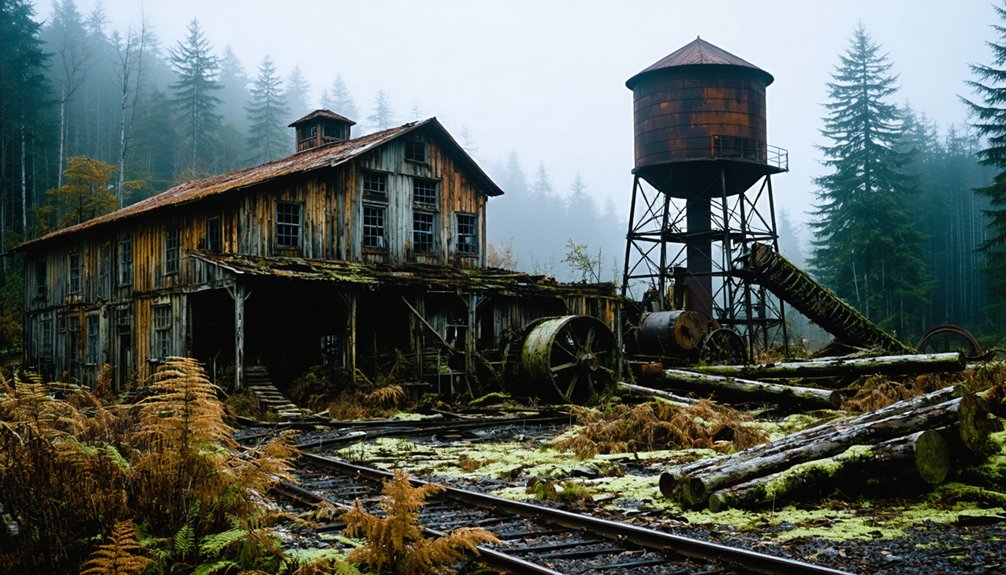
Revitalizing forgotten lumberjack towns requires five strategic approaches. You’ll need to uncover historical narratives through archaeological documentation, establish heritage museums with interactive exhibits, transform abandoned mill structures into community spaces, develop forest-based tourism that balances conservation with accessibility, and build sustainable local partnerships across sectors. These complementary strategies preserve cultural heritage while creating economic opportunities for residents. The intersection of preservation and innovation offers communities a framework for sustainable development beyond mere historical commemoration.
Key Takeaways
- Document and preserve historical artifacts through archaeological techniques to uncover authentic lumberjack narratives and experiences.
- Establish heritage museums with interactive exhibits and hands-on demonstrations to maintain cultural connections and educate visitors.
- Transform abandoned mill structures into community spaces that honor architectural heritage while serving modern needs.
- Develop forest-based tourism opportunities that balance conservation with economic growth through trails and eco-friendly accommodations.
- Build sustainable local partnerships between government, businesses, educational institutions, and tribal entities to secure long-term community investment.
Uncovering Historical Footprints Through Archaeological Documentation
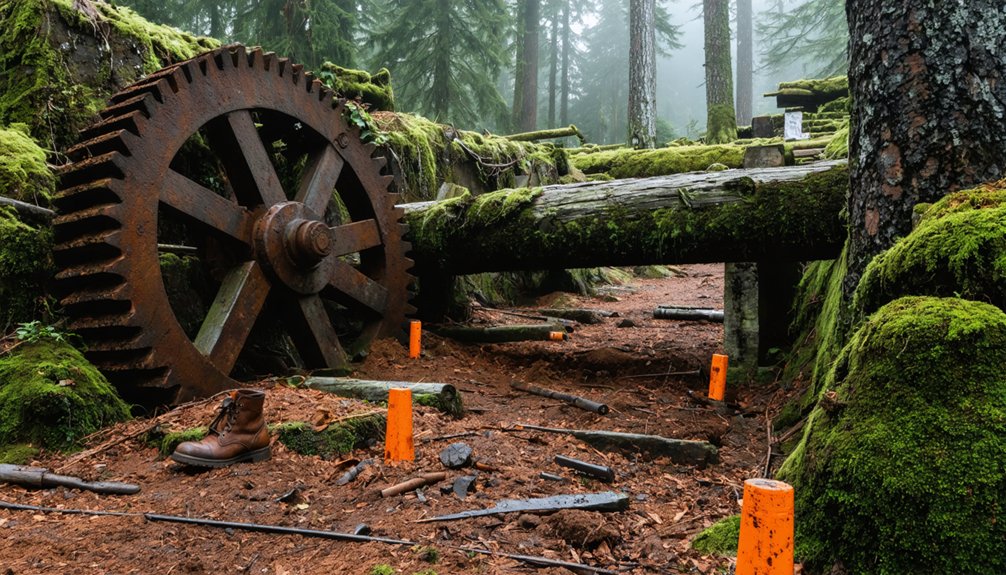
While traditional historical narratives often emphasize the economic impact of the lumber industry, archaeological documentation provides a more nuanced window into the lived experiences of lumberjack communities.
You’ll gain richer insights by combining multiple documentation techniques: traditional excavation with metal detector surveys, magnetometry, and high-precision GPS mapping. These methods reveal subsurface features and structural remains with minimal site disturbance.
Structure-from-Motion photogrammetry enhances your documentation by creating detailed 3D reconstructions that facilitate precise site mapping.
For thorough understanding, integrate your artifact analysis with archival research—maps, photographs, court records, and technical bulletins provide essential context.
This triangulated approach, validating physical evidence against written and oral records, enables you to reconstruct settlement patterns and challenge existing historical narratives, particularly when discrepancies emerge between documented accounts and archaeological findings.
Examining material culture like the charred animal bones found at Maxville provides crucial evidence of dietary adaptations and connections to the local environment.
Recent excavations at the Wanaki Logging Camp near Cass Lake, Minnesota have revealed seven structural ruins that offer valuable insights into early 20th century logging camp organization.
Establishing Heritage Museums to Preserve Lumberjack Culture
Because physical remnants of lumber towns continue to disappear at an alarming rate, establishing dedicated heritage museums represents a critical intervention in preserving North America’s vanishing lumberjack culture.
Among these, ghost towns near Yellowstone National Park offer a unique glimpse into the past, showcasing the challenges faced by early settlers in the rugged landscape. Visiting these sites allows us to appreciate the intricate histories and stories behind each town. As we explore these remnants, we gain insight into the cultural shifts that accompanied the rise and fall of these communities.
You’ll find that successful preservation demands multi-sensory approaches—combining authentic structural preservation with interactive cultural exhibits that demonstrate period tools and techniques.
Consider incorporating hands-on demonstrations of sawing and axe-handling alongside reconstructed bunkhouses and cook shacks to immerse visitors in the complete lumberjack experience. Museums should include video presentations like Stump to Ship that document the comprehensive logging process from forest to mill. Showcasing the physically demanding profession of logging helps visitors appreciate the hardiness required of historical timber workers.
Heritage education thrives when community stakeholders participate in programming—volunteer docents from logging families can provide intergenerational knowledge transfer through interpretive storytelling.
Partner with local schools to develop curriculum that contextualizes regional economic development through the lumber industry lens.
Transforming Abandoned Mill Structures Into Community Spaces

Abandoned mill structures, once the lifeblood of North America’s booming lumber industry, now present extraordinary opportunities for community revitalization through adaptive reuse strategies.
You’ll find success by prioritizing the preservation of original architectural elements while incorporating modern amenities—a balance achieved in projects like Royal Mills and Massachusetts Mills, which transformed into vibrant residential complexes.
Consider how community engagement can naturally activate these spaces; informal gatherings, public art installations, and partnerships with local organizations sustain long-term significance.
The economic benefits are substantial: mill conversions create affordable housing options, employment opportunities, and new commercial spaces that attract visitors. Successful restoration projects can increase property tax values ten times greater than those of underutilized buildings, significantly boosting local government revenues.
Like the Aerosol Techniques Factory, many of these sites provide unique canvases for graffiti artists seeking creative expression.
You’ll need to navigate challenges including environmental remediation, funding complexities, and ownership disputes, but the payoff—a revitalized community centerpiece that honors your town’s industrial heritage while meeting contemporary needs—is worth the investment.
Developing Forest-Based Tourism Opportunities
When historic lumberjack communities face economic decline, forest-based tourism emerges as a powerful revitalization strategy that leverages existing natural assets. By transforming your region’s forestland into a destination, you’ll create sustainable economic opportunities while preserving natural heritage. Consider incorporating forest bathing experiences that promote visitor well-being through mindful immersion in nature.
Implementing well-designed forest trails and eco-friendly accommodations balances conservation with accessibility.
For ideal economic and environmental outcomes:
- Engage local communities in infrastructure development, particularly in trail maintenance and cultural interpretation services.
- Establish partnerships between government entities and local entrepreneurs to diversify tourism offerings beyond traditional hiking.
- Implement visitor fee structures that directly fund conservation efforts while creating employment opportunities in guiding and hospitality.
This approach not only generates revenue but empowers communities through entrepreneurship in sectors like accommodation, cultural experiences, and artisanal crafts—creating a self-sustaining economic ecosystem. Consider signing up for the Accelerator Programme to receive tailored advice from specialists on sustainable tourism initiatives.
Building Local Partnerships for Long-Term Sustainability
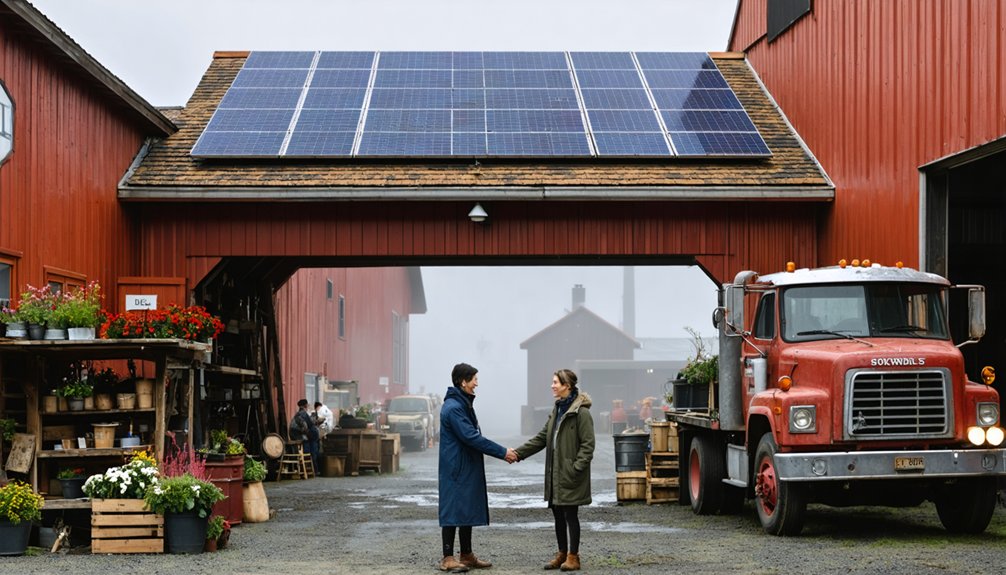
Successful revitalization of historic lumberjack towns hinges on the establishment of robust local partnerships that transcend traditional institutional boundaries.
You’ll need to forge connections between local governments, businesses, educational institutions, and community organizations—including tribal entities whose perspectives are essential for equitable outcomes.
Prioritize community engagement through public meetings and transparent decision-making processes that center historically marginalized voices.
Local collaboration should extend to federal and state agencies that provide vital funding and technical assistance through programs like the USDA Forest Service initiatives.
Develop public-private partnerships to drive innovation and share investment, particularly in areas like sustainable timber housing.
Guarantee sustainability by institutionalizing these collaborative structures with formal agreements and governance frameworks that adapt to changing community priorities while maintaining accountability to your residents.
Frequently Asked Questions
How Much Does a Typical Heritage Town Restoration Project Cost?
Penny for your thoughts, you’re facing a restoration budget ranging from $1-50 million. Your project funding typically blends public-private partnerships, with cost variables determined by scale, scope, and infrastructural rehabilitation requirements.
Can Former Lumber Towns Qualify for Specific Federal Preservation Grants?
Yes, former lumber towns can qualify for federal funding through HPF grants if they meet preservation eligibility criteria related to historical significance, architectural integrity, and cultural relevance to America’s industrial development trajectory.
What Safety Regulations Apply When Repurposing Century-Old Industrial Buildings?
Walking a tightrope of regulations, you’ll navigate building codes requiring fire safety systems, hazardous materials remediation, structural reinforcements, and accessibility upgrades while balancing historical preservation considerations for your century-old industrial freedom project.
How Do You Resolve Land Ownership Disputes in Abandoned Communities?
You’ll need to examine legal documentation, pursue adverse possession claims, apply agreed-boundary doctrines, and engage in court actions or mediation, while facilitating community engagement throughout the dispute resolution process.
What Sustainable Forestry Practices Complement Heritage Tourism Development?
You’ll enhance heritage tourism by implementing sustainable logging practices that showcase historical techniques while ensuring ecosystem integrity, complemented by eco-friendly tourism infrastructure that minimizes environmental impact and maximizes authentic cultural experiences.
References
- https://www.woodsplitterdirect.com/blogs/wsd/a-history-of-maine-logging
- https://blog.stormykromer.com/2023/08/21/upper-peninsula-lumber-history/
- https://www.historylink.org/file/23080
- https://npshistory.com/publications/voya/logging-lumbering-shs.pdf
- https://en.wikipedia.org/wiki/History_of_the_lumber_industry_in_the_United_States
- https://www.opb.org/article/2020/09/22/timber-wars-episode-4-mill-city/
- https://www.mnhs.org/foresthistory/learn/logging
- https://msaf.forest.mtu.edu/ForestInfo/MSUElibrary/LumberingInMichigan.PDF
- https://www.midwestarchaeology.org/sites/default/files/ABSTRACTS_0.pdf
- https://minds.wisconsin.edu/bitstream/handle/1793/92814/Flannery_uwm_0263m_10477.pdf?sequence=1&isAllowed=y