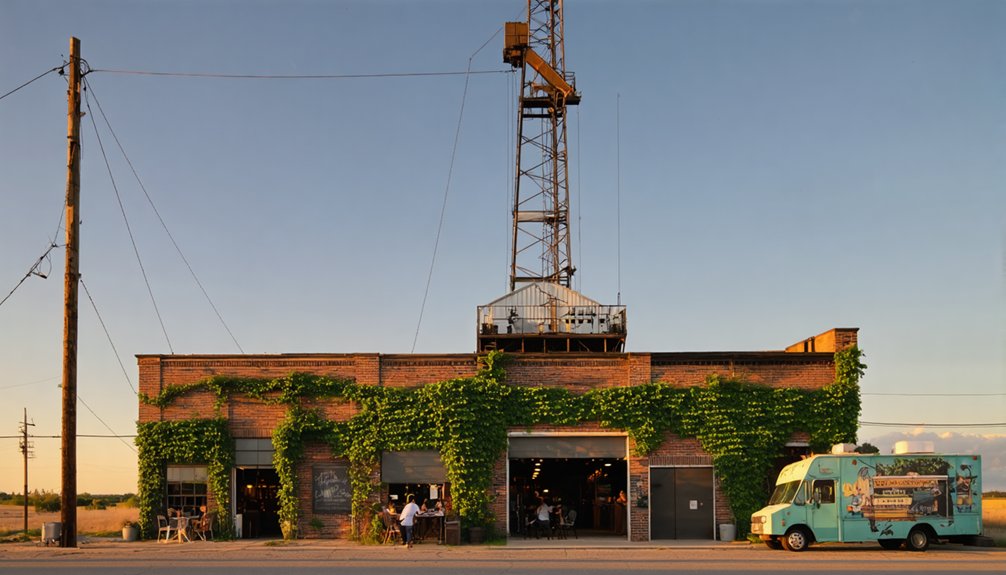
To revive forgotten oil towns, you’ll need to conduct a thorough asset inventory identifying all existing resources. Transform abandoned structures through adaptive reuse, saving up to 40% of landfill waste. Secure funding via public-private partnerships using layered models. Create walkable, vibrant public spaces that reflect local identity. Diversify your economy beyond oil by targeting high-value industries and investing in workforce development. These strategic approaches offer your community a sustainable path forward.
Key Takeaways
- Conduct a comprehensive asset inventory to identify existing resources that can be leveraged for economic diversification.
- Transform abandoned oil infrastructure through adaptive reuse strategies to create new business and community spaces.
- Develop strategic workforce training programs that align with emerging industries beyond the oil sector.
- Establish public-private partnerships to secure layered funding for revitalization projects.
- Create innovation hubs that foster entrepreneurship and attract investment to previously oil-dependent communities.
Conducting a Comprehensive Community Asset Inventory
Resurrection of oil towns begins with a thorough accounting of existing resources.
You’ll need to categorize assets using established frameworks—natural, built, social, economic, and institutional groupings provide extensive coverage. The Whole Assets Approach offers an alternative structure that can reveal overlooked resources.
Implement diverse identification methods through asset mapping activities.
Combine walking tours with community engagement events where residents photograph valuable local features. Deploy surveys and interviews to uncover hidden assets that physical observation might miss.
Document everything from natural resources (oil reserves, water sources) to built infrastructure (industrial parks, pipelines) and social capital (skilled workers, industry knowledge). Identifying vulnerabilities in network reliance can help develop targeted strategies for economic diversification.
This inventory becomes your foundation for strategic planning, helping you identify competitive advantages and target investment opportunities that align with your community’s unique strengths.
Transforming Abandoned Structures Into Community Resources
While abandoned structures often represent the visible scars of economic decline, they also offer tremendous potential for community revitalization in oil towns.
Consider adaptive reuse strategies for your industrial buildings—preserve factory shells for offices or event spaces, highlighting historic features like exposed beams. You’ll reduce landfill waste by up to 40% compared to new construction.
Former gas stations on prime roadways make excellent small business locations with existing utilities already in place.
Decommissioned oil infrastructure can serve higher purposes: rigs become artificial reefs supporting marine ecosystems, while tank farms transform into green spaces or affordable housing. The Rigs-to-Reefs program has successfully converted over 600 platforms into thriving marine habitats in the Gulf of Mexico alone.
These repurposed structures require thorough cleaning of residual chemicals to prevent environmental contamination and ensure community safety.
Prioritize community engagement throughout the process.
Successful projects align with local needs, stimulate economic growth, and preserve industrial heritage while creating health clinics, recreational facilities, and public spaces that serve modern community functions.
Securing Strategic Funding Through Public-Private Partnerships
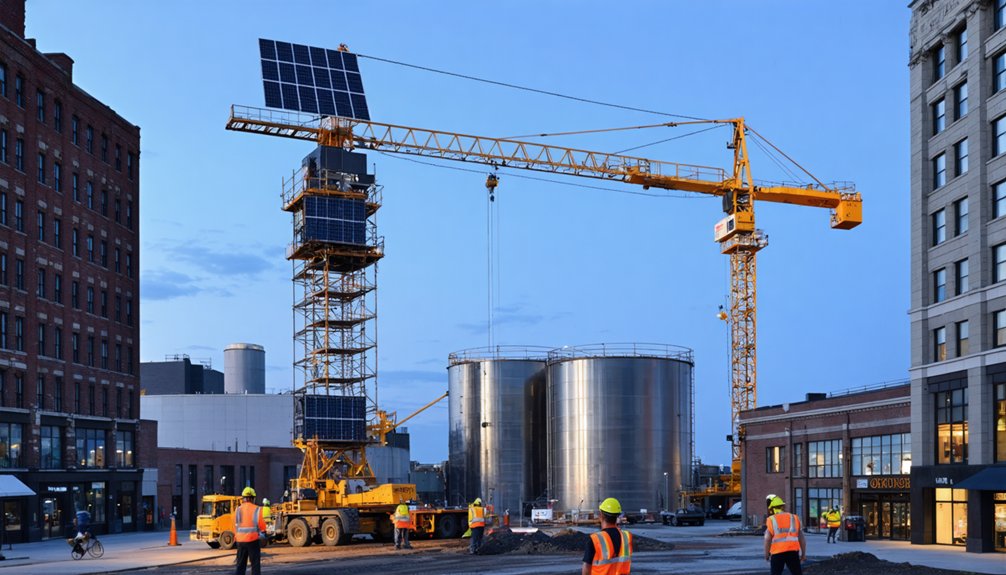
Securing funding presents perhaps the greatest hurdle when revitalizing abandoned oil towns, yet public-private partnerships (PPPs) offer a powerful mechanism to overcome financial barriers.
You’ll need to implement layered funding models combining public grants, private investments, and tax incentives like TIF to finance initial development costs.
Success hinges on early stakeholder engagement—bring local businesses, regional authorities, and community members into planning discussions.
Early community involvement transforms stakeholders from observers into champions for redevelopment initiatives.
Consider establishing special assessment districts where private entities contribute directly through bonds backed by anticipated property value increases. This approach worked effectively in the CityArchRiver project, which blended public funding with private donations.
For complex projects, implement phased development to manage risks while building investor confidence through transparent processes and long-term agreements.
Regional cooperation remains essential, particularly when revitalization requires shared infrastructure across multiple jurisdictions.
Lessons from Mozambique show that strong government commitment and institutional reform are critical for successful infrastructure development through PPPs.
Washington D.C.’s NoMa neighborhood transformation demonstrates how strategic PPPs can generate billions in economic output while creating thousands of jobs.
Creating Vibrant Public Spaces That Attract New Residents
Creating vibrant public spaces forms the cornerstone of successful oil town revitalization, transforming derelict industrial areas into magnetic community hubs that drive population growth.
You’ll need to prioritize walkable neighborhoods with widened sidewalks, safe crosswalks, and multi-use trails connecting key amenities.
Exploring hidden gems along the east coast can enhance your experience, as these neighborhoods often feature unique local businesses and charming parks. Additionally, you’ll find a variety of dining options that highlight the region’s rich culinary heritage. Embracing the local culture can make your walks even more enjoyable.
Develop mixed-use developments that combine retail, dining, and residential components, ensuring essential services remain within walking distance of communal areas.
Remediate contaminated soils while introducing native plantings and green infrastructure that support both environmental healing and climate resilience.
Engage residents in participatory planning processes to reflect local identity through public art and heritage features.
Address historical inequities by prioritizing green space development in underserved neighborhoods, ensuring your revitalized spaces welcome all socioeconomic groups with free recreational amenities and proper lighting for safety.
Creating interactive waterfront experiences that adapt to seasonal changes encourages visitors to explore local ecological assets while fostering community ownership of these public spaces.
Incorporate spaces for Indigenous ceremonies and cultural education to honor Native Nations’ heritage and promote inclusive community gathering areas.
Fostering Economic Resilience Beyond the Oil Industry
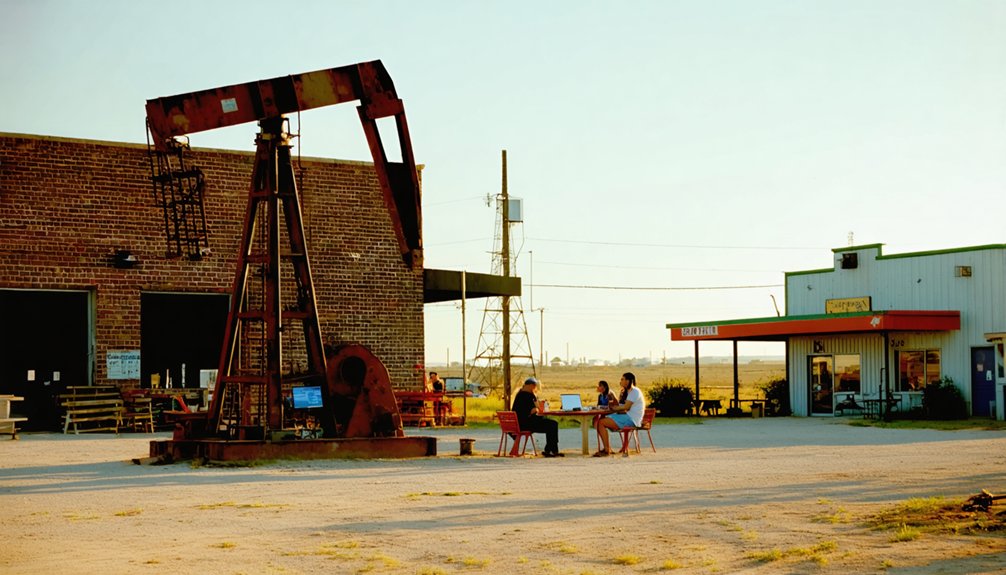
Economic resilience in former oil towns hinges on building diverse, sustainable revenue streams that withstand energy market volatility.
You’ll need to implement strategic sectoral diversification, targeting high-value industries like precision manufacturing, clean technologies, and financial services that leverage your region’s existing strengths.
Invest in critical infrastructure upgrades—modernize transportation networks, expand digital connectivity, and develop renewable energy capacity through public-private partnerships.
These improvements will attract non-oil investments and support emerging businesses.
Prioritize workforce development through education reforms, vocational training, and partnerships with international institutions.
Your workforce must be equipped with skills that match future industry needs.
Similar to Saudi Arabia’s approach, consider establishing sector skills councils to ensure education outcomes are closely aligned with industry needs.
Many Gulf states have successfully pursued a balanced approach to energy transition while maintaining economic stability and preventing unemployment.
Establish innovation hubs and incubators to nurture entrepreneurship, while implementing supportive policy frameworks that incentivize private sector growth.
This thorough approach will transform your oil-dependent economy into a resilient, diversified powerhouse.
Frequently Asked Questions
How Long Does a Typical Oil Town Revitalization Project Take?
Like a phoenix rising, your oil town revival will typically span 5-20 years. Project timelines vary based on scope, with community involvement extending planning phases but ensuring sustainable transformation through phased implementation.
What Environmental Health Risks Remain After Oil Well Remediation?
You’ll still face groundwater contamination, soil pollution, persistent methane emissions, and potential oil spill residue. These hazards can affect drinking water, air quality, and ecosystem recovery for decades post-remediation.
Can Residents Stay During Major Infrastructure Redevelopment Phases?
You’ll likely face relocation during major infrastructure redevelopment due to safety and legal requirements. Advocate for temporary housing options and robust community engagement to protect your rights throughout the displacement process.
How Do You Overcome Resistance From Long-Term Residents to Change?
Isn’t resistance often rooted in legitimate concerns? You’ll overcome it through early community engagement, transparent decision-making, and demonstrating tangible benefits. Trust building requires listening to residents’ perspectives while integrating their values into development plans.
What Metrics Best Measure Successful Community Revitalization?
You’ll want to measure economic growth indicators like business retention and property values alongside community engagement metrics tracking participation rates, public space usage, and inclusive development that prevents displacement.
References
- https://www.ksmithresearch.com/permian
- https://www.youtube.com/watch?v=FHHiSYUo35Y
- https://montrose-env.com/blog/strategies-to-revitalize-americas-abandoned-properties-and-legacy-neighborhoods/
- https://jpt.spe.org/texas-has-thousands-of-abandoned-oil-and-gas-wells-who-is-responsible-for-cleaning-them-up
- https://www.columbian.com/news/2012/may/08/oil-boom-resurrects-north-dakota-ghost-town/
- https://www.hppr.org/hppr-economy-and-enterprise/2014-03-07/plentiful-domestic-crude-oil-brings-a-refining-revival-to-kansas-and-texas
- https://www.motherjones.com/environment/2014/10/inside-north-dakotas-crazy-oil-boom/
- https://www.route-fifty.com/management/2021/06/restoring-land-around-abandoned-oil-and-gas-wells-would-free-millions-acres-forests-farmlands-and-grasslands/174601/
- https://communitydevelopment.ces.ncsu.edu/wp-content/uploads/2014/08/Asset-Mapping.pdf?fwd=no
- https://blogs.extension.wisc.edu/community/files/2025/04/Capital-Asset-Inventory-Tool.pdf