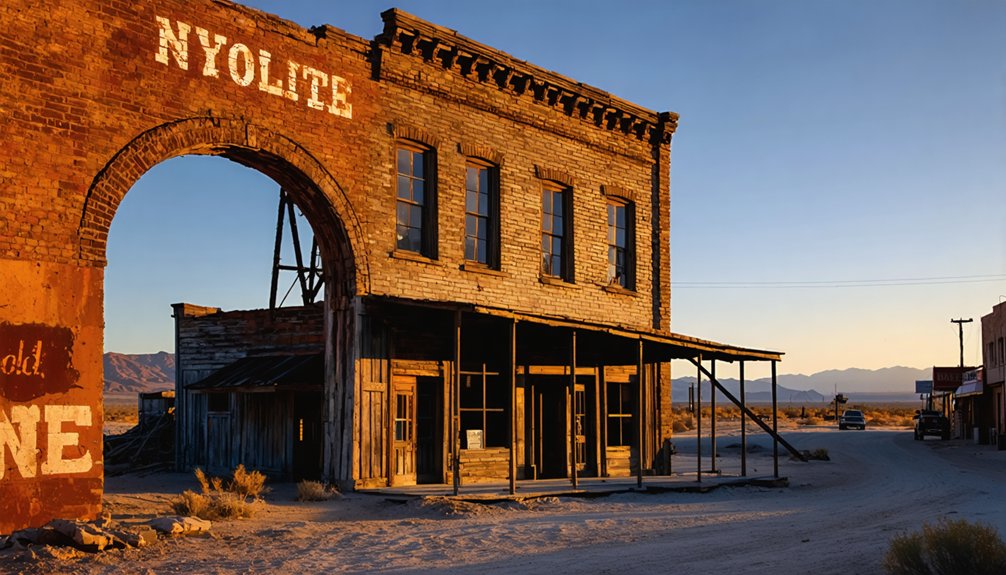
When exploring reviving industrial metropolises, prioritize safety by checking structural integrity and carrying a flashlight. Seek out adaptive reuse projects that preserve historical elements while serving as cultural hubs. Support local businesses to drive economic development, especially minority-owned enterprises. Capture architectural contrasts with wide-angle lenses and natural lighting. Engage with community-led initiatives through participation in neighborhood coalitions and design feedback sessions. These approaches will transform you from tourist to informed urban explorer.
Key Takeaways
- Prioritize safety when exploring industrial sites by checking structural integrity and carrying necessary equipment like flashlights.
- Engage with community-led initiatives transforming abandoned factories into cultural venues and public spaces.
- Support local businesses, especially minority-owned enterprises, to contribute to sustainable economic revitalization.
- Document urban renewal through photography that ethically represents both historical elements and contemporary transformations.
- Participate in community planning processes to ensure infrastructure developments reflect residents’ needs and prevent displacement.

While exploring historical industrial districts, you’ll need to be acutely aware of the unique safety challenges these environments present. The remnants of early manufacturing—exposed machinery, unguarded belts, and deteriorating infrastructure—demand vigilance at every turn.
Before entering any historical industrial space, assess structural integrity. Look for corroded metal supports, rusted beams, and signs of water damage that could compromise safety. Watch for asbestos and lead paint in older buildings, common hazards that require proper protective equipment. Be aware that many historical sites may contain dangerous chemical residues from manufacturing processes that once went unregulated. The lack of comprehensive safety standards during the industrial revolution led to factory designs with inherent dangers that persist in these spaces today.
Always carry a flashlight to illuminate poor lighting conditions and identify potential tripping hazards. Establish an exit strategy and communicate your exploration plans to someone outside.
Remember that early industrial sites lacked the historical safety features we take for granted today—there may be minimal fire exits and unstable staircases without proper railings.
Uncovering Hidden Cultural Gems in Former Factory Spaces
Beyond the safety considerations of industrial exploration lies a world of cultural renaissance taking shape in these historic spaces.
Former factories worldwide have undergone remarkable adaptive reuse transformations—from Brooklyn’s metal foundry turned artistic venue to Bratislava’s heating plant now hosting cultural and gastronomic experiences.
When exploring these reimagined spaces, look for the intentional preservation of original industrial elements—exposed beams, brick walls, and machinery that tell the building’s story.
You’ll find these sites serve multiple cultural functions: art galleries, performance venues, community hubs, and creative workspaces often coexist under one roof.
The most successful projects balance historical authenticity with contemporary needs.
A delicate dance between preserving industrial character and meeting modern functionality creates truly transformative spaces.
They’re more than tourist attractions; they’re catalysts for local economic revitalization and community engagement, breathing new life into industrial heritage through cultural preservation.
Cape Town’s Zeitz Museum offers a particularly striking example with its galleries ingeniously carved from the honeycomb structure of a historic grain silo.
The adaptive reuse of these industrial sites not only preserves our connection to the past but also significantly contributes to environmental sustainability by saving construction materials and reducing urban sprawl.
Supporting Local Businesses in Transitioning Economies

As industrial cities undergo economic transformation, supporting local businesses becomes critical to sustainable revitalization efforts. Your local investments create outsized impact—68% of every dollar spent at small businesses stays in the local economy compared to just 43% at large retailers.
These enterprises collectively contribute 44% to national GDP while facing significant challenges.
Consider forming business partnerships with neighborhood entrepreneurs who often reinvest in community development. Small businesses represent over 99% of all businesses in the U.S. and employ nearly half of all private sector workers. You’ll find most small business owners actively volunteer (76%) and donate to local causes (90%), strengthening civic infrastructure. Small business owners frequently provide in-kind contributions such as meeting spaces and excess inventory to support local charitable events.
Look for “one-stop-shop” resource centers that help navigate evolving economies. By supporting programs that connect large companies with underserved small businesses, you’re building economic resilience.
Participate in local chambers of commerce and advocate for inclusive pipelines that welcome non-traditional businesses to guarantee economic mobility for all.
Photographing Urban Renewal and Architectural Contrasts
Photographing the striking visual narratives of urban renewal requires both technical skill and artistic sensitivity to capture meaningful contrasts between past and present. Use wide-angle lenses to document architectural juxtapositions, employing leading lines to guide viewers through shifts from decay to revival.
Your composition techniques should leverage natural light filtering through abandoned spaces, creating dramatic chiaroscuro effects that highlight texture and depth. Consider long exposures (2-6 seconds) to contrast stillness in vacant buildings with movement in revitalized areas.
When documenting these changes, prioritize ethical representation by balancing aesthetic appeal with social commentary. Avoid glamorizing decline or gentrification; instead, incorporate human elements that tell authentic stories of community impact. Urban exploration communities often emphasize codes of conduct that respect both the locations and the histories they represent. Remember that selective framing can significantly impact public perception, as historical photographs have powerfully shaped narratives about neighborhoods undergoing renewal.
HDR techniques can effectively emphasize dramatic lighting contrasts, but should serve the narrative rather than merely creating visually striking images.
Engaging With Community-Led Revitalization Projects
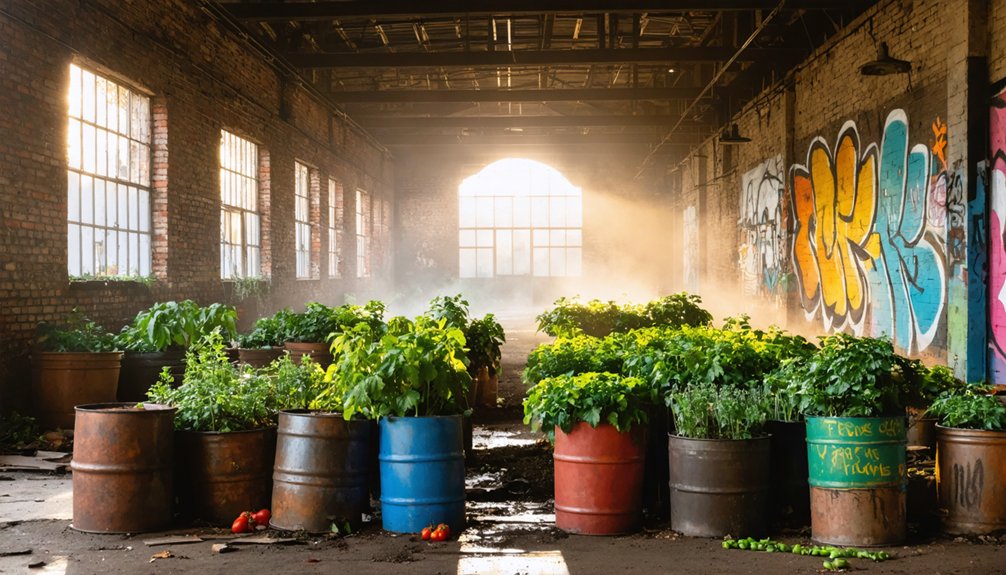
Community-led revitalization projects represent the cornerstone of sustainable urban renewal, transforming industrial cities through genuine civic engagement rather than top-down interventions.
When exploring these urban renaissance efforts, seek opportunities to participate in neighborhood coalitions that define local priorities and implement change.
You’ll find authentic project collaboration opportunities through community gardens, adaptive reuse initiatives, and local business support programs. Successful urban renewal, as seen in The Chattanooga Way, demonstrates how public engagement can reverse population decline while creating sustainable spaces.
Look for areas where residents are transforming underutilized spaces into vibrant community hubs or advocating for policy changes that prevent displacement. These initiatives often aim to undo systemic racism in housing and community development practices.
The most successful revitalization occurs when resources align with residents’ priorities.
Consider joining design feedback sessions for public infrastructure projects or supporting Black-owned businesses along commercial corridors.
Frequently Asked Questions
How Do Seasonal Changes Affect Access to Industrial Heritage Sites?
Seasonal accessibility to industrial heritage sites fluctuates, with 17% operating seasonally. You’ll find reduced winter access due to weather impacts, staffing limitations, and tourism patterns, especially at private and foundation-run sites.
Are There Apps Specifically Designed for Exploring Post-Industrial Cities?
Yes, you’ll find several exploration apps like Abandoned World, Haze Explr, and Urbexology designed specifically for urban discovery of post-industrial sites with filters, navigation support, and community-verified locations.
For those intrigued by a broader adventure, consider exploring abandoned towns in the great plains. These locations offer a haunting glimpse into the past, revealing forgotten histories and unique architecture. Many of these sites are accessible via dedicated exploration apps that can guide you through the eerie landscape while ensuring your safety.
What Permits Might I Need for Filming Abandoned Industrial Spaces?
Looking to capture industrial decay on camera? You’ll need property owner permissions, city film permits, liability insurance, and possibly special location releases. Always research local filming regulations before your expedition.
How Can I Identify Toxic Industrial Contaminants While Exploring?
You’ll identify toxic substances using handheld detectors, observing physical indicators like discoloration, and monitoring bodily reactions. Always prioritize safety precautions by wearing protective equipment and bringing monitoring instruments.
Which Industrial Cities Have Maintained Their Original Worker Housing Communities?
While you can’t visit every industrial heritage site, you’ll find remarkably preserved historic neighborhoods in Lowell, Coltsville, Manchester’s Ancoats district, Stockholm near Sofia Church, and Chicago, each maintaining authentic worker communities from different eras.
References
- https://sociology.institute/urban-sociology/evolution-industrial-cities-work-urban-environment/
- https://en.wikipedia.org/wiki/Industrial_city
- https://ibis.geog.ubc.ca/~ewyly/g350/industrial.pdf
- https://www.brookings.edu/wp-content/uploads/2018/04/2018-04_brookings-metro_older-industrial-cities_full-report-berube_murray_-final-version_af4-18.pdf
- https://www.ebsco.com/research-starters/social-sciences-and-humanities/city-and-industrial-revolution
- https://www.scienceandindustrymuseum.org.uk/objects-and-stories/worlds-first-industrial-city
- https://blr.com/resources/3-turning-points-in-the-history-of-workplace-safety/
- https://intrinsicallysafestore.com/blog/safety-standards-tracing-the-historical-evolution-of-safety-standards-in/
- https://safetylineloneworker.com/blog/history-of-workplace-safety
- http://urbandesignla.com/resources/docs/IndustrialCitywideDesignGuidelines/hi/IndustrialCitywideDesignGuidelines.pdf