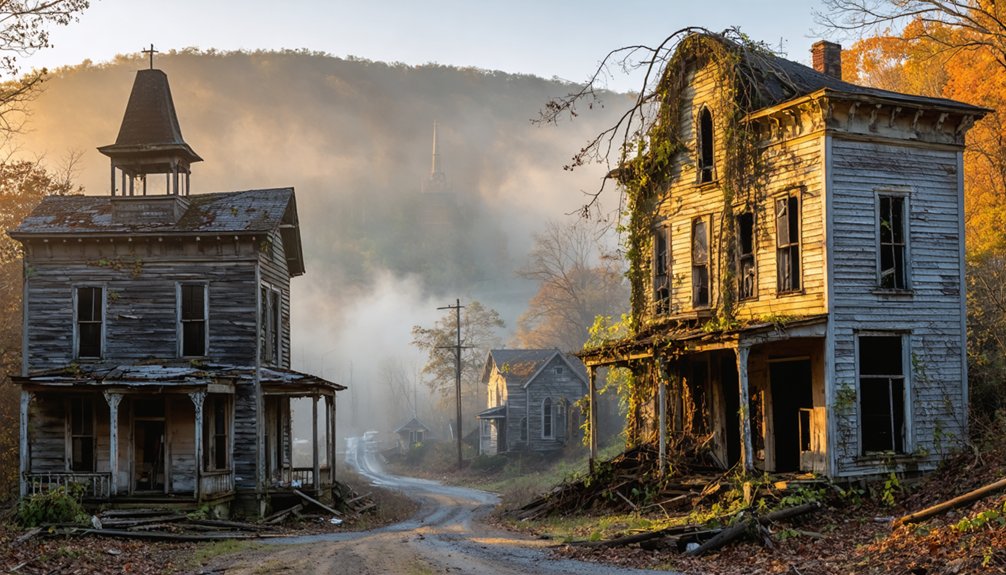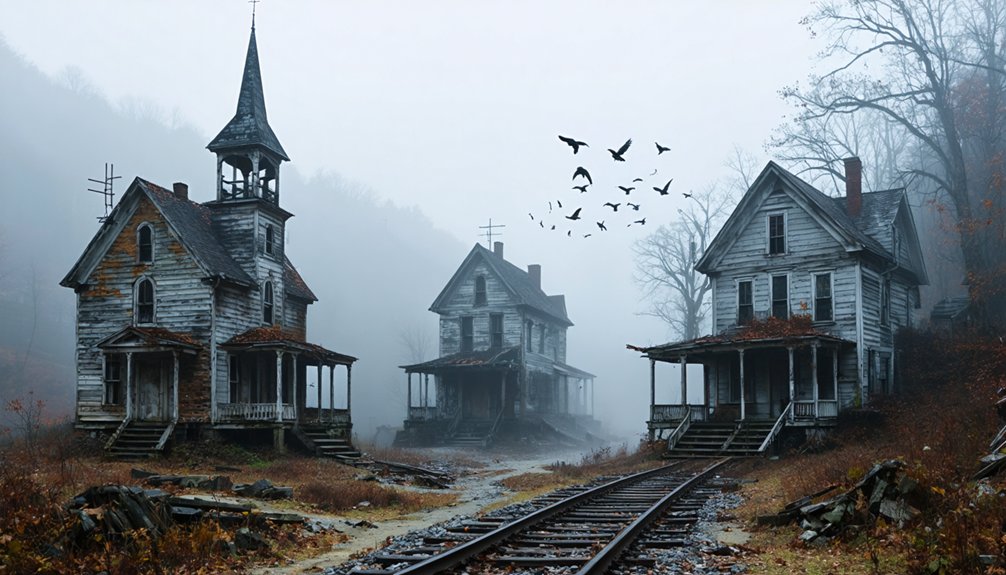
Appalachian ghost towns stand as haunting remnants of the coal mining boom from 1880-1930, when over 600 company towns dominated the landscape. You’ll find well-preserved sites like Thurmond, West Virginia and Elkmont’s restored structures showcasing early 20th-century life. These abandoned communities tell stories through rusted equipment, crumbling foundations, and local legends. Preservation efforts now transform these historical treasures into tourist destinations, breathing new economic life into places once trapped in boom-and-bust cycles.
Key Takeaways
- Hundreds of abandoned coal mining communities dot the Appalachian Mountains, remnants of the 1880-1930 boom period.
- Restoration projects like Elkmont preserve historical structures using original materials to maintain architectural authenticity.
- Towns like Dante, Virginia transform abandoned mine lands into recreational trails, creating new economic opportunities.
- Heritage tourism initiatives provide economic second lives to ghost towns through photography, exploration, and historical storytelling.
- Local communities, governments, and non-profit organizations collaborate on preservation efforts to protect Appalachian cultural identity.
The Rise and Fall of Company Towns in Appalachia
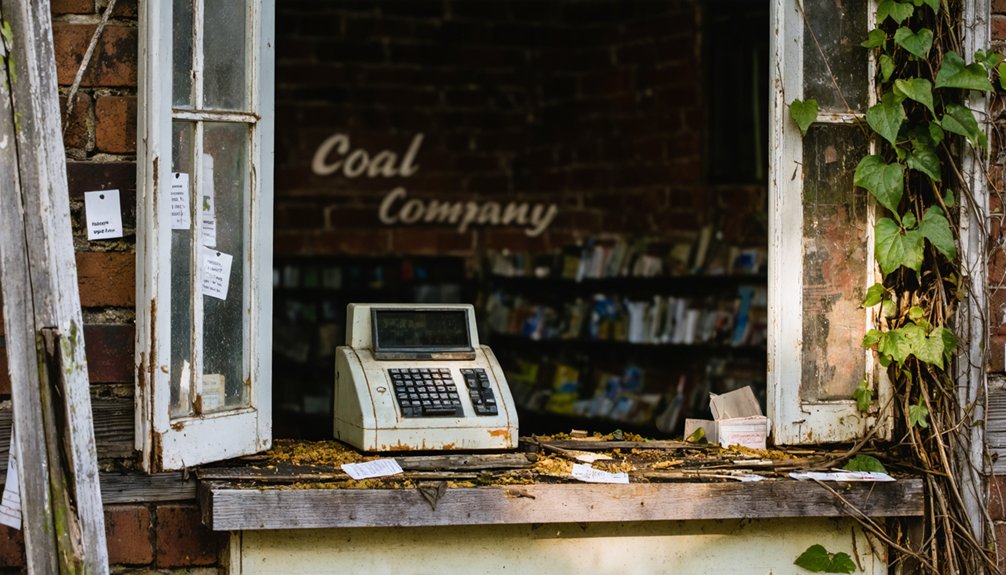
As the Industrial Revolution propelled America’s insatiable hunger for coal in the early 20th century, mining companies swiftly transformed the rugged Appalachian landscape by constructing entire communities virtually overnight.
You’d have found over 600 company towns dotting the mountains between 1880-1930, outnumbering independent settlements five to one.
These hastily-built communities featured identical wooden houses, company stores, and basic amenities—all controlled by coal corporations. The social structure revolved entirely around mining operations, creating tight-knit communities despite difficult circumstances. Towns like Thurmond and Clinchco became centers of vibrant community life despite their corporate origins.
Your life would’ve been marked by economic dependency, with companies controlling housing, goods, and even the currency you used. These communities often employed welfare capitalism as a strategic approach to delay unionization by providing benefits to workers.
When mines depleted or markets shifted, these towns collapsed as quickly as they arose. Companies abandoned operations, leaving behind empty buildings that now stand as haunting reminders of Appalachia’s industrial past.
Abandoned Treasures: Notable Ghost Towns Worth Exploring
Where can you find the most authentic relics of Appalachia’s industrial past? Thurmond history comes alive in this well-preserved ghost town where narrow streets and original buildings offer glimpses into its coal-boom heyday within New River Gorge National Park.
Step back in time at Thurmond, where a preserved coal-boom ghost town reveals Appalachia’s authentic industrial soul.
Nearby, Kaymoor trails lead adventurers down to moss-covered mining ruins, where iron and timber remnants tell stories of hard-won coal.
Cumberland memories live on only through annual gatherings, as its neighborhoods now rest beneath flood-control waters.
In Kentucky, Elkhorn architecture stands as a symbol of once-bustling rail culture, with empty dance halls echoing past revelry.
For true wilderness exploration, Lost Cove beckons with Civil War-era stone chimneys and moonshining lore. Loyston tells a similar story, having been completely submerged in 1935 when the Tennessee Valley Authority built Norris Dam. The Southern Appalachian Highlands Conservancy acquired 95 acres of this historic settlement to protect its natural and cultural significance.
These forgotten places aren’t just abandoned towns—they’re outdoor museums preserving Appalachia’s complex industrial heritage.
From Boom to Bust: Economic Forces Behind Ghost Town Formation
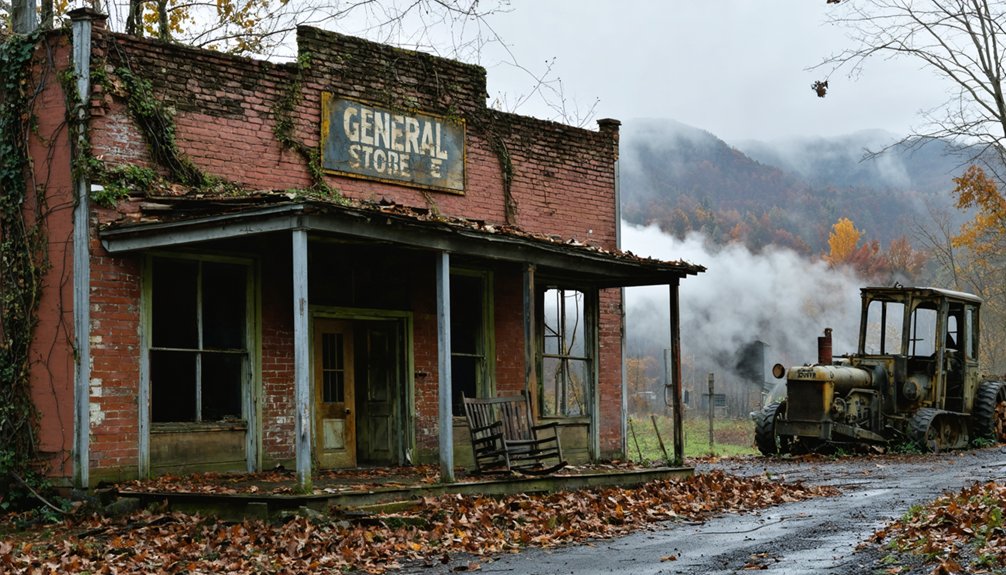
The transformation of vibrant Appalachian communities into ghost towns began not with whimpers but with explosive booms of industry. You can trace these towns’ origins to coal companies that constructed entire communities overnight—building homes, stores, and churches to support mining operations.
This rapid development created economic dependency by design. Companies paid workers in scrip usable only at company stores with inflated prices, trapping families in cycles of debt. Labor struggles emerged as miners earned less than their Northern counterparts while facing limited mobility. The payment system at Kmore exemplified this exploitative practice that severely restricted workers’ economic freedom. These conditions led to significant historical events like the Mine Wars of the early twentieth century where workers fought for better conditions.
When mines eventually dried up or became unprofitable, the economic foundation crumbled. Companies abandoned operations, trains stopped running, and populations fled. The single-industry dependency that built these towns ultimately sealed their fate, leaving behind empty buildings as monuments to boom-and-bust economics.
Preserving Mountain Heritage: Restoration Projects and Historical Sites
Ghost towns scattered throughout Appalachia have found new life through carefully orchestrated preservation efforts that balance historical accuracy with sustainable futures.
You’ll find this heritage conservation exemplified in Elkmont, where painstaking restoration began in 2009, salvaging 19 historic structures through meticulous three-year cabin restorations that honor original materials and techniques.
Similar transformations dot the region: Dante, Virginia converted abandoned mine lands into recreational trails, while The Cumberland Forest Project manages 253,000 acres across three states. These transformations represent a small fraction of the estimated 850,000+ acres of damaged abandoned mine lands still awaiting remediation.
St. Paul’s community-driven revitalization demonstrates how small towns reclaim their historical significance through ecotourism initiatives like the Wetlands Estonoa center. The Friends of the Smokies established a $9 million endowment to support ongoing preservation work.
These projects guarantee Appalachian communities’ contributions remain documented through oral histories and walking tours, creating vibrant connections between past mining infrastructure and contemporary mountain identity.
Haunting Beauty: Photography and Tourism in Forgotten Communities

Hauntingly frozen in time, Appalachia’s forgotten communities have emerged as compelling subjects for photographers and tourists alike, drawn to the poetic decay and historical resonance these sites embody.
Through photographic storytelling, explorers capture rusted mining equipment and crumbling foundations, creating tangible evidence of past settlements before nature reclaims them completely.
You’ll find these visual nostalgia destinations increasingly accessible through heritage tourism initiatives that have given abandoned towns economic second lives. Elkmont’s restoration plans have preserved 19 historic buildings that showcase early 20th-century architecture.
Places like Thurmond, West Virginia offer you “untouched slivers of American history,” while Blue Heron Mining Community features metal shell structures with recordings of former inhabitants.
Some adventurous spirits even dive Lake Jocassee’s waters to explore submerged ghost towns with visibility reaching 50 feet. The submerged Attakulla Lodge, which remarkably resisted bulldozers before flooding, remains a fascinating underwater landmark for divers.
Whether hiking Lost Cove’s trails or walking Thurmond’s narrow streets, these preservation efforts guarantee forgotten mountain voices remain heard.
Frequently Asked Questions
Are There Paranormal Encounters Reported in Appalachian Ghost Towns?
Yes, you’ll find abundant paranormal encounters in these towns. Haunted legends persist through generations, while spectral sightings—from shadowy figures to glowing eyes—continue to challenge your understanding of these abandoned historical landscapes.
Exploring haunted locations across the United States offers a unique glimpse into the eerie and mysterious history of each site. From ghostly apparitions in old theaters to whispering winds in forgotten cemeteries, these experiences enrich our understanding of the past. Every town holds secrets that beckon adventurous souls to uncover the stories behind their haunted reputations.
How Safe Are Abandoned Structures for Visitors to Explore?
Abandoned structures pose serious dangers to your freedom-seeking spirit. You’ll face compromised structural integrity, wildlife encounters, potential legal consequences, and health hazards—all reminders that these buildings weren’t abandoned without reason.
What Survival Items Should Hikers Bring to Remote Ghost Towns?
Like ghosts needing a vessel, you’ll need hiking essentials: map, compass, first-aid kit, water filter, multi-tool, flashlight, sturdy boots, and emergency supplies for safely traversing these crumbling time capsules of Appalachian history.
Can Metal Detectors Be Legally Used at Ghost Town Sites?
No, you can’t freely use metal detectors in ghost towns. Metal detecting regulations prohibit use at historically registered sites, and historical preservation laws require permits for most locations—regardless of how abandoned they appear.
Which Ghost Towns Offer Accessibility Options for Visitors With Disabilities?
Like peering through a historic window, Elkmont in Great Smoky Mountains and Thurmond in West Virginia offer accessible trails and wheelchair friendly facilities with paved areas, accessible restrooms, and interpretive signage at viewing height.
References
- https://www.youtube.com/watch?v=4oHlJFXbrCk
- https://www.geotab.com/ghost-towns/
- https://smokymountainnationalpark.com/blog/fun-facts-about-elkmont-ghost-town/
- https://appalachianmemories.org/2025/10/16/the-lost-towns-of-appalachia-the-forgotten-mountain-communities/
- https://www.blueridgeoutdoors.com/go-outside/southern-ghost-towns/
- https://www.appalachianplaces.org/post/appalachia-s-other-company-towns
- https://dsi.appstate.edu/projects/mountain-music/topics/industrialization
- http://www.cpreview.org/articles/2025/5/king-coals-last-reign-how-corporate-greed-keeps-appalachia-underdeveloped
- https://coalheritage.wv.gov/coal_history/Pages/Company-Towns.aspx
- https://www.100daysinappalachia.com/2021/09/commentary-appalachia-can-prove-company-towns-dont-lift-the-working-class/