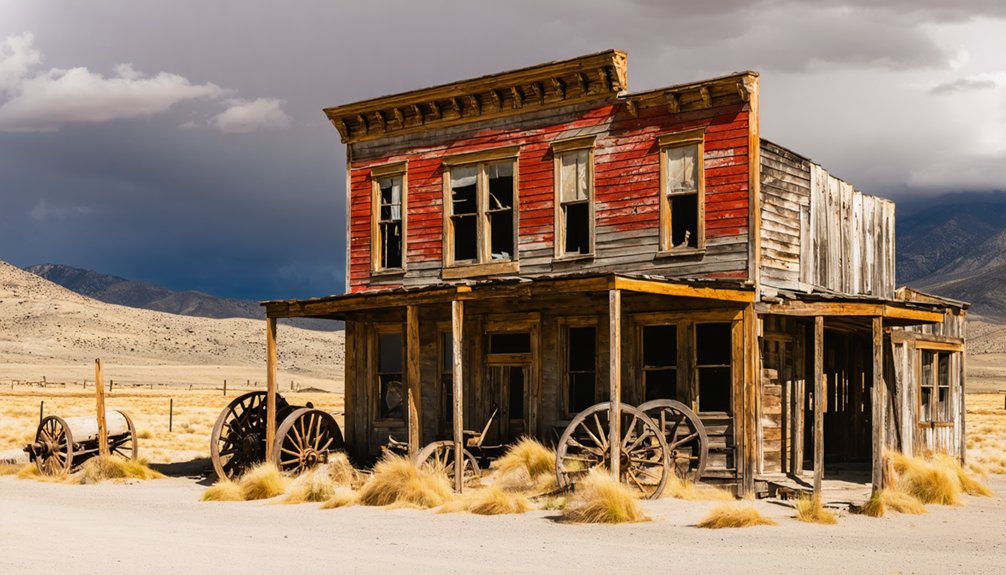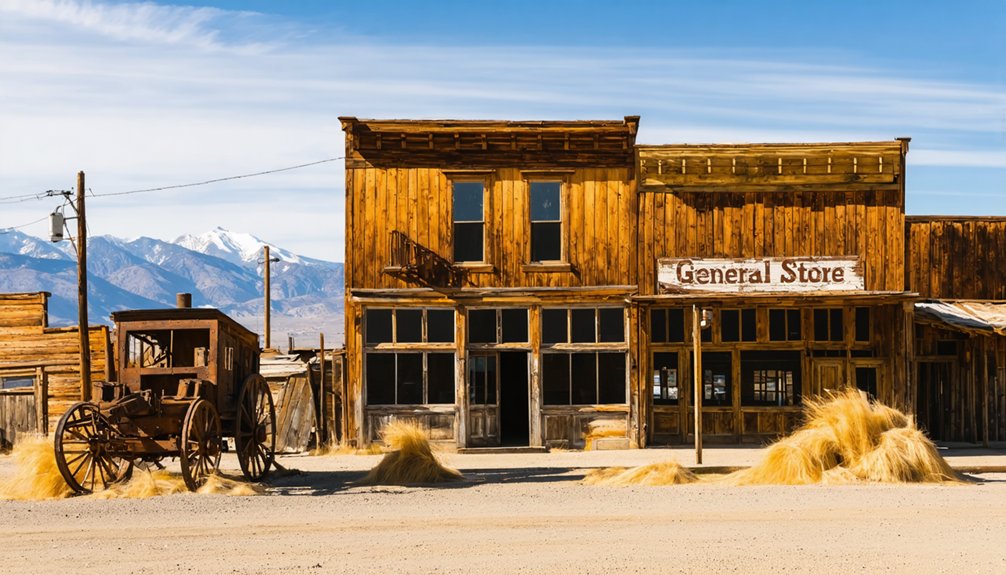
Ghost towns historically collapsed when their single economic engine failed—mines depleted, railroads rerouted, or factories closed—triggering unemployment spikes that decimated tax revenues and forced resident flight. You’re now seeing a fundamental shift: modern cities don’t die from resource exhaustion but from deliberately pricing out their middle class through unsustainable costs. When San Francisco lost 60,000 residents between 2020-2023 despite having thriving tech industries, it revealed how high housing costs, elevated taxes, and living expenses create self-reinforcing abandonment cycles that mirror historic mining town collapses through entirely different mechanisms.
Key Takeaways
- Historic ghost towns collapsed when economic anchors disappeared: mines depleted, railroads rerouted, or single factories closed, eliminating primary employment sources.
- Single-industry dependence created cascading failures, with unemployment spiking from 4.2% to 10.9% after major employer closures, triggering population exodus.
- Modern urban decline differs from historic patterns, driven by cities pricing out residents through high costs rather than resource depletion.
- Infrastructure becomes unsustainable as populations shrink, creating self-reinforcing cycles where declining tax bases force rate increases that accelerate resident flight.
- Economic shocks eliminate geographic advantages cities once commanded, with remote work and housing costs redistributing populations away from traditional urban centers.
When Single Industries Collapse: The Domino Effect on American Cities
A single factory closure doesn’t just eliminate paychecks—it triggers an economic cascade that can hollow out entire communities. When Newton’s mill shut down in 2008, it didn’t merely eliminate 208 jobs immediately—unemployment rocketed from 4.2% to 10.9% within two years.
This pattern of single employer dependency has devastated towns across America. Graniteville’s industrial collapse pushed unemployment to 7.8% throughout 2008, while economic diversification challenges left these communities with no safety net.
The Rustbelt cities—Cleveland, Pittsburgh, Detroit—watched populations hemorrhage as manufacturing evaporated. Selma’s population plummeted from 20,000 to 16,000 between 2010 and 2025. When your town’s economic foundation rests on one industry, you’re not building prosperity—you’re constructing a house of cards waiting for the inevitable wind.
How the Housing Bubble Created Modern Ghost Towns
While factory closures carved out Rustbelt ghost towns over decades, the 2008 housing bubble achieved the same devastation in mere months. You’ll find the evidence in South Florida’s 23,000 new condo units built between 2003-2007, with neighboring counties adding 18,000 more. This overbuilding during boom times created excess housing inventory that couldn’t survive market corrections.
When prices crashed 30-60%, you witnessed foreclosure activity surge 72% in some areas. Phoenix’s domestic inflow collapsed from 32,600 in 2022 to under 2,000 by 2024. USPS data revealed 16.4% more declining zip codes than pre-recession periods, concentrated in southwestern cities and outer suburbs. New Orleans hit 22.9% vacancy, while developers abandoned Las Vegas projects mid-construction, leaving desert communities without basic municipal services.
The Mass Exodus: Population Decline Patterns Across Urban America
You’ll notice the 2024-2025 population growth slowdown—0.5% compared to the previous year’s 1.0%—reveals how abruptly migration patterns can shift when economic conditions change. The 54% drop in net international migration, from 2.7 million to 1.3 million, stripped 40 states of their primary growth engine and exposed which urban centers depended entirely on newcomers to offset resident departures.
This volatility matters because economic shocks don’t just slow growth—they reverse decades of urbanization momentum, particularly when remote work eliminates the geographic premium cities once commanded.
Economic Shocks Trigger Outmigration
Economic shocks don’t simply nudge populations—they fundamentally reshape urban geography through cascading waves of outmigration that can reverse decades of growth. You’re witnessing this transformation in Chicago, where labor market fluctuations erased all 2010s gains, leaving it with fewer residents than a decade prior.
New York’s domestic outflow of 119,198 residents between July 2024-2025 reveals how economic uncertainty triggers systematic departures, despite international arrivals offsetting losses. These demographic composition shifts aren’t temporary—37 major cities that grew throughout the 2010s now experience sustained population decline.
The pattern intensifies when examining metros like Los Angeles, which lost 99,979 domestic residents, and Miami’s 67,418 outflows. Without international migration buffering these exits, cities like Washington, Philadelphia, and Boston would face absolute population contraction.
Remote Work Reshapes Cities
Remote work permanently altered the calculus of urban living, triggering the largest voluntary redistribution of American populations since westward expansion. You witnessed New York City shed 500,000 residents while Dallas absorbed 152,000—evidence that geographic constraints no longer bound economic opportunity.
The shift in population dynamics accelerated dramatically: San Francisco declined 7%, yet Austin surged 32.8% among million-plus metros. Housing market impacts proved decisive as telecommuters exchanged $3,000 Manhattan apartments for Texas mortgages. By 2023, the exodus slowed—San Francisco gained 1,200 residents, New York’s outflow improved by 34,000. Yet damage persisted: Northeast urban areas remained 150,000 residents below 2020 levels. Remote work didn’t destroy cities; it revealed which ones justified their premium pricing.
Natural Disasters and Pandemics as Economic Catalysts
When catastrophic events strike a settlement, the immediate economic shock often proves less destructive than the cascading failures that follow. You’ll find that GDP drops of 0.7 to 3.0 percent pale against the structural damage: 15 to 40 percent of affected businesses never reopen, triggering supply chain collapses that eliminate supporting industries.
Hurricanes drive the wealthiest residents away first—those with relocation resources—leaving behind concentrated poverty and depleted tax bases. Without diversification of economic base, communities dependent on single industries face irreversible decline when disaster strikes their primary sector.
Insurance costs spike $921 annually per household, strangling discretionary spending. Capital gets trapped in reconstruction rather than expansion, preventing economic adaptation. Long term population resilience requires multiple income streams; settlements lacking this foundation become tomorrow’s ghost towns.
The Cycle of Urban Decay: From Unemployment to Abandonment
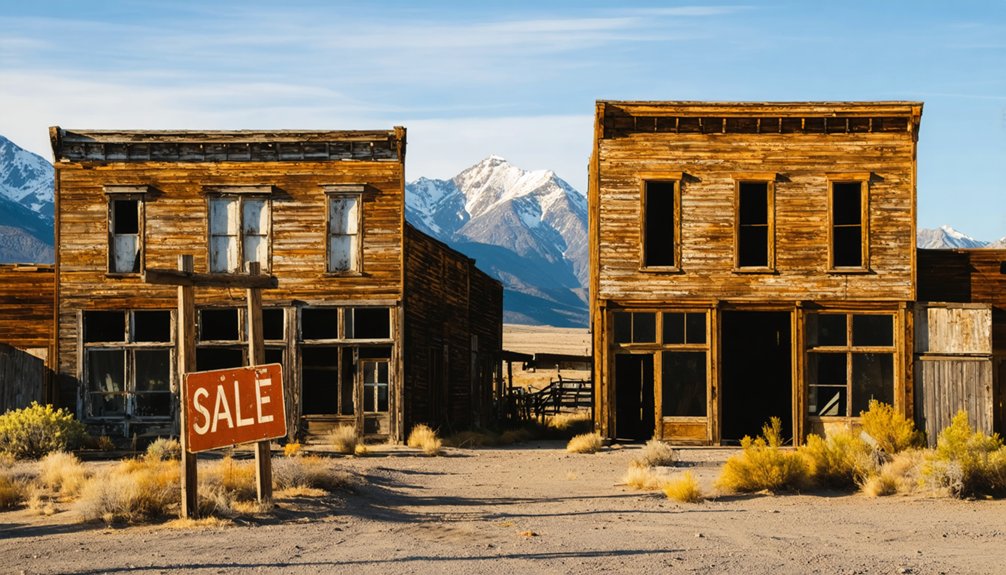
When factories close and unemployment exceeds 25%—as documented in Youngstown’s 1980 collapse—you’re witnessing the first domino in urban decay.
The resulting tax revenue depletion strips municipalities of funding for essential services, creating immediate budget shortfalls that prevent infrastructure maintenance and public service delivery.
This dual shock of job loss and revenue collapse transforms temporarily distressed cities into permanently abandoned landscapes, as the economic foundation necessary for recovery simply ceases to exist.
Job Loss Triggers Decline
Single-industry dependence creates a vulnerability that economic shifts exploit with devastating efficiency. When New Orleans’ oil sector collapsed in the late 1970s, you witnessed unemployment swell and residents flee.
Liverpool’s docks couldn’t adapt when containerization slashed labor needs. Kitakyushu’s steel workforce plummeted from 50,000 to 4,200 as production moved overseas. The pattern repeats because workers face skill mismatch—cargo handlers can’t pivot to banking, steel workers lack automotive expertise.
These mechanisms trigger community disconnection through:
- Technological displacement: Containerization eliminated traditional dock jobs
- Offshore competition: Cheaper overhead drew manufacturing abroad
- Obsolete expertise: Industry-specific skills became unmarketable
- Service sector collapse: Hotels and restaurants closed without business patrons
You’re left watching cities hemorrhage population when their economic foundation crumbles, transforming vibrant communities into abandoned shells.
Revenue Collapse Accelerates Abandonment
As employment opportunities vanish, local businesses face a cascade of closings that strips cities of their economic infrastructure. Philadelphia’s family-owned stores and Houston’s small businesses collapsed as customer bases evaporated.
Commercial strips now display more empty storefronts than open ones, creating visual markers of economic failure.
This exodus triggers tax system distortion—property assessments remain calibrated to peak valuations while actual home values plummet to $57,700 or lower. Cities desperately raise rates on declining bases, accelerating resident flight. Over half of households earn under $22,500 annually, with 43.8% requiring SNAP benefits.
Infrastructure deterioration follows as municipalities flirt with bankruptcy. Vacancy rates reach 31.4% in hardest-hit ZIP codes, creating self-reinforcing abandonment cycles. You’re witnessing communities lose both their economic foundation and governmental capacity simultaneously.
Unsustainable Living Costs Driving the New Wave of Urban Decline
While historic ghost towns collapsed when mines ran dry or railroads shifted routes, today’s urban decline stems from a different calculus: cities pricing out their own residents. San Francisco’s combination of high living costs, elevated house prices, and burdensome taxes drove 60,000 residents away between 2020-2023.
Cities now self-destruct not from economic collapse, but from deliberately pricing out the middle class through tax and housing policy.
You’re witnessing disruptive infrastructure costs becoming unsustainable as populations shrink, making electricity, water, and transit unaffordable for remaining residents.
Key indicators of cost-driven exodus:
- Phoenix home values dropped 10%, with 87% losing value since 2024
- Net domestic migration to Phoenix collapsed from 32,600 (2022) to under 2,000 (2024)
- St. Louis building permits decreased 22% from 2022-2023
- Detroit permits fell 15% in one year
These depressed housing markets signal cities trapped between unaffordable costs and declining tax bases.
Frequently Asked Questions
Can Ghost Towns Ever Recover and Become Thriving Communities Again?
Yes, you’ll see success when repopulation efforts align with economic incentives. Bisbee, Arizona transformed from abandoned copper town to thriving artist community through low property costs attracting independent creators. Madrid, New Mexico’s hippie revival proves freedom-seeking individuals rebuild communities organically.
What Happens to Municipal Debt When a City Loses Population?
When population drops, you’re stuck paying fixed debt with reduced tax revenue while facing municipal service challenges. Your per capita burden skyrockets—fewer residents shoulder unchanged obligations, forcing higher taxes, service cuts, or bankruptcy like Detroit’s $18 billion collapse.
Who Owns Abandoned Properties in Ghost Towns Legally?
Original owners or their estates retain legal title until you navigate transfer processes. Property ownership rights don’t vanish with abandonment—they persist through public records. Legal ownership disputes require court action, adverse possession claims, or tax sale purchases to secure your freedom.
Do Ghost Towns Attract New Industries or Remain Permanently Abandoned?
Ghost towns can attract new industries through seasonal tourism opportunities and resource extraction potentials. You’ll find data shows some sites transform into tech hubs or heritage destinations, while others remain permanently abandoned due to economic constraints and limited infrastructure investment.
How Do Neighboring Cities Absorb Displaced Residents From Declining Areas?
You’ll find neighboring metros absorb displaced residents through job creation and housing expansion. Population migration patterns show working-age adults clustering near employment hubs, while economic revitalization strategies target infrastructure development—transforming urban centers into opportunity magnets for ghost town refugees seeking independence.