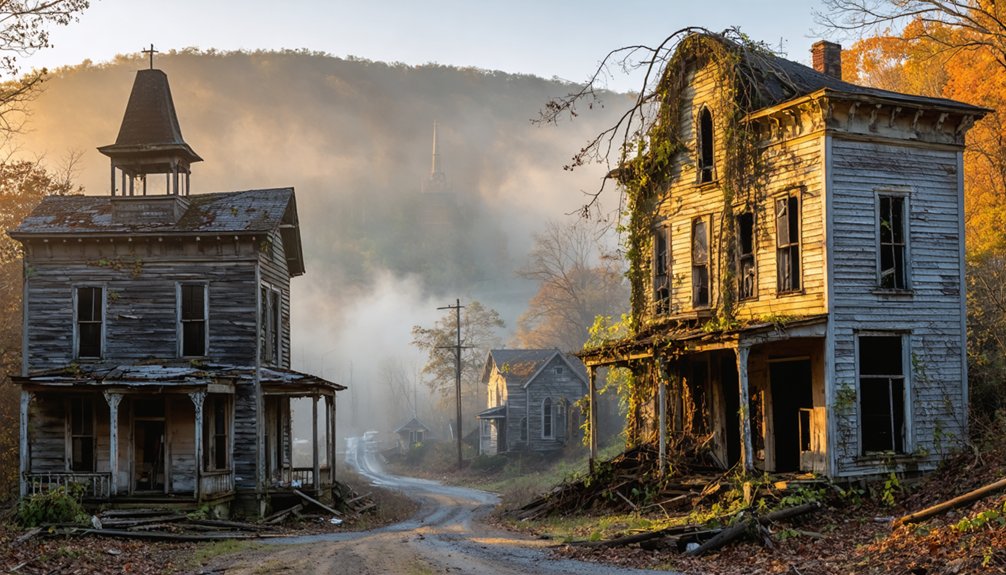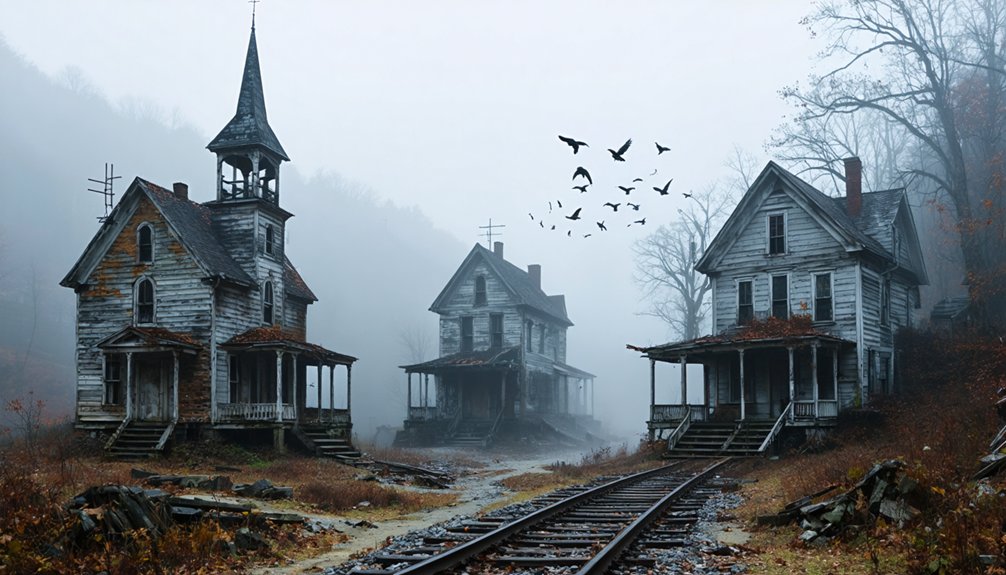
Appalachia’s ghost towns tell stories of rapid industrial boom and heart-wrenching bust. You’ll discover over 600 company towns that sprouted overnight when northern industrialists harvested coal and timber in the late 1800s. These forgotten places—with their identical wooden houses, company stores, and single-drop porch lights—once buzzed with life before economic collapse scattered families. Today, their silent rails and empty porches whisper secrets of a mountain heritage waiting to be uncovered.
Key Takeaways
- Over 600 company towns emerged by 1910 in Appalachia, built by northern industrialists who discovered the region’s timber and coal resources.
- Resource depletion led to widespread abandonment, with towns like Thurmond seeing populations dwindle from boom-time prosperity to near-extinction.
- Railroad networks strategically established towns at extraction sites and junctions, connecting previously isolated mountain communities to industrial commerce.
- Distinctive architectural elements like single-drop porch lights and practical wooden housing reflected miners’ lifestyles and harsh mountain conditions.
- Former ghost towns increasingly transform into tourism destinations through preservation efforts, historical tours, and outdoor recreation opportunities.
Birth of Company Towns: When Coal and Timber Built Communities Overnight
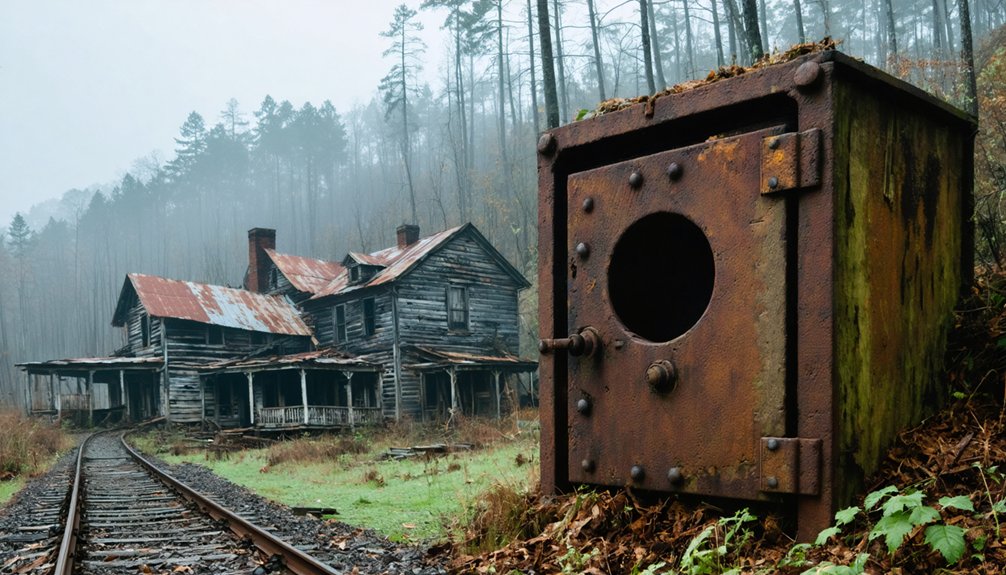
While Appalachia’s mist-shrouded mountains had stood for millennia, its landscape transformed almost overnight when northern industrialists discovered the region’s riches in the late 1800s.
By 1910, outsiders had snatched up the choicest timber and thickest coal seams, leaving their footprints in over 600 company towns scattered across the hollows.
You’d hardly recognize these places today, but back then, they sprang up like mushrooms after rain.
Company town dynamics were simple yet controlling—identical wooden houses lined in rows near the mine or mill, with the company store, church, and school nearby. These towns fostered a strong sense of community life with children playing in the streets and families sharing pride in their labor.
Everything belonged to the company: your house, your job, even the scrip in your pocket.
This worker dependence wasn’t accidental—it was designed to keep you tied to the land that gave up its treasures to outside interests.
The Industrial Revolution sparked the creation of approximately 2,500 company towns across America, with Appalachia housing a significant portion of these industrial settlements.
Abandoned Rails: The Transportation Networks That Shaped Mountain Development
You’ll find traces of forgotten rail lines weaving through our hollows and ridges, silent witnesses to the boom times when steel tracks brought life to isolated mountain communities.
The Norfolk and Western pushed into virgin coalfields while Henry Davis’s West Virginia Central spawned entire towns like Elkins and Davis, transforming wilderness into bustling industrial centers. The competition between transport methods, including canals and railroads, dramatically shaped the economic landscape of these developing regions.
These abandoned railways, with their crumbling trestles and overgrown rights-of-way, tell the story of how timber barons and coal operators conquered Appalachia’s rugged terrain, connecting our remote mountains to distant markets that hungered for the region’s natural wealth. The Clinchfield Railroad, with its remarkable high-standard design, forever changed isolated mountain communities by enabling the rapid transportation of coal, timber, and goods throughout the Appalachian region.
Rail-Built Community Foundations
As the rugged Appalachian hillsides once stood as formidable barriers to travel, the arrival of steel rails carved new possibilities into the ancient mountains.
You’re witnessing the echoes of a railroad legacy that transformed isolated hollers into bustling centers of commerce almost overnight. Where your ancestors once relied on river paths and primitive trails, company towns sprouted like spring flowers—complete with wooden houses, general stores, and the rhythmic sound of steam whistles marking time. Mining communities throughout Central Appalachia relied exclusively on rail transportation networks to move their coal to distant markets. The post-1880 railroad expansion initiated an unprecedented influx of outside investors who began to exploit the region’s previously untouched natural resources.
These rail-built communities showcase mountain community resilience through:
- Strategic placement at junctions and resource extraction sites
- Complete infrastructure development including housing, schools, and churches
- Connection of formerly isolated regions to larger industrial networks
Towns like Thurmond, Johnson City, and Roanoke stand as monuments to how railroads didn’t just follow settlements—they created them.
Timber’s Transportation Revolution
Deep in the hollows of Appalachia, where ancient forests once blanketed every ridge and valley, a revolution in timber transportation forever changed the mountain landscape you’d recognize today.
Before steel rails carved through these mountains, you’d have seen oxen teams struggling to drag massive old-growth logs through rugged terrain or watched splash dams release torrents carrying timber downstream. When companies like William Ritter faced railroad companies unwilling to build necessary lines, they simply constructed their own.
By 1901, Little River Railroad was hauling 60,000 board feet daily to distant markets.
These logging innovations—inclined railways, overhead cable systems, and eventually mechanized cranes—transformed impossible tasks into profitable ventures. Mixed trains with limited passenger capacity often served these remote timber operations while primarily focusing on resource extraction. Where primitive methods once limited harvest to nearby trees, rails allowed timber barons to reach deep into untouched forests, leaving behind ghost towns when the trees were gone. The dramatic increase from 800 million to over 900 million board feet between 1899 and 1907 demonstrated the efficiency of these new transportation networks.
Coal’s Iron Pathways
While modern travelers speed along smooth highways cutting through Appalachia’s mountains, beneath their tires lie forgotten pathways of iron and steel—the abandoned rail networks that once pulsed like arteries through these ancient hills.
You’re traveling atop history when you cross these mountains. Railway expansion transformed these hollows after 1850, pushing deep into virgin forest with the promise of black gold. The B&O and Norfolk & Western carved passages where no roads existed, enabling coal extraction on an unprecedented scale. The dramatic decline since WWII’s peak production has left countless miles of track abandoned as railroads consolidated operations. These abandoned railways originally relied on steam power generated from the very coal they transported before diesel engines took over.
Those rusty ghosts—once the lifeblood of mountain communities—still whisper their stories.
- Explore abandoned tipples where multiple coal grades once cascaded into waiting hoppers
- Walk the ghostly “rails in every holler” that connected isolated camps to the outside world
- Stand in the silence of abandoned yards where coal drags once thundered toward distant cities
Thurmond’s Glory Days: A Case Study in Boom and Bust
Tucked away in the rugged folds of the New River Gorge, Thurmond stands as a tribute to the fleeting nature of boomtown prosperity. You’d hardly believe this quiet hamlet once handled more coal than Cincinnati, with 18 trains rumbling through daily.
Thurmond’s transformation from Captain William’s 73-acre payment into Appalachia’s economic powerhouse exemplifies boom-bust economic cycles that shaped the region.
Like a mountain wildflower that blooms fiercely then fades, Thurmond’s rise and fall echoes through Appalachia’s economic history.
While the Baptist captain banned liquor in town, you could cross the river to Thomas McKell’s unrestricted domain where the Dun Glen Hotel offered gambling, spirits, and company to weary travelers.
Locals quipped that “the only difference between Hell and Thurmond is that a river runs through Thurmond.”
Eventually, diesel engines, devastating fires, and the Depression silenced this once-roaring town, leaving just five souls by 2020.
Elkmont’s Transition: From Lumber Camp to Resort to Ghost Town
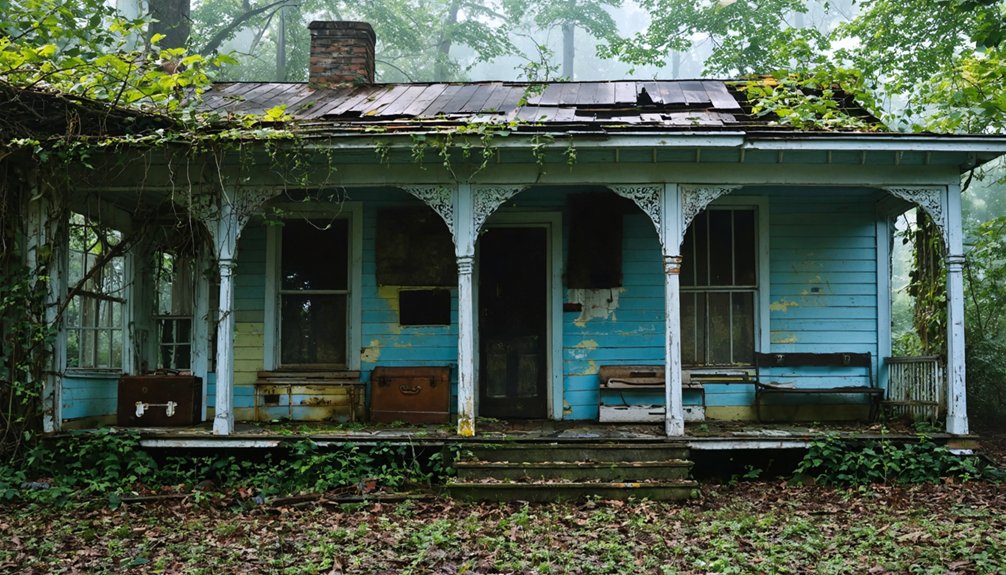
You’ll find Elkmont’s story written in three distinct chapters: a bustling lumber settlement that cleared ancient forests, a fashionable resort where Knoxville’s elite built vacation cottages in the shadows of sawmills, and finally, an eerily beautiful ghost town where abandoned cabins still hold family memories in their weathered walls.
The Appalachian and Wonderland Clubs once hosted lively summer gatherings, their wooden porches filled with rocking chairs and laughter before the National Park Service reclaimed the land.
What remains today is a haunting collection of empty resort cabins, some still furnished as if their owners might return for one more mountain summer, their fading wallpaper and sagging floors telling silent stories of Elkmont’s fascinating transformation.
Elkmont’s Three-Phase Evolution
If you trace the winding paths through Elkmont today, you’re walking the layered history of a place that witnessed one of Appalachia’s most fascinating transformations.
This mountain hamlet evolved through three distinct chapters that tell the story of changing American priorities:
- Timber extraction (1840s-1920s): Colonel Townsend’s logging practices forever altered the landscape, with rail innovations carrying away 560 million board feet of timber.
- Resort development (1920-1934): Wealthy Knoxvillians repurposed the community dynamics, transforming logging camps into vacation retreats with distinctive architectural styles.
- Park absorption (1926-1992): The economic impacts shifted as properties were sold to create the national park, preserving cultural heritage while eventually returning the land to wilderness.
Abandoned Resort Cabins
While the Little River Lumber Company buzzed with activity in the early 1900s, no one could’ve predicted how Elkmont’s sawdust-covered origins would transform into one of Appalachia’s most curious ghost towns.
Walking through Elkmont today, you’ll find abandoned cabins where Knoxville’s elite once sipped cocktails on creaking porches. The Appalachian and Wonderland Clubs thrived after 1910 when wealthy families traded the city’s heat for mountain breezes.
You can almost hear echoes of dances and laughter that filled these now-silent structures.
After the Park Service acquired the land in 1934, residents negotiated lifetime leases before reluctantly surrendering their summer homes. By 1992, most leases expired, leaving over 70 buildings to nature’s reclamation.
Resort nostalgia lingers in every weathered wall—a bittersweet reminder of Elkmont’s golden age.
The Lost Communities Beneath Appalachian Lakes
Beneath the glassy surfaces of Appalachian lakes lies a haunting secret—entire communities swallowed by the waters of progress.
These submerged histories include Gad, West Virginia, now resting under Summersville Lake, and Loyston, Tennessee, which vanished beneath Norris Lake in 1935.
When you visit these placid waters, you’re floating above once-thriving towns with stories untold.
- Every ten years, Summersville Lake drains for maintenance, revealing Gad’s ghostly roadways and foundations—a brief window into yesterday’s world.
- Divers exploring Lake Jocassee report eerie standing forests underwater, resembling a moonlit winter landscape frozen in time.
- Underwater discoveries at Proctor can only be glimpsed by experienced divers, who find themselves swimming through the remnants of Appalachia’s lumber heritage.
Forced Displacement: When Families Lost Generational Lands
Throughout the storied hollows and ridges of Appalachia, thousands of families witnessed their generational homesteads slip from their grasp during the early twentieth century, victims of a government that valued resources over roots.
You’d have found these displacement narratives repeating across the landscape—from Cherokee communities forced along the Trail of Tears to farmers evicted for Shenandoah National Park’s creation. The feds began buying mountain lands in 1911, while Virginia condemned over 3,000 tracts in the 1930s.
Generations uprooted through state force—Cherokee families, Shenandoah farmers, and thousands more sacrificed for national interest over mountain heritage.
Later, TVA flooded entire towns like Loyston beneath rising reservoirs.
These weren’t isolated mountain folk as government claims suggested. They’d built farms, churches, schools—deep ancestral connections to lands their grandparents had worked.
When coal companies and federal projects arrived, your family’s century of stewardship meant nothing against progress’s hungry march.
Economic Collapse and Population Exodus: Why Towns Were Abandoned
You’ll find the roots of Appalachian ghost towns in the brutal economics of resource exhaustion, when coal seams ran thin and companies abandoned communities they’d built and controlled for generations.
Similar tales of decline can be seen in abandoned farms in the midwest where agricultural shifts and economic pressures have left vast swathes of land untended. Once thriving homesteads now stand as silent reminders of a bygone era, with overgrown fields reclaiming what was once cultivated. This phenomenon reflects a broader narrative of change and transformation that continues to shape rural landscapes across the country.
When the mines closed in places like Gary, West Virginia, folks watched helplessly as their livelihoods vanished, triggering a mass exodus that left behind empty homes, shuttered storefronts, and crumbling infrastructure.
The pain of these abandoned communities runs deeper than deteriorating buildings—it represents the severing of deep cultural ties to land where families had put down roots for generations, only to be scattered like leaves in the wind when the economic foundation collapsed beneath them.
Resource Depletion Impact
When the coal mines began to run dry in Appalachia, they took entire communities with them into the darkness. Poor resource management left once-thriving towns abandoned almost overnight, with families packing up and fleeing as jobs vanished faster than morning mist on the mountains.
You’d hardly recognize places where generations had built their lives around a single industry.
- Coal production plummeted between 1990-2015 as clean energy demand rose
- Mountaintop removal mining destroyed over 500 peaks while requiring fewer workers
- Company towns collapsed immediately when extraction ceased, with no community resilience
Where wooden storefronts once bustled with life, only crumbling brick remains. The rhythm of rail cars has gone silent, and the streams that once ran clear now carry the bitter legacy of what was taken and never replaced.
Displaced Community Trauma
The collapse of Appalachia’s coal economy didn’t just empty towns—it shattered lives built around generations of mining heritage.
You’d see it in the abandoned homes where displaced families once gathered for Sunday dinners, their exodus marking the end of community memory passed down porch to porch.
When mines closed, everything unraveled. Labor force participation plummeted—in McDowell County, less than a third remained by 2020.
Schools shuttered, company stores vanished, and neighbors scattered to the winds. What you’re looking at isn’t just economic decline; it’s cultural amputation.
The trauma cuts deeper than statistics show. Those left behind faced not only poverty but the daily reminder of what was lost—a way of life, shared traditions, and the comforting rhythm of small-town existence.
Forgotten Architecture: The Distinctive Building Styles of Mining Communities
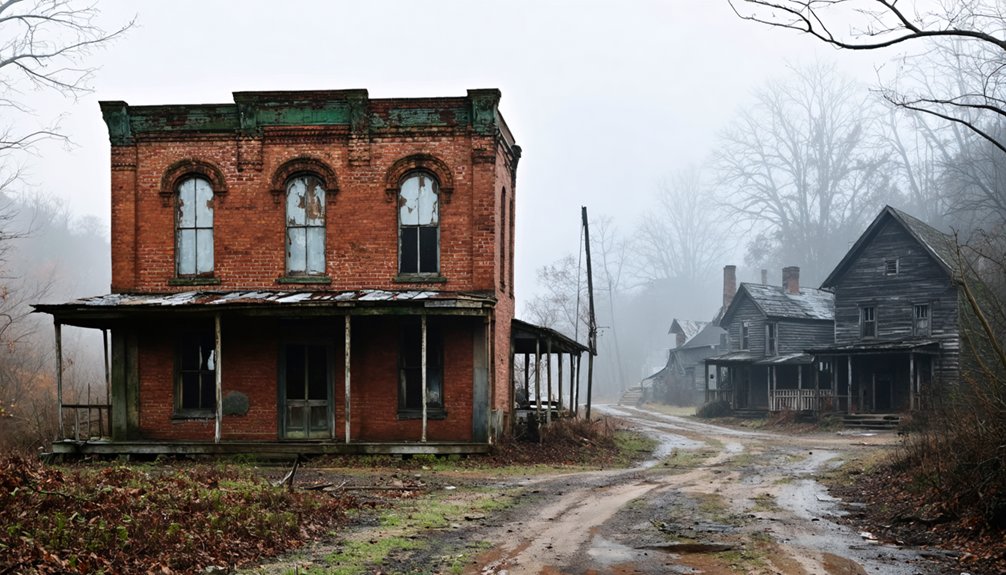
Deep in the forgotten hollows of Appalachia, a distinctive architectural heritage still stands as silent testimony to the region’s mining past.
You’ll notice the stark contrast between the elaborate Queen Anne mansions of coal barons—with their imported bricks and copper roofing—and the simple clapboard homes of miners that clung to hillsides, warmed by coal they themselves had dug.
- The single-drop porch lights that once guided tired miners home after dark shifts
- The practical wooden company houses, hastily built yet designed to withstand mountain winters
- The brick company stores and gathering halls that anchored these communities, where paychecks were earned and spent in the same place
This forgotten architecture tells a tale of both oppression and resilience.
Preserving the Past: Documentation Efforts in Vanishing Towns
Despite decades of neglect and Mother Nature’s persistent reclaiming, dedicated preservationists haven’t given up on Appalachia’s vanishing towns. You’ll find them scrambling up steep hollers with cameras and measuring tapes, racing against time as roofs cave and walls crumble.
These mountain detectives weave together fragments of history—combining oral histories from old-timers with digital preservation techniques that capture every weathered board and rusty hinge. They’re creating virtual time capsules of places that’ll soon exist only in memory.
What makes this work special ain’t just the buildings—it’s the community narratives that breathe life into cold stone foundations. Local folks partner with universities to record their grandparents’ stories, preserving the soul of these places long after the last porch collapses into wildflowers.
Heritage Tourism: How Ghost Towns Find New Purpose
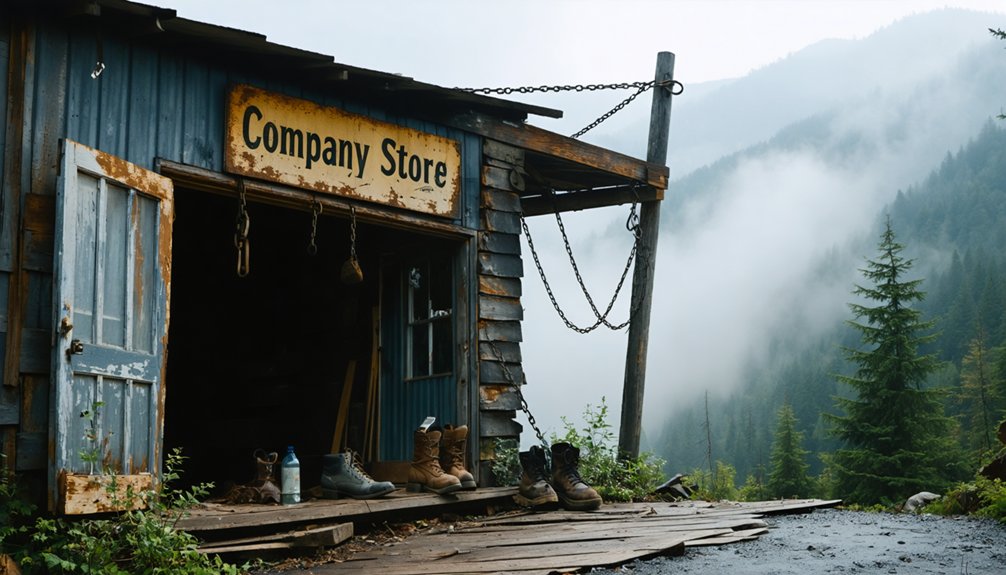
Once forgotten and left to crumble under kudzu vines and mountain fog, Appalachia’s ghost towns have found surprising new life as destinations where travelers can touch history with their own fingertips.
You’ll discover places like Kennicott and St. Elmo transformed through ghost town revitalization, welcoming over 2,000 visitors annually who contribute roughly $13 per person to local economies.
- Take guided historical tours through preserved buildings where miners and merchants once bustled
- Participate in cultural festivals celebrating mountain traditions that refuse to fade away
- Explore hiking trails like the Creeper Trail, drawing 250,000 freedom-seeking souls yearly
These tourism sustainability efforts aren’t just preserving our past—they’re breathing economic life back into communities that once feared they’d be nothing more than footnotes in history books.
Frequently Asked Questions
How Did Racial Segregation Manifest in Appalachian Company Towns?
You’d find company towns split folks by color – separate neighborhoods, schools, churches. Those segregation policies kept Black miners in worse housing while labor exploitation paid everyone in worthless company scrip.
What Role Did Women Play in Ghost Town Economies?
You’d find women’s labor was the invisible backbone—they’d take in laundry, run boardinghouses, tend gardens, and preserve food. Their economic contributions kept families afloat when the mines stopped callin’.
How Did Natural Disasters Accelerate Town Abandonment?
When Loyston flooded beneath Norris Dam’s waters, you’d have seen families packing overnight. Natural disasters like floods, fires, and mine collapses hastened town abandonment, erasing communities in one cruel sweep.
Were Any Ghost Towns Successfully Revitalized as Permanent Communities?
You’ll find St. Paul, Virginia’s your shining example—they’ve breathed new life into their old coal town through community engagement and smart revitalization efforts centered on that beautiful Clinch River they’ve always cherished.
What Archaeological Methods Are Used to Study Submerged Ghost Towns?
You’d find researchers usin’ underwater excavation paired with side-scan sonar, while historical mapping reconstructs the town’s bygone layout. Photogrammetry captures what remains, preservin’ memories of places long swallowed by the waters.
References
- https://www.youtube.com/watch?v=4oHlJFXbrCk
- https://www.thewanderingappalachian.com/post/underwater-ghost-towns-of-appalachia
- https://appalachianmemories.org/2025/10/16/the-lost-towns-of-appalachia-the-forgotten-mountain-communities/
- https://www.blueridgeoutdoors.com/go-outside/southern-ghost-towns/
- https://www.geotab.com/ghost-towns/
- https://smokymountainnationalpark.com/blog/fun-facts-about-elkmont-ghost-town/
- https://jrap.scholasticahq.com/api/v1/articles/9543-the-economics-of-ghost-towns.pdf
- https://www.appalachianplaces.org/post/appalachia-s-other-company-towns
- https://dsi.appstate.edu/projects/mountain-music/topics/industrialization
- https://socialwelfare.library.vcu.edu/organizations/labor/company-towns-1890s-to-1935/