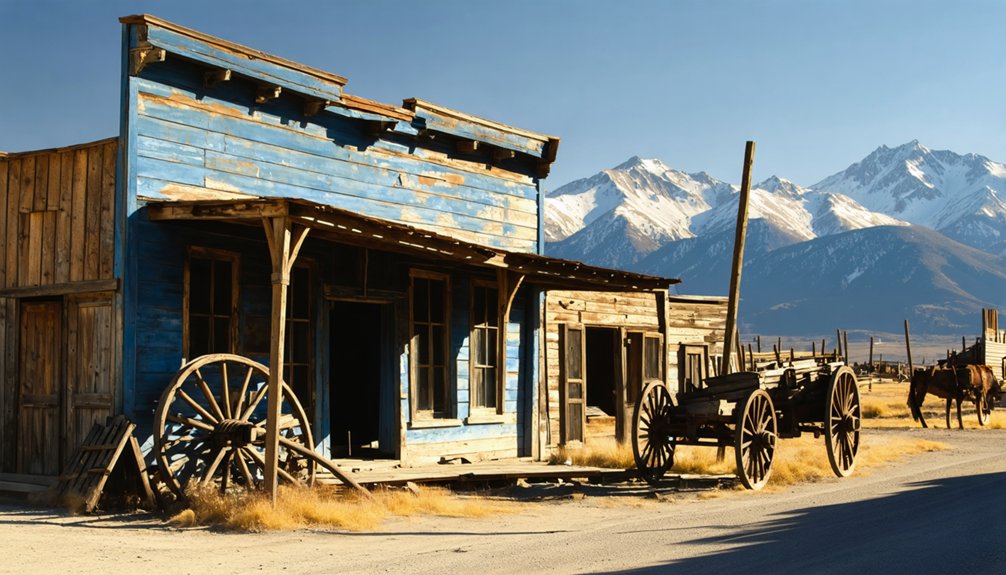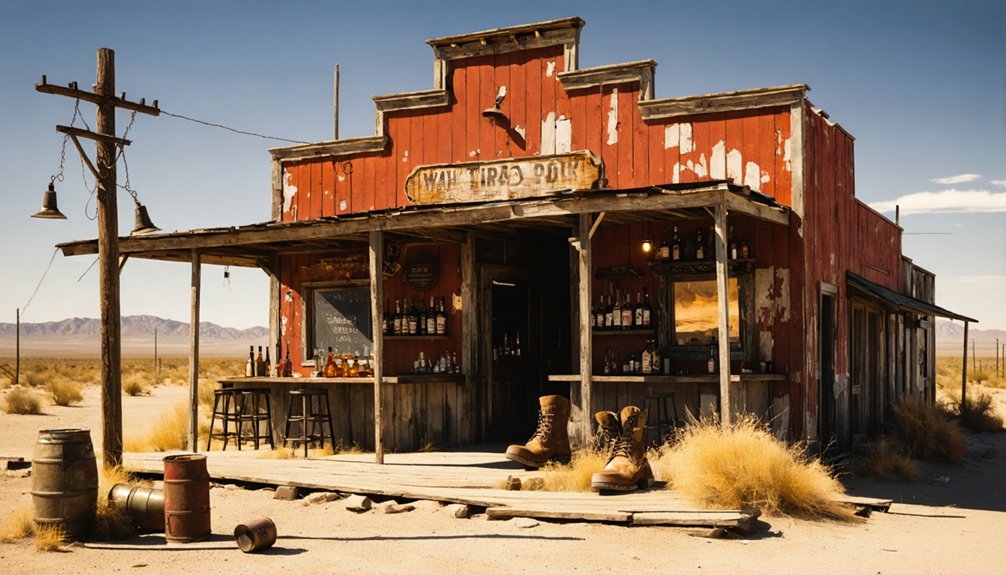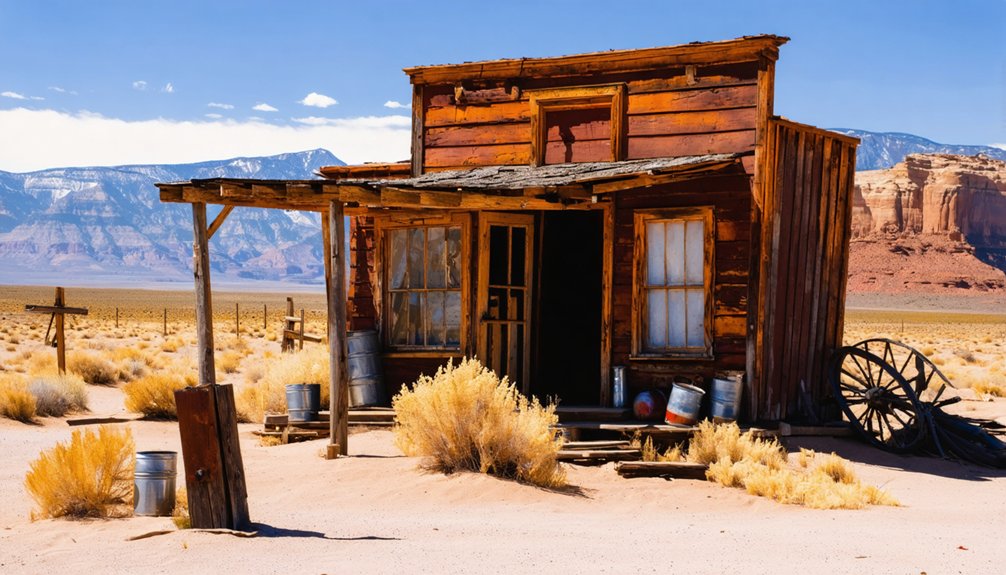
You’ll find America’s most fascinating ghost towns just a short drive from major national parks. Explore Bodie’s preserved saloons near Yosemite, wander Rhyolite’s haunting ruins outside Death Valley, or discover Bannack’s historic structures in Montana. These abandoned settlements tell stories of gold rushes, boom-and-bust cycles, and frontier life through their weathered buildings and forgotten streets. Each ghost town offers a compelling journey through Western history alongside your national park adventures.
Key Takeaways
- Bodie State Historic Park near Yosemite offers 170 preserved buildings in “arrested decay” from its 1876 gold rush heyday.
- Rhyolite, located near Death Valley National Park, showcases impressive ruins including a three-story bank and unique Bottle House.
- Bannack State Park contains over 50 original structures from Montana’s first major gold discovery site near Yellowstone.
- Kennecott in Wrangell-St. Elias National Park features historic copper mining structures amid spectacular glacier landscapes.
- Garnet, the best-preserved ghost town near Glacier National Park, contains intact buildings and million-dollar historic mine yields.
Bodie: The Golden Ghost Town Beside Yosemite
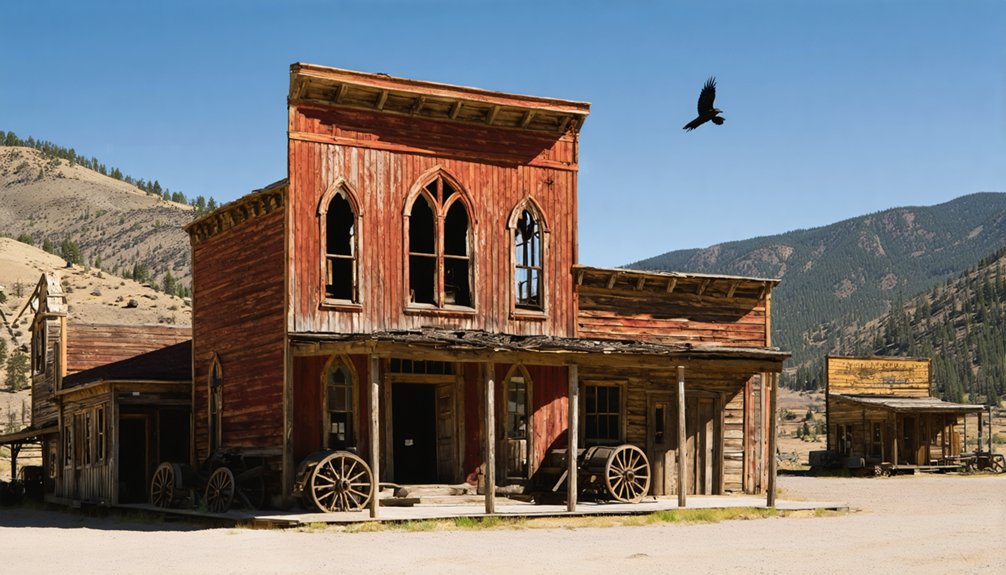
While Yosemite’s majestic valleys draw millions of visitors annually, just a few hours’ drive away stands Bodie, a remarkably preserved relic of America’s golden past.
This authentic ghost town exploded into existence after a lucky mine cave-in exposed valuable gold in 1876, transforming a small camp into a booming frontier settlement of 10,000 residents.
You’ll walk among 170 buildings frozen in “arrested decay” – saloons, brothels, and homes abandoned when the gold rush fever subsided. The town’s lawless reputation developed alongside its prosperity, with 60 saloons operating by 1880.
Bodie history comes alive as you peer through windows at interiors preserved exactly as left decades ago. This site serves as a disambiguation resource for visitors seeking specific information about various locations named Bodie.
Peek into time capsules of frontier life, where dusty possessions await owners who never returned.
After producing $70 million in precious metals, Bodie’s last mine closed during WWII in 1942, and the town was never revived.
Now California’s official gold rush ghost town, this National Historic Landmark offers an unfiltered glimpse into authentic Wild West life.
Visitors can explore the rich gold rush history of California through its preserved buildings and artifacts. Interactive exhibits provide insights into the lives of those who sought fortune during this pivotal time. With guided tours available, guests can hear the captivating stories that shaped the region’s heritage.
St. Elmo: Colorado’s Haunted Mining Camp in the Sawatch Range
As you wander through St. Elmo’s eerily preserved streets, the spirits of miners who once extracted over $4.4 million in gold from the famous Mary Murphy Mine seem to linger in the forty remaining original structures.
You’ll feel the echoes of the town’s 2,000 former residents who thrived during the 1880s boom before fires and economic collapse gradually emptied this once-bustling mountain settlement.
The Town Hall museum and notorious jail still stand as silent witnesses to St. Elmo’s transformation from mining powerhouse to what many visitors now claim is Colorado’s most authentically haunted ghost town.
Perched at 10,006 feet elevation, this well-preserved ghost town attracts approximately 50,000 curious visitors each summer who come to experience its frontier mining history.
Local legend suggests that Annabelle Stark’s spirit continues to watch over the town, with numerous visitors reporting encounters with a woman in a white dress who appears in windows and vanishes mysteriously.
Haunted History Encounters
Among Colorado’s most haunted locations, St. Elmo offers you a chance to experience genuine ghostly encounters with the past. The Stark family’s spirits reportedly roam their former properties, while the historic general store serves as a hotspot for spectral sightings, with objects moving mysteriously and disembodied voices echoing through empty aisles.
As you explore, you might encounter unexplained cold spots, malfunctioning electronics, or even glimpse Victorian-era figures walking the streets at dusk. Visitors are drawn to the town’s tranquil atmosphere surrounded by the breathtaking Sawatch Mountain Range.
The town’s tragic history—from the 1914 robbery to deadly food poisoning incidents—has created a paranormal landscape ripe for investigation. Most visitors are shocked to discover that St. Elmo was once a thriving community with five hotels, dancing halls, and numerous saloons.
Paranormal teams frequently document high electromagnetic activity here, making St. Elmo a premier destination for those seeking to witness the supernatural while surrounded by the stunning Sawatch Range.
Mining Glory Days
Beyond the spectral encounters that now define St. Elmo, you’ll discover a town that once pulsed with mining prosperity. After Abner Wright and John Royal struck silver in 1875, the Mary Murphy Mine became the district’s crown jewel, extracting an astonishing 220,000 ounces of gold valued at $4.4 million.
At its peak, nearly 2,000 residents called St. Elmo home. Mining techniques evolved as workers shipped 50-75 tons of ore daily to nearby smelters. The town boasted saloons, dance halls, and two banks—everything a frontier community needed. The town’s growth exploded after being officially incorporated as St. Elmo in 1880, changing from its initial organization as Forestville.
Ghost stories often reference the devastating 1890 fire that triggered St. Elmo’s decline. When the Mary Murphy Mine closed in 1925, most residents abandoned their mountain home. Situated at 10,000 feet elevation in the Sawatch Range, the town offered miners a challenging yet resource-rich environment.
Today, forty original structures remain, offering you a perfectly preserved glimpse into Western mining’s golden era.
Bannack State Park: Montana’s Preserved Territorial Capital
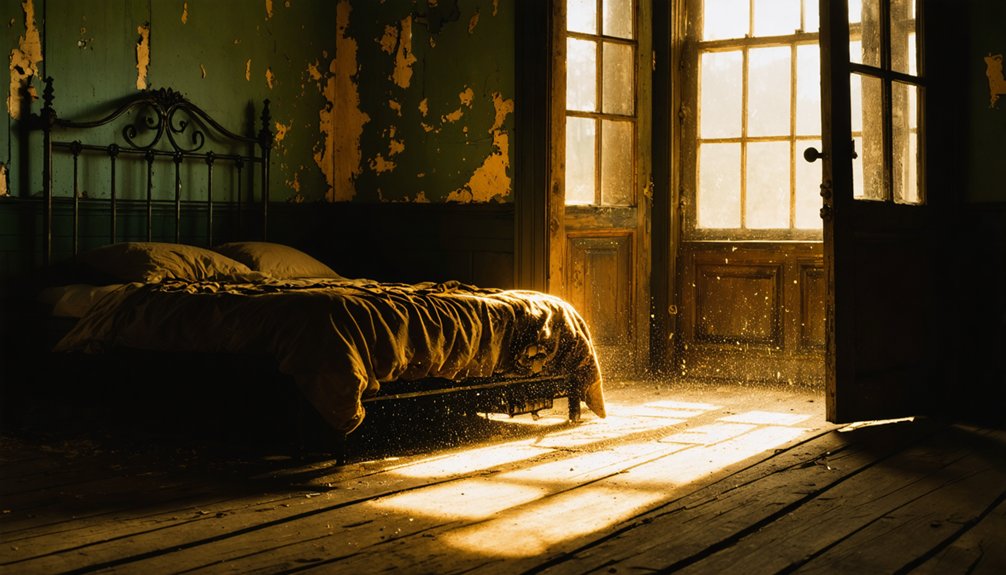
Golden dreams transformed a quiet Montana creek into the bustling settlement of Bannack in July 1862, marking the territory’s first major gold discovery.
You’ll walk the same streets that once teemed with 5,000 fortune-seekers during the height of the gold rush, when Bannack briefly served as Montana’s first territorial capital.
Today, you can explore over 50 remarkably preserved structures lining Main Street, from weathered log cabins to the historic jail built by infamous Sheriff Henry Plummer.
The state’s acquisition of Bannack in 1954 saved this authentic piece of Western heritage from disappearing like so many other boom towns.
Unlike many abandoned settlements, Bannack remained inhabited until the 1970s before becoming the ghost town you can freely wander through today—a National Historic Landmark frozen in time. The town’s decline began when railroad construction in the 1880s bypassed Bannack entirely, gradually diminishing its economic prospects.
Every July, visitors can experience Bannack Days with historical reenactments that bring the town’s vibrant past back to life.
Rhyolite: Death Valley’s Neighboring Boom-and-Bust Settlement
While Montana’s Bannack preserves its territorial legacy, Nevada’s desert landscape holds another extraordinary ghost town. Just outside Death Valley National Park, Rhyolite exemplifies the classic boom-and-bust narrative of the American West. In 1905, gold discovery transformed this barren land into a thriving community of 5,000 residents within months.
Rhyolite’s architecture still captivates visitors today—the impressive three-story bank, unique Bottle House, and jail ruins stand as silent witnesses to forgotten prosperity.
When financial panic struck in 1907, the town’s descent was as rapid as its rise. By 1916, the lights went out permanently.
Now among Nevada’s best-preserved abandoned settlements, Rhyolite anchors ghost town tourism in the region, drawing explorers seeking freedom among these haunting desert ruins that perfectly capture the West’s ephemeral dreams.
Garnet: Montana’s Hidden Gem for History and Outdoor Adventure
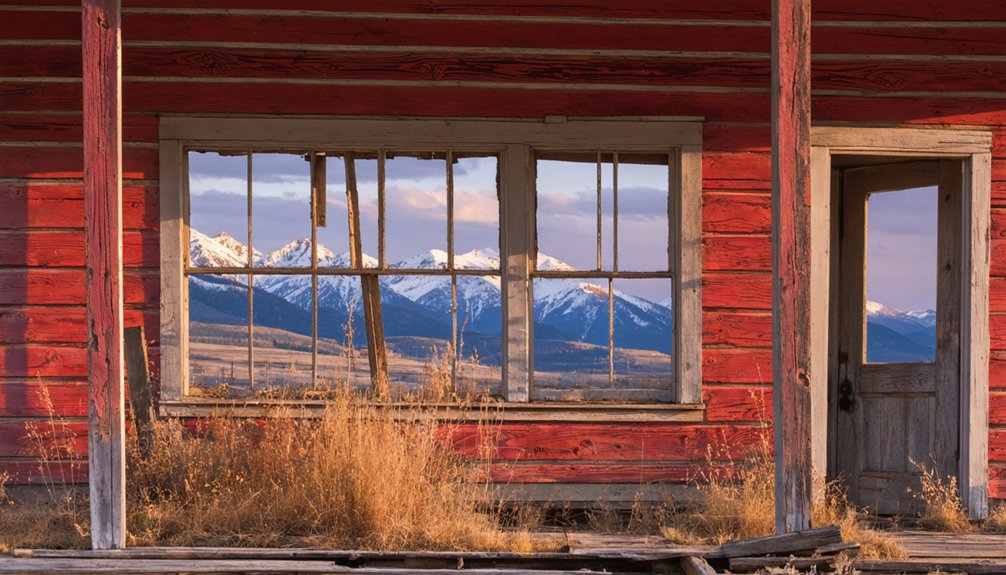
You’ll discover Montana’s best-preserved ghost town of Garnet nestled at 6,000 feet in the mountains east of Missoula, where historic mines once yielded over a million dollars in gold and silver.
The town’s remarkably intact buildings—from saloons to hotels—offer a genuine glimpse into frontier life, with many structures still containing original furnishings abandoned by residents during the town’s decline after 1912.
Beyond exploring the historical treasures maintained by the Bureau of Land Management, you can extend your adventure with hiking trails that wind through the surrounding Garnet Mountain Range, creating perfect opportunities for photography and backcountry recreation.
Historical Mining Significance
Beneath the sprawling Montana sky lies Garnet, a tribute to the volatile fortunes that defined America’s western mining frontier.
You’ll walk through a town that transformed from simple placer mining operations in the 1860s to a bustling gold hub after Samuel Ritchie’s Nancy Hanks mine struck rich ore in 1895.
When silver markets collapsed in 1893, thousands flocked to Garnet, adopting advanced mining techniques that fueled an economic impact visible in the town’s impressive collection of buildings.
- Experience firsthand how gold’s fluctuating value shaped an entire community’s destiny
- Witness the preserved remnants of prosperity that vanished when resources depleted
- Stand where determined miners returned during the Great Depression when gold prices doubled
- Explore tangible evidence of how mining ventures built—and ultimately abandoned—the American West
Preserved Frontier Buildings
The gold rush that fueled Garnet’s rise has left behind more than just echoes of pick-axes and dreams of fortune.
Today, you’ll find Montana’s best-preserved ghost town showcasing authentic frontier life through its remarkably intact structures. Thirty original buildings stand in “arrested decay,” including the two-story J.K. Wells Hotel, Kelley’s Saloon, and the Davey store—all managed with minimal intervention for maximum historical preservation.
Unlike heavily reconstructed tourist attractions, Garnet’s architectural significance lies in its authenticity.
The Bureau of Land Management and Garnet Preservation Association maintain these log and frame buildings as they were abandoned—some with furnishings still intact, as if residents just stepped out.
When you explore Garnet’s wooden boardwalks and peer into miners’ cabins, you’re experiencing genuine Western frontier architecture, preserved rather than reimagined.
Backcountry Recreation Options
Beyond Garnet’s historical facades lie four spectacular backcountry routes that transform this ghost town from mere museum to adventure headquarters.
Nestled at 6,000 feet elevation where the Garnet Mountains meet wilderness, you’ll find yourself at the perfect basecamp for authentic Montana backcountry trails.
When you’ve finished exploring the abandoned miners’ cabins, venture into the surrounding wilderness exploration opportunities:
- Trek the rugged First Chance Creek trail system, following the same paths 19th century prospectors blazed
- Camp beneath star-filled skies undiminished by modern light pollution
- Photograph wildlife in their natural habitat while hiking the BLM-maintained trail network
- Experience seasonal backcountry skiing and snowshoeing when winter blankets this mountain sanctuary
The ghost town’s secluded location provides the freedom you’re seeking—far from crowds but accessible year-round.
Kennecott: Alaska’s Remote Copper Mining Town in Wrangell-St. Elias

Nestled deep within the rugged wilderness of Wrangell-St. Elias National Park lies Kennecott, one of America’s most fascinating copper discovery sites.
In 1900, prospectors Warner and Smith spotted a malachite outcrop that would transform this remote Alaskan landscape. By 1911, a railway connected the booming operation to civilization, enabling the extraction of over 1.1 billion pounds of copper before the mines closed in 1938.
You’ll walk among the same mill buildings where miners once processed ore containing up to 72% pure copper.
After the last train departed, Kennecott evolved into a perfectly preserved ghost town. Today, the National Park Service protects these historic structures, allowing you to explore this abandoned industrial complex against a backdrop of glaciers and mountains.
Frequently Asked Questions
Can You Visit These Ghost Towns During Winter Months?
Yes, you can explore most ghost towns during winter months. Desert locations like Rhyolite offer accessible seasonal attractions, while mountain sites may require chains and careful winter exploration planning.
Are Any of These Locations Accessible for Visitors With Mobility Limitations?
You’ll find limited wheelchair access at all locations. Rhyolite offers the flattest terrain, while Bodie’s uneven paths require adaptive equipment. Each town presents challenges, but determined explorers can experience these frontier remnants.
What Photography Permits or Restrictions Apply at These Historic Sites?
Like a guardian of the past, photography guidelines prioritize historic preservation. You’re free to shoot with fewer than six people without permits, but drones are banned and damaging structures is prohibited.
Are Overnight Accommodations Available Within the Ghost Towns Themselves?
You’ll find on-site accommodation options at Calico, Bannack, and Terlingua, where you can immerse yourself in ghost town history overnight. Grafton doesn’t offer lodging within its historic boundaries.
How Do These Towns Compare for Families With Young Children?
Like enthusiastic explorers drawn to forgotten treasures, Elkmont and Bodie offer the most child friendly activities and educational opportunities with ranger programs, marked trails, and interpretive features that’ll engage your little adventurers safely.
References
- https://www.sixt.com/magazine/travel/top-ghost-towns-us/
- https://www.npca.org/articles/1935-spooky-beautiful-photos-of-abandoned-park-towns
- https://familytraveller.com/usa/national-parks/american-west-ghost-towns/
- https://www.frommers.com/slideshows/848476-9-ghost-towns-to-explore-during-road-trips-through-the-american-west/
- https://albiongould.com/ghost-towns-to-visit-in-the-states/
- https://explorethearchive.com/western-ghost-towns
- https://www.geotab.com/ghost-towns/
- https://www.visitutah.com/things-to-do/history-culture/ghost-towns
- https://www.atlasobscura.com/lists/americas-best-preserved-ghost-towns
- https://www.nps.gov/subjects/abandonedplaces/ghost-towns.htm