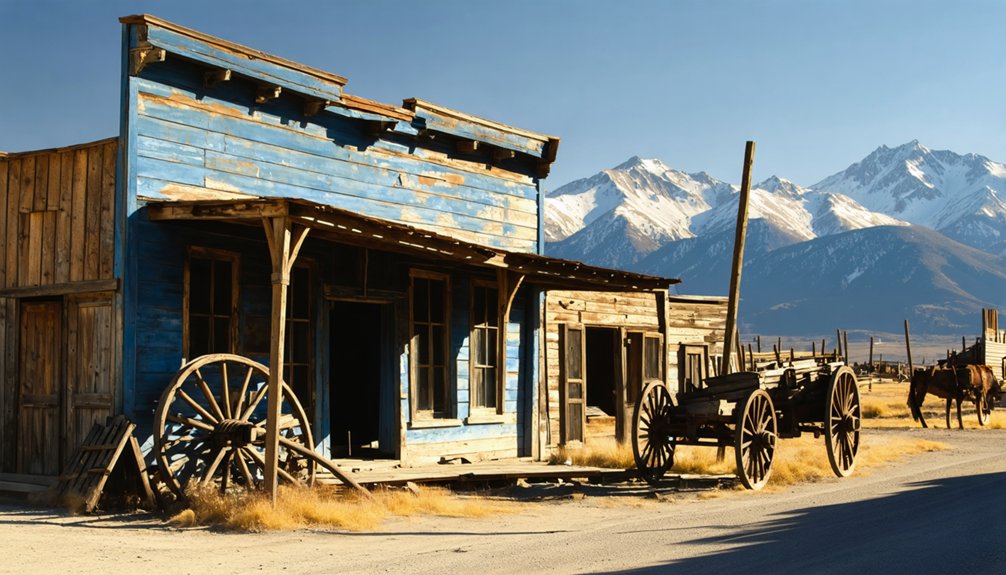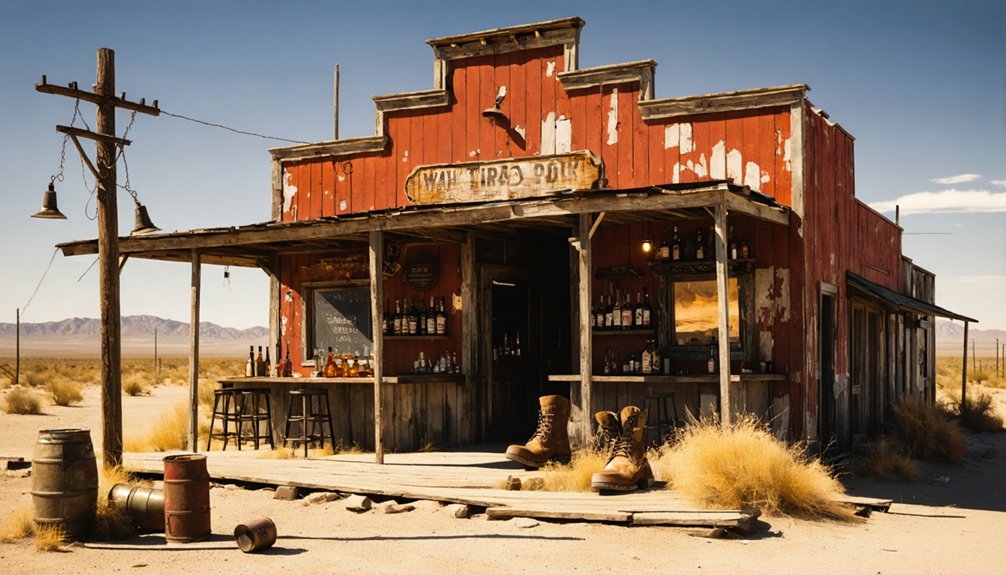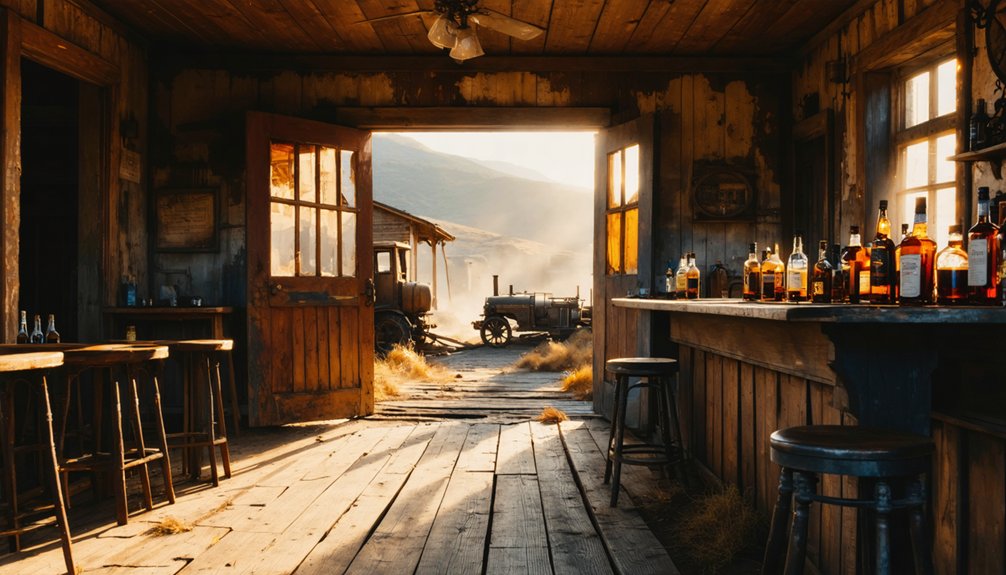
You’ll find America’s best-preserved cowboy ghost towns in places like Bodie, California, where 200+ original buildings stand frozen in time. Explore authentic Western lawlessness in Tombstone’s O.K. Corral or Montana’s Bannack with its 60 historic structures. Visit during spring or fall for comfortable temperatures and fewer tourists. Pack water, offline maps, and respect artifacts—local lore claims those who pocket Bodie souvenirs face an enduring curse. The frontier’s untold stories await beyond these weathered thresholds.
Key Takeaways
- Visit Bodie, California for over 200 original buildings preserved in a state of “arrested decay” since the 1910s.
- Explore towns like Tombstone and Dodge City for authentic Wild West lawlessness and daily gunfight reenactments.
- Plan visits during spring or fall (60-75°F) to avoid extreme weather and crowds at sites like Bannack and St. Elmo.
- Pack essentials including full gas tanks, ample water, and offline maps as many ghost towns lack commercial services.
- Photograph weathered structures during golden hour with a tripod, capturing textures that tell stories of frontier life.
Best-Preserved Ghost Towns of the American Frontier
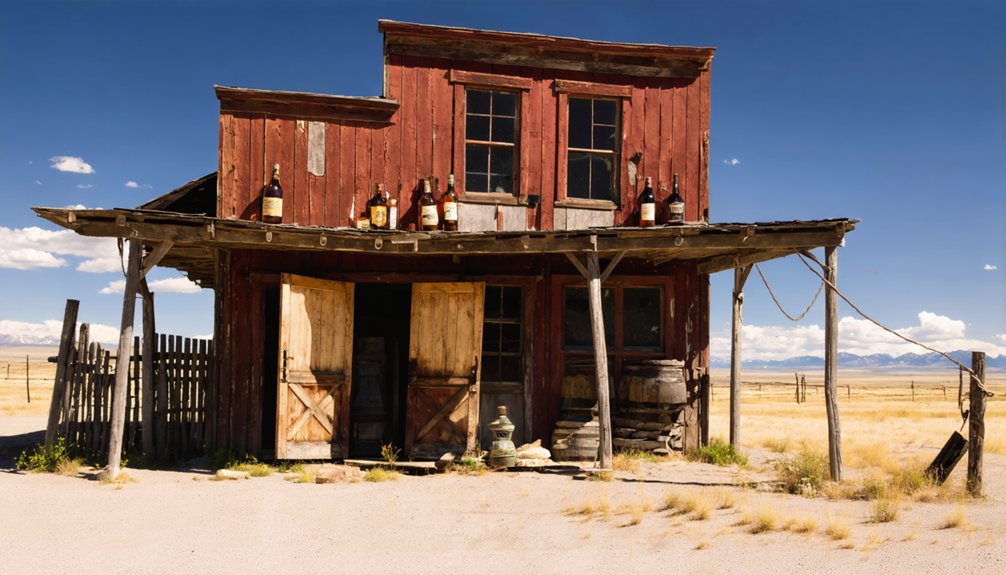
While the American West’s storied frontier has largely vanished into history, several remarkably intact ghost towns stand as time capsules of the nation’s cowboy era.
Bodie Exploration rewards you with over 200 original buildings, many still furnished as they were when hastily abandoned. Visitors can peek through windows to see the eerie arrested decay preservation of everyday life. Established in 1859, Bodie became a ghost town by the 1910s with approximately 110 structures still standing today.
Garnet History comes alive among preserved log cabins and saloons where 1,000 residents once thrived.
St. Elmo Architecture showcases the 1880s mining boom through main street structures that withstood decades of mountain winters.
Kennecott Preservation efforts continue within Wrangell-St. Elias National Park, where weathered copper mine buildings whisper tales of frontier industrialism.
Bannack Significance can’t be overstated—Montana’s first territorial capital retains 60+ historic structures and earned National Historic Landmark status for its authentic representation of gold rush communities.
Where to Experience Authentic Western Lawlessness
Beyond the romanticized Hollywood portrayals, genuine remnants of the Wild West’s lawlessness still beckon travelers seeking authentic frontier experiences.
While Hollywood paints the frontier with romantic strokes, authentic Wild West lawlessness awaits adventurous travelers.
In Bodie, California, you’ll encounter over 200 original buildings where lawless legends thrived amid shootouts and a bustling red-light district.
Tombstone’s O.K. Corral reenactments bring its violent silver boom era to life, while Dodge City’s Boot Hill Museum showcases the “wickedest little city in the West” through daily gunfights.
Idaho City’s planked boardwalks and Pioneer Cemetery reflect the birthplace of vigilante justice, offering glimpses into frontier survival.
For ghost stories, visit Frisco, Utah, where abandoned stone kilns and a historic cemetery mark a notoriously criminal mining town that collapsed in 1885, preserving its wild reputation in the haunting desert landscape.
Virginia City’s Chollar Mine tours provide visitors an authentic glimpse into the challenging conditions miners faced during the famous Comstock Lode boom.
At Bannack, Montana, visitors can explore the infamous “Toughest Town in the West” with its 60 remaining structures that witnessed the greed and gunplay of the 1860s.
Utah’s Hidden Cowboy Settlements
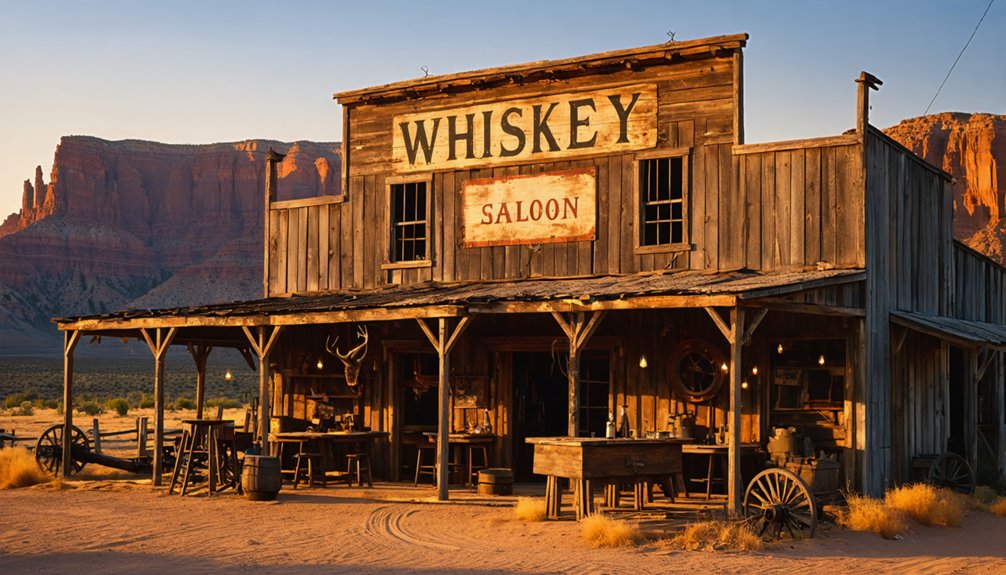
Utah’s rugged landscape conceals a wealth of forgotten settlements that tell a different story of Western expansion than their more infamous counterparts.
Unlike boomtowns built on gold fever, places like Grafton emerged from Mormon settlements attempting cotton cultivation in harsh desert conditions. These agricultural failures reveal the struggle against unforgiving terrain.
as industries evolved, many of these towns faced economic impacts on sawmill towns, where logging became the primary source of livelihood. The decline in timber demand led to job losses and dwindling populations, forcing communities to adapt or risk fading into obscurity. This shift sparked a renewed focus on diversifying local economies to ensure sustainability and resilience.
You’ll find Iosepa’s remnant cemetery, the only visible marker of this abandoned community.
Sego and Silver Reef showcase mining’s boom-and-bust cycle, while Thistle’s railroad history comes with tales of Marshal Pearson’s ruthless approach to lawlessness—shooting six outlaws his first night on duty.
Each ghost town represents different Western settlement patterns, from railroad infrastructure developments like Promontory to failed agricultural experiments that proved even determined faith couldn’t overcome nature’s harsh reality.
Old Iron Town stands as evidence of early industrial ambitions, established as part of Brigham Young’s Iron Mission to produce iron in 1850.
Frisco once housed a staggering 6,000 residents during its peak as a thriving silver mining town before its eventual abandonment in the 1920s.
Saloons, Brothels, and Gambling Halls: The Wild West Experience
At the heart of every boomtown’s social landscape stood an unholy trinity of establishments that defined Wild West culture more vividly than any wanted poster could.
When exploring ghost towns, you’ll walk where saloon culture thrived—from canvas tents to ornate brick palaces with gleaming mirrors. Brothel operations ran by notorious madams contributed greatly to town revenues, often sharing walls with gambling halls where fortunes changed hands over Faro and poker.
Don’t miss dance halls where performers earned more in a night than laborers made monthly. The Faro card game, not poker, was actually the most popular gambling activity in Old West saloons. The historical legends of these places endure—visit remnants of the Bird Cage Theatre in Tombstone or the infamous Gem Saloon site in Deadwood.
These notorious locations witnessed the real Wild West, where cowboys, miners, and outlaws gathered under gas lamps to escape frontier hardship. In the profession’s golden age, gambling was considered a legitimate profession comparable to law, clergy, or medicine.
Planning Your Ghost Town Road Trip
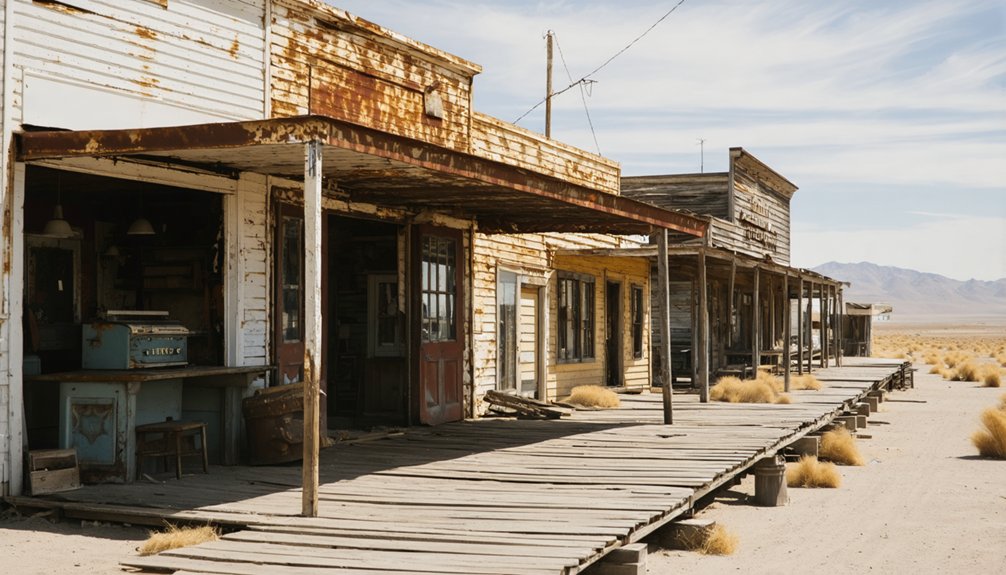
Your ghost town itineraries should account for seasonal conditions; Bodie becomes impassable after snowstorms, while Bannack hosts reenactments during July’s Bannack Days.
Road trip essentials include full gas tanks and ample provisions, as places like Bodie offer no commercial services. Remember that taking artifacts from sites like Bodie may come with a supposed curse on visitors who remove items from the grounds. Virginia City offers a unique experience with its historical reenactments and costume rentals for a more immersive journey into the gold rush era.
Allocate sufficient exploration time—at least two hours for Bodie’s hundred-plus abandoned buildings—and consider accommodations ranging from Terlingua’s eclectic yurts to seasonal lodging near Montana’s winter skiing opportunities.
Photography Tips for Capturing Western Decay
To capture the haunting beauty of ghost town decay, you’ll find no better opportunity than the golden hour when low-angled sunlight creates dramatic shadows across weathered facades and illuminates dust particles suspended in abandoned saloons.
Rather than sweeping panoramas alone, focus your lens on intimate details—cracked leather saddles, faded wanted posters, or rusted spurs—which tell more compelling stories of frontier life than wide shots ever could.
Frame compositions that juxtapose remnants of the 1880s with modern elements like fence posts or distant highways to emphasize the passage of time and create visual tension that enhances your photographic narrative.
Golden Hour Magic
The golden hour casts its ethereal glow across weathered planks and rusted hinges, transforming ordinary ghost town ruins into photographic masterpieces bathed in amber light.
You’ll find this magical lighting twice daily—just after sunrise and before sunset—when the sun’s low angle creates warm, directional illumination perfect for highlighting decay’s texture.
Position your camera to capture side-lighting on weathered wood and corroded metal, allowing shadows to reveal depth in abandoned structures.
Use a tripod for stability during these low-light conditions, and consider wider apertures to include both foreground details and dramatic backgrounds.
Work quickly—golden hour waits for no one.
Scout locations beforehand to maximize shooting time when that perfect light bathes rusty mining equipment and vacant storefronts, telling visual stories of frontier dreams long faded into history.
Detail Shots Matter
While golden hour paints broad, dramatic scenes across ghost town landscapes, intimate detail photography reveals the soul of these abandoned settlements.
You’ll want a prime lens and tripod to capture the textures of rust patterns, weathered wood, and peeling paint that tell stories of sudden desertion.
Frame architectural elements tightly—broken windows, door handles, faded signage—isolating textures that evoke tactile experiences. Your detail shot techniques should include strategic flashlight illumination to highlight intricate features in shadowy corners.
Look for storytelling elements: abandoned tools, household items, and mine equipment that suggest human presence.
Consider shooting in monochrome or sepia to emphasize contrast and timelessness. Explore different angles to reveal unexpected shapes in decayed objects, and document where nature reclaims human structures—these compositions create powerful narratives of the West’s forgotten chapters.
Contrast Old and New
Ghost towns truly come alive photographically when you juxtapose their weathered structures against modern elements, creating visual tension that emphasizes the passage of time.
Position your wide-angle lens to capture weathered saloons of historical significance alongside distant wind farms or modern highways. During golden hour, these contrasts become most pronounced as sunset light bathes century-old architectural styles in warm tones while modern elements remain cooler-toned.
Try light painting during long exposures (2-13 seconds) to illuminate abandoned structures while capturing modern car light trails in the same frame. Black and white conversion often strengthens this old-versus-new narrative by emphasizing textural differences rather than color distractions.
For maximum impact, photograph from elevated positions that showcase both the ghost town’s complete layout and contemporary surroundings, demonstrating nature’s reclamation alongside human progress.
Seasonal Considerations for Ghost Town Exploration
You’ll find spring and fall offering the prime exploration windows for most Western ghost towns, with comfortable 60-75°F days ideal for lengthy walks through weathered boomtown remnants.
Winter excursions demand careful preparation—pack tire chains for mountain access roads, layer wool clothing against bitter morning chills, and research which historical sites maintain winter hours.
The calendar brims with period-specific events throughout the year, from Memorial Day shootout reenactments in Bodie to October’s lantern-lit cemetery tours in Virginia City, each providing authentic glimpses into frontier life beyond mere architectural remains.
Best Weather Windows
Planning your ghost town expedition requires careful consideration of seasonal weather patterns to guarantee both comfort and access.
Winter months (December-February) deliver mild 70°F temperatures and thinner crowds, creating an authentic experience with predictable weather patterns for extended explorations.
Early June and late September mark ideal sweet spots with comfortable temperatures and fewer tourists. May offers acceptable conditions for longer walking tours, while October showcases spectacular fall colors at mountainous locations in Colorado and Montana.
Avoid peak summer (June-August), particularly early August when crowds swell and desert heat demands constant hydration.
Mountain ghost towns experience limited accessibility from October through April due to snow coverage.
Adjust your seasonal attire accordingly—lightweight, breathable fabrics for warmer months and layered clothing for variable conditions during changing seasons.
Preparing for Extremes
Beyond weather windows, ghost town exploration demands proper preparation for extreme conditions that can arise without warning in these remote, abandoned territories.
The frontier spirit that built these towns couldn’t tame nature’s wrath, and neither can modern adventurers without proper survival gear.
Your expedition into cowboy country requires:
- Desert-to-Mountain Adaptability – Pack layered clothing that withstands 98-degree heat and unexpected snowfall, with sturdy closed-toe boots for traversing debris-laden structures.
- Water Redundancy – Carry minimum three days’ supply regardless of planned duration, as extreme weather can strand even well-prepared explorers.
- Communication Lifelines – Establish check-in protocols with a trusted contact, equipped with portable chargers and GPS devices downloaded with offline maps.
Your freedom to explore these historical treasures depends entirely on your readiness for their extremes.
Seasonal Events Calendar
Timing your ghost town expeditions with annual signature events transforms a simple historical excursion into an immersive journey through the authentic rhythms of frontier life.
Summer months (June-August) offer the richest calendar, with Bannack Days in Montana featuring pioneer demonstrations and gunfight reenactments during July’s third weekend.
For spring festivities, California’s Calico Days delivers gunfighting shows, mining contests, and Victorian theater against desert backdrops.
Autumn celebrations include Halloween-themed performances at locations like Spooky Wild West City in October.
Note that weather dictates accessibility—desert towns schedule around midday heat, while northern and high-elevation settlements like 1880 Town in South Dakota close entirely from November through April.
Plan accordingly to experience these living windows into America’s frontier past.
Frequently Asked Questions
Are Ghost Towns Safe for Children to Visit?
Ghost towns can be safe if you’re vigilant about child-friendly activities and ghost town safety. You’ll need to supervise closely, avoid unstable structures, and watch for hazards like rusty nails or debris.
Can You Legally Collect Artifacts From Ghost Towns?
No, you can’t legally collect artifacts from ghost towns. Federal and state legal regulations prohibit removal without permits. You’ll protect artifact preservation and avoid hefty fines by observing, not taking these historical items.
Do Any Ghost Towns Still Have Permanent Residents?
Yes, you’ll find permanent residents in several Western ghost towns. Their demographics vary from handful to thousands, preserving historical significance while creating hybrid communities that honor freedom through adaptive reuse of America’s frontier legacy.
What Gear Is Essential for Ghost Town Exploration?
Your exploration essentials include sturdy boots, gloves, headlamp, backup flashlight, first aid kit, water, maps, and safety gear like dust masks and glasses. Don’t forget your camera—history’s waiting.
Are There Any Haunted Ghost Towns With Paranormal Activity?
You’ll find haunted legends at Tombstone, Bodie, and St. Elmo, where ghostly encounters include apparitions of cowboys, unexplained sounds, and moving objects—all tied to their violent frontier histories.
References
- https://www.mentalfloss.com/geography/american-ghost-towns-can-still-walk-through
- https://explorethearchive.com/western-ghost-towns
- https://www.americansky.co.uk/travel-inspiration/top-10-wild-west-towns-in-america
- https://www.visitutah.com/things-to-do/history-culture/ghost-towns
- https://grizzlyrose.com/wild-western-towns/
- https://www.geotab.com/ghost-towns/
- https://wildwestcity.com/old-west-ghost-towns/
- https://www.atlasobscura.com/lists/americas-best-preserved-ghost-towns
- https://www.youtube.com/watch?v=SC60gEY39us
- https://www.usawelcome.net/news/explore-ghost-towns-west-usa.htm