You’ll discover America’s colonial ghost towns through weathered edifices, abandoned mine shafts, and forgotten trading posts that span from failed 16th-century settlements like Roanoke to Gold Rush boomtowns. These historical remnants, now often protected as heritage sites, preserve architectural features alongside rich folklore and supernatural legends. Many locations have transformed into tourism destinations that generate economic opportunities while facing preservation challenges. The silent witnesses to America’s colonial past await your exploration.
Key Takeaways
- Colonial ghost towns like Plymouth Colony and failed settlements such as Jamestown and Roanoke offer valuable historical insights through their preserved ruins.
- The National Register of Historic Places protects numerous colonial-era abandoned settlements, facilitating authentic encounters with early American history.
- Religious sanctuaries, trading posts, and defensive buffer communities comprise the diverse landscape of colonial ghost town remnants.
- Preservation initiatives have transformed deteriorating colonial relics into heritage tourism centers through strategic designation as national monuments.
- Colonial ghost towns feature authentic structures, living history tours, and cultural presentations that showcase the challenges of early American settlement.
Mining Boomtowns: The Rise and Fall of Colonial-Era Ghost Towns
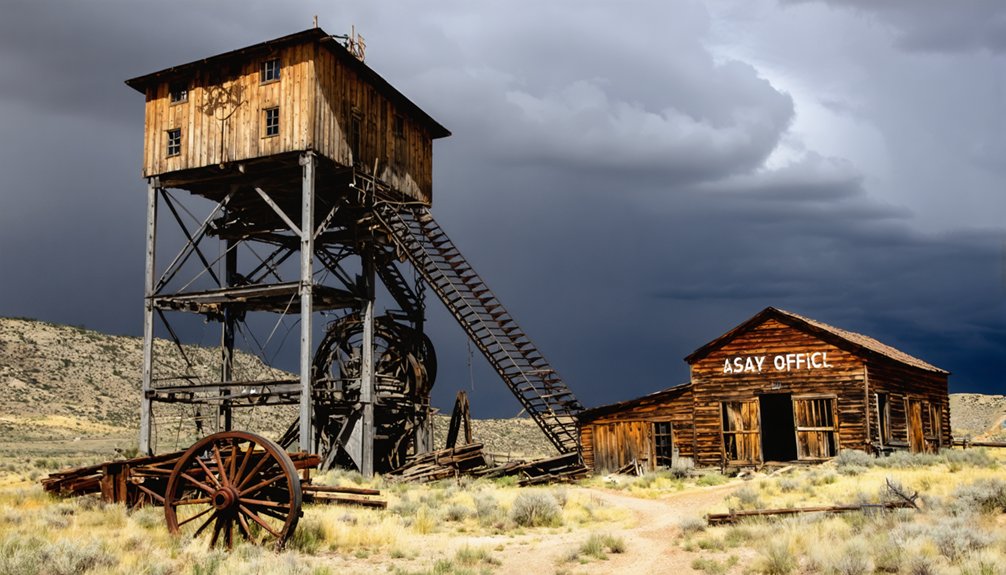
As the British colonies along the eastern seaboard expanded their industrial capacity throughout the 17th and 18th centuries, mining boomtowns emerged as essential centers of resource extraction and economic development.
You’ll find their origins in early metal discoveries in Massachusetts (1628) and Rhode Island (1768), quickly spreading to neighboring territories.
The economic impacts of these settlements transformed the wilderness into commercial hubs, with banks, schools, and transportation networks developing rapidly to serve the burgeoning industry. Mining on the East Coast had mixed results until the California gold rush dramatically shifted the center of mining activity westward.
From wilderness to commerce—colonial mining settlements catalyzed rapid infrastructure development throughout the American frontier.
Social dynamics reflected the diversity and stratification of colonial society—predominantly male populations with ratios reaching 9-to-1, comprised of English, European, and minority miners including Chinese and Mexican laborers.
Law enforcement in these settlements was often inadequate, with vigilante justice frequently replacing formal legal proceedings.
When resources depleted or markets crashed, these once-thriving communities withered into ghost towns, leaving behind archaeological treasures that tell their complex stories.
The Legacy of Silver and Gold: Preserved Historic Districts
While the mining boomtowns of the colonial era eventually succumbed to economic decline, their legacy endures through meticulously preserved historic districts that showcase America’s silver and gold mining heritage.
You’ll discover Empire Mine State Historic Park, where period-costumed interpreters bring Grass Valley’s gold mining past to life through living history tours. The park features extensive underground passages spanning 367 miles that once produced 5.8 million ounces of gold before operations ceased in 1956.
At Nevada City, 93 Gold Rush structures stand as monuments to 19th-century prosperity.
Tonopah Historic Mining Park preserves original claims across 100 acres of silver country.
These bastions of historic preservation transcend mere commemoration—they narrate western expansion through physical artifacts and restored machinery.
Virginia City’s remarkable wealth from the Comstock Lode was so significant that it prompted Nevada’s statehood in 1864, forever altering the nation’s political landscape.
The National Register of Historic Places provides essential protection for these sites, while interpretive exhibits, scale models, and self-guided explorations offer you authentic encounters with mining heritage, from the Comstock Lode to Bisbee’s evolution from mining camp to artist colony.
Beyond Mining: Diverse Origins of Colonial Settlements
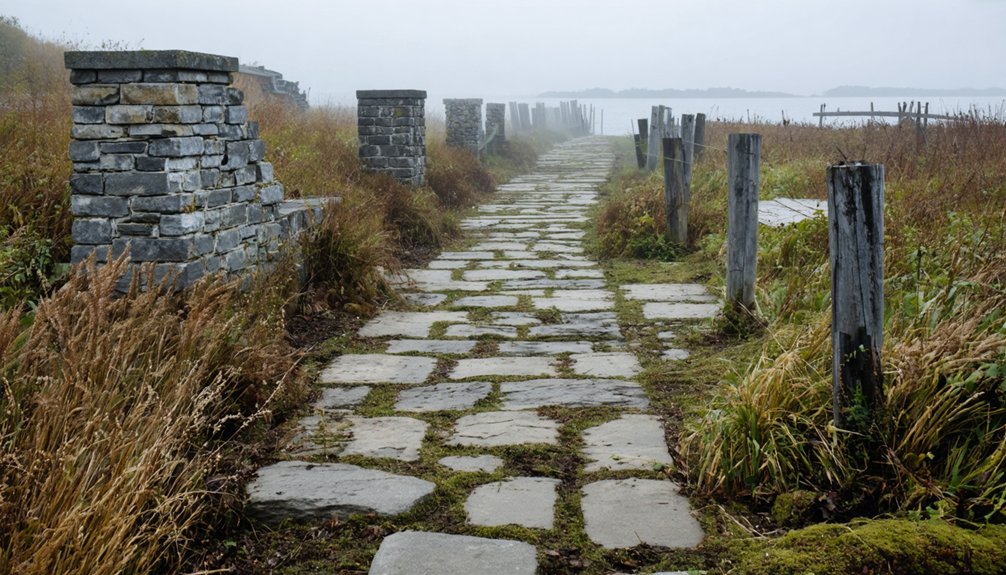
Though mining settlements dominate narratives of colonial ghost towns, America’s abandoned settlements originated from a remarkably diverse tapestry of motivations beyond mineral extraction.
You’ll discover religious freedom spawned numerous settlements, from the Pilgrims’ Plymouth Colony to Quaker havens in Pennsylvania, where utopian “Holy Experiments” flourished before fading into obscurity.
Economic ventures likewise shaped the landscape—abandoned trading posts dot former Dutch territories, while failed tobacco plantations lie scattered throughout Virginia’s countryside. The British Empire’s earliest settlements, like Jamestown established in 1607, often struggled against harsh conditions and dwindling resources. The ill-fated Roanoke colony, known historically as the “Lost Colony,” represents one of the earliest English settlement attempts that mysteriously disappeared around 1591.
Strategic settlements reveal perhaps the most poignant remnants; Georgia’s defensive buffer communities, originally populated with debtors as human shields against Spanish Florida, now stand as crumbling monuments to imperial chess games.
The weathered foundations of these diverse ghost towns offer glimpses into colonial America’s complex social experiments, commercial aspirations, and religious sanctuaries.
The historic remnants of colonial ghost towns reveal the stories of those who once inhabited them, painting a vivid picture of life during a transformative era. As time weathered their structures, these sites became silent witnesses to the struggles and triumphs of early settlers. Today, they serve as poignant reminders of a past that continues to intrigue historians and adventurers alike.
Haunted Tales and Folklore From America’s Abandoned Past
Beyond these physical remnants of colonial ambition, America’s abandoned settlements harbor an equally rich spiritual landscape—one that continues to captivate modern visitors and researchers alike.
You’ll encounter spectral sightings at dusk near sites like Crystal Mill, where phantom miners still work century-old claims. The folklore traditions reflect a cultural fusion—Irish-Scottish settlers’ Pagan beliefs merged with Indigenous oral traditions and African storytelling practices across the Appalachian frontier. In Alabama, visitors to Cahaba report witnessing a mysterious ghostly orb near the cemetery, believed to be the spirit of a lost Confederate soldier or Union prisoner of war. Out of America’s 3,800 ghost towns, many have developed unique supernatural legends that reflect their dramatic histories of boom and bust.
- Submerged settlements like Oscarville beneath Lake Lanier carry curse legends following racial violence and displacement.
- Fort Griswold and Valley Forge encampment manifest persistent paranormal activity where historical tragedy occurred.
- Revolutionary battlefields report spectral soldiers, perpetuating regional variations of encounters that transcend singular cultural origins.
Tourism and Preservation Efforts in Colonial Ghost Towns
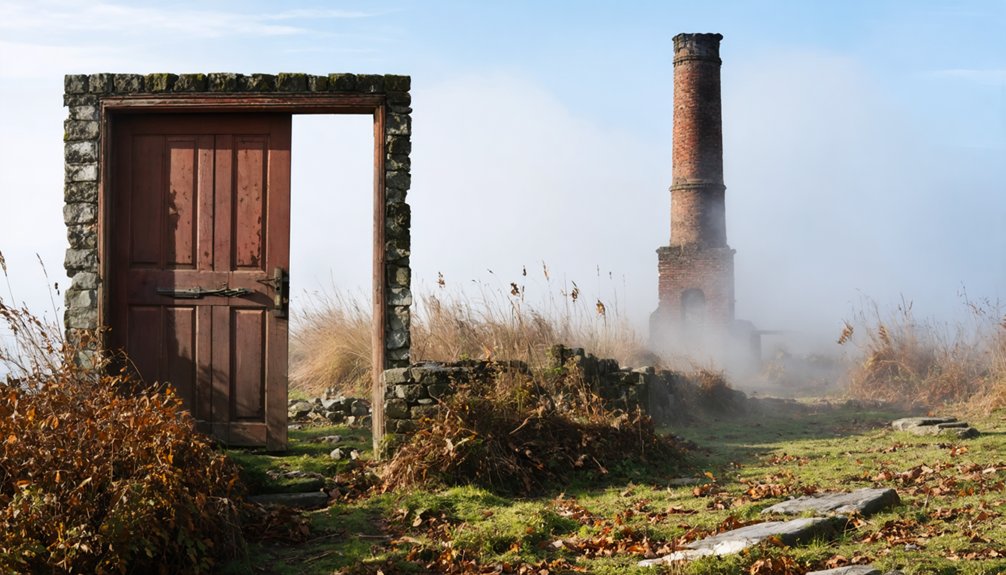
How did America’s forgotten colonial outposts transform from deteriorating relics into vibrant centers of heritage tourism? The metamorphosis began with strategic preservation initiatives that secured protected status for sites like Fort Jefferson, which gained National Monument designation in 1935. This legal framework guarantees funding continuity and prevents commercial encroachment upon historical fabric.
The strategic preservation of America’s colonial ruins transformed forgotten outposts into thriving centers of historical significance.
You’ll find these preservation efforts face substantial challenges—structural deterioration, weather damage, and limited budget force difficult prioritization among thousands of potential sites. Towns like Kennicott and Berlin demonstrate the importance of state park designation for long-term preservation. Ghost towns serve as popular tourist attractions, with many of the 4,531 ghost towns in the United States offering guided historical tours.
Despite these constraints, places like St. Elmo and Bodie demonstrate remarkable success, maintaining authentic colonial-era structures that attract international visitors during peak seasons.
This heritage tourism revival creates economic engines in formerly abandoned regions, generating employment opportunities through infrastructure development while simultaneously preserving architectural treasures that would otherwise succumb to time’s relentless march.
Frequently Asked Questions
How Many Colonial Ghost Towns Remain Completely Undiscovered Today?
You’ll find approximately 50 hidden settlements of archaeological significance remain undiscovered, according to experts’ estimates. These vestiges of provincial habitations await revelation through advanced surveying methodologies like LiDAR technology.
Which Colonial Ghost Town Artifacts Are Most Valuable to Collectors?
While theories abound, you’ll find colonial relics commanding highest collector demand include Spanish gold coins, ornate powder horns, Jean Lafitte’s pirate treasure, and authenticated personal artifacts with traceable provenance to original settlements.
Can People Legally Live in Abandoned Colonial Ghost Towns?
You’re typically barred from ghost town residency through eminent domain claims, historic preservation regulations, and zoning restrictions. Legal implications include potential eviction unless you’ve purchased the property through proper channels.
How Did Indigenous Communities Interact With These Colonial Settlements?
You’ll find indigenous communities engaged in complex cultural exchange with colonists, trading goods and knowledge while maintaining community resilience through diplomatic negotiations, strategic alliances, and occasional armed resistance against territorial encroachment.
What Environmental Restoration Occurs at Toxic Colonial Mining Sites?
You’ll find toxic remediation includes topsoil replacement, phytostabilization, and chemical amendments to neutralize heavy metals. Mining restoration employs native plantings, woody debris placement, and community-led initiatives that liberate landscapes from colonial exploitation’s environmental legacy.
References
- https://www.christywanders.com/2024/08/top-ghost-towns-for-history-buffs.html
- https://albiongould.com/ghost-towns-to-visit-in-the-states/
- https://nightofthejack.com/2025/01/23/top-creepy-ghost-towns-in-america/
- https://devblog.batchgeo.com/ghost-towns/
- https://www.geotab.com/ghost-towns/
- https://whakestudios.com/us-ghost-towns/
- https://en.wikipedia.org/wiki/Lists_of_ghost_towns_in_the_United_States
- https://www.youtube.com/watch?v=F6-_DPPPjt4
- https://freepages.history.rootsweb.com/~gtusa/usa.htm
- https://hobblecreek.us/blog/entry/mining-towns-of-the-old-west