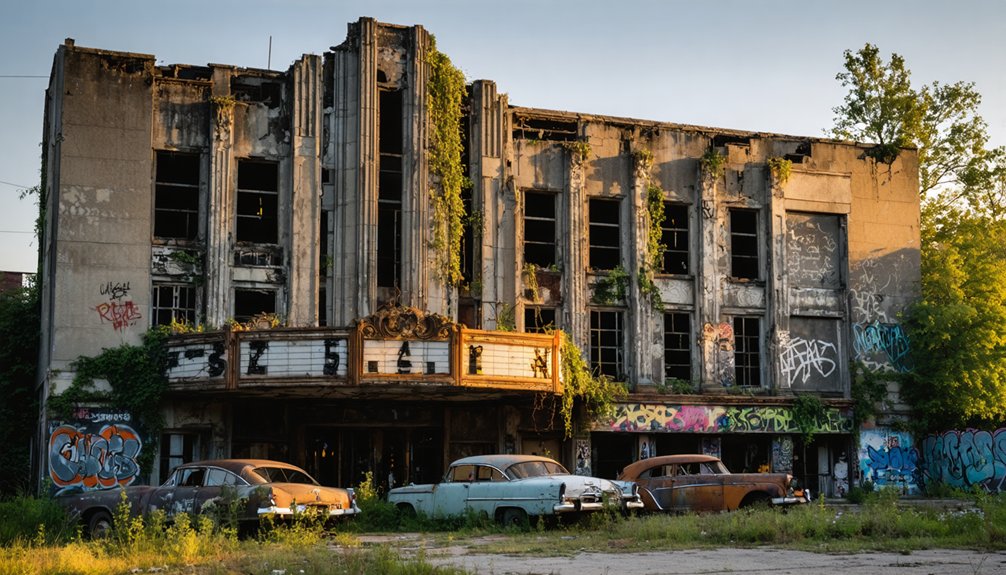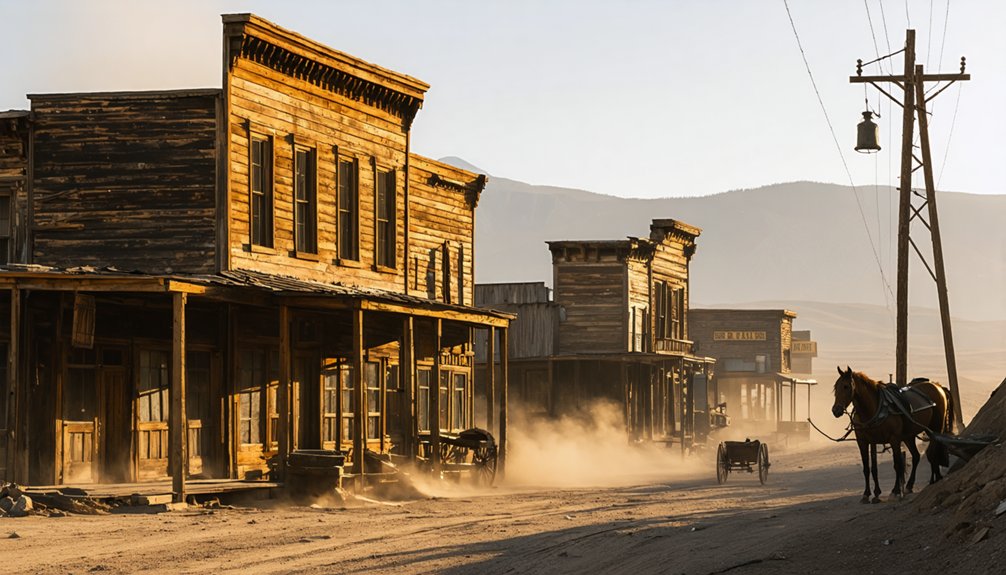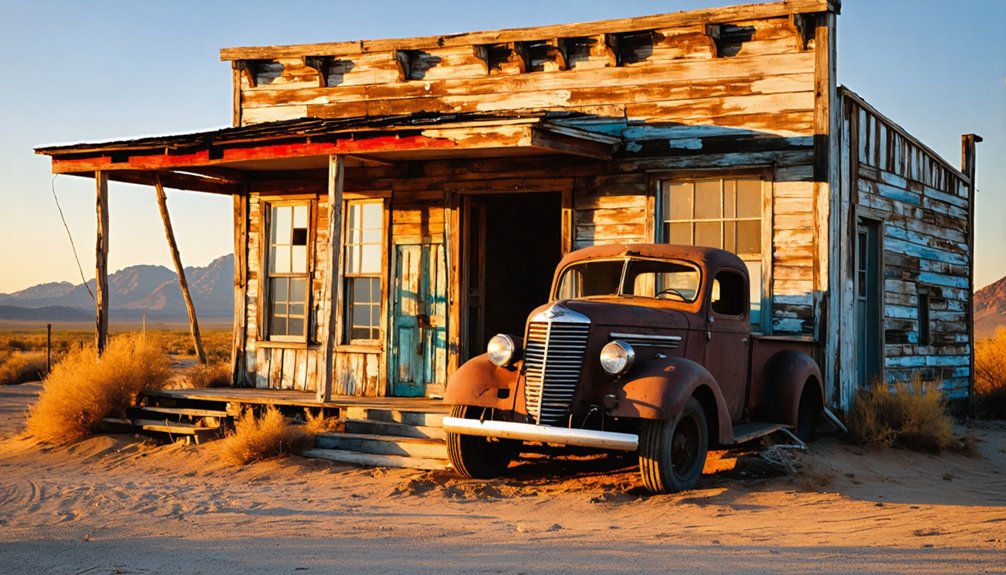
America’s remote ghost towns offer windows into our frontier past, from Victorian mining settlements to abandoned Dust Bowl communities. You’ll discover well-preserved architecture in places like Bodie with over 100 buildings in “arrested decay,” alongside dramatic historical sites from outlaw hideouts to Lincoln County War battlegrounds. Most require specialized equipment and expert navigation to access their isolated locations in mountains, deserts, and forgotten highway corridors. The stories they tell await your exploration.
Key Takeaways
- Remote ghost towns often require multi-day treks through rugged terrain and once supported populations under 200 residents.
- Mining boomtowns like Bodie and Bannack are preserved as living museums with original wooden structures in “arrested decay.”
- Ghost town cemeteries reveal environmental hazards, unique burial practices, and document the harsh realities of frontier life.
- Historic conflict sites preserve outlaw hideouts, escape routes, and battlegrounds from the Lincoln County War era.
- Transportation changes, including railroad decline and highway bypasses, directly contributed to many ghost towns’ abandonment.
Mining Boomtowns of the American West

While Spanish miners conducted small-scale operations in the western United States as early as the late 1600s, it wasn’t until the California Gold Rush of 1849 that the era of mining boomtowns truly began. Over 300,000 men flocked to California, establishing settlements that transformed overnight into industrial centers.
As placer deposits depleted, miners developed underground lode mines, pushing into every remote corner of the West.
Mining camp life flourished in places like Virginia City, Nevada, where the 1859 Comstock Lode created a metropolis of 25,000 residents.
You’ll find ghost town legends throughout Colorado, Idaho, and the Black Hills, where communities once boasted hotels, saloons, churches, and railroads.
If you’re interested in unique adventures, exploring ghost towns in Oregon can also offer a fascinating glimpse into the past. From abandoned mining sites to dilapidated homes, these towns narrate stories of resilience and lost dreams. Each visit can be an opportunity to connect with history and appreciate the beauty of forgotten places.
These towns exemplify the dramatic boom-and-bust cycle—rising spectacularly with silver and gold discoveries, only to be abandoned when mines played out, leaving behind the skeletal remains you can explore today.
Many of these historic mining towns have been preserved as tourist destinations, offering visitors a glimpse into the Victorian-era buildings and mining artifacts that tell the story of America’s westward expansion.
These initial mining communities were characterized by rough-and-tumble atmospheres, with constantly changing fortunes as miners sought their riches in the untamed wilderness.
Frontier Ghost Towns With Preserved Architecture
In frontier ghost towns like Bannack and Bodie, you’ll find remarkably intact wooden storefronts that have withstood over a century of harsh weather conditions, offering authentic glimpses into 19th-century commercial architecture.
These preserved facades, with their hand-carved details and weathered signage, represent the most visible elements of frontier town planning and serve as living museums of Western expansion. Many of these structures are now maintained as part of heritage tourism efforts that help preserve America’s historical narrative. Bodie’s preservation approach keeps buildings in a state of “arrested decay” with over 100 structures still standing since the gold rush era.
Beyond the main streets, you should approach the historic cemeteries with caution, as these hallowed grounds often feature unstable headstones, sunken graves, and deteriorating perimeter fences that present genuine safety concerns while simultaneously documenting the harsh realities of frontier life.
Wooden Storefronts Endure
Time stands still within the wooden storefronts of America’s remote ghost towns, where frontier architecture remains remarkably intact despite decades of abandonment.
In Garnet, Montana, you’ll discover over twenty preserved structures—from log cabins to a three-story hotel—exemplifying utilitarian frontier designs that once supported vibrant mining communities. The town’s peak population reached about 1,000 residents during its gold-mining heyday of the 1890s.
Bodie, California presents over 100 wooden buildings maintained under an “arrested decay” philosophy, where architectural significance shines through weathered boards deliberately left unrestored. Visitors can witness buildings left with goods and furniture as if owners would return, creating an authentic state of preservation unlike any other ghost town.
St. Elmo’s forty original structures showcase the prosperity railway connections brought to frontier settlements, while Virginia City’s wooden sidewalks transport you to the 1860s silver boom.
The wooden preservation efforts across these towns offer you unfiltered glimpses into authentic frontier life—places where freedom and opportunity once drew thousands to America’s wilderness.
Dangerous Town Cemeteries
Beyond the weather-worn storefronts and abandoned miners’ cabins lie perhaps the most poignant remnants of America’s ghost towns—their cemeteries—where danger now manifests in both physical and metaphysical forms.
These burial grounds reveal stark realities of frontier life while harboring toxic legacies that persist today.
- Environmental Hazards: Picher, Oklahoma’s cemetery remains contaminated with lead and zinc, exemplifying how industrial poisons outlast the communities they destroyed.
- Unique Burial Practices: New Orleans’ St. Louis Cemetery features distinctive above-ground crypts constructed from local materials, housing over 100,000 souls. Established by Spanish royal decree in 1789, it stands as the oldest existing grave site in New Orleans.
- Documented Paranormal Activity: Tombstone’s Boothill Graveyard reportedly hosts apparitions of O.K. Corral victims emerging from their graves. This historical site contains over 200 burials from America’s infamous Wild West era.
- Cultural Preservation Challenges: Terlingua’s mercury mining cemetery contains approximately 400 graves, mainly of Hispanic heritage, gradually vanishing due to erosion and vandalism.
Dust Bowl Remnants Across the Great Plains
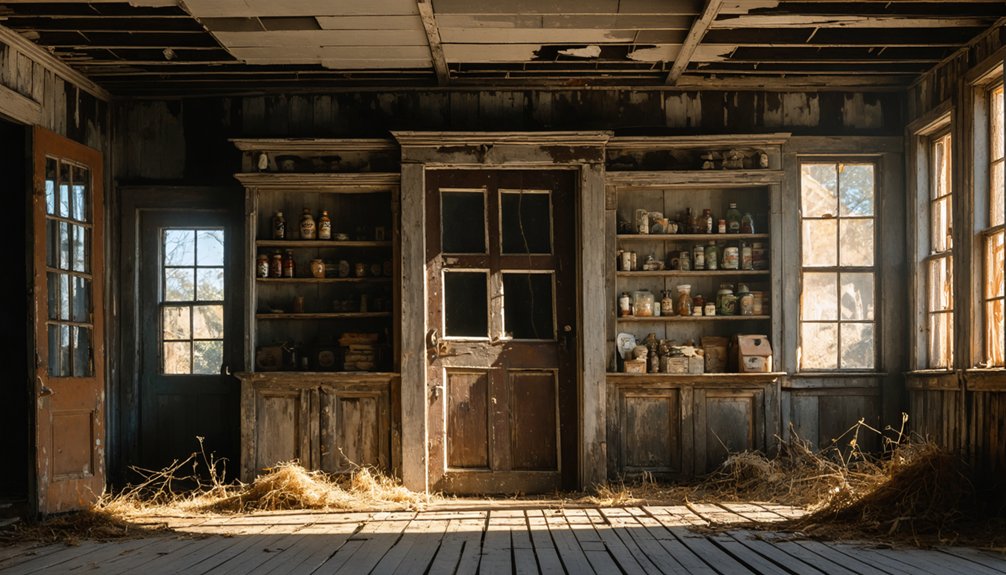
While once vibrant farming communities dotted the landscape of America’s Great Plains, the catastrophic environmental and economic conditions of the 1930s transformed many into the haunting remnants we now classify as Dust Bowl ghost towns.
You’ll find these abandoned settlements characterized by weathered wooden structures, collapsed brick buildings, and rusting agricultural equipment—silent testimonies to community resilience that ultimately faltered.
Dearfield, Colorado stands as a particularly poignant example—a once-thriving African American farming settlement founded by Oliver T. Jackson that reached 700 residents before drought and depression forced its abandonment. Only three buildings remain today: a gas station, a diner, and the founder’s home, all under preservation efforts by the Black American West Museum.
During its peak in the early 1920s, Dearfield’s residents found surprising harmony with neighboring whites despite the prevalent racism of the Jim Crow era.
As you explore these forgotten places, you’ll encounter remnants of schools, post offices, and community halls that tell the story of American agricultural ambition undone by ecological crisis and economic collapse.
High-Altitude Mountain Settlements
Perched at elevations where oxygen grows thin and winter stretches beyond conventional seasons, America’s high-altitude mountain settlements have transformed into some of the nation’s most haunting ghost towns.
Mountain isolation shaped these communities’ distinctive identities, from the Blue Ridge Hollows to Rocky Mountain mining camps like Lulu City, Colorado. The extreme remoteness fostered unique cultural retention as inhabitants developed self-sufficient lifestyles blending subsistence farming, wage labor, and craftsmanship.
- Most sites require multi-day treks through rugged terrain
- Communities typically relied on mining, logging, or tourism economies
- Population densities rarely exceeded 200 residents at peak occupation
- Abandonment occurred rapidly when economic conditions deteriorated
You’ll find these settlements preserved through their inaccessibility—often only wooden remnants and interpretive signs mark where vibrant communities once struggled against nature’s harsh boundaries.
Historic Conflict Zones and Outlaw Hideaways

In America’s remote ghost towns, you’ll encounter the physical remnants of the Lincoln County War, where notorious figures like Billy the Kid once roamed through settlements now frozen in time.
The weathered buildings of Mogollon and Chloride still bear witness to decades of outlaw operations, indigenous conflicts, and the harsh realities of frontier justice that shaped the American West.
These remote conflict zones preserve escape routes and hideaways used by infamous outlaws, offering you tangible connections to a tumultuous era when lawlessness prevailed across territorial boundaries.
Lincoln County Battlegrounds
During the tumultuous years of 1878-1881, the rugged terrain of Lincoln County transformed into a deadly chessboard where economic power and territorial control were contested through bloodshed.
As you explore these battleground sites, you’ll witness the stark remnants of America’s most notorious range war that propelled Billy the Kid to folk hero status.
- Tunstall’s ranch – Where the conflict ignited with the murder that compelled the Regulators to form
- Lincoln’s main street – The thoroughfare where Sheriff Brady was ambushed and killed
- McSween’s house – Site of the five-day siege and final battle that left the structure burned to ashes
- Rio Peñasco area – Where running gunfights and executions established the war’s brutal reputation
These sites remain as silent testimonies to the cultural impact of a conflict that forever changed New Mexico’s landscape.
Outlaw Escape Routes
Traversing the rugged landscape of the American West, notorious outlaws established an intricate network of hideaways and escape routes that allowed them to evade capture for decades.
You’ll find evidence of this criminal ingenuity at Hole-in-the-Wall in Wyoming’s Big Horn Mountains, where multiple gangs maintained a coalition base accessible only through a narrow eroded passage.
Butch Cassidy’s Wild Bunch utilized both this location and Utah’s Robbers Roost—a maze of slot canyons offering strategic lookout points.
Brown’s Hole, straddling Colorado, Utah, and Wyoming, served as another essential haven governed by a unique “outlaw code.”
These hideouts connected through the extensive Outlaw Trail Network stretching from Montana to Mexico, facilitating collaboration among criminal organizations and enabling their unprecedented longevity.
Today, you can visit preserved remnants of these outlaw hideouts at sites like Old Trail Town Museum in Cody, Wyoming.
Frontier Justice Remnants
Wandering through America’s ghost towns today, you’ll encounter somber reminders of frontier justice—weathered gallows platforms, bullet-riddled walls, and crumbling jailhouses that tell stories of a legal system forged in desperation.
These physical artifacts reflect a lawless society where vigilante justice often superseded formal proceedings, especially in borderlands where official governance remained sparse.
- Lynching trees – Sites where extrajudicial executions occurred, reflecting the stark racial tensions underlying many frontier conflicts
- Marshal offices – Often operated by elected officials with minimal training who straddled the line between law enforcer and frontier gunman
- Courthouse ruins – Where hastily assembled tribunals delivered swift verdicts with limited due process
- Border outposts – Strategic locations exploited by outlaws evading capture across jurisdictional boundaries
Transportation Routes That Built and Abandoned Towns
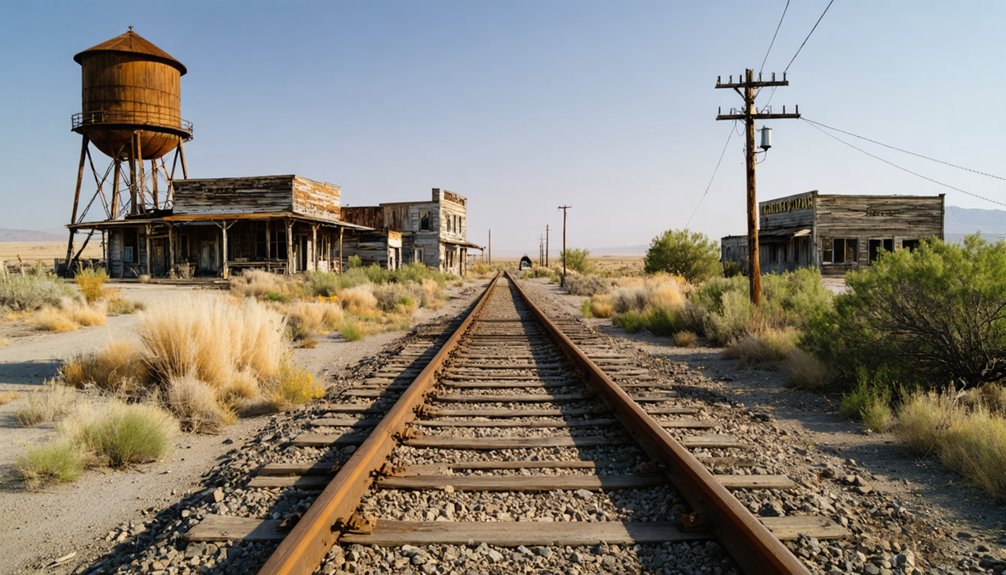
The intricate web of transportation routes across America’s vast landscapes has shaped the rise and fall of countless remote communities, creating a fascinating cycle of development and abandonment that continues to define the nation’s geography.
You’ll find ghost towns that once thrived as railroad stops, where steam engines required water and repairs during their cross-country journeys. The railroad impact was transformative—towns like Amboy, California sprang up overnight along the tracks, only to wither when diesel engines eliminated the need for frequent stops.
Similarly, the Interstate Highway System‘s development dealt a fatal blow to communities not located near exits.
These highway bypasses redirected life-sustaining traffic away from small towns that had previously flourished along older roads, rivers, and canals—transportation arteries that once promised prosperity but ultimately led to isolation.
Planning Your Ghost Town Expedition: Access and Equipment
Visiting these forgotten outposts requires careful preparation, as the journey to America’s ghost towns often proves as challenging as it’s rewarding.
Embrace the challenge of America’s ghost towns—where difficult journeys lead to unparalleled historical discoveries.
Many sites demand high-clearance 4×4 vehicles to navigate unpaved travel routes through rugged terrain, while others like Bodie or Kennecott offer more accessible paths. Seasonal conditions further dictate when certain locations become viable destinations.
- Research access permissions – Verify entry regulations and obtain necessary permits before departing
- Prepare equipment essentials – Pack recovery tools, navigation aids, and ample provisions
- Plan self-sufficient travel – Map fuel stops and download offline navigation waypoints
- Assemble safety resources – Carry satellite communication devices and first aid supplies
Always inform someone of your itinerary when venturing to these remote historical treasures, and remember that proper preparation guarantees both your safety and the preservation of these irreplaceable sites.
Frequently Asked Questions
Are Ghost Towns Legally Protected From Artifact Collecting or Metal Detecting?
Yes, you’ll find ghost towns are legally protected through federal and state regulations that prioritize artifact preservation. You must obtain permits before collecting or detecting at these historic sites.
How Dangerous Are Abandoned Mine Shafts in Ghost Town Areas?
You’re facing extreme danger in abandoned mine shafts. They present lethal hazards including collapse, toxic gases, and hidden vertical drops. Safety precautions should include complete avoidance unless properly trained and equipped.
Which Ghost Towns Allow Overnight Camping or Accommodation?
The veil between past and present thins when you’re permitted to stay in Calico, Chaco Culture, Holy Ghost, St. Elmo, and Jerome. Camping regulations vary; recommended accommodations include both on-site and nearby options for intrepid explorers.
Do Any Ghost Towns Have Paranormal Investigation Opportunities?
Yes, you’ll find paranormal tours in several ghost towns. Silver City offers interactive investigations with J Paul Corlew, while Thurmond features guided explorations of haunted history at the Post Office and Mankin-Cox Building.
What Survival Supplies Are Essential for Visiting Remote Ghost Towns?
You’ll need extensive survival gear including water purification tools, non-perishable food, shelter, appropriate clothing, navigation instruments, and a fixed-blade knife. Don’t forget your emergency kit with first aid supplies.
References
- https://www.mythfolks.com/haunted-us-ghost-towns
- https://www.colorado.com/articles/colorado-ghost-towns
- https://www.youtube.com/watch?v=BQH5LghhkVs
- https://www.newmexico.org/places-to-visit/ghost-towns/
- https://www.geotab.com/ghost-towns/
- https://en.wikipedia.org/wiki/Lists_of_ghost_towns_in_the_United_States
- https://www.youtube.com/watch?v=n4IZqKxN1Ds
- https://westernmininghistory.com/map/
- https://hobblecreek.us/blog/entry/mining-towns-of-the-old-west
- https://jasontdunn.com/files/ghost_towns_big_cities.pdf