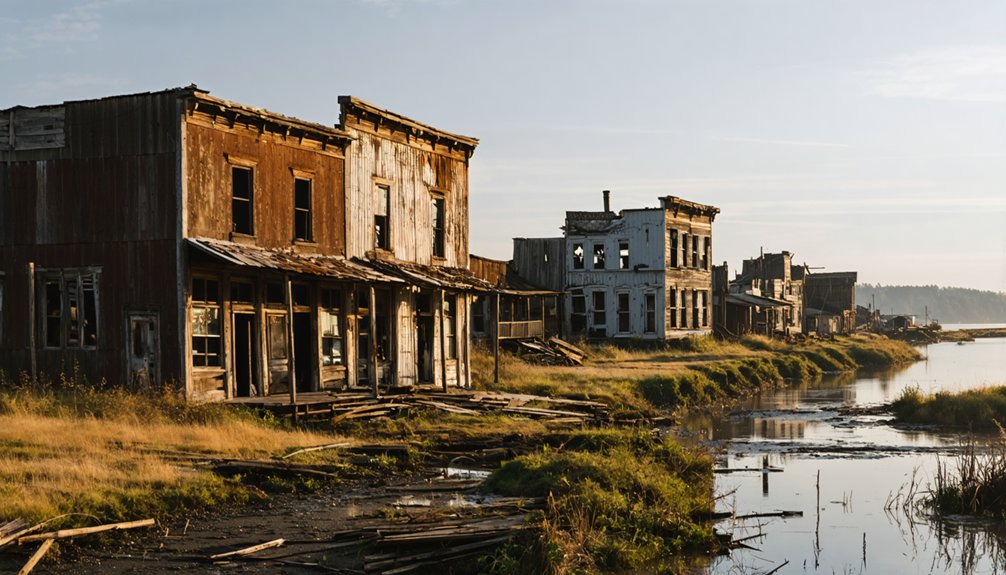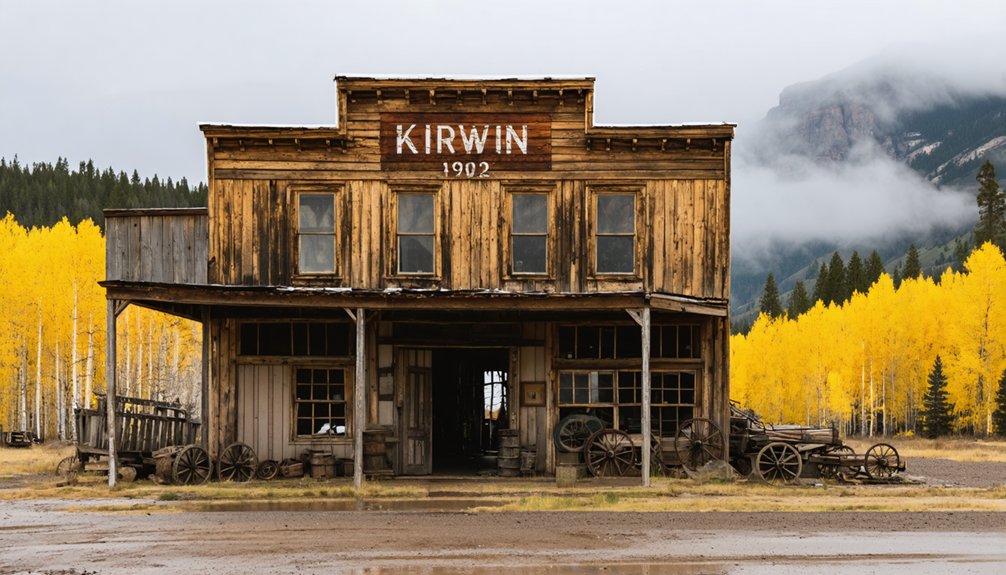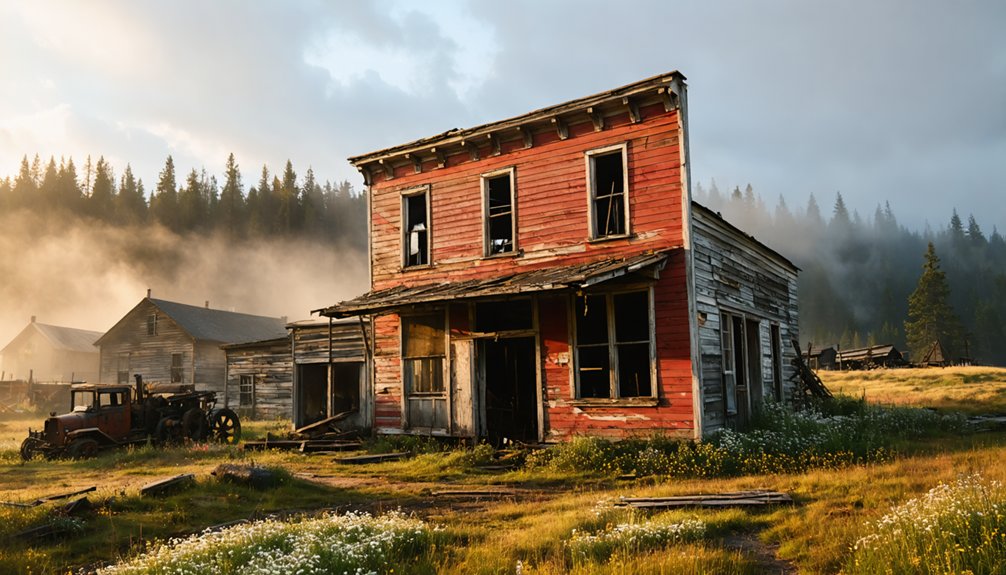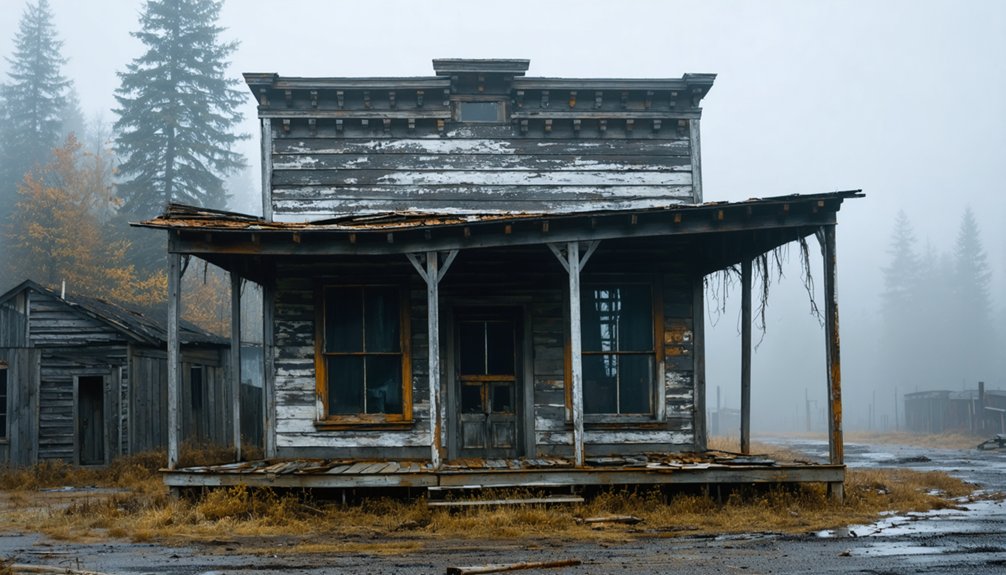
Oregon’s ghost towns offer unique paranormal experiences if you’re prepared. Bring paper maps for navigation when cell service fails, and research historical tragedies for context during your explorations. Always notify someone of your plans, document findings with timestamp protocols, and respect private property boundaries. Pack sturdy footwear and extra supplies for remote locations above 5,000 feet. Connecting with local historical societies can reveal hidden gravesites and forgotten stories that most visitors never discover.
Key Takeaways
- Bring paper maps, a high-clearance vehicle, and extra fuel when exploring remote ghost towns above 5,000 feet where cell service fails.
- Research town histories through newspapers and mining records to understand specific tragedies that may contribute to hauntings.
- Document investigations chronologically with synchronized timestamps across devices and gather baseline environmental readings for comparison.
- Connect with local historical societies and elderly residents who can share firsthand accounts of paranormal encounters.
- Respect property boundaries and preservation ethics by following posted guidelines and never removing artifacts from sites.
Prepare for Remote Exploration and Harsh Terrain
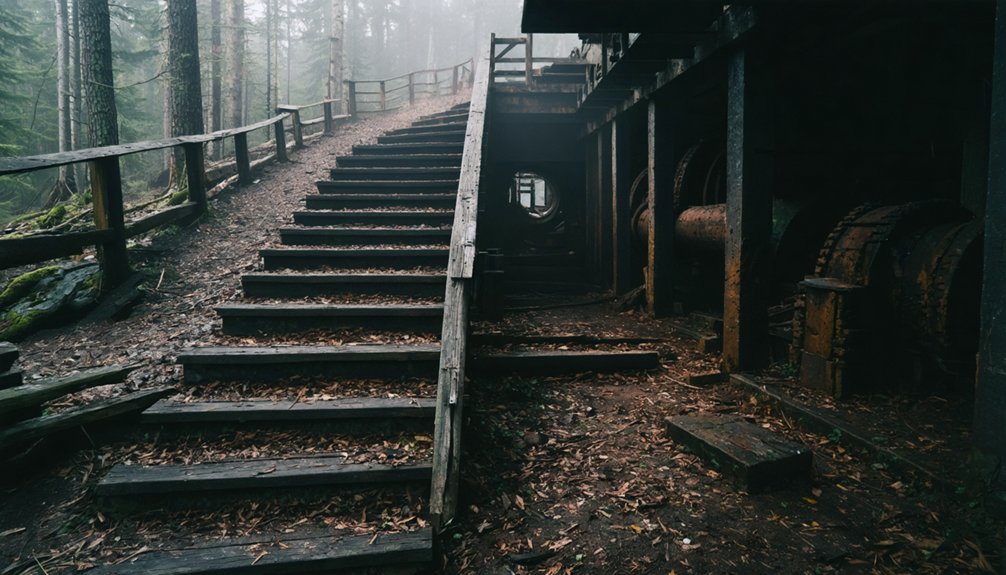
While Oregon’s ghost towns beckon with their mysterious allure, they demand serious preparation before you set foot on their weathered boards.
These forgotten settlements hide in rugged landscapes at elevations exceeding 5,000 feet, where cell service vanishes and GPS proves unreliable in the shadowed mountain terrain.
Isolated above 5,000 feet, these ghost towns exist where modern signals fade and mountains swallow your digital lifelines.
Pack paper maps for remote navigation – they’re non-negotiable when digital fails you. Your journey requires a high-clearance vehicle capable of handling winding mountain roads and unpaved passages.
Don’t forget extra fuel; services disappear quickly beyond Baker City. Terrain challenges escalate with seasonal weather shifts, making some locations inaccessible during winter months. Always check TripCheck.com for closures before departure.
The isolation that preserved these haunting relics also creates hazards – bring ample food, water, and sturdy, closed-toe footwear to protect against scattered metal and uneven ground. Towns like Greenhorn become completely inaccessible when heavy snow blocks mountain roads in winter. Remember to practice Leave No Trace principles and avoid removing artifacts from these historical time capsules.
Research Historical Backgrounds Before Your Visit
Before setting foot in Oregon’s ghost towns, you’ll gain richer insights by examining primary sources like newspaper articles, mining records, and early photographs that reveal daily life in places like Canyon City and Golden.
Studying timelines of boom-and-bust cycles illuminates how events like the 1862 gold discoveries or the 1942 mine closures transformed thriving communities into abandoned remnants.
Creating a mental map of original town layouts helps you visualize where churches, schools, and mercantiles once stood, allowing you to better appreciate the echoes of communities that once housed hundreds of residents. Many of these abandoned communities were established during the period of westward expansion when Americans sought fortune and new opportunities. With over 80 ghost towns listed on the national register, Oregon offers abundant opportunities for historical exploration and discovery.
Primary Historical Sources
To uncover the authentic stories of Oregon’s ghost towns, you’ll need to explore primary historical sources that reveal their forgotten pasts.
Start at the Oregon Historical Society and University of Oregon Libraries, where archival photographs, personal accounts, and town records await your discovery. County courthouses house original property deeds and plat maps that trace ownership through boom and bust cycles.
Don’t overlook digitized newspaper archives through Chronicling America or the Oregon Newspaper Index—these contain day-to-day accounts of town life that official records miss.
For the most compelling insights, seek out oral testimonies collected by historical societies and museums. These firsthand narratives breathe life into abandoned streets and crumbling structures, connecting you directly to those who witnessed these towns in their prime.
With over 200 ghost towns in Oregon, thorough research before visiting allows you to appreciate the unique history behind each abandoned location.
Online research provides enhanced security as many historical websites employ bot protection services to ensure only legitimate users can access their valuable archival materials.
Timeline Enriches Understanding
Primary sources reveal the facts, but a historical timeline provides the context that brings Oregon’s ghost towns to life. When you understand the historical milestones that shaped these abandoned communities, your exploration becomes more meaningful.
Chart how Canyon City thrived with 700 residents until federal mine closures in 1942, or how Sumpter’s population peaked at 2,000 before declining after the devastating 1917 fire.
Recognize timeline significance in agricultural settlements like Antelope, which gradually lost residents after its 1901 incorporation, or Blitzen, whose commercial hub operated until 1943.
Natural disasters mark dramatic endpoints—Orleans washed away completely in the 1861 flood, while Linn City vanished in 1862.
These temporal markers transform ghost towns from curious ruins into powerful reflections of boom-and-bust cycles that define Oregon’s frontier heritage. Bayocean demonstrates this perfectly, as the once-thriving “Atlantic City of the West” with its heated saltwater pool began sliding into the sea by 1926.
Shaniko tells a similar story, established in 1898 as an essential railroad shipping point for the region’s thriving sheep industry before its eventual decline.
Map Original Town Layouts
Ghost towns reveal their secrets most fully when you’ve mapped their original layouts before your visit.
Start by consulting historical county and railroad maps that show how transportation routes shaped these abandoned communities. Look for collections like the R.N./M.L. Preston maps that document spatial evolution over time.
Identify founding dates and town platting years to establish baselines, then locate key structures that once defined the town center.
You’ll uncover forgotten historical roadways and ghostly landmarks by cross-referencing geographic names with natural features that influenced town positioning. Vintage photographs provide visual confirmation of building arrangements along main streets.
For deeper insights, analyze topographic maps and abandoned road alignments.
The original footprints often persist in modern road names—silent witnesses to communities that once thrived in Oregon’s rugged landscape.
Oregon’s abundance of ghost towns makes it the perfect state for this type of historical mapping exploration.
For towns like Granger, investigating the Oregon Pacific Railroad route between Corvallis and Albany provides crucial context for understanding the town’s development and eventual decline.
Pack Photography Equipment for Capturing Paranormal Evidence
When venturing into Oregon’s abandoned settlements after dark, your ability to document the paranormal hinges on bringing the right photography equipment.
Pack a combination of camera types: a full spectrum camera to capture light beyond visible range, an SLS camera to detect humanoid shapes, and a thermal imaging device to track unexplained temperature fluctuations.
For effective evidence capture, mount your cameras on tripods at different angles throughout the ghost town.
Don’t forget high-capacity memory cards and extra batteries—paranormal investigations often run for hours. Set up motion-activated recording to catch activity when you’re exploring elsewhere.
A FLIR thermal camera paired with a night vision device like the Phasm Cam offers extensive coverage.
Remember to time-stamp all footage and back up your data frequently to preserve any spectral encounters you might witness.
Respect the Heritage Sites and Their Preservation Rules

While documenting the paranormal demands proper equipment, your presence in Oregon’s ghost towns requires equal attention to legal and ethical considerations.
Remember that historic ghost towns operate under specific legal definitions in Oregon, with many sites lacking protections that automatically preserve their character.
As you explore, practice heritage conservation by respecting property boundaries—many sites remain privately owned with owners retaining rights to refuse historic designation or restrict access.
Follow posted guidelines, avoid moving artifacts, and tread lightly on fragile structures.
Local preservation ethics vary by location, with some ghost towns subject to historic review ordinances while others rely solely on community stewardship.
Your responsible behavior supports grassroots preservation efforts that keep these haunting portals to the past accessible for future paranormal investigators and history enthusiasts alike.
Time Your Visit During Local Ghost Town Festivals
Timing your paranormal explorations to coincide with Oregon’s ghost town festivals creates an ideal opportunity to experience these historic sites at their most vibrant and accessible.
Mark your calendar for Shaniko Days in summer, where you’ll discover preserved ghost town buildings alongside vintage cars and local vendors in this one-day celebration.
Step back in time at Shaniko Days, where Oregon’s past breathes alongside classic cars and local artisans.
For autumn adventures, consider Spirit of Halloweentown in St. Helens (September 27-October 31) or the Oregon Ghost Conference in Seaside, both offering paranormal activities and spooky entertainment.
Music lovers shouldn’t miss NORTH of WEST MUSIC FEST in St. Helens on September 20, 2025, featuring 22+ bands across multiple venues.
For literary-minded explorers, Ashland Mystery Festival (October 15-19, 2025) presents dramatic readings and interactive discussions.
Consulting festival schedules in advance guarantees you’ll maximize your ghost town experiences with special access to normally restricted areas.
Engage With Locals to Discover Hidden Ghost Stories
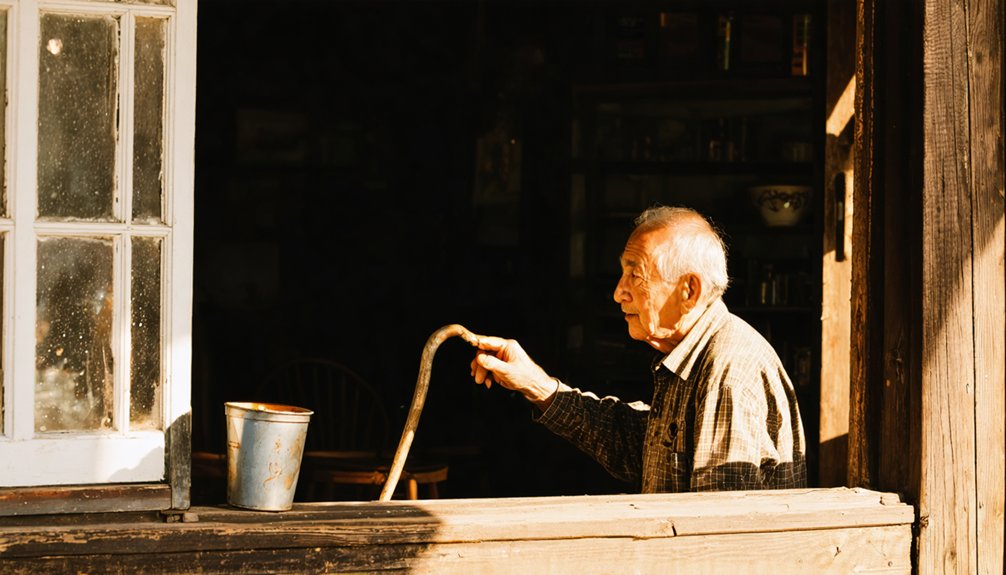
You’ll uncover the richest ghost stories by striking up conversations with elderly residents who’ve witnessed decades of Oregon’s haunted history firsthand.
Connect with local historical societies and small-town museums where passionate volunteers often keep meticulous records of paranormal encounters that never make it into official guidebooks.
These local experts can lead you to forgotten gravesites, abandoned homesteads, and crumbling structures where spirits linger, waiting for someone patient enough to hear their tales.
Talk to Longtime Residents
Beyond the weathered facades and crumbling foundations of Oregon’s ghost towns lie stories that no history book fully captures. Longtime residents are invaluable treasures, holding local legends and ghost stories passed through generations that reveal the supernatural fabric of these abandoned places.
When seeking these oral histories, approach residents with genuine curiosity and respect. Visit local diners, general stores, or community gatherings where stories flow as freely as coffee.
Listen intently as they share firsthand accounts of spectral miners, ghostly stagecoaches, or the lingering spirits of frontier tragedies.
- Ask open-ended questions about specific buildings or areas rumored to be haunted
- Offer to exchange information—locals appreciate when you share your findings too
- Remember that some residents may hesitate initially—patience often reveals the most chilling tales
Find Local History Groups
Beneath the surface of every Oregon ghost town lies a wealth of spectral stories waiting to be unearthed by those willing to connect with local history enthusiasts.
Seek out groups like the Benton County Historical Society or Fort Rock Valley Historical Society, whose local archives contain treasures from abandoned communities—photographs, letters, and artifacts that tell forgotten tales.
These organizations host immersive events like Buncom Day, where you’ll hear firsthand accounts passed through generations.
Historical preservation efforts by places like the Maxville Heritage Interpretive Center resurrect lost narratives, including those of marginalized communities.
You’ll find these societies frequently collaborate with academics to document and verify ghost town histories, creating thorough resources that go beyond tourist brochures.
Attend their storytelling sessions and hands-on tours to experience the authentic, often haunting essence of Oregon’s phantom settlements.
Oregon’s ghost towns scatter across the state’s diverse landscape like forgotten relics of a bygone era, each with its own spectral stories and haunted histories.
When planning your exploration of ghostly encounters, understand that Eastern Oregon holds the richest concentration, particularly in Baker and Grant Counties where Sumpter, Bourne, and Granite offer prime locations for spectral sightings.
- Central Oregon features Shaniko in Wasco County and Lonerock, both offering well-preserved structures where paranormal activity is frequently reported.
- The Blue Mountains region houses multiple abandoned mining communities, with Susanville and Sumpter providing eerie atmospheres year-round.
- While Western Oregon has fewer ghost towns, places like Golden in Josephine County (a State Heritage Site since 2011) offer unique haunted experiences.
Document Your Paranormal Experiences Responsibly
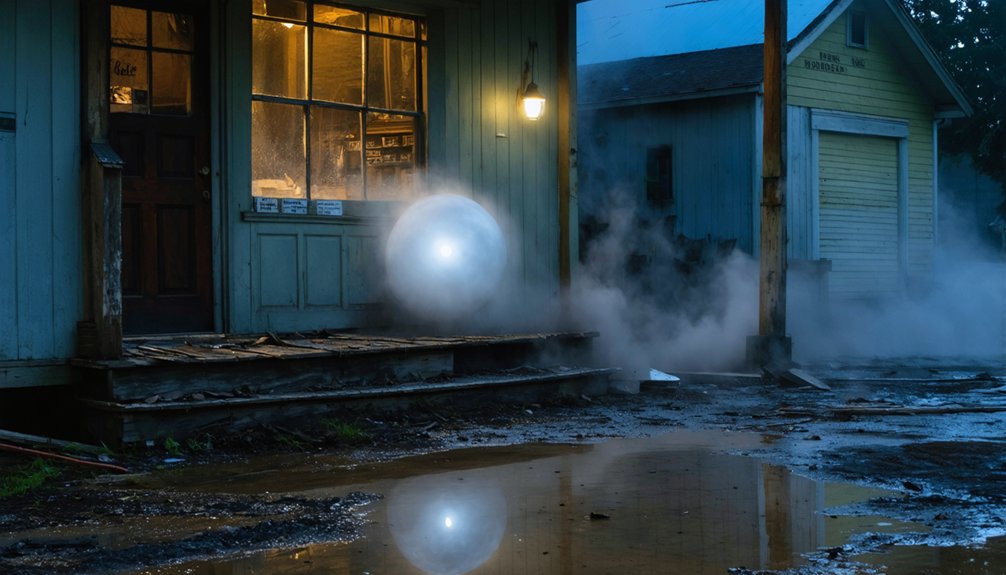
When exploring Oregon’s haunted ghost towns, you’ll need to document any paranormal phenomena without disturbing historical sites or potential spiritual energies.
Set up your equipment thoughtfully, placing cameras, voice recorders, and environmental sensors in strategic locations that respect the integrity of the space.
After your investigation, organize your findings chronologically, labeling each piece of evidence with precise details about time, location, and environmental conditions to create a credible record of your supernatural encounters.
Capture Without Disturbance
Documenting your paranormal experiences requires a delicate balance between thorough investigation and respectful preservation. When exploring Oregon’s haunted ghost towns, position your equipment strategically in high-activity areas while avoiding disturbing historical artifacts or compromising structural integrity.
Record ghostly interactions using non-invasive techniques that maintain the location’s authenticity and energy.
- Deploy EMF readers and temperature gauges to establish baseline readings before investigating sound anomalies.
- Use headphones during audio review to detect subtle EVPs without disrupting the environment’s natural state.
- Take rapid succession photographs to identify genuine anomalies while maintaining distance from sensitive areas.
Always secure proper permissions before entering private properties or restricted sites. Your investigation should leave no trace beyond the evidence you’ve collected, preserving these historic locations for future explorers while documenting the mysterious phenomena that make Oregon’s ghost towns so compelling.
Organize Evidence Methodically
After encountering paranormal phenomena in Oregon’s abandoned towns, you’ll need a structured approach to validate your experiences. Maintain a chronological log with precise timestamps, locations, and environmental conditions for each event. This systematic evidence cataloging creates a foundation for credible research.
Organize your digital evidence methodically—separate audio, video, and photos while ensuring they’re linked to corresponding event logs through rigorous data synchronization. Use timestamp protocols across all devices to align different data streams for thorough analysis.
Have team members independently review your findings to reduce bias, and establish a shared repository for collaborative assessment. Never edit original recordings, as authenticity is paramount.
When analyzing evidence, first rule out natural explanations by comparing against baseline environmental readings taken before your investigation began.
Practice Safe Exploration of Potentially Unstable Structures
The weathered bones of Oregon’s ghost towns hold countless stories amid their crumbling walls, but exploring these unstable structures demands serious preparation and caution.
Before entering any abandoned building, scout the location during daylight hours to assess structural integrity and identify escape routes. Your safety equipment should include sturdy boots, gloves, and respirators to protect against hidden dangers.
- Test floor stability by staying near walls and support columns rather than venturing into room centers
- Carry multiple light sources and first aid supplies for emergencies
- Notify a trusted person of your exploration plans including location and expected return time
When traversing interiors, watch for compromised ceilings, hidden holes, and toxic materials like asbestos or black mold that could turn your ghost town adventure into a real-life nightmare.
Connect Historical Tragedies to Modern Hauntings
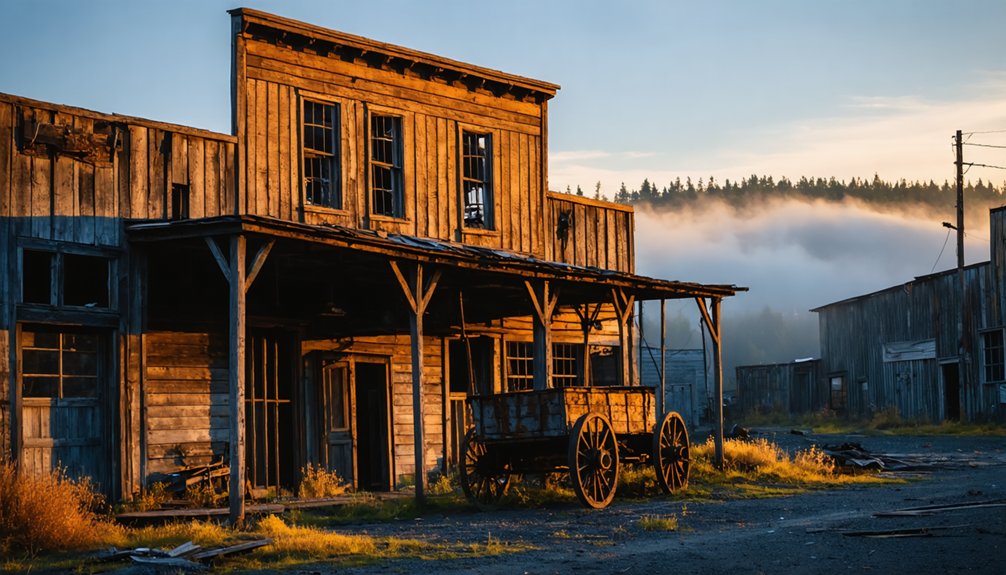
Oregon’s historical tragedies form the spiritual foundation upon which modern ghost stories are built, creating an unbroken chain between past suffering and present hauntings.
When you explore these abandoned communities, examine surviving cemeteries, mining equipment, and stone structures as physical anchors for historical connections to paranormal phenomena.
Notice how catastrophic floods that swept away towns like Champoeg created perfect conditions for lingering spirits, while mining accidents in places like Greenhorn left unresolved trauma.
These ghostly legends don’t emerge from nowhere—they’re rooted in documented violence, economic collapse, and natural disasters.
The spectral echoes haunting Oregon arise from real tragedy—bloodshed, ruin, and nature’s wrath immortalized as paranormal phenomena.
To truly understand a haunting, research the specific tragedies that befell each location.
Mining town records often reveal deaths that correlate with reported apparitions, while tales of frontier isolation explain why certain spirits seem unable to move on.
Frequently Asked Questions
Are Children Allowed on Guided Ghost Town Tours?
Yes, most ghost tours welcome children, though policies vary. You’ll find family friendly attractions with discounts for kids under 13, while some tours restrict children under 6 for safety reasons.
Can I Bring My Dog to Oregon’s Ghost Towns?
Yes, you can bring your dog to Oregon’s ghost towns. Dog friendly policies allow pets on public lands, but you’ll need to follow leash requirements—keep them on a six-foot leash.
What Paranormal Equipment Works Best in Abandoned Mining Towns?
EMF detectors excel in detecting electrical remnants in mining towns, while spirit boxes help you communicate across the veil. Don’t forget thermal cameras to capture cold spots in the dusty tunnels you’ll explore.
Are Any Ghost Towns Accessible During Winter Months?
Yes, you’ll find several ghost towns accessible in winter. Lower-elevation sites like Golden are open year-round, while high-altitude towns require careful winter exploration planning. Always check road conditions before your ghost town accessibility adventure.
Do Native American Spirits Haunt These Abandoned Settlements?
While 68% of ghost town legends reference spiritual presences, you’ll find Native legends about ancestral spirits are largely anecdotal. Spirit encounters attributed to Indigenous peoples remain undocumented, often reflecting symbolic rather than literal hauntings.
References
- https://www.nationaldaycalendar.com/lists/12-oregon-ghost-towns
- https://www.visitoregon.com/oregon-ghost-towns/
- https://en.wikipedia.org/wiki/List_of_ghost_towns_in_Oregon
- https://thatoregonlife.com/2016/04/road-trip-ghost-towns-eastern-oregon/
- http://www.photographoregon.com/ghost-towns.html
- https://www.travelmedford.org/southern-oregon-ghost-towns-
- https://www.pdxmonthly.com/travel-and-outdoors/2025/10/oregon-ghost-towns-history
- https://traveloregon.com/things-to-do/culture-history/ghost-towns/
- https://traveloregon.com/things-to-do/culture-history/ghost-towns/secrets-oregons-ghost-towns/
- https://takingthekids.com/explore-oregon-ghost-towns-that-are-both-creepy-and-beautiful/