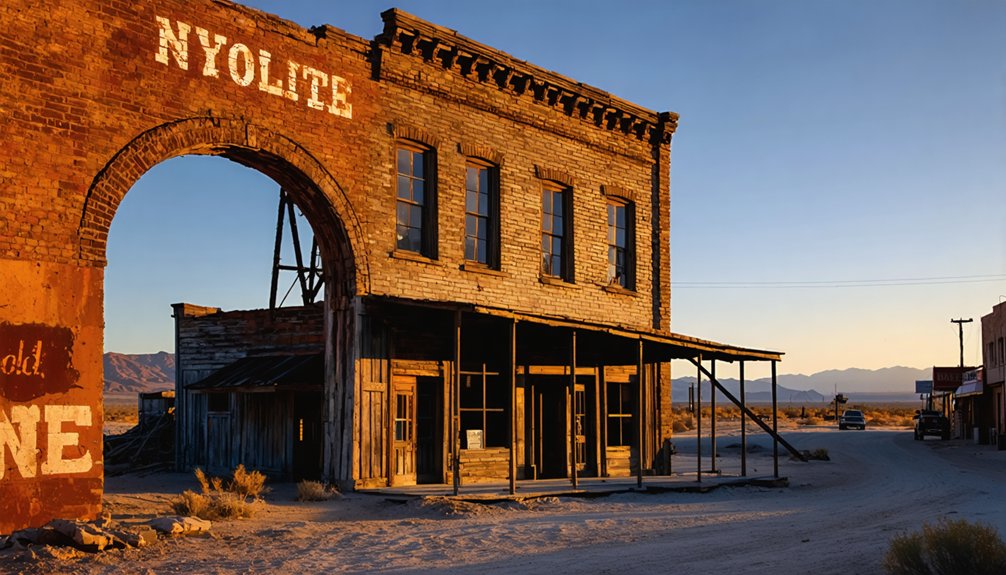
You’ll find industrial collapse extends far beyond the Rust Belt, affecting 48 additional metro areas where 6.7 million manufacturing jobs have vanished since 1979. Towns like Danville, Illinois and Albany, Georgia have lost over 20% of their populations. These hidden communities face cascading crises: plummeting home values, 40% higher divorce rates, and deteriorating health outcomes. Some former manufacturing hubs have found paths forward through diversification and adaptive reuse.
Key Takeaways
- Industrial decline extends beyond the Rust Belt to 48 metro areas, representing 12.6% of all U.S. metropolitan regions.
- Towns like Danville, Illinois and Albany, Georgia have experienced devastating population losses exceeding 20%.
- High-tech centers such as San Jose and Austin face similar vulnerability to manufacturing offshoring pressures.
- Abandoned housing creates “ghost neighborhoods” with vacancy rates reaching 12.7% in places like Wichita, Kansas.
- Identifying these towns requires analyzing population decline, manufacturing job loss, home vacancy rates, and health outcome disparities.
The Aftermath of Manufacturing Exodus: Economic Reality in America’s Forgotten Towns
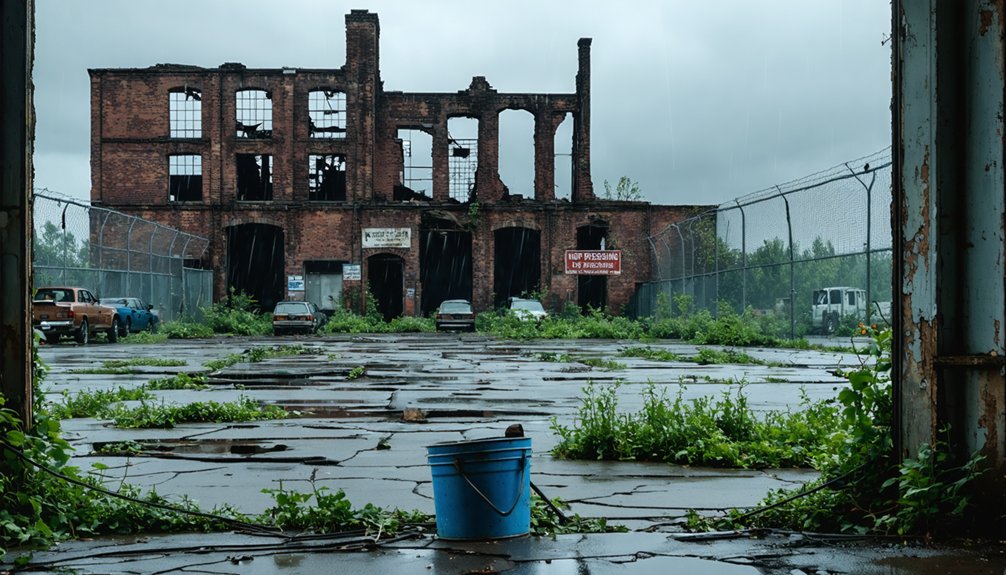
As America’s manufacturing sector experienced a staggering decline of 6.7 million jobs since 1979, the economic landscape of once-thriving industrial towns has fundamentally transformed into one of persistent hardship.
You’ll find these forgotten communities trapped in downward spirals—their tax bases eroding as populations dwindle, core services like education and healthcare deteriorating rapidly.
Workers face earnings losses that persist for decades while middle-class opportunities vanish. The manufacturing establishment count has plummeted 31% in just twenty years, despite overall growth in American companies. The U.S. experienced a 21% decrease in manufacturing firms from 2002 to 2022 while the broader economy grew by 10%.
Manufacturing’s collapse devastated American workers, wiping out decades of earnings and middle-class dreams as factories vanished nationwide.
Failed economic policies have concentrated this devastation in specific regions, creating pockets of entrenched poverty outside areas of broader economic growth.
Workforce adaptation remains challenging as skill pools shrink due to demographic shifts and restrictive immigration policies.
This isn’t just about job numbers—it’s about communities permanently altered by industrial collapse. These economic challenges mirror the contraction observed in 2025 when the purchasing managers’ index fell below 50, signaling decline across the manufacturing sector.
Beyond the Rust Belt: Mapping Industrial Collapse Across the Nation
While many Americans associate industrial decline primarily with the familiar Rust Belt regions of Michigan, Ohio, and Pennsylvania, the reality of manufacturing collapse extends far beyond these well-documented areas.
You’ll find industrial decline’s footprint in 48 metro areas outside traditional Rust Belt hubs, representing 12.6% of all U.S. metropolitan regions.
Towns like Danville, Illinois and Albany, Georgia demonstrate how deindustrialization crosses regional boundaries. These communities have experienced population losses exceeding 20% from their peak, lacking the economic resilience to recover from plant closures.
Without industrial diversity, even high-tech centers like San Jose and Austin have become vulnerable to similar offshoring pressures. Forrester Research estimates that 3.4 million white-collar jobs will move overseas by 2015, showing this isn’t just a blue-collar problem. Since 2000, America has lost almost 30% of manufacturing jobs, highlighting the widespread vulnerability of industrial communities nationwide.
The ripple effects extend beyond primary manufacturing, collapsing local retail, banking, and service sectors that once thrived alongside industrial workforces, making recovery particularly challenging for communities isolated from large metropolitan resources.
The Human Cost: Social Disintegration in Post-Industrial Communities
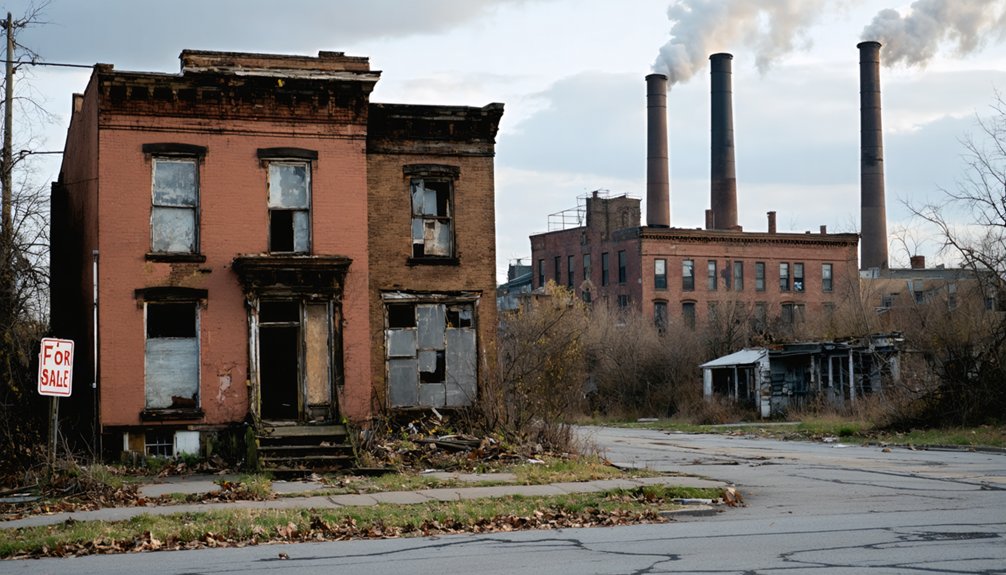
You’ll find industrial collapse towns with divorce rates up to 40% higher than national averages as economic pressures tear families apart.
The loss of mills and factories that once served as community anchors has erased collective identities built over generations, leaving residents without shared narratives or purpose.
This social unraveling manifests in declining participation in local organizations, diminished trust in neighbors, and the disappearance of cultural traditions that once defined these communities. These patterns mirror what researchers found in Eastern Europe, where hazardous drinking emerged as a stress-coping strategy following rapid industrial decline. Workers who previously had stable manufacturing jobs now struggle to find employment in the service sector jobs that require specialized education and skills they often lack.
Families Breaking Apart
The disintegration of family units represents perhaps the most devastating consequence of industrial collapse in America’s forgotten factory towns.
When factories close, the ripple effects tear through households as unemployment triggers a cascade of pressures that few relationships can withstand.
You’ll find family disintegration follows predictable patterns in these communities: fathers leave to find work elsewhere; young adults migrate to cities; and those who remain face intensifying isolation as support networks crumble.
This pattern has intensified since 2000, with manufacturing jobs declining from 25% to less than 10% of total employment across the nation.
The shift from stable manufacturing jobs to precarious service work destroys financial security, while the psychological toll manifests in rising rates of substance abuse, domestic violence, and suicide.
The data shows a clear correlation: when towns lose their economic foundation, families break apart – leaving vulnerable populations stranded in communities increasingly stripped of resources, opportunity, and hope.
Vanishing Community Identity
Beyond individual households, industrial collapse inflicts profound damage on entire social ecosystems, erasing the shared identity that once bound communities together.
When the factory gates close permanently, you’ll witness more than economic fallout. The community pride that once flowed from productive purpose dissolves as residents internalize a narrative of collective failure. Cultural heritage tied to industrial work—festivals, traditions, social clubs—withers without institutional support.
This identity vacuum triggers a cascade of disintegration: weakened social networks, declining civic participation, and fractured trust. Community organizations struggle to maintain relevance as their membership bases evaporate.
The physical landscape reinforces this erasure as abandoned buildings replace once-vibrant gathering spaces. Most concerning is how this identity loss fuels cynicism toward institutions that failed to prevent collapse, creating a self-reinforcing cycle that makes revitalization increasingly difficult. This pattern is particularly evident in Rust Belt cities that once thrived as manufacturing centers but now face severe population loss and economic challenges.
Ghost Neighborhoods: Housing Crisis and Population Exodus
While America’s housing market appears robust at a national level, a troubling phenomenon of ghost neighborhoods has emerged in pockets across the country, with approximately 1.39 million U.S. homes sitting vacant as of Q3 2025.
You’ll find zombie foreclosures increasing alarmingly in specific regions, with Cleveland (9.1%), St. Louis (8.9%), and Indianapolis (8.5%) leading major metros in housing abandonment.
States like Colorado and Washington have seen their rates more than double in just a year. These ghost neighborhoods often correlate directly with population decline exceeding 20% in some ZIP codes.
The exodus is particularly severe in former industrial towns where home values plummet to as little as 14% of statewide medians. Wichita, Kansas stands out with a staggering 12.7% vacancy rate in its foreclosure pipeline, representing one of the highest concentrations in the Midwest.
As younger residents relocate for jobs, these communities face demographic aging and continued deterioration, creating a self-reinforcing cycle of abandonment in America’s forgotten industrial centers.
North Carolina has experienced a troubling 52.5 percent increase in zombie properties over the past year, indicating an accelerating housing crisis in certain regions.
Health in Decline: The Medical Consequences of Economic Devastation

As industrial jobs vanished from America’s factory towns and mining regions, they left behind a devastating health crisis that continues to intensify decades later.
You’ll find nearly 3,000 excess deaths annually in Appalachian coal communities alone, even after accounting for poverty and education levels.
Health disparities widen relentlessly in these forgotten places—rural death rates now exceed urban rates by 20%.
The respiratory disease gap has exploded from 11% to 48% in just twenty years.
Midsized factory towns suffered a 5.7% health decline following manufacturing losses, while smaller towns barely improved.
Both men and women face heightened mortality from chronic illnesses like heart disease and cancer, proving these aren’t just occupational hazards but community-wide afflictions.
Environmental factors from industrial pollution compound the economic devastation, creating a perfect storm of declining health.
Revival Stories: Towns Finding New Purpose After Industrial Death
Despite the bleak economic landscape in former industrial centers, certain American towns have engineered remarkable turnarounds that defy the dominant narrative of decline.
You’ll find Lowell, Massachusetts transformed vacant textile mills into vibrant spaces, proving economic revitalization can emerge from historic preservation.
In Bethlehem, Pennsylvania, a massive steel plant brownfield evolved into a thriving cultural and entertainment district, generating $55 million annually.
Pittsburgh diversified beyond steel into technology and healthcare, becoming a model for Rust Belt revival through innovation.
Grand Rapids maintained manufacturing strength through employer loyalty, with 20% of jobs still in manufacturing—far above the national average.
Cedar Rapids demonstrated resilience after devastating floods, generating $307 million in downtown investments within five years.
These success stories share a common thread: adaptive reuse of industrial assets and collaborative vision for future growth.
Frequently Asked Questions
How Do School Systems Survive in Industrial Collapse Towns?
You’ll find schools surviving through diversified educational funding sources, community engagement initiatives, alternative vocational programs, consolidation efforts, and partnerships with colleges that align training with emerging local economic opportunities.
What Happens to Local Cultural Institutions After Industrial Collapse?
Remember when your town’s soul was vibrant? After collapse, you’ll see cultural institutions lose funding, forcing adaptation through community resilience. Some transform abandoned spaces into creative hubs, while others fight for cultural preservation against overwhelming odds.
How Do Religious Communities Respond to Industrial Town Decline?
You’ll find churches adapting through faith-based initiatives in non-traditional spaces and flexible scheduling. They’re pursuing community outreach despite declining attendance, with data showing they remain essential economic anchors when industrial jobs disappear.
What Environmental Legacies Remain in Abandoned Industrial Towns?
In Picher, Oklahoma, you’ll find mountains of toxic waste and urban decay. You’re confronting industrial towns’ deadly legacy: contaminated soil, acid mine drainage, structural hazards, and costly remediation challenges awaiting your action.
As you navigate through this landscape, the echoes of history remind us of the gold rush era in the wild west, a time when fortunes were made and lost with reckless abandon. This turbulent past has left scars on the environment that linger long after the last prospectors left. The struggle to reclaim these lands parallels the rivalries and dreams of those who sought their fortune in a lawless land.
How Do Collapse Towns Maintain Essential Infrastructure With Diminished Resources?
You’ll find collapse towns strategically prioritize resource allocation through automation, shared services, and volunteer networks. They’re leveraging community resilience by tapping retiree expertise while pursuing targeted grants for critical infrastructure maintenance.
References
- https://www.governing.com/archive/gov-legacy-city-struggling-cities.html
- https://ysu.edu/center-working-class-studies/social-costs-deindustrialization
- https://www.americanmanufacturing.org/tale-of-many-cities-unmade-in-america-2/
- https://www.abandonedamerica.us/gary-indiana
- https://abcnews.go.com/Business/Economy/story?id=6914381&page=1
- https://247wallst.com/housing/2024/04/11/americas-modern-ghost-towns-2/
- https://montrose-env.com/blog/strategies-to-revitalize-americas-abandoned-properties-and-legacy-neighborhoods/
- https://www.geotab.com/ghost-towns/
- https://joybird.com/blog/top-ghost-towns-in-america/
- https://itif.org/publications/2024/08/09/census-bureau-confirms-us-manufacturing-declined/