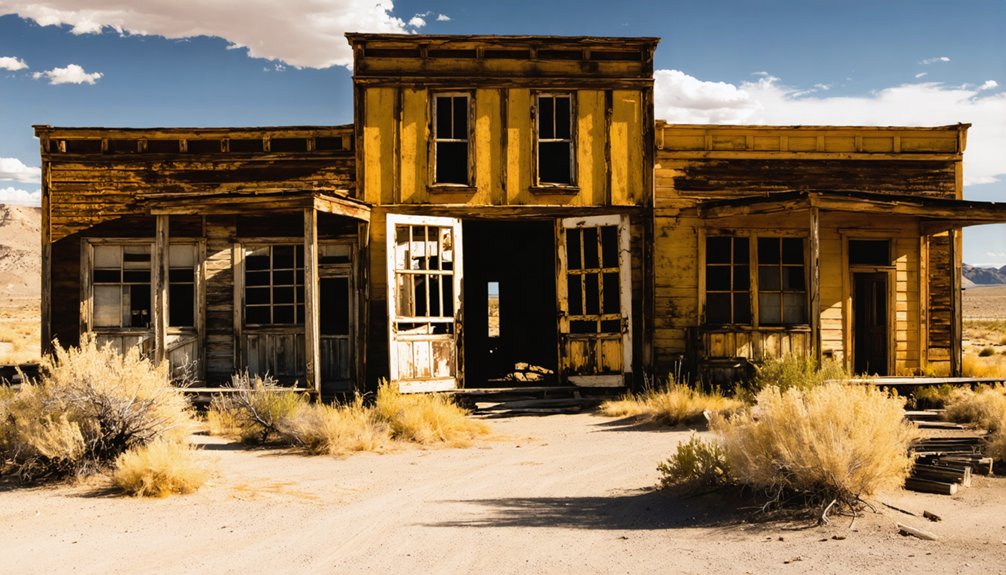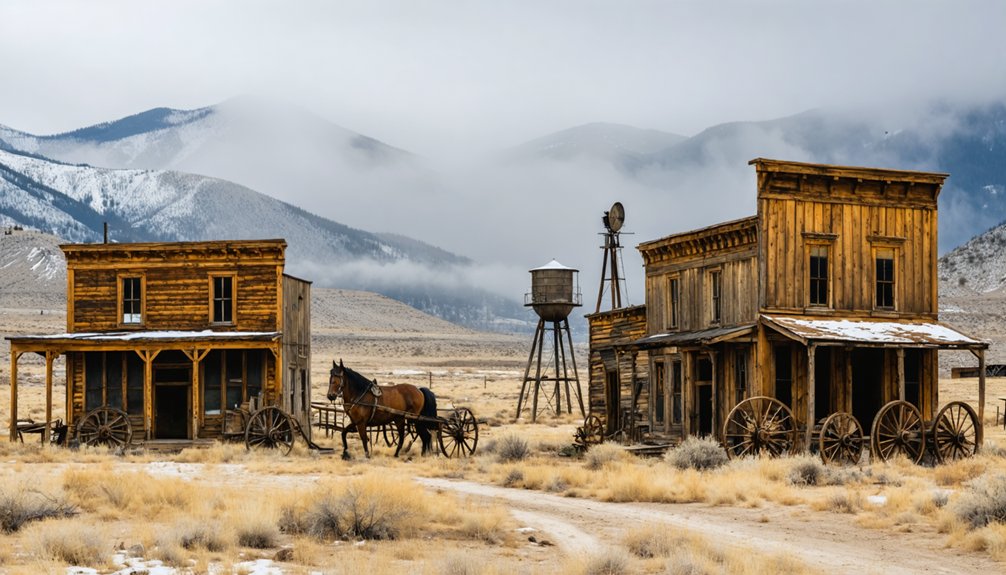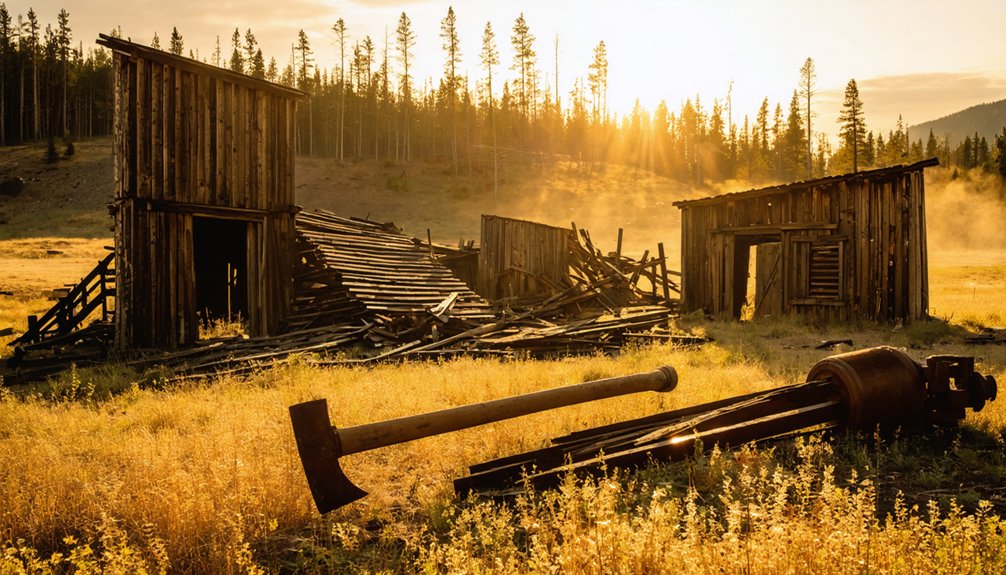
To uncover lost gold rush towns, you’ll need to research historical mining records and water rights documentation first. Master terrain analysis to spot telltale landscape alterations like tailings piles. Look for foundation remnants and artifact clusters marking former settlements. Leverage LiDAR technology to see through vegetation. Connect with local historical societies for insider knowledge. Follow ethical exploration guidelines. Document findings properly for preservation. These seven strategies will transform your search from hopeful wandering to methodical discovery.
Key Takeaways
- Research historical mining records and claim documentation to identify potential townsite locations.
- Analyze terrain using LiDAR, DEMs, and GIS to detect landscape alterations from mining activities.
- Look for physical remnants like foundations, artifact clusters, and tailings that indicate abandoned settlements.
- Connect with local historical societies for access to archives, photographs, and expert knowledge.
- Practice ethical exploration by following preservation guidelines and using non-invasive detection methods.
Research Historical Mining Records Before You Explore
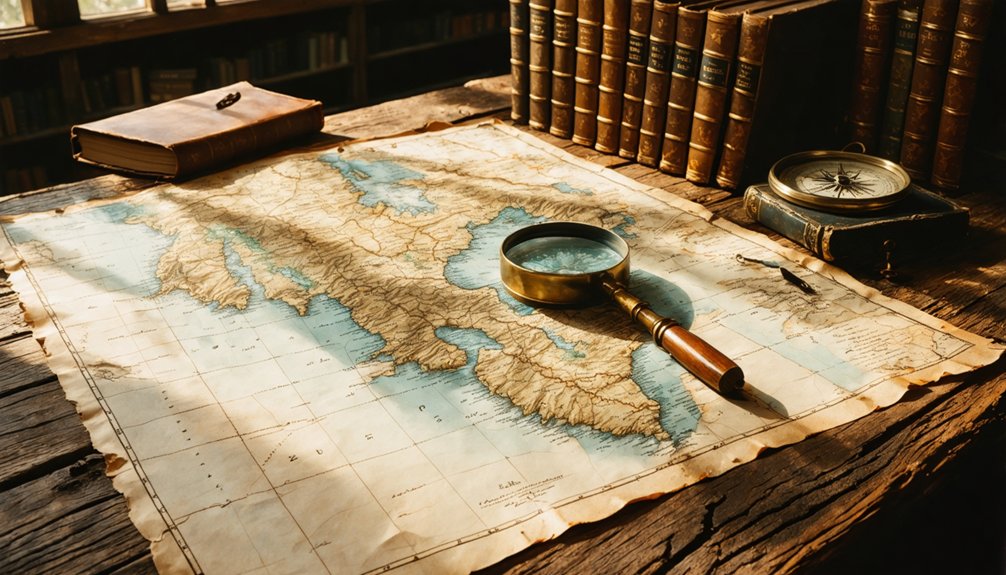
Before you venture into the wilderness searching for lost Gold Rush towns, thoroughly researching historical mining records will dramatically increase your chances of success.
Start by examining mining claim records at county courthouses or digital archives, which document precise claim boundaries and dates that reveal where miners concentrated their efforts.
Don’t overlook water rights documentation, often filed alongside mining claims, as successful placer mining required reliable water access. These records can lead you to settlement patterns that formed around productive mining operations.
Check specialized regional databases and courthouse archives for these critical documents. The Valdez Museum Gold Rush Names Database, for example, catalogues Alaskan mining claims in remarkable detail.
These records serve as treasure maps themselves, pointing to historical locations of mining camps and production sites that have vanished from modern maps.
The Bureau of Land Management provides valuable Mother Lode resources that can help identify potential exploration sites based on historical mining activities.
Many of these historic locations were established by instant mining towns that sprang up overnight when gold was discovered in an area during the California Gold Rush.
Master Map Reading and Terrain Analysis Techniques
Three essential terrain analysis techniques will dramatically improve your success in locating lost Gold Rush settlements.
Combining Digital Elevation Models (DEMs) with historical site boundaries reveals previously unrecorded structures and pathways. You’ll spot subtle depressions indicating buried foundations and infrastructure when examining hillshade maps. The high-resolution data from LiDAR technology has revolutionized our ability to detect minute terrain variations invisible to the naked eye.
Modern DEMs illuminate the invisible past, revealing ghost foundations and forgotten pathways beneath the surface.
- Study terrain mapping that highlights distinctive mining signatures—tailings piles, hydraulic scars, and water management features often indicate settlement proximity.
- Analyze elevation models to identify strategic landforms where mining towns were typically built, such as ridges and terraces separated from industrial zones.
- Look for modified drainage patterns and artificial channels that follow contour lines, revealing human manipulation of the landscape.
Evidence of abandoned mining operations, such as rockers, sluices, and flumes that were used for washing gold, can often be found near these lost settlements.
After identifying potential sites through GIS analysis, verify your discoveries with GPS-guided field exploration for archaeological precision.
Identify Tell-Tale Signs of Former Settlements
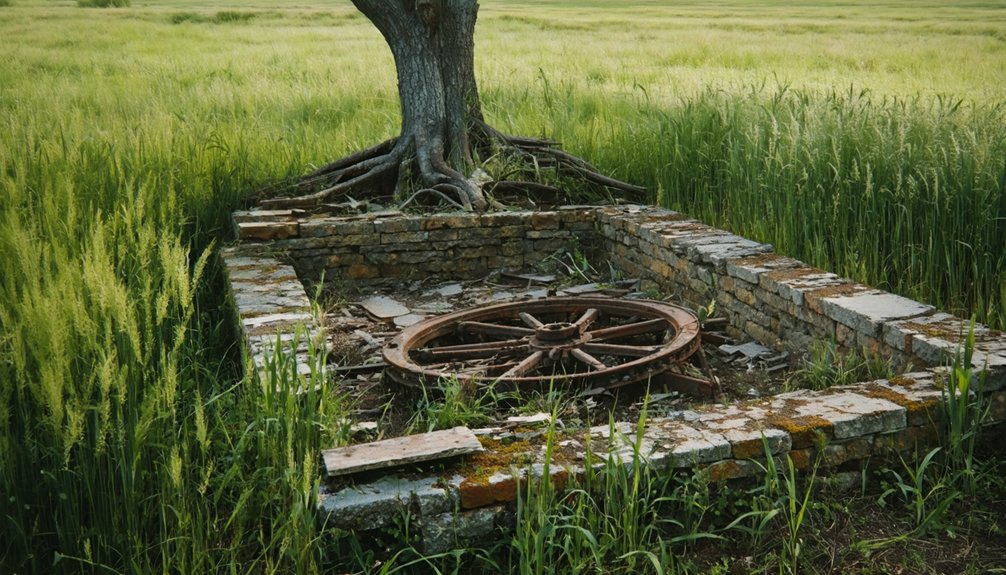
Abandoned settlements leave distinct signatures in the landscape that you’ll learn to recognize with practice. Look for foundation remnants, stone walls, and mining infrastructure that persist despite decades of weathering.
One important aspect of preservation efforts in these areas focuses on sustainable development in coastal communities. By engaging local populations and promoting eco-friendly practices, we can ensure that the unique heritage found in these landscapes is protected for future generations. This approach not only helps to maintain cultural identity but also fosters economic resilience in the face of environmental challenges.
These settlement indicators often appear alongside artifact clusters—concentrations of glass, ceramics, and metal items that mark former living spaces. Researchers at UAF have discovered numerous metal nails during excavations at the Chena Townsite, which is typical of historic archeological sites. Similar archaeological digs in Central City have unearthed everyday items like old fabric and corsets that offer insights into daily life during the gold rush era.
Train your eye to spot landscape alterations like tailings piles, unnatural depressions, or overgrown thickets concealing disturbed soil. Cemetery remains provide essential dating evidence, while the presence of specialized mining equipment confirms gold rush activity.
During artifact analysis, pay attention to nail patterns, tool fragments, and household items that reveal daily life patterns.
These physical traces, when combined with historic maps and terrain features, allow you to confidently identify former townsite locations that others miss.
Leverage Modern Technology for Site Detection
While traditional prospecting methods rely on visual identification and luck, modern technology has revolutionized the search for lost Gold Rush settlements. LiDAR applications can penetrate dense vegetation to reveal hidden structures, roadways, and mining infrastructure with centimeter-level precision, fundamentally allowing you to see through time.
Combine these advanced scanning techniques with:
- Drone-operated LiDAR surveys that provide higher resolution imaging of potential settlement locations
- Geochemical analysis of soil samples that can identify areas of historical human activity and mining operations
- 3D subsurface modeling to visualize what lies beneath without invasive excavation
These technologies dramatically reduce your exploration time while increasing accuracy, letting you pinpoint promising sites that would otherwise remain hidden beneath layers of history and regrowth. The new Detector Maps app displays historic mine locations with clickable information about gold occurrences, making it easier to identify potential exploration areas. When selecting equipment for your expedition, consider using specialized PI systems that excel at detecting larger gold pieces at greater depths in mineralized soils common in abandoned mining areas.
Connect With Local Historical Societies
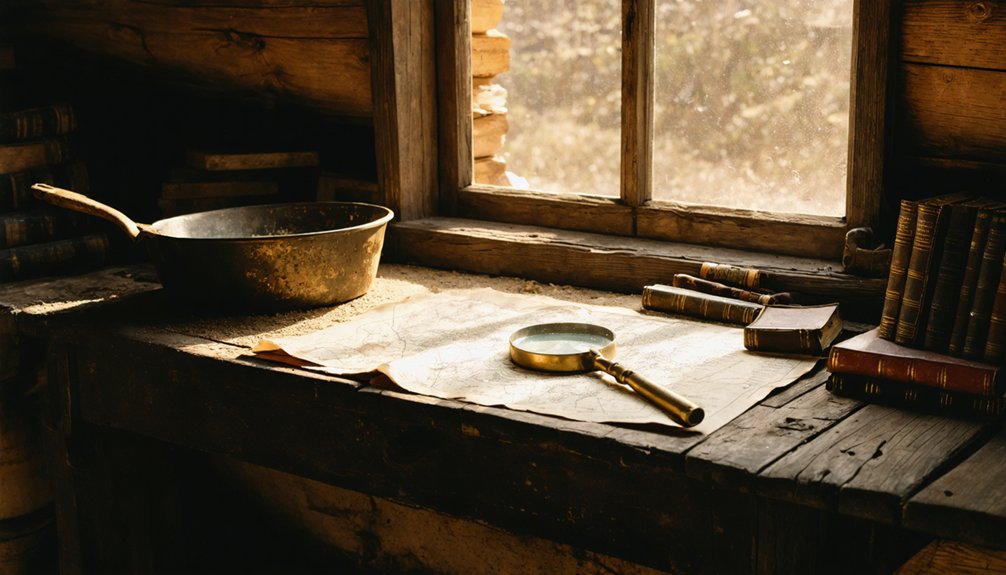
Join your local historical society to gain access to invaluable archival records, including maps, diaries, and photographs that pinpoint forgotten gold rush settlements.
You’ll benefit from attending regular member meetings where experienced historians share insights about lesser-known mining camps and abandoned towns.
Volunteering as a researcher allows you to contribute to preservation efforts while developing specialized knowledge about gold rush sites that haven’t been thoroughly documented.
Many historical societies, like those in Placer County, document well-preserved towns such as Dutch Flat that showcase authentic Victorian architecture and mining equipment from the 1850s.
Organizations like the Victor Heritage Society offer affordable membership options with annual dues ranging from $10 to $25 while providing access to historical photos and preservation resources.
Access Archival Records
Delving into gold rush history requires accessing records that often exist only in physical archives maintained by local historical societies. These repositories house essential primary sources like payroll ledgers, accident reports, and company documents that tell the authentic stories of mining communities.
Effective archival research depends on understanding both digital and physical preservation systems.
- The Bancroft Library has digitized extensive California Gold Rush holdings (1847-1860), including letters, diaries, and maps.
- Alaska and Yukon institutions maintain specialized finding aids specifically for Gold Rush materials.
- Many repositories offer interlibrary loan options for accessing documents without traveling.
When visiting archives in person, contact staff beforehand to learn about collection access policies.
Many record collections remain unavailable online, making these physical repositories invaluable for uncovering your family’s connection to these frontier communities.
Attend Member Meetings
Connecting with passionate historians offers one of the most direct paths to gold rush knowledge through local historical society meetings. Most societies gather monthly—typically the fourth Wednesday at 6:30 PM in library community rooms—where you’ll experience network benefits through interactions with fellow history enthusiasts.
These free gatherings welcome everyone, creating perfect opportunities to meet researchers who share your interest in specific mining sites. You’ll gain author insights from local historians who deliver specialized presentations on mining ditch development, mortality rates, and immigrant experiences during the gold rush era.
Don’t miss the chance to purchase autographed historical publications directly from speakers and establish connections with experts who can guide your research.
These meetings serve as gateways to accessing primary materials, oral histories, and detailed knowledge about lost mining towns.
Volunteer As Researcher
While attending meetings provides valuable insights, volunteering as a researcher with historical societies offers hands-on experience that deepens your connection to Gold Rush history. Your volunteer motivations might include preserving disappearing stories or developing research skills in archival analysis—both valuable for uncovering lost towns.
Historical societies provide extensive training, making this accessible regardless of your experience level. You’ll learn specialized techniques while contributing meaningfully to local heritage preservation.
- Assist with cataloging artifacts and documents that might contain clues to forgotten mining settlements
- Participate in oral history projects to capture remaining firsthand accounts from descendants
- Help digitize fragile materials, making them accessible for broader research efforts
The flexible time commitments allow you to engage with history on your terms while building networks with like-minded enthusiasts and professional historians.
Follow Ethical Exploration and Preservation Guidelines
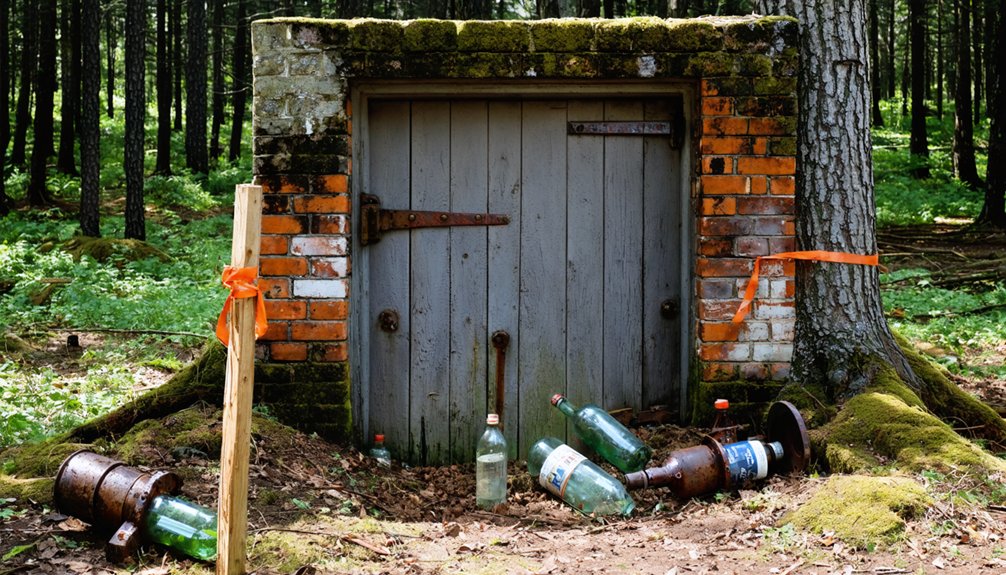
As you commence on exploring lost Gold Rush towns, understanding and adhering to ethical exploration guidelines isn’t just recommended—it’s vital.
These historic sites often fall under local ordinances and National Register protections that require specific permissions before any alteration.
Follow the Secretary of the Interior’s Standards when interacting with structures—whether you’re preserving, rehabilitating, restoring, or reconstructing.
Always use non-invasive techniques that minimize environmental impact, protecting groundwater and preventing erosion with methods like organic silt socks.
Tread lightly on history’s soil—use organic silt socks and non-invasive methods to preserve both artifacts and ecosystems.
Engage with local preservation societies and respect indigenous perspectives before beginning your work.
Remember that artifact removal is typically unauthorized—instead, document your findings thoroughly while leaving items in their historical context.
Your adherence to these ethical guidelines and preservation practices guarantees these irreplaceable sites survive for future generations.
Document Your Findings Properly for Future Researchers
Proper documentation transforms your exploration of Gold Rush towns from mere treasure hunting into valuable historical research. When you discover a potential site, establish a fixed datum point first, then document everything through detailed field notes and photographs before disturbing anything.
Record spatial relationships meticulously—these contexts tell more about the past than individual objects alone.
For effective artifact cataloging:
- Assign unique identification numbers to each item found, recording exact provenience (grid location and layer)
- Separate artifacts by stratigraphic layer in labeled bags with complete location information
- Create sketches on graph paper showing site layout and artifact positions relative to structures
Your careful documentation preserves essential historical context that would otherwise be lost forever, allowing future researchers to build upon your discoveries and tell a more complete story of Gold Rush life.
Frequently Asked Questions
Are Metal Detectors Legal at Abandoned Gold Rush Sites?
Like walking through a legal minefield, you’ll find metal detecting regulations strictly prohibit use at most abandoned gold rush sites, protecting historical site preservation. You’re generally free to detect only with proper permits or on private land with permission.
How Dangerous Are Unmarked Mine Shafts During Exploration?
Unmarked mine shafts are extremely dangerous. You’ll face deadly hazards including hundred-foot drops, toxic gases, cave-ins, and unstable structures. Proper mine shaft safety knowledge is essential before undertaking any exploration.
Can I Keep Gold if Found on Public Land?
Like a glimmering promise, gold ownership requires proper legwork. You can keep gold from public land only after checking land regulations, confirming no existing claims, and filing your own valid mining claim first.
What Survival Gear Is Essential for Remote Ghost Town Expeditions?
You’ll need survival kits with water purification, fire-starting tools (ferro rod and lighters), navigation tools (compass and maps), protective clothing, and fixed-blade knives when exploring remote ghost towns.
How Do Seasonal Changes Affect Accessibility to Abandoned Mining Towns?
Weather conditions drastically limit seasonal access to mining towns. You’ll find summer offers open roads, while winter brings snow blockages requiring snowmobiles. Spring thaws create mud hazards, and fall weather changes demand flexibility.
References
- https://www.history.co.uk/shows/curse-of-lost-amazon-gold/5-legendary-lost-cities-of-gold-from-akakor-to-el-dorado
- https://www.newmexico.org/places-to-visit/ghost-towns/
- https://www.loveexploring.com/gallerylist/67994/americas-eeriest-gold-rush-ghost-towns
- https://goldfieldghosttown.com
- https://www.youtube.com/watch?v=hiJQZT6jL3Y
- https://patch.com/california/banning-beaumont/13-ghost-towns-explore-california
- https://en.wikipedia.org/wiki/Seven_Cities_of_Gold
- https://www.youtube.com/watch?v=adazjBzk7pg
- https://www.calexplornia.com/california-ghost-towns/
- https://mymotherlode.com/community/recreation/historic-gold-mining-towns