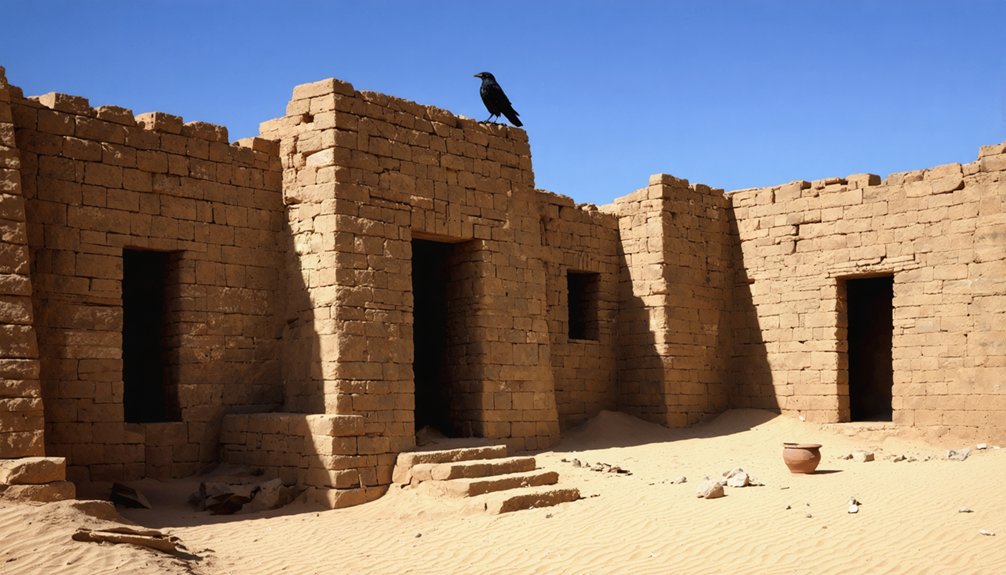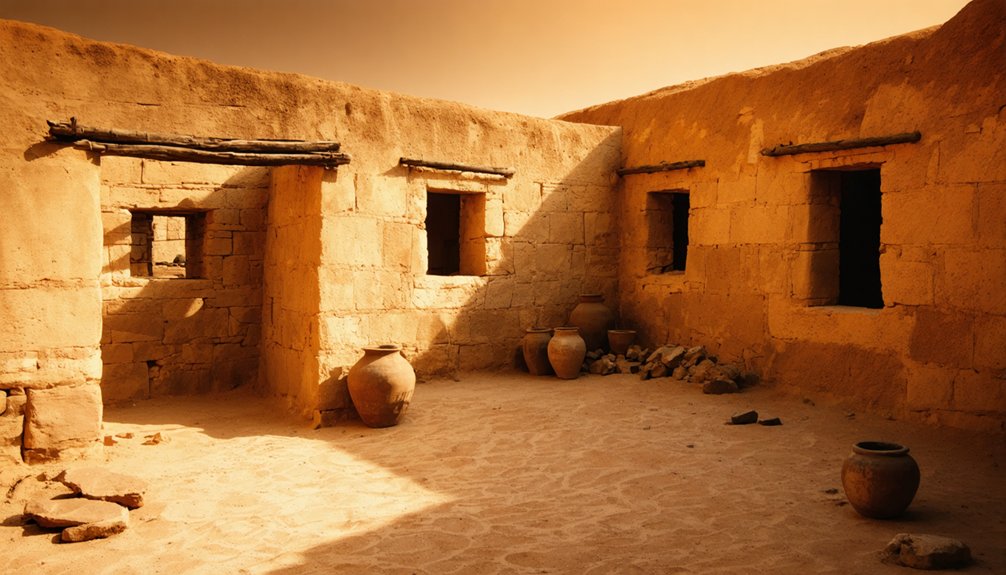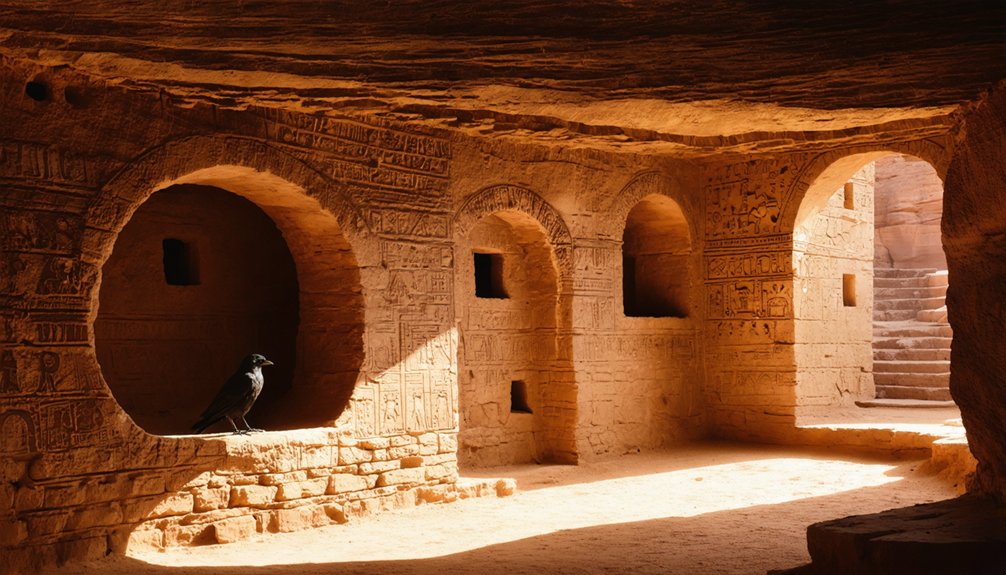
Native American ruins across the United States showcase remarkable architectural achievements spanning thousands of years. You’ll discover monumental earthworks dating to 9000 BCE at LSU campus and elaborate cliff dwellings like Mesa Verde’s Cliff Palace with its 150 rooms. Plan your visits during spring or fall for ideal conditions, and always respect these sites’ profound spiritual significance. These ancient landscapes reveal sophisticated urban planning, astronomical knowledge, and cultural practices awaiting your exploration.
Key Takeaways
- Visit impressive mound sites like Cahokia, where North America’s largest ancient city once flourished with over 100,000 inhabitants.
- Explore Southwest cliff dwellings at Mesa Verde and Montezuma Castle, featuring multi-story structures and ceremonial kivas dating from 1190-1300 CE.
- Plan trips during spring (March-May) or fall (September-November) for ideal weather conditions and fewer crowds at ancient sites.
- Research permit requirements before visiting tribal lands and always practice proper site etiquette by staying on designated paths.
- Prepare appropriately with sturdy footwear, ample water, and navigation tools when exploring remote Native American ruins.
Monumental Achievements: The Mound Builder Sites
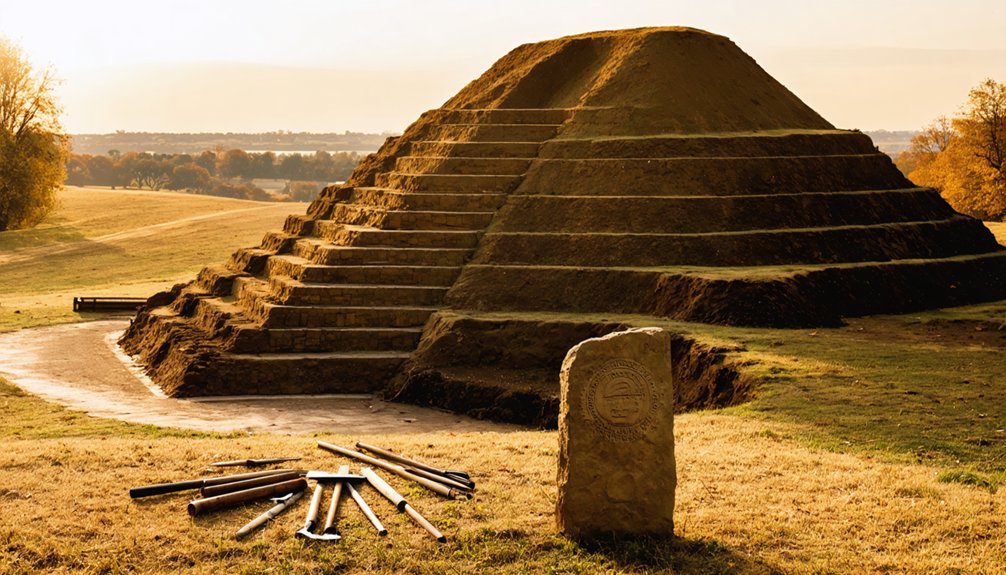
While many tourists associate ancient ruins with distant civilizations, North America boasts some of the world’s oldest and most impressive archaeological sites in the form of Native American mounds.
You’ll find Watson Brake in Louisiana represents North America’s oldest mound complex, dating to 3500 BCE—predating Egypt’s Great Pyramid by a millennium. The LSU campus houses even older structures, with Mound B construction beginning around 9000 BCE.
Throughout the Eastern and Midwestern United States, you can explore evidence of complex social hierarchies at sites like Cahokia, where Monks Mound rises 100 feet tall, and Moundville, where elite residents occupied elevated homes while commoners lived in thatched huts below.
These engineering marvels weren’t isolated achievements but part of sophisticated societies with agricultural systems and extensive trading networks spanning the continent. Many mound sites feature effigy shapes representing animals that held spiritual significance to their builders. Most settlements were strategically positioned near rivers for easy access to water, food resources, and efficient trade routes.
Cliff Dwellings of the Desert Southwest
Spanning the rugged canyon landscapes of the American Southwest, cliff dwellings represent some of North America’s most ingeniously adapted prehistoric architecture. These remarkable structures emerged during the late 1190s when Ancestral Pueblo peoples migrated from mesa tops into protective sandstone alcoves, reaching peak development between 1190-1300 CE.
You’ll discover breathtaking engineering at sites like Mesa Verde’s Cliff Palace, with its 150 rooms and 23 kivas, or Montezuma Castle’s perfectly preserved 20-room complex.
Ancestral Pueblo migrations southward began mid-1200s, prompted by drought and resource scarcity, with most settlements abandoned by 1300. Cliff dwelling architecture features multi-story construction reaching 26 feet high, ceremonial kivas, and villages accommodating up to 100 inhabitants. Navajo Nation’s Betatakin, meaning “house on the ledge,” exemplifies this architectural style with its impressive 120 rooms built around AD 1267.
Modern preservation efforts, beginning with Virginia McClurg’s activism, have guaranteed these cultural treasures remain accessible today. The Manitou Cliff Dwellings Preserve was created by relocating stones from dwellings that were at risk of being bulldozed for farmland.
Cultural Significance and Sacred Spaces
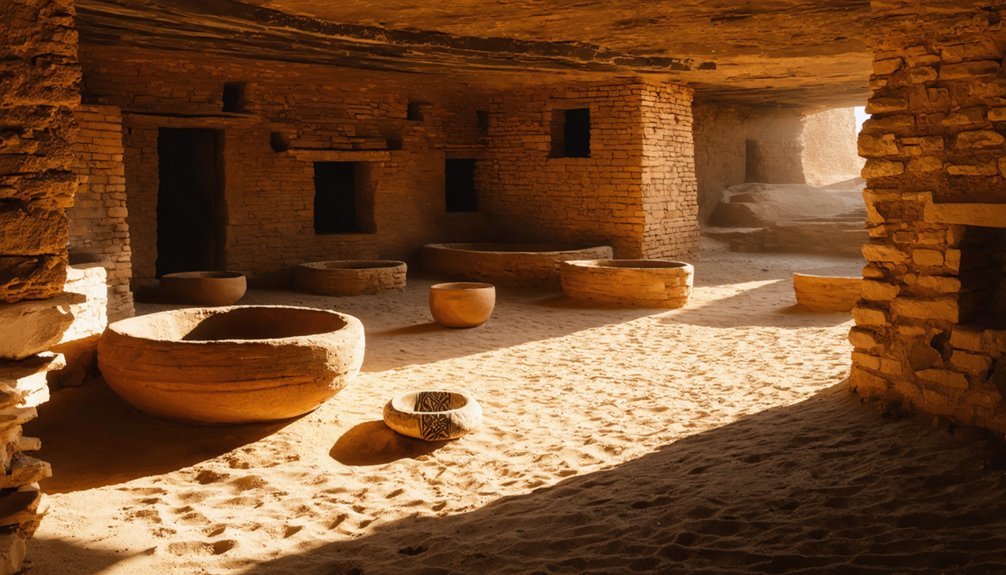
Beyond physical structures, Native American ruins represent profound spiritual landscapes where Indigenous cosmologies, religious practices, and cultural identities converge. When you visit sites like Bears Ears or Chaco Canyon, you’re entering spaces where ancestral connections have endured for millennia, with Indigenous peoples maintaining continuous spiritual practices that transcend written history.
Native American sacred sites transcend mere archaeology—they are living spiritual landscapes connecting past and present Indigenous traditions.
Throughout these sacred spaces, you’ll encounter:
- Great kivas and ceremonial centers that functioned as religious focal points for complex societies from AD 900-1450.
- Sophisticated architectural achievements revealing advanced astronomical knowledge and urban planning capabilities.
- Living cultural heritage sites where modern tribes maintain direct spiritual connections to ancestors who once inhabited these spaces.
These sites demand respectful visitation, as they remain actively significant to numerous Indigenous communities across the continent. At Cahokia Mounds, archaeologists have uncovered evidence of what was once North America’s largest city, with a population that exceeded 100,000 at its height. Many interactive features of these archaeological sites require JavaScript enabled browsers to fully experience their virtual tours and educational content.
Practical Travel Tips for Visiting Ancient Sites
Visiting ancient Indigenous sites requires more than historical appreciation—it demands thorough preparation and cultural sensitivity.
Before starting your journey, research permit requirements for your chosen location—many ruins require official authorization, especially on tribal lands. Some areas, like Antelope Canyon, mandate guided tours with tribal members. Understanding that these sites are part of Indian Country’s vastness, spanning over 56 million acres across diverse geographical regions, helps visitors appreciate their significance.
Always practice proper site etiquette: stay on designated paths, never touch petroglyphs or structures, and absolutely refrain from removing artifacts—violations can result in $100,000 fines or imprisonment.
When photographing, avoid using flash near rock art and secure permits for commercial photography.
Pack sturdy footwear, ample water, and navigation tools for safety in remote areas.
Check weather forecasts to avoid flash floods, and follow Leave No Trace principles to preserve these irreplaceable cultural treasures for future generations. Remember that many Indigenous peoples maintain deep spiritual connections to these lands, viewing them as integral to their identity and cultural heritage.
Seasonal Considerations and Best Times to Visit
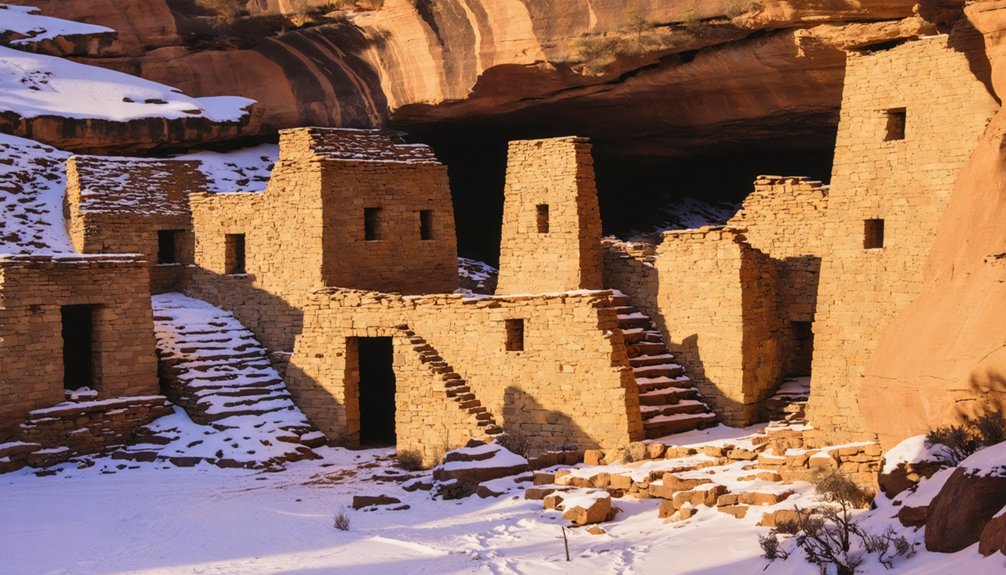
Timing your visit to Native American archaeological sites represents perhaps the most essential planning decision you’ll make, as seasonal variations dramatically impact both accessibility and experience quality. The best visiting times fall within spring (March-May) and fall (September-November), when mild temperatures and smaller crowds create ideal exploration conditions.
When you plan matters most—choose spring or fall for comfortable temperatures and a more intimate experience at ancient sites.
Consider these critical seasonal factors:
- Summer (June-August) delivers extreme heat in desert regions, often exceeding 100°F, along with peak tourism crowds and higher accommodation costs.
- Winter brings snow and ice at higher elevations, with limited access to certain ruins and reduced visitor services.
- Regional variations exist—southwestern sites favor shoulder seasons, while coastal locations offer extended visiting windows throughout the year.
For visitors planning exploration of sites near the Black Hills, the first two weeks of June and last few weeks of September offer comfortable temperatures with fewer tourists and more affordable lodging options.
Many sites like Mesa Verde require ranger-led tours for accessing premier cliff dwellings such as Cliff Palace and Balcony House, so plan accordingly during your visit.
Avoid major holiday weekends and special events when planning your journey into America’s ancient past.
Frequently Asked Questions
How Did Native Americans Farm on Steep Canyon Terrain?
Against all odds, Native Americans mastered steep canyon terrain through ingenious terracing techniques, constructing level platforms with stone retaining walls. They implemented sophisticated irrigation systems that conserved precious water while extending growing seasons.
What Tools Were Used to Construct These Massive Monuments?
You’ll observe Native Americans constructed monumental works using stone tools, including hammers and axes, carrying earth in hand-held baskets through coordinated labor systems, demonstrating sophisticated construction techniques despite technological constraints.
These practices reveal the depth of ancient native american culture insights, showcasing their profound connection to the land and the resources around them. Their rituals and social structures were intricately woven, reflecting a rich tapestry of beliefs and values that have shaped their communities over generations. This understanding deepens our appreciation for their contributions to history and the environment.
Are There Lesser-Known Sites Accessible Without Guided Tours?
While tourists flock to Mesa Verde, you’ll find numerous hidden gems awaiting self-guided exploration. Hovenweep, Tuzigoot, and Casa Grande Ruins allow independent access to ancient structures without mandatory tours.
How Did These Ancient Communities Communicate Between Distant Settlements?
You’ll find they utilized intricate systems of runners, smoke signals, and mirror flashes for urgent messages, while maintaining verbal communication networks and developing sophisticated symbolic languages for permanent record-keeping across distant settlements.
What Evidence Exists of Trade Networks Between Different Native American Cultures?
Like threads in a vast tapestry, you’ll find evidence of indigenous trade networks in archaeological discoveries of trade artifacts spanning thousands of miles—copper, turquoise, shells, and ceramics—alongside cultural exchange patterns between distant societies.
References
- https://reclaimingwonders.com/us-archeology-sites/
- https://www.infoplease.com/history/native-american-heritage/american-indian-archaeological-sites
- https://maps.apple.com/guides?curated=2426176765318900615&_provider=9902
- https://en.wikipedia.org/wiki/Native_American_Heritage_Sites_(National_Park_Service)
- https://www.utahgeology.com/bin/archeo/
- https://www.nps.gov/subjects/travelamericancultures/amindsites.htm
- https://www.doi.gov/pressreleases/10-public-lands-powerful-native-american-connections
- https://www.worldhistory.org/article/1746/ten-great-native-american-mound-sites/
- https://icatchshadows.com/list-of-ancient-native-american-mound-sites/
- https://dnrhistoric.illinois.gov/experience/sites/site.cahokia-mounds.html