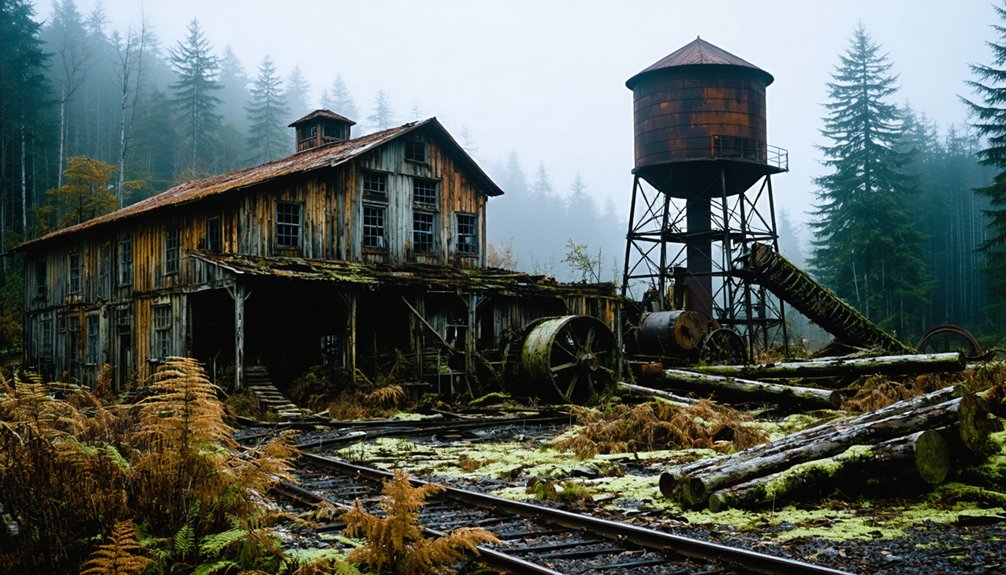
To uncover timber harvesting ghost towns, first identify landscape markers like terraced slopes, stone foundations, and non-native vegetation near water sources. Second, utilize research resources including GIS databases, historical society archives, and USGS topographic maps to pinpoint abandoned settlements. Third, prioritize safety by conducting hazard assessments, wearing proper gear, and avoiding structurally compromised areas. These evidence-based approaches will guide you toward discovering these forgotten industrial communities with both precision and protection.
Key Takeaways
- Look for structural remnants like foundations, cellar holes, and standing chimneys that indicate former settlement locations.
- Identify non-native vegetation patterns such as fruit trees and ornamental plants that often mark abandoned homesteads.
- Consult historical maps, GIS databases, and university archives to pinpoint potential ghost town locations before field exploration.
- Search near water sources for mill remnants including concrete footings, metal gears, or boiler plates.
- Use proper safety protocols when exploring abandoned sites, including hazard assessments and appropriate protective gear.
Recognizing the Telltale Signs of Former Timber Communities
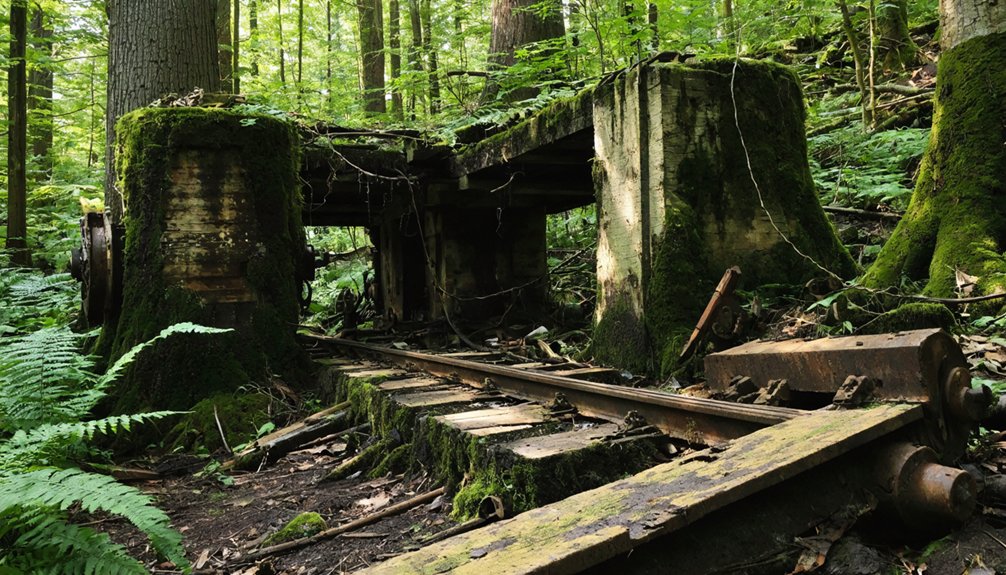
When exploring dense forests that were once home to bustling timber operations, you’ll need to develop a keen eye for the subtle yet distinct markers that reveal these ghost towns’ existence.
Look for landscape changes such as cleared areas, terraced slopes, or compacted soil indicating former roads. Stone or concrete foundations, standing chimneys, and cellar holes are definitive structural evidence.
You’ll often find these sites near water sources, where mill remnants—concrete footings, metal gears, or boiler plates—may still exist. Examination of remaining timber framing can provide valuable insights into the construction dates of these abandoned structures.
Non-native vegetation, particularly ornamental plants or fruit trees, frequently surrounds abandoned homesteads. Look for signage that details past silviculture practices which often served as historical records of forest management activities.
Before venturing out, consult historical maps to identify probable locations of logging settlements, comparing past infrastructure with current topography to narrow your search area.
Exploring abandoned towns in the Pacific Northwest can unveil fascinating remnants of past communities. Keep an eye out for old railway lines and decaying buildings that tell stories of their former inhabitants. These sites often provide a unique glimpse into the region’s logging history and its profound impact on the landscape.
Essential Research Resources for Locating Lost Logging Towns
Finding these hidden timber communities requires more than keen observation skills—it demands systematic research using specialized resources.
Start by exploring official GIS portals and online databases that offer thorough ghost town datasets with precise geospatial coordinates. University digital archives frequently contain invaluable thesis research documenting specific logging settlements, complete with fieldwork findings and archaeological surveys.
GIS portals and university archives reveal forgotten logging towns through precise coordinates and documented fieldwork.
Don’t overlook local historical societies and archival collections, which house photographs, oral histories, and company records that often reveal locations unmarked on modern maps.
The integration of USGS topographic quadrangles with timber industry records can identify abandoned rail spurs and mill sites. Towns like Alpine, which was accessible only by rail, present unique challenges for modern researchers trying to locate their remnants. Historically significant locations like abandoned towns may now be submerged under reservoirs, requiring additional research approaches. For ideal results, cross-reference multiple sources—academic excavation reports, museum collections, and government heritage databases—to triangulate locations before your field expedition begins.
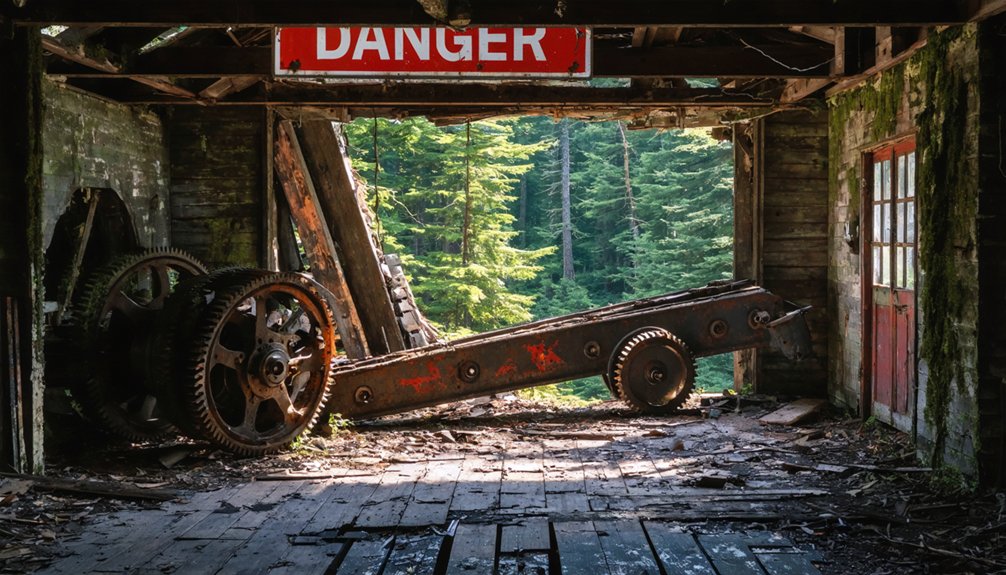
Exploring abandoned timber mill sites demands meticulous attention to safety protocols that extend far beyond casual exploration considerations.
Before entry, conduct a thorough hazard assessment identifying structural instabilities, contaminated areas, and potential fall risks. You’ll need extensive safety gear appropriate for site-specific dangers. Inspect all areas for potential hydraulic fluid leaks that may have pooled and created hazardous conditions over time.
- Wear full body harnesses when working four feet or more above ground level
- Don respiratory protection against airborne hazards from decomposed materials
- Maintain clear egress routes with ladders positioned at maximum 25-foot intervals
- Stay vigilant for combustible dust accumulation that creates explosion hazards
- Keep at least two feet from excavation edges to prevent cave-ins
Be prepared to establish fire watch procedures when using any tools that might generate sparks in these environments, as they can quickly ignite accumulated dust.
Remember that underground shafts, contaminated environments, and deteriorating structures present serious dangers requiring professional evaluation.
Never enter areas with questionable structural integrity without proper assessment and equipment.
Frequently Asked Questions
How Do Timber Ghost Towns Differ From Mining Ghost Towns?
Unlike Kirby, Wyoming with its preserved timber town architecture, timber ghost towns emerged from renewable resource harvesting and experienced gradual timber industry decline, while mining towns faced abrupt abandonment when non-renewable mineral deposits were exhausted.
Can I Legally Collect Artifacts Found at Timber Ghost Towns?
Generally, you can’t legally collect artifacts from timber ghost towns. Artifact ownership depends on land status—federal, state, or private—with each having specific legal considerations requiring permits or permissions.
What Photography Equipment Works Best for Documenting Timber Town Remains?
You’ll need a full-frame camera with wide-angle and macro lenses for thorough documentation. Guarantee tripod stability in rugged terrain and carry weather-sealed equipment with extra batteries for remote locations.
How Did Seasonal Weather Patterns Affect Timber Town Operations?
Like seasons turning forest pages, you’ll find weather’s rhythm dictated timber town life. Winter’s frozen ground enabled efficient harvesting while spring thaws halted operations, creating seasonal impacts that determined these communities’ economic pulses.
What Indigenous Communities Were Displaced by Timber Harvesting Towns?
You’ll find indigenous displacement occurred widely in timber history, affecting the Iban Dayak, Orang Rimba, Penan, Hmong, Batwa, Native American tribes, Amazon peoples, and Canadian First Nations.
References
- http://strangemaine.blogspot.com/2012/02/ghost-towns-of-maine.html
- https://www.nps.gov/slbe/learn/historyculture/ghosttowns.htm
- https://www.uwsp.edu/wp-content/uploads/2023/11/leaf-changing-of-the-land-lesson-5.pdf
- https://en.wikipedia.org/wiki/Ghost_town
- https://freepages.history.rootsweb.com/~gtusa/definitions.pdf
- https://www.historylink.org/File/23208
- https://www.carvercountyhistoricalsociety.org/ghost_towns.php
- https://wou.edu/history/files/2015/08/Ron-Vorderstrasse.pdf
- https://grokipedia.com/page/List_of_ghost_towns_in_Oregon
- https://www.jbconservation.com/blog/dating-timber-frames