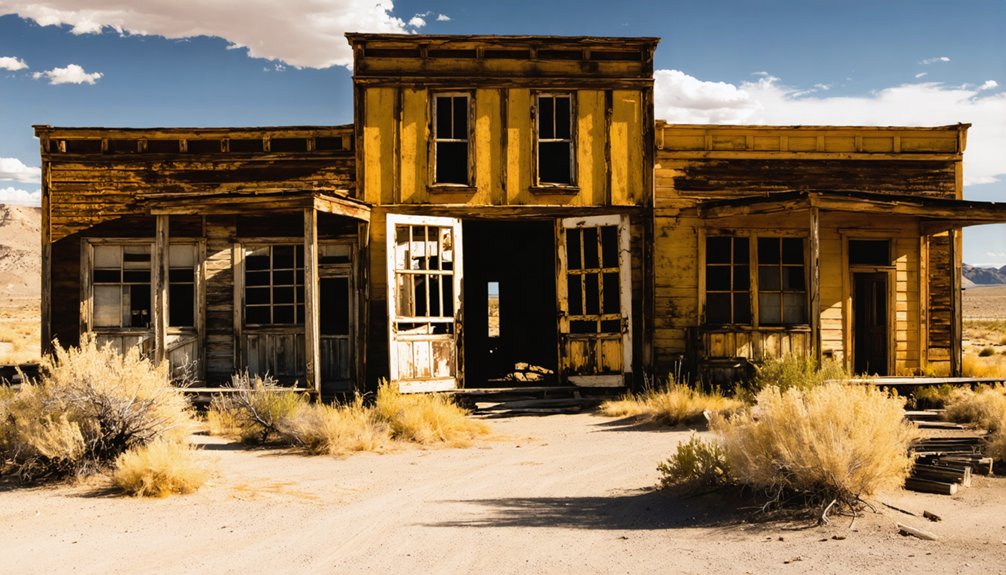
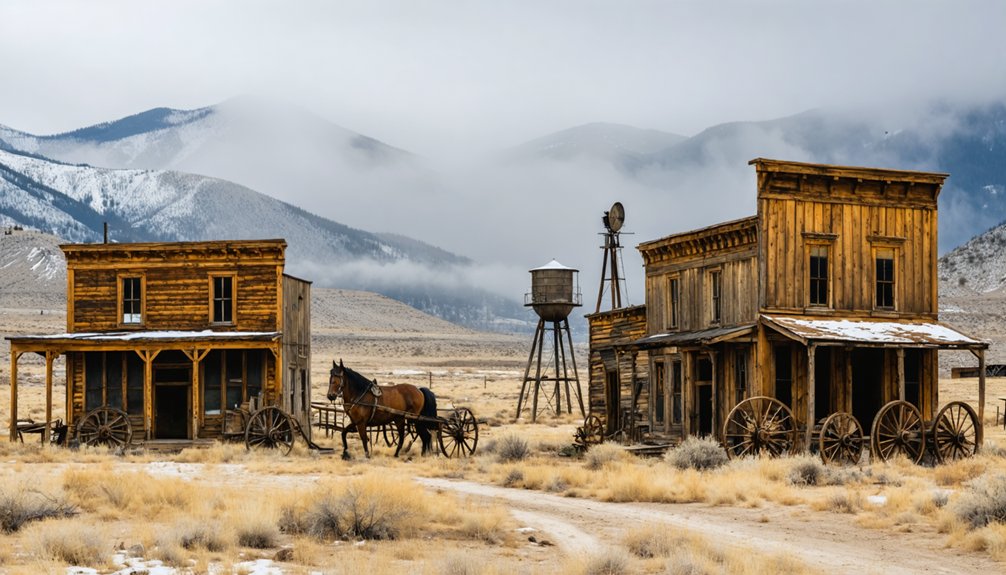
To unearth America’s lost railroad towns, look for linear clearings in forests and strategic mountain passes that signal abandoned railbeds. Research economic patterns by comparing historical maps with modern satellite imagery to identify where transportation hubs once thrived. Document architectural remnants through photography and 3D scanning before they disappear, focusing on adaptive reuse opportunities. These forgotten settlements tell powerful stories of America’s transportation revolution that shaped—then abandoned—countless communities across the landscape.
Key Takeaways
- Look for linear clearings in forests or fields, which often indicate abandoned railbeds where towns once thrived.
- Study historical maps and compare with modern satellite imagery to pinpoint forgotten rail community locations.
- Search for architectural remnants like depots, warehouses, or water towers that reveal railroad town sites.
- Explore mountain passes and river valleys, as these were prime locations for early rail lines and settlements.
- Document findings through photographs, GPS coordinates, and detailed notes to contribute to historical preservation efforts.
Identifying Geographic Clues to Locate Forgotten Rail Communities
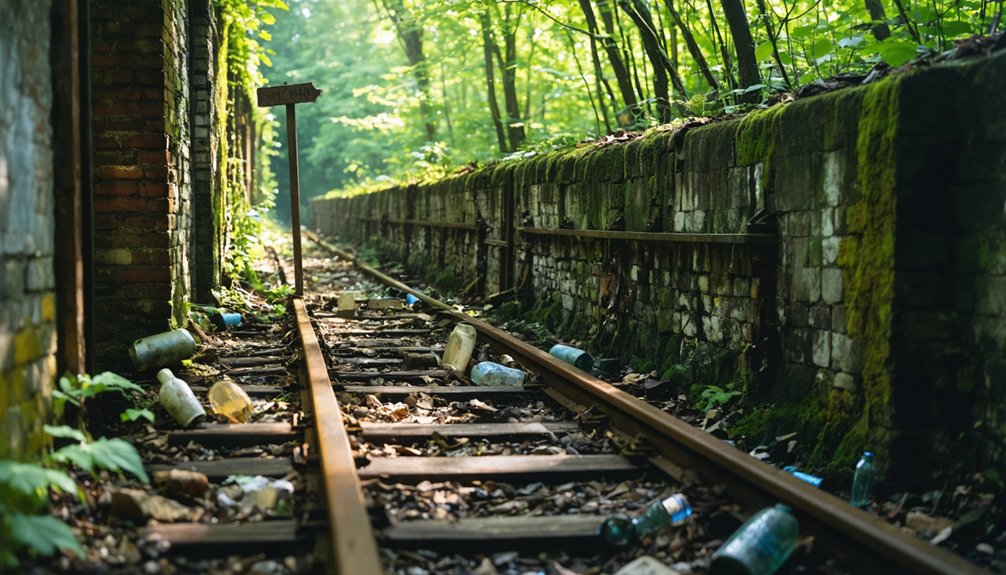
While the American railroad network once sprawled across nearly every corner of the continent, thousands of small communities that depended on these steel arteries have vanished almost completely from our landscape.
These forgotten communities have left subtle imprints on railroad geography that you can detect through careful observation.
Look for linear clearings cutting through forests or fields—these often mark abandoned railbeds. Natural corridors like mountain passes and river valleys were prime locations for early rail lines.
Scan for topographic anomalies: isolated flat areas amid rugged terrain often indicate former loading zones. Remnants of infrastructure—tunnels, switchbacks, cuts in hillsides—reveal rail town locations. Ghost towns like Union Level, Virginia show how the arrival and subsequent departure of Southern Railroad services transformed small communities from prosperous centers to abandoned relics.
When exploring, compare modern satellite imagery with historical railroad maps to pinpoint station points where communities once thrived.
Towns like Centralia, Pennsylvania stand as eerie reminders of how environmental disasters can create ghost towns where rail communities once thrived.
Researching Economic Patterns That Shaped Railroad Town Development
When researching lost railroad towns, understanding the economic forces that drove their development provides essential context for historical investigation.
The narrative surrounding lost oil town heritage in America is similarly intertwined with economic shifts that influenced their rise and decline. As the demand for oil changed, so too did the fortunes of these towns, leaving behind a rich but often overlooked cultural legacy. Exploring the remnants of this heritage reveals not only the history of energy production but also the human stories that shaped these communities.
These settlements often emerged from strategic economic patterns you can trace through historical records.
Look for these economic indicators:
- Transportation cost reductions – 50-70% decreases revolutionized market access, fundamentally altering land valuation in previously isolated areas.
- Employment migration patterns – Railroad towns retained 18-44 year-olds who might otherwise have left seeking opportunities.
- Regional specialization effects – Areas near rail lines often developed distinctive economic identities (Midwestern agriculture, Western resource extraction).
- Infrastructure investment impacts – Railroad companies’ land management and development decisions determined which towns thrived and which failed.
The economic impact of rail access transformed marginal territories into thriving communities—until changing transportation patterns reversed their fortunes. Railroad development often led to the creation of monopolistic practices that influenced the economic sustainability of these towns. New towns and settlements emerged around railway stations as commercial and social centers that capitalized on the connectivity railroads provided.
Preserving and Documenting Architectural Remnants of Rail Heritage
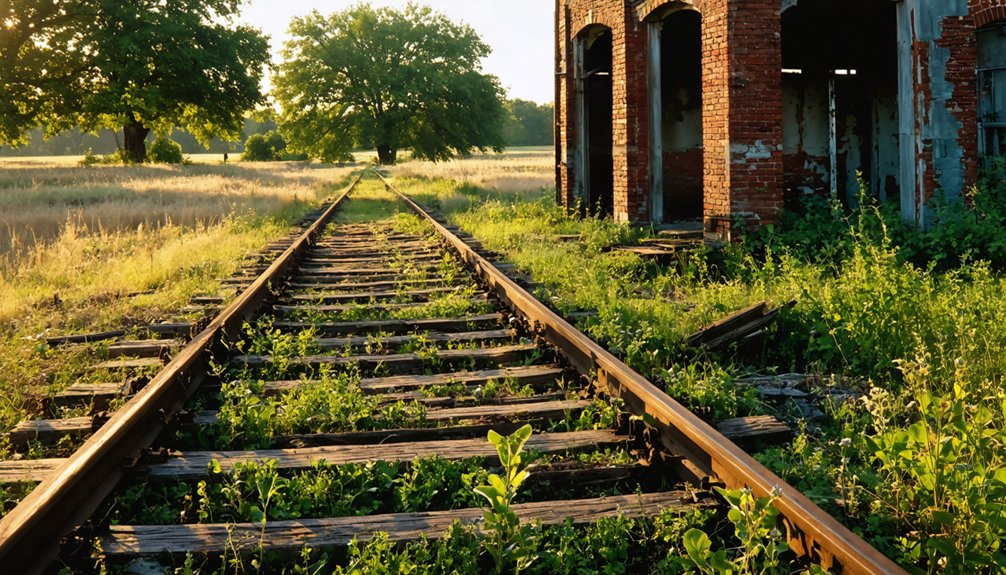
The architectural legacy of lost railroad towns represents one of the most tangible connections to America’s rail-based past. When you discover these remnants, consider advocating for historic overlay districts in your local zoning codes to protect these irreplaceable structures from demolition.
You’ll find that adaptive reuse offers practical solutions for breathing new life into abandoned stations and warehouses while preserving their distinctive character.
Document these treasures using modern technology—3D scanning creates precise digital records for future generations. Strengthen your preservation efforts through community engagement by establishing partnerships with historical societies and organizing volunteer documentation days.
Preserve tomorrow’s history today through digital archiving and the power of community collaboration.
Repurpose original materials creatively; transform railway ties into public seating or interpretive displays. This approach not only conserves embodied energy in existing structures but also maintains authentic connections to your town’s railroad heritage without sacrificing modern functionality. These preservation efforts significantly reduce environmental impact, as building reuse is essential for cutting global carbon emissions from the built environment. Consider how the National Trails System Act has enabled many communities to preserve rail corridors as public spaces while maintaining their historical significance.
Frequently Asked Questions
How Did Railroad Towns Handle Early Medical Emergencies and Healthcare?
In the crucible of necessity, you’d find railway towns created extensive healthcare access through company hospitals, trained railroad surgeons, and innovative emergency response systems including mobile surgical cars and first-aid protocols for injured workers.
What Social Hierarchies Existed in Railroad Towns Among Different Worker Classes?
You’d have witnessed stark class divisions based on job roles, housing quality, and ethnicity. Supervisors lived luxuriously while laborers occupied cramped quarters, though labor relations occasionally united them against management exploitation.
How Did Railroad Towns Manage Waste and Environmental Challenges?
You’d see railroad towns evolve from primitive open dumps to coordinated systems. Initially, they’d suffer vermin and water contamination until they developed municipal waste management partnerships and environmental controls through sanitary landfilling techniques.
What Recreational Activities Were Popular in Isolated Railroad Communities?
You’d find residents enjoying fishing, hunting, organized baseball games, community picnics along scenic hiking trails, card tournaments, impromptu boxing matches, and collecting railroad artifacts during your exploration of these self-sufficient settlements.
How Did Railroad Towns Accommodate Diverse Ethnic and Immigrant Populations?
You’ll find railroad towns created ethnic enclaves where immigrants maintained cultural practices through community celebrations, while experiencing limited cultural integration through commercial spaces despite widespread segregation and discriminatory employment practices.
References
- https://www.youtube.com/watch?v=VJXBWheKanY&vl=en-US
- https://www.youtube.com/watch?v=ViMtkXwwKcA
- https://www.youtube.com/watch?v=_aoqSwyZpJA
- https://www.trains.com/trn/railroads/hotspots/10-must-visit-historic-railroad-towns/
- https://en.wikipedia.org/wiki/Abandoned_railway
- https://www.abandonedrails.com
- https://backroadplanet.com/12-forgotten-railroad-towns-across-the-u-s/
- https://www.frrandp.com/p/the-map.html
- https://theforgottensouth.com/union-level-virginia-ghost-town-history/
- https://www.youtube.com/watch?v=wBudY-sDA1o