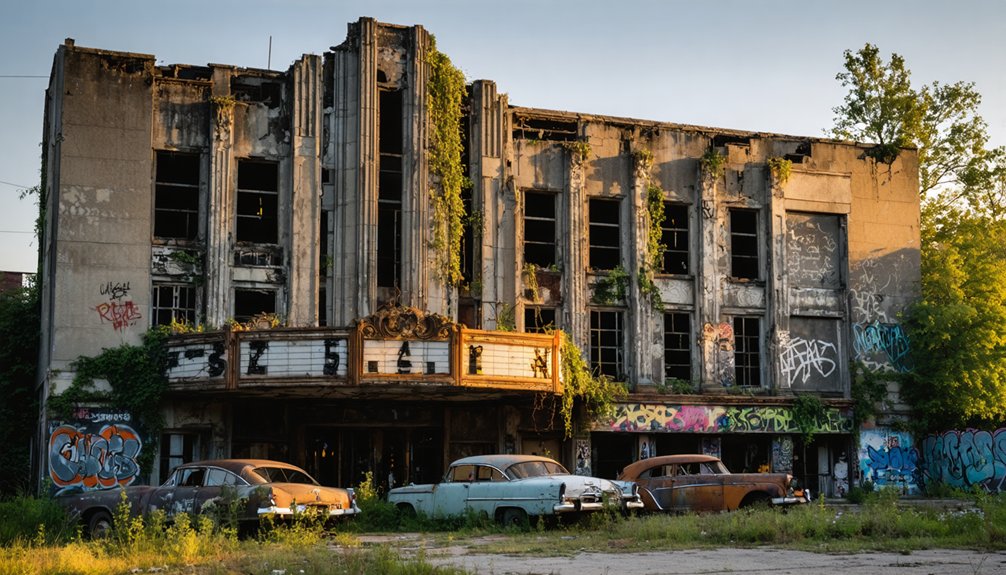
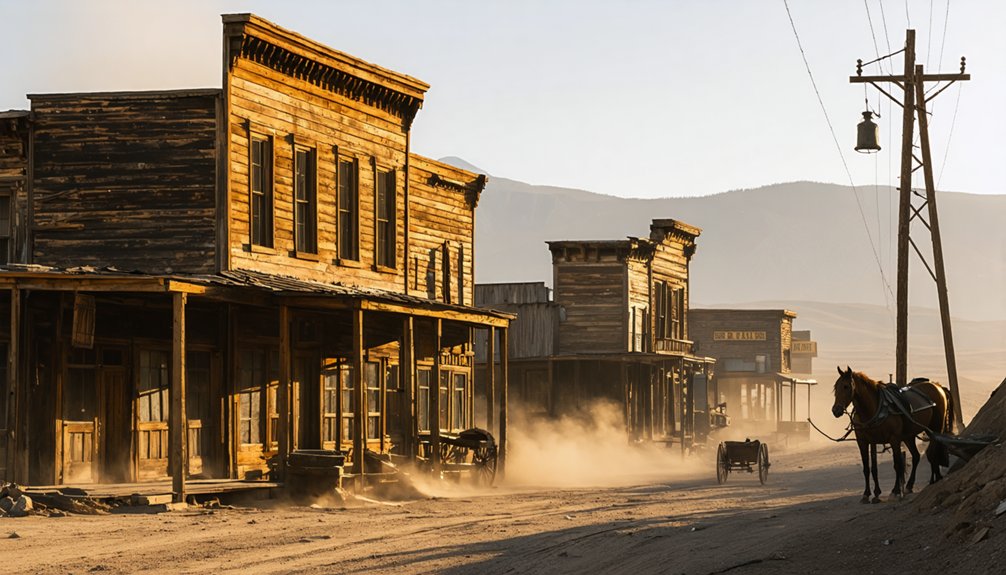
When exploring deserted American towns, you’ll find artifacts that reveal daily life and technological innovation. Look for ceramic bottles, mining tools, and personal items that connect to past inhabitants’ stories. Examine items for authenticity through manufacturer stamps, wear patterns, and craftsmanship. Always obtain proper permits and practice minimal disturbance during excavation. These forgotten objects offer windows into America’s cultural evolution and socioeconomic history—each discovery unveils another chapter of our collective past.
Key Takeaways
- Proper artifact identification requires examining manufacturer stamps, wear patterns, craftsmanship, weight distribution, and original finishes.
- Ethical exploration demands obtaining permits, collaborating with descendant communities, and minimizing site disturbance.
- Documentation using standardized tools like Munsell Color Charts preserves artifact context and historical significance.
- Mining relics reveal technological evolution from hand tools to sophisticated machinery, reflecting American industrial development.
- Personal artifacts such as diaries, photos, and toys provide insights into individual stories and family life in frontier communities.
The Lost Treasures: Common Artifacts That Tell America’s Forgotten Stories

America’s abandoned towns serve as time capsules, preserving artifacts that illuminate the daily lives of those who came before us. When you explore sites like Rhyolite, Nevada, or Bodie, you’ll discover ceramic bottles and glass containers that reveal trade networks and domestic preferences.
The artifacts’ significance extends beyond mere objects—each button, leather fragment, and clothing remnant tells a story about socioeconomic status and fashion sensibilities.
In these ghost towns, even the smallest fragments whisper truths about wealth, class, and the fashion trends that shaped frontier identities.
Storytelling through artifacts happens when you examine kitchenware like cast iron pans and enamelware, which document cooking practices and daily routines.
Preserved furniture fragments expose interior lifestyles frozen in time. Perhaps most poignant are children’s toys and school items, which speak to family dynamics and educational values in frontier communities—tangible connections to those who sought freedom in America’s vast landscapes. Mining tools and equipment found at sites like Kennecott Mines serve as evidence of the resource depletion that ultimately led to many towns’ abandonment. In Calico, California, visitors can take guided tours through restored buildings where paranormal activity is said to provide a supernatural connection to the town’s silver mining past.
Mining Town Relics: Tools and Equipment From the Industrial Frontier
You’ll discover the evolution of extraction technology from simple hand tools like pickaxes to complex machinery such as continuous miners that revolutionized America’s industrial frontier.
When examining potential artifacts, look for authentic materials like stainless steel components, evidence of metal stamping techniques, and specialized designs that indicate genuine mining provenance. Many artifacts recovered from mining ghost towns represent different mining methods including underground mining techniques that required specialized equipment for extracting minerals in confined spaces. Modern explorers can benefit from partnering with companies that have expertise in difficult environments similar to those where these historical mining operations took place.
These unearthed relics—from carbide lamps that illuminated dark tunnels to fragments of stamp mills that processed precious metals—preserve tangible connections to the technological innovations and human experiences that shaped mining communities.
Extraction Innovations Through Time
From primitive stone implements to sophisticated diesel-powered machinery, the evolution of extraction tools reveals humanity’s increasing mastery over earth’s resources.
When you explore historical mining sites, you’ll find evidence spanning millions of years of technological advancement.
The Industrial Revolution transformed extraction techniques from painstaking manual labor to mechanized efficiency.
Benjamin Holt’s innovations—first the combine harvester in 1886, then the revolutionary “caterpillar” tractor in 1906—fundamentally changed resource gathering.
The introduction of bucket wheel excavators in the 1920s, used primarily in mining operations, represented another significant leap in heavy equipment technology.
You’ll notice how each technological leap represented freedom from previous limitations: steam power overcame human strength constraints; dynamite replaced black powder for breaking rock formations; and diesel engines eventually superseded steam.
The California Gold Rush of 1848 spurred rapid innovation in mining tools and techniques as approximately 300,000 prospectors sought more efficient ways to extract precious metals.
Identifying Authentic Mining Tools
While sifting through artifacts in historic mining towns, distinguishing authentic mining tools from replicas requires careful examination of specific characteristics.
Look for manufacturer stamps like Warwood Tool markings and genuine wear patterns that reveal a tool’s working history.
Authentic mining craftsmanship shows in hammer-forged construction and high-grade USA steel that withstood harsh underground conditions.
You’ll notice hickory handles with a distinct patina that can’t be artificially reproduced.
Tool authenticity often reveals itself through proper weight distribution and balance—features that skilled 19th-century craftsmen understood were essential for miners working long shifts.
The most genuine pieces will showcase a legacy of American manufacturing dating back to 1854, when these essential tools began shaping the nation’s industrial development.
Compare your finds with museum collections when possible, and document provenance thoroughly.
Remember that original finishes, including appropriate rust patterns, are valuable indicators of genuine historical mining equipment.
Many of these tools were used in the hazardous environments of mines where laborers faced daily dangers for minimal compensation.
Unearthed Equipment Tells Stories
Beyond identifying authentic tools lies the broader narrative of America’s industrial past captured in abandoned mining equipment. When you discover a century-old steam drill in Washington’s Index Mining District or examine corroded drill stands in Kennecott’s copper operations, you’re touching tangible connections to frontier innovation.
The archaeological significance of these finds extends beyond their physical presence. Each arrangement of scattered drill steel, preserved wooden explosive rods, or rusted sledges reveals mining practices and technological adaptation. Artifacts like the rare steam drill from around 1903 provide exceptional evidence of early drilling technology used in copper extraction. Vulture City’s stamping mills represent gold refinement processes that produced over 340,000 ounces of gold throughout the mine’s productive years.
In places like Vulture Mine and Garnet Ghost Town, mining machinery abandoned during hasty departures creates an industrial time capsule. These artifacts speak to the ambition, ingenuity, and often desperate circumstances of those who sought fortune underground.
Every piece of equipment tells a story of America’s resource-driven expansion and the people who powered it.
Everyday Life Frozen in Time: Household Objects and Personal Possessions
You’ll find the most intimate historical narratives within the personal artifacts left behind in abandoned homes—diaries, costume jewelry, and family photos that reveal individual stories frozen at the moment of departure.
Kitchens often serve as time capsules where daily life remains suspended, with tea sets, salt and pepper shakers, and charred animal bones offering insights into food practices and domestic routines.
These preserved household spaces, complete with linens, toys, and correspondence school doodle pads, provide archaeologists with unparalleled windows into the everyday lives and personal tastes of former residents.
Personal Stories Emerge
When archaeologists carefully sift through the remnants of abandoned American towns, they’re not merely collecting artifacts but reconstructing intimate personal narratives. Each discovered item—from an 1887 Indian Head penny to handwritten letters on copper paper—creates personal connections to forgotten lives.
Diaries reveal firsthand accounts of gold rush migrations, while family bibles and bridge scorecards expose spiritual practices and social gatherings.
You’ll find narrative threads in the smallest objects: a child’s diaper pin, a worker’s Levi Strauss button, or decorative dress snaps marking the boundary between labor and leisure.
These artifacts tell stories of adaptation, like charred animal bones showing how Black Southern families adjusted to Oregon’s food sources.
Through postcards, photos, and journals, you’re witnessing frozen moments—evidence of dances, celebrations, and daily routines that once animated these now-silent places.
Time-Capsule Kitchens Preserved
Abandoned kitchens in America’s ghost towns serve as extraordinary time capsules where everyday life remains suspended in the moment of departure.
You’ll find tables set with dishes and utensils awaiting the next meal, pantry shelves still stocked with decades-old staples. The kitchen nostalgia is palpable as you discover calendars frozen on specific dates and handwritten notes left on tables.
The artifact significance becomes clear when you examine porcelain sinks, cast-iron stoves, and glass jars containing food remnants preserved by arid desert conditions.
Personal possessions tell intimate stories – aprons hanging nearby, family photographs tucked in drawers, letters abandoned mid-conversation.
In places like Bodie, California, or St. Elmo, Colorado, these preserved kitchens aren’t just historical records but portals into America’s past, where freedom and opportunity once beckoned settlers westward.
Architectural Remnants: What Surviving Structures Reveal About Past Communities

The architectural remnants of deserted American towns stand as silent witnesses to the complex social, economic, and cultural tapestries that once flourished in these now-quiet spaces.
You’ll find each structure holds architectural significance beyond mere aesthetics—from ornate Victorian homes revealing social stratification to humble miners’ cabins telling stories of transient labor forces.
Mining infrastructure, commercial establishments like saloons, and civic buildings collectively paint a portrait of community identity. Churches and schools demonstrate how education and faith anchored these frontier societies despite harsh conditions.
The preservation method of “arrested decay” maintains authenticity while allowing you to glimpse genuine abandonment patterns. Even deterioration itself speaks volumes—wooden structures succumb faster than stone counterparts, while foundations map original town planning.
Decay itself tells a story—revealing construction hierarchies and settlement patterns through its selective erosion of the past.
These physical remnants aren’t just ruins—they’re readable chapters of American pioneering history.
Preservation Techniques: How Artifacts Are Documented and Protected
Preserving the tangible remnants of our past requires methodical documentation and protective measures that go far beyond simple collection.
Artifact conservation begins with precise provenience recording using grid squares and stratigraphic layers, establishing vital spatial context for future analysis.
When you discover artifacts at abandoned town sites, they undergo a systematic workflow:
- Immediate stabilization with tailored chemical treatments based on material composition
- Documentation using standardized tools like Munsell Color Charts for consistent recording
- Non-destructive examination through digital x-rays and microscopy to reveal hidden details
- Implementation of environmental controls to prevent deterioration post-conservation
Documentation methods extend to the site itself, with techniques ranging from partial excavation to protective reburial, prioritizing preservation over complete exposure.
This balanced approach guarantees historical integrity while allowing meaningful study of America’s abandoned settlements.
Ethical Exploration: Respecting Historical Sites While Discovering Artifacts

While searching for historical remnants in America’s forgotten towns, you’ll encounter ethical responsibilities that extend far beyond mere discovery.
You’ll need to follow ethical guidelines that prioritize minimal disturbance—using non-invasive technologies like ground-penetrating radar before any physical excavation.
Always secure proper permits; artifact collection without authorization isn’t just unethical—it’s illegal.
When you do excavate, employ targeted methods that preserve site integrity and document everything meticulously.
Cultural sensitivity requires collaboration with descendant communities, especially Indigenous groups. Their perspectives on artifacts aren’t optional—they’re essential.
Communicate transparently about your intentions and findings, and recognize that these items hold deep cultural significance beyond their historical value.
Regional Differences: How Artifacts Vary Across America’s Ghost Towns
Across America’s diverse landscape, archaeological treasures tell distinctly regional stories, each with unique signatures reflecting local industries, cultures, and settlement patterns.
You’ll notice stark regional variations as you explore these abandoned places.
In Western towns, mining equipment and rapid abandonment create well-preserved sites, while Eastern settlements typically reveal foundation remnants and agricultural implements.
Southwestern sites showcase rich Native American heritage through pottery and ceremonial spaces.
- Southern ghost towns contain evidence of ranching life and segregation-era buildings
- Northern regions yield cold-weather survival tools and logging equipment
- Western sites feature mining apparatus often found in original context
- Southwestern locations preserve indigenous cultural markers like rock art
Understanding these artifact significance patterns helps you recognize how climate, available resources, and cultural priorities shaped America’s forgotten communities.
From Relic to Museum: The Journey of Salvaged Historical Objects
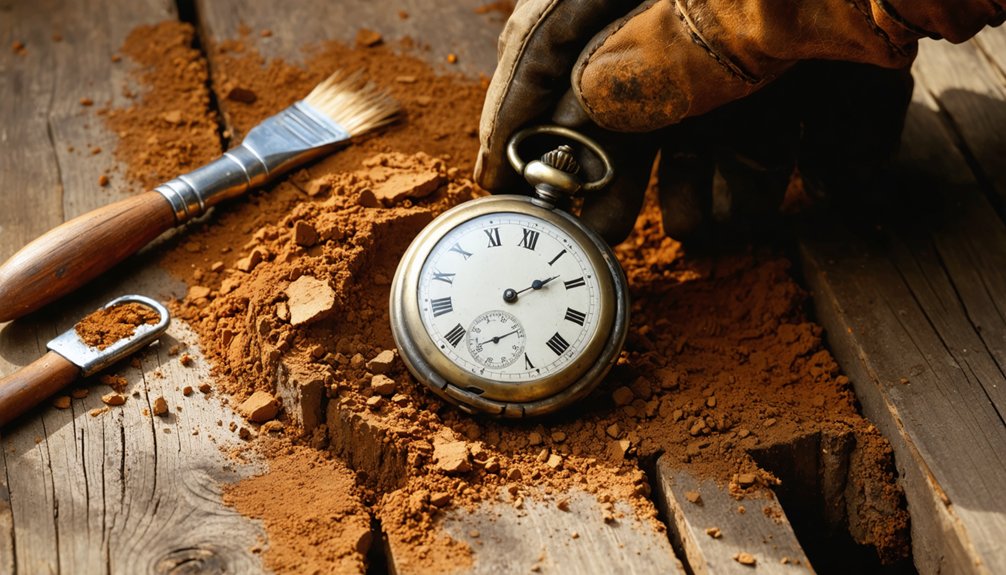
Once discovered in abandoned settlements, historical artifacts commence on a complex journey before reaching museum displays.
You’ll find that establishing artifact provenance begins with thorough documentation—each item receives an accession number while specialists verify authenticity through historical records and material analysis.
Conservation ethics guide the entire process.
You’ll see artifacts undergo careful condition assessment before conservators apply non-invasive cleaning techniques and specialized treatments based on the material composition.
Temperature and humidity controls prevent further deterioration while restoration work prioritizes historical integrity.
When you visit museums displaying these relics, you’re witnessing objects that have been meticulously preserved in climate-controlled environments with protective cases minimizing exposure to harmful elements.
This systematic approach guarantees these tangible connections to America’s past remain accessible for generations.
Frequently Asked Questions
Are There Legal Restrictions on Exploring Abandoned Towns?
Yes, you’re not as free as you think! You need legal permissions to avoid trespassing charges. Obtain explicit owner consent and follow exploration ethics to legally discover abandoned towns.
Can I Keep Artifacts I Find in Abandoned Towns?
No, you can’t legally keep artifacts without proper authorization. Artifact ownership depends on land status, requiring landowner permission on private property and permits on public lands. Ethical considerations demand preservation of historical context.
How Dangerous Are Structural Hazards in Deteriorating Ghost Towns?
Like hidden vipers, structural hazards in ghost towns are extremely dangerous. You’ll face imminent risks from compromised structural integrity, asbestos exposure, mine collapses, and gas pockets without proper safety precautions.
Exploring abandoned towns along the Columbia River can lead to unexpected encounters with nature reclaiming its territory. Overgrown vegetation often shrouds the remnants of human habitation, creating an eerie yet captivating atmosphere. Visitors must remain vigilant, as the allure of these ghost towns can quickly turn perilous amid the lurking dangers.
Do Indigenous Artifacts Receive Special Protection in These Locations?
Yes, you’ll find indigenous artifacts receive substantial legal protection. Federal laws like NAGPRA enforce indigenous rights regarding artifact ownership on federal and tribal lands, with stricter penalties for unauthorized collection.
What Tools Do Professional Archaeologists Use for Artifact Recovery?
You’ll find archaeologists using trowels, brushes, and dental tools for precise excavation techniques. They’ll employ screens for sifting, measuring instruments for documentation, and specialized packaging for artifact preservation during recovery.
References
- https://everydaywanderer.com/us-ghost-towns
- https://www.theexplorographer.com/2024/06/abandonedus/
- https://www.geotab.com/ghost-towns/
- https://hiddencityphila.org/2015/03/surveying-the-damage-with-abandoned-america-the-age-of-consequences/
- https://www.loveexploring.com/gallerylist/131658/abandoned-in-the-usa-92-places-left-to-rot
- https://www.mentalfloss.com/geography/wanderlust/creepiest-ghost-towns-united-states
- https://www.christywanders.com/2024/08/top-ghost-towns-for-history-buffs.html
- https://en.wikipedia.org/wiki/Lists_of_ghost_towns_in_the_United_States
- https://www.atlasobscura.com/lists/americas-best-preserved-ghost-towns
- https://www.youtube.com/watch?v=8iFV5zFQdns