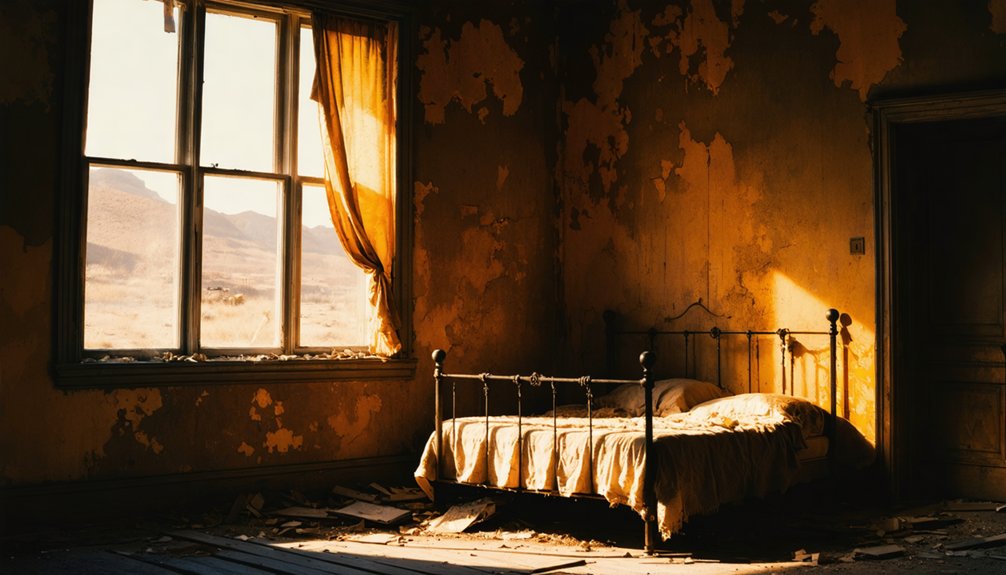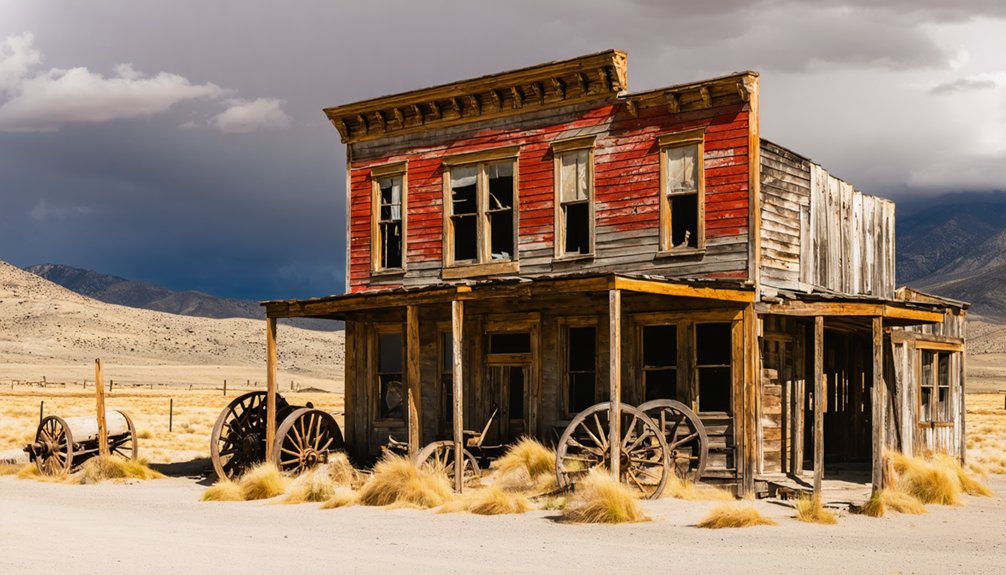
America’s ghost towns let you step back in time through weathered buildings and abandoned streets. Visit Bodie, California for gold rush structures in “arrested decay,” explore Virginia City’s silver boom architecture, or wander Terlingua’s mercury mining ruins. Bannack, Montana offers remarkable preservation with over 60 historic buildings, while Calico provides haunted mine tours. With nearly 4,000 ghost towns across the US, your journey through America’s fascinating boom-and-bust past awaits.
Key Takeaways
- Bodie, California offers remarkably preserved gold rush buildings in “arrested decay” with authentic period structures from the 1850s.
- Virginia City, Nevada features a National Historic District with 19th-century architecture and tours of the original Comstock Lode silver mines.
- Terlingua, Texas showcases America’s mercury mining history with preserved industrial Scott Furnaces and a historic cemetery.
- Bannack, Montana maintains over 60 historic structures including Hotel Meade and hosts annual Bannack Days Festival with period reenactments.
- Calico Ghost Town provides haunted mine tours, nighttime ghost hunts, and displays of authentic 1880s mining equipment and artifacts.
The Frozen-in-Time Charm of Bodie, California
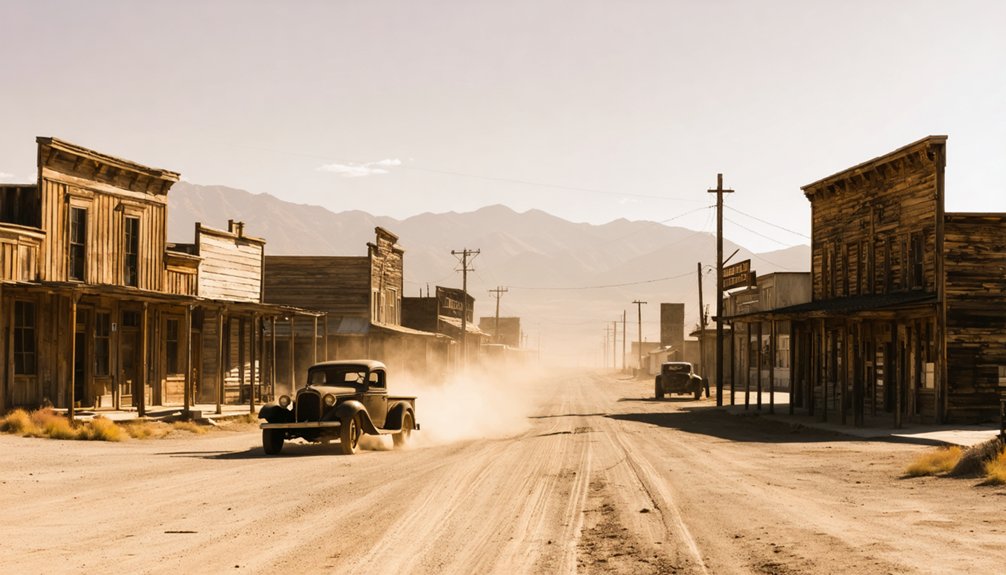
Whispers of the past echo through the weathered clapboard buildings of Bodie, California, a gold rush boomtown frozen in time since its abandonment in the 1940s.
Once home to 10,000 gold-hungry souls, you’ll now find over 200 structures preserved in “arrested decay,” offering an authentic glimpse into 1880s mining life.
Founded after William S. Bodey’s gold discovery in 1859 (note the misspelling of the town’s name), Bodie quickly earned notoriety as one of America’s wildest settlements.
Bodie was born in error, but its reputation for lawlessness spread far beyond the misspelling in its name.
Bodie legends tell of daily shootouts and the ominous phrase “Goodbye God, I’m going to Bodie” scribbled in a child’s diary. Visitors seeking information about Bodie should be aware that the name refers to multiple locations requiring clarification when researching its history.
Wander through this National Historic Landmark where ghost stories abound—especially around Boothill Graveyard, where the town’s “undesirables” were laid to rest. The town’s technological advancement is showcased by the hydro-electric center built in 1893 by the Standard Consolidated Mining Company.
Virginia City: Silver Boom Legacy and Haunted History
A gleaming chapter in America’s mining legacy, Virginia City, Nevada rose to prominence following the discovery of the Comstock Lode in 1859—the first major silver deposit in the United States.
This boomtown reached 25,000 residents by 1873, with innovative mining techniques like square-set timbering enabling extraction worth over $600 million in today’s currency.
When you visit this preserved National Historic District, you’ll experience:
- Authentic 19th-century architecture rebuilt after the devastating 1875 fire
- Tales of ghostly apparitions in century-old saloons and hotels
- Historic sites where mining accidents claimed countless lives
- Paranormal tours revealing the town’s violent past and unexplained phenomena
The town features several notable structures including the impressive Old Courthouse built in 1876 using 1 million bricks and 100,000 pounds of iron. Visitors can explore the Chollar Mine with its 45-minute guided tours showcasing original mining techniques and equipment from the boom era.
Though the silver boom faded by the 1880s, Virginia City’s haunted reputation and preserved heritage now attract millions of freedom-seeking adventurers annually.
Exploring the Mercury Mining Past of Terlingua, Texas
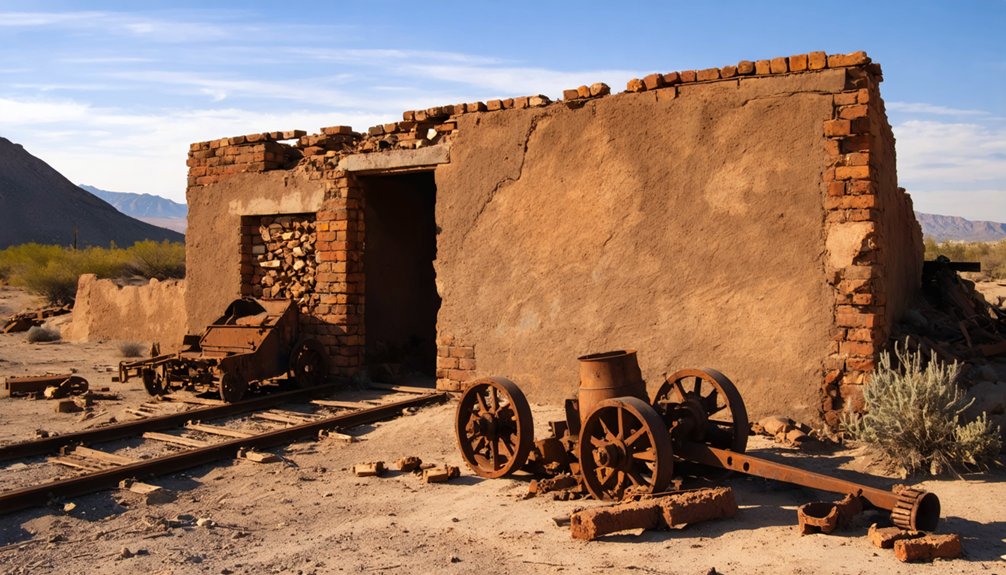
Hidden beneath the rugged terrain of far West Texas lies Terlingua’s fascinating mercury mining legacy, where fortunes rose and fell with the extraction of cinnabar ore beginning in the mid-1880s.
The dusty ghosts of Terlingua whisper tales of mercury dreams that once shimmered in the Chihuahuan desert.
When you visit, you’ll discover the remnants of the Chisos Mining Company, once America’s largest mercury producer, established by industrialist Howard E. Perry in 1903. The town once bustled with 2,000 residents, mostly Mexican immigrants who built their own adobe homes and shaped the local culture. Terlingua’s economic boom peaked during World War I when increased military demand drove mercury prices to unprecedented levels.
You can explore where workers employed primitive mining techniques before advancing to industrial Scott Furnaces. The region’s unique geology yielded rich deposits where Eagleford shale met Buda limestone. The local Terlingua Cemetery stands as a somber reminder of the hardships faced by miners, particularly during the devastating influenza pandemic of 1918-1919.
Though prosperity ended with the company’s 1942 bankruptcy, Terlingua’s mercury legacy lives on through its preserved structures and haunting beauty.
Bannack, Montana: Gold Rush Relics and Annual Festivals
You’ll step back in time when visiting Bannack’s remarkably preserved 1860s buildings, including the haunting Hotel Meade where gold rush history lingers in every creaking floorboard.
During July’s annual Bannack Days Festival, the ghost town comes alive with period costumes, demonstrations of pioneer skills, and gold panning experiences that reconnect you with Montana’s vigilante past.
The festival transforms this once-bustling gold mining capital into a living museum where you can wander through over 60 historic structures that survived the town’s dramatic boom-and-bust cycle. The town’s gold was notably pure, with 99-99.5% purity that attracted thousands of prospectors to Grasshopper Creek in the 1860s. Visitors can explore the infamous Bannack Jail, which stands as a stark reminder of the town’s lawless era under Sheriff William Henry Plummer who was later executed by vigilantes in 1864.
Preserved 1860s Architecture
Stepping into Bannack, Montana is like walking through a perfectly preserved time capsule from the 1860s gold rush era, where approximately 60 original structures still stand in proof to frontier ingenuity.
Unlike many historic sites focused on restoration, Bannack’s commitment to architectural significance lies in its authentic preservation of buildings exactly as they were abandoned.
You’ll find yourself immersed in genuine frontier architecture:
- The stately 1875 Beaverhead County Courthouse with its imposing presence
- Original jail cells with untouched interiors revealing harsh justice realities
- The 1874 Masonic Lodge that doubled as a schoolhouse for nearly seven decades
- Decorative false fronts adorning log structures—a typical 1860s aesthetic meant to impress
This historic preservation approach allows you to experience the raw, unfiltered essence of frontier life without modern interpretations. The site was officially donated to Montana in 1954 with the specific stipulation that Bannack maintain its ghost town atmosphere rather than becoming a commercialized tourist attraction. Established on July 28, 1862, Bannack rapidly grew following the gold discovery that transformed Willards Creek into the renowned Grasshopper Creek.
Ghostly Hotel Meade
At the heart of Bannack’s spectral reputation stands the imposing Hotel Meade, where the veil between past and present seems particularly thin.
Originally built as a courthouse in 1875, this red-brick Italianate structure transformed into a luxurious hotel in 1891 before closing permanently in the 1940s.
You’ll feel history’s weight as you explore halls where ghostly encounters are commonplace. The spirit of Dorothy Dunn, who drowned in 1916, often appears in her blue dress, especially to children who visit.
Cold spots, moving doors, disembodied voices, and shadow figures create an atmosphere thick with haunted legends.
Unlike many historic sites, Hotel Meade remains intentionally unrestored, preserving its authentic ghostly ambiance.
Whether you’re drawn by frontier history or paranormal curiosity, this centerpiece of Bannack State Park offers a glimpse into Montana’s gold rush era—with supernatural companions included.
Bannack Days Festival
Every July, when summer warmth bathes Montana’s rugged landscape, Bannack transforms from a quiet ghost town into a vibrant celebration of frontier life during the annual Bannack Days Festival.
This living history event, celebrating its 49th year in 2025, invites you to step back to 1862 when Bannack history began as Montana’s first territorial capital. For $5 admission, you’ll experience frontier life through authentic reenactments along the preserved Main Street where over 50 original buildings still stand.
Festival activities include:
- Gold panning in the same streams that sparked Montana’s first major gold rush
- Horse-drawn wagon rides through the historic townsite
- Blacksmithing and pioneer craft demonstrations by costumed interpreters
- “Gunfight” reenactments and a Main Street parade
You’ll find breakfast at Hotel Meade starting at 7am, with the festivities running until 5pm Saturday and 4:30pm Sunday.
Paranormal Adventures in Calico’s Silver Mining District
You’ll descend into Calico’s eerie mining tunnels on the Haunted Mines Tour, where stories of spectral miners and unexplained phenomena await around every dark corner.
The Cursed Artifacts Zone showcases items with mysterious pasts, reportedly causing strange occurrences for those who’ve touched them without proper respect.
For the truly brave, join a Nighttime Ghost Hunt through the abandoned silver boomtown, where professional paranormal equipment helps you track the otherworldly residents who never left their claims.
Haunted Mines Tour
Deep within the shadowy tunnels of Calico Ghost Town’s historic silver mines, visitors can experience a blend of fascinating history and spine-tingling paranormal phenomena.
On this guided adventure through tunnels dug in the 1880s, you’ll explore the infamous “glory hole” where $65,000 in silver was extracted, while learning about the miners whose spirits may still linger.
- Cold spots and unexplained temperature drops envelop you as you venture deeper
- Echoing footsteps and disembodied voices interrupt the guide’s mining folklore
- Shadowy figures dart between the well-lit passages and restored work scenes
- Electronic equipment mysteriously malfunctions near areas of documented accidents
Don’t worry if you’re mildly claustrophobic—the tunnels are well-ventilated and illuminated, though lights have been known to flicker when the spirits grow restless.
Cursed Artifacts Zone
Unlike the haunted mine tunnels where paranormal activity thrives, Calico’s much-discussed “Cursed Artifacts Zone” exists primarily in the domain of folklore rather than fact.
You’ll find no officially documented cursed objects in this former silver mining district, despite what local legends might suggest.
While touring the museum, you’ll see authentic 1880s mining equipment and household items—all presented with historical context rather than supernatural claims.
Ghost tour guides may entertain you with tales of a ghostly prospector’s pickaxe or the infamous “cursed silver vein” that supposedly brought misfortune to miners, but these haunted relics remain unverified by historical records.
The real attraction lies in Calico’s documented history, not in cursed legends.
Paranormal enthusiasts might sense something near certain displays, but these experiences remain delightfully subjective.
Nighttime Ghost Hunt
When darkness falls over Calico’s weathered wooden facades, the abandoned silver mining town transforms into a paranormal playground for ghost hunters and thrill-seekers alike.
You’ll follow guides through the historic streets where ‘Tumbleweed’ Harris, the last town marshal, allegedly still patrols beyond death.
- Feel the unexplained chills inside Maggie Mine where miners’ spirits linger after tragic deaths
- Listen for whispers and footsteps in the old schoolhouse, a renowned hotspot for spectral stories
- Experience sudden temperature drops in Calico Corral where unseen presences may touch you
- Capture potential evidence during EVP sessions at Hank’s Hotel where ghostly encounters abound
The guided tours blend historical narratives with paranormal tales, inviting you to connect with Calico’s mysterious past in locations preserved since the silver boom’s dramatic collapse.
Off the Beaten Path: St. Elmo and Centralia
Among Colorado’s most fascinating ghost towns, St. Elmo stands frozen in time at nearly 10,000 feet in the Sawatch Range. Founded in 1880 during the silver and gold rush, this remarkably preserved settlement once bustled with 2,000 residents enjoying hotels, saloons, and dance halls before mining declined in the 1920s.
What makes St. Elmo special is its survival story. When others abandoned the town, the eccentric Stark family remained, purchasing properties at tax sales and operating the general store. Their dedication saved over 43 original structures from destruction, creating one of America’s best-preserved ghost towns.
Today, you can walk the authentic Main Street where about 10 permanent residents still live, making it less abandoned ghost town and more living museum of frontier life.
Planning Your Ghost Town Road Trip Across America
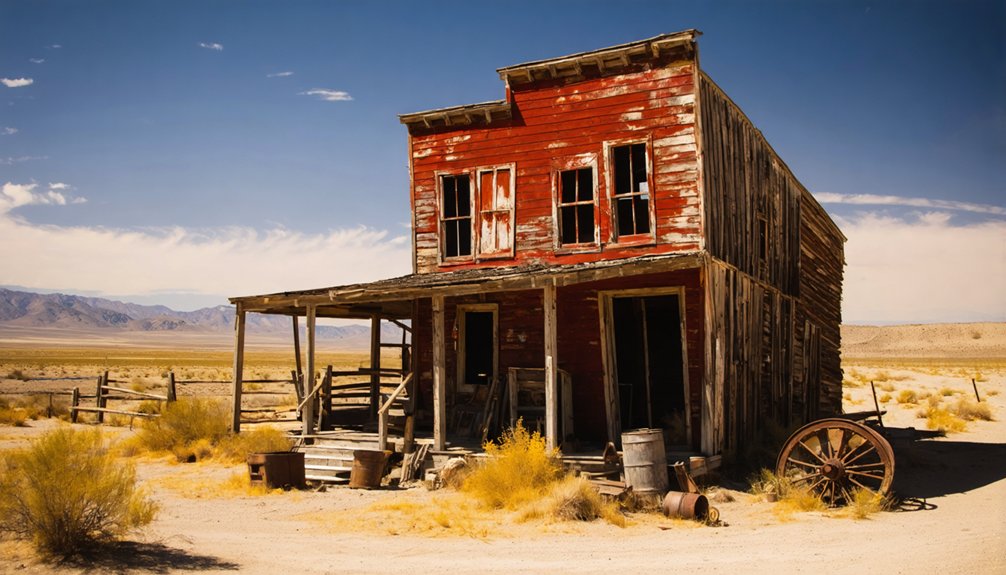
While St. Elmo and Centralia offer fascinating glimpses into ghost town history, planning a thorough road trip reveals America’s abandoned past in all its haunting glory.
With nearly 4,000 documented ghost towns nationwide, your adventure requires thoughtful preparation.
Consider these travel tips for an unforgettable journey:
- Follow established routes like the 1,346-mile western ghost town trail spanning 12 stops, or incorporate abandoned settlements along iconic highways like Route 66.
- Leverage GPS-mapped tours with cultural recommendations for self-directed exploration.
- Contact local historical societies for detailed information about lesser-known locations.
- Pack camera equipment to capture dramatic ruins including abandoned buildings, faded neon signs, and empty main streets.
Texas, California, and the Great Plains offer particularly rich concentrations of these time capsules, each telling unique stories of boom and bust cycles.
Capturing the Spirit: Photography Tips for Abandoned Towns
To properly convey the haunting beauty of abandoned towns, your photography techniques must capture both their tangible details and ethereal atmosphere. Pack essentials like a wide-angle lens for sweeping abandoned landscapes, a tripod for low-light shots, and a flashlight to illuminate shadowy interiors.
Golden hour light casts dramatic shadows that heighten the sense of desolation, while long exposures of star trails add a supernatural dimension. Frame your shots using doorways or windows, and experiment with low angles to emphasize scale against vast desert backdrops.
Don’t overlook the small details—rusted machinery, weathered signs, and forgotten personal items—that reveal historical narratives.
Consider black and white processing to emphasize textures of decay and abandonment. Use natural framing and juxtaposition of old against new to create visual tension that speaks to the passage of time.
Frequently Asked Questions
Are Ghost Towns Safe to Visit With Children?
Like crumbling castles of America’s past, ghost towns can be safe for children with proper parental supervision. You’ll need to prioritize child safety by avoiding unstable structures and staying on marked paths.
What’s the Best Season to Tour Multiple Ghost Towns?
Plan your multi-town ghost adventure from May to October when you’ll enjoy the best seasonal weather, clear roads, and fully operational facilities. Summer months offer more festivals and guided tours.
Can You Legally Take Artifacts Found in Ghost Towns?
You might think those rusty nails are just trash, but they’re protected treasures. You can’t legally remove artifacts from ghost towns due to serious legal implications. Artifact preservation is mandated by federal law.
Do Any Ghost Towns Offer Overnight Accommodation Options?
Yes, you’ll find diverse ghost town accommodations across the US. From Bodie’s historic cabins to St. Elmo’s Guest House, these overnight stays offer authentic experiences where you’re free to immerse in western history.
How Accessible Are Ghost Towns for Visitors With Mobility Issues?
Like ancient ruins concealing forgotten tales, ghost towns offer limited wheelchair accessibility. You’ll find uneven terrain and few accommodations, though some sites provide paved roads, accessible restrooms, and occasional guided tours for mobility-challenged explorers.
References
- https://www.christywanders.com/2024/08/top-ghost-towns-for-history-buffs.html
- https://www.visittheusa.com/experience/5-us-ghost-towns-you-must-see
- https://www.realgirlreview.com/dark-tourism-in-america/
- https://nightofthejack.com/2025/01/23/top-creepy-ghost-towns-in-america/
- https://devblog.batchgeo.com/ghost-towns/
- https://www.atlasobscura.com/lists/americas-best-preserved-ghost-towns
- https://whakestudios.com/us-ghost-towns/
- https://thelittlehouseofhorrors.com/bodie-the-cursed-ghost-town/
- https://en.wikipedia.org/wiki/Bodie
- https://www.exploratography.com/blog-cal/dxan8zo55mm3dq325qd8yhi7s0e0qi